
1 Samuel 4:1-11 is about the Israelites suffering a devastating defeat in battle against the Philistines due to their reliance on the Ark of the Covenant as a talisman rather than seeking a genuine relationship with God.
1 And the word of Samuel came to all Israel. Now Israel went out to battle against the Philistines. They encamped at Ebenezer, and the Philistines encamped at Aphek.
2 And the Philistines drew up to meet Israel, and when the battle spread, Israel was defeated by the Philistines, who killed about four thousand men on the field of battle.
3 And when the troops came to the camp, the elders of Israel said, “Why has the Lord defeated us today before the Philistines? Let us bring the ark of the covenant of the Lord here from Shiloh, that it may come among us and save us from the power of our enemies.”
4 So the people sent to Shiloh and brought from there the ark of the covenant of the Lord of hosts, who is enthroned on the cherubim. And the two sons of Eli, Hophni and Phinehas, were there with the ark of the covenant of God.
5 As soon as the ark of the covenant of the Lord came into the camp, all Israel gave a mighty shout, so that the earth resounded.
6 And when the Philistines heard the noise of the shouting, they said, “What does this great shouting in the camp of the Hebrews mean?” And when they learned that the ark of the Lord had come to the camp,
7 And the Philistines were afraid, for they said, “A god has come into the camp.” And they said, “Woe to us! For nothing like this has happened before.
8 Woe to us! Who can deliver us from the power of these mighty gods? These are the gods who struck the Egyptians with every sort of plague in the wilderness.
9 Be strong, and behave like men, O Philistines, that you may not become slaves to the Hebrews as they have been to you; be men and fight.”
10 So the Philistines fought, and Israel was defeated, and they fled, every man to his home. And there was a very great slaughter, for thirty thousand foot soldiers of Israel fell.
11 And the ark of God was captured, and the two sons of Eli, Hophni and Phinehas, died.
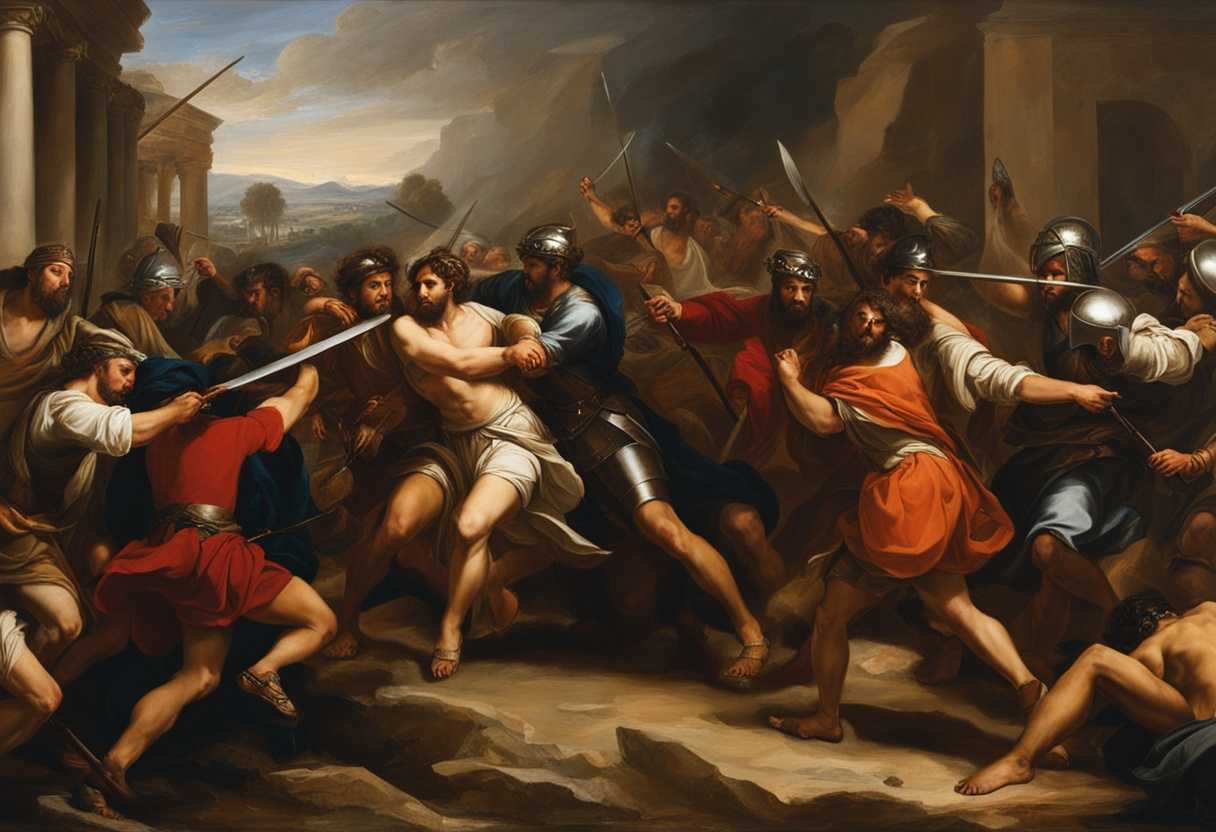
Setting the Scene for 1 Samuel 4:1-11
The scene in 1 Samuel chapter 4 is set during a time when the Israelites were at war with the Philistines. The Israelites gathered for battle at Ebenezer, while the Philistines encamped at Aphek. The Israelites were led by the high priest Eli’s sons, Hophni and Phinehas. The Philistines defeated the Israelites in the first battle, causing the Israelites to retreat to their camp.
In the midst of this tense situation, the elders of Israel decided to bring the Ark of the Covenant from Shiloh to the battlefield, believing that its presence would ensure their victory. The Ark was a sacred chest that symbolized the presence of God among the Israelites. When the Ark arrived at the camp, the Israelites shouted for joy, believing that God was with them and that they would be victorious.
The Philistines, however, were not intimidated. They rallied their forces and fought even harder, ultimately defeating the Israelites once again. The Philistines captured the Ark of the Covenant, causing great dismay among the Israelites. This event marked a significant loss for the Israelites and a turning point in their relationship with God.
What is 1 Samuel 4:1-11 about?
This verse from the Bible describes a tumultuous time for the people of Israel. Despite their strong faith and belief in God, they suffered a devastating defeat at the hands of their enemies, the Philistines. The capture of the Ark of the Covenant was a significant blow as it symbolized the presence and protection of God among the Israelites. The deaths of Eli’s sons and then Eli himself further compounded the tragedy, as they were prominent figures in the religious leadership of the community. We may wonder why such a series of unfortunate events unfolded as we reflect on this verse. Was it a test of faith for the Israelites? Was there a lesson to be learned about the consequences of disobedience or neglecting one’s duties? Regardless of the specific reasons, this verse serves as a stark reminder of the challenges and trials that can arise, even for those who are deeply committed to their beliefs. It prompts us to consider how we respond to adversity and how we can find strength and resilience in the face of difficulties, just as the Israelites did in the aftermath of these tragic events.
Understanding what 1 Samuel 4:1-11 really means
Introduction and Context
To understand the deeper meaning of 1 Samuel 4:1-11, it’s essential to start by setting the context. This passage narrates a significant event in Israel’s history where they suffer a devastating defeat at the hands of the Philistines. The Ark of the Covenant, which symbolizes God’s presence and covenant with Israel, is captured. This event marks a pivotal moment in Israel’s relationship with God, revealing both divine judgment and the consequences of misplaced trust.
Meaningful Phrases and Their Implications
The phrase “the Ark of the Covenant” holds immense significance. The Ark was not merely a religious artifact; it represented God’s throne on earth and His promise to be with His people. Its capture was not just a military loss but a spiritual crisis. It prompts us to reflect on where we place our trust. Do we, like the Israelites, sometimes treat symbols or rituals as guarantees of divine favor, while neglecting the relationship and obedience they represent?
Cross-References and Broader Biblical Themes
This passage echoes other biblical themes, such as in Joshua 6, where the Ark played a crucial role in the victory at Jericho. However, unlike Jericho, where the Israelites obeyed God’s specific instructions, in 1 Samuel 4, their decision to take the Ark into battle seems driven by superstition rather than divine command. This contrast highlights the importance of seeking and following God’s will rather than relying on religious symbols as talismans. It’s easy to fall into the trap of relying on external symbols or rituals for security and success in our lives today. Whether it’s a religious artifact, a specific prayer routine, or church attendance, these practices are meaningful but should not replace a genuine relationship with God. They are meant to draw us closer to Him, not to serve as substitutes for heartfelt obedience and trust. A man always carried a Bible in his car, believing it would protect him from accidents. One day, he faced a severe crash, and the Bible was damaged, leaving him shaken. This incident prompted him to realize that his true safety lay not in the physical book but in the God it pointed to. His faith deepened as he shifted from relying on the symbol to developing a more intimate relationship with God.
Conclusion and Reflection
1 Samuel 4:1-11 challenges us to examine our faith. Are we depending on mere symbols, or are we cultivating a living, obedient relationship with God? It reminds us of the importance of aligning our actions with God’s will, rather than using religious practices as a shield for our agendas. Let this passage encourage us to seek genuine connection with God, ensuring that our faith is rooted in trust and obedience rather than ritualistic assurances.
Do we rely on God’s power or our own?
The Israelites in this passage rely on their own strength and strategies in battle, rather than turning to God for guidance and help. They carried the ark of the covenant, thinking it would bring them victory due to its significance and power. However, they neglected to seek God’s will and favor in their actions. The Philistines dealt them a devastating defeat.
This serves as a reminder for us as believers that we should not rely solely on our own strength, wisdom, or resources, but we should always seek God’s guidance and trust in His power to deliver us. When we lean on our own understanding and abilities, we may face failure and defeat. However, when we surrender to God and trust in His strength, we can overcome even the greatest challenges and obstacles that come our way.
Therefore, it is important for us to continuously seek God’s will, invite His presence in our lives, and trust in His power to work miracles and bring victory in all circumstances. When we depend on God rather than ourselves, we can experience His supernatural intervention and see His power manifested in our lives.
Application
Think of your life like managing a busy project at work or juggling family responsibilities. 1 Samuel 4:1-11 teaches us the critical need for guidance—from God. The Israelites ignored this and faced severe consequences. Don’t make the same mistake. Trust in God’s plan and seek His wisdom in every decision. Will you step up and align your actions with God’s direction today?

Reverend Michael Johnson is an experienced Church Minister with a profound expertise in spirituality and guidance. With a serene presence and a compassionate heart, he has faithfully served his congregation for over 20 years, leading them on a spiritual journey towards inner peace and enlightenment. Reverend Johnson’s extensive knowledge of religious philosophies and profound understanding of human nature have made him a trusted confidant and mentor to many, as he seamlessly weaves his profound wisdom into life teachings. Reverend Johnson’s calming demeanor and empathetic nature continue to uplift and heal souls, nurturing a sense of unity and tranquility within his community.