
1 Now Jericho was shut up inside and outside because of the people of Israel.
2 And the Lord said to Joshua, “See, I have given Jericho into your hand, with its king and mighty men of valor.
3 You shall march around the city, all the men of war going around the city once. Thus shall you do for six days.
4 Seven priests shall bear seven trumpets of rams’ horns before the ark. And on the seventh day you shall march around the city seven times, and the priests shall blow the trumpets.
5 And when they make a long blast with the ram’s horn, when you hear the sound of the trumpet, then all the people shall shout with a great shout, and the wall of the city will fall down flat, and the people shall go up, everyone straight before him.”
6 So Joshua the son of Nun called the priests and said to them, “Take up the ark of the covenant and let seven priests bear seven trumpets of rams’ horns before the ark of the Lord.”
7 And he said to the people, “Proceed, and march around the city, and let the armed men pass on before the ark of the Lord.”
8 And just as Joshua had commanded the people, the seven priests bearing the seven trumpets of rams’ horns before the Lord went forward, blowing the trumpets, with the ark of the covenant of the Lord following them.
9 And the armed men were walking before the priests who were blowing the trumpets, and the rear guard was walking after the ark, while the trumpets blew continually.
10 But Joshua commanded the people, “You shall not shout or make your voice heard, neither shall any word go out of your mouth, until the day I tell you to shout. Then you shall shout.”
11 So he caused the ark of the Lord to circle the city, going about it once. And they came into the camp and spent the night in the camp.
12 And Joshua rose early in the morning, and the priests took up the ark of the Lord.
13 And seven priests bearing seven trumpets of rams’ horns before the ark of the Lord walked on, and they blew the trumpets continually.
14 So the people shouted, and the trumpets were blown. As soon as the people heard the sound of the trumpet, the people shouted a great shout, and the wall fell down flat, so that the people went up into the city, every man straight before him, and they captured the city.
15 On the seventh day they rose early, at the dawn of day, and marched around the city in the same manner seven times. It was only on that day that they marched around the city seven times.
16 And at the seventh time, when the priests had blown the trumpets, Joshua said to the people, “Shout, for the Lord has given you the city.
17 And the city and all that is within it shall be devoted to the Lord for destruction. Only Rahab the prostitute and all who are with her in her house shall live, because she hid the messengers whom we sent.
18 But you, keep yourselves from the things devoted to destruction, lest when you have devoted them you take any of the devoted things and make the camp of Israel a thing for destruction and bring trouble upon it.
19 But all the silver and gold, and every vessel of bronze and iron, are holy to the Lord; they shall go into the treasury of the Lord.”
20 So the people shouted, and the trumpets were blown. As soon as the people heard the sound of the trumpet, the people shouted a great shout, and the wall fell down flat, so that the people went up into the city, every man straight before him, and they captured the city.
21 Then they devoted all in the city to destruction, both men and women, young and old, oxen, sheep, and donkeys, with the edge of the sword.
22 But to the two men who had spied out the land, Joshua said, “Go into the prostitute’s house and bring out from there the woman and all who belong to her, as you swore to her.”
23 So the young men who had been spies went in and brought out Rahab and her father and mother and brothers and all who belonged to her. And they brought all her relatives and put them outside the camp of Israel.
24 And they burned the city with fire, and everything in it. Only the silver and gold, and the vessels of bronze and of iron, they put into the treasury of the house of the Lord.
25 But Rahab the prostitute and her father’s household and all who belonged to her, Joshua saved alive. And she has lived in Israel to this day, because she hid the messengers whom Joshua sent to spy out Jericho.
26 Joshua laid an oath on them at that time, saying, “Cursed before the Lord be the man who rises up and rebuilds this city, Jericho. At the cost of his firstborn shall he
lay its foundation, and at the cost of his youngest son shall he set up its gates.”
27 So the Lord was with Joshua, and his fame was in all the land.
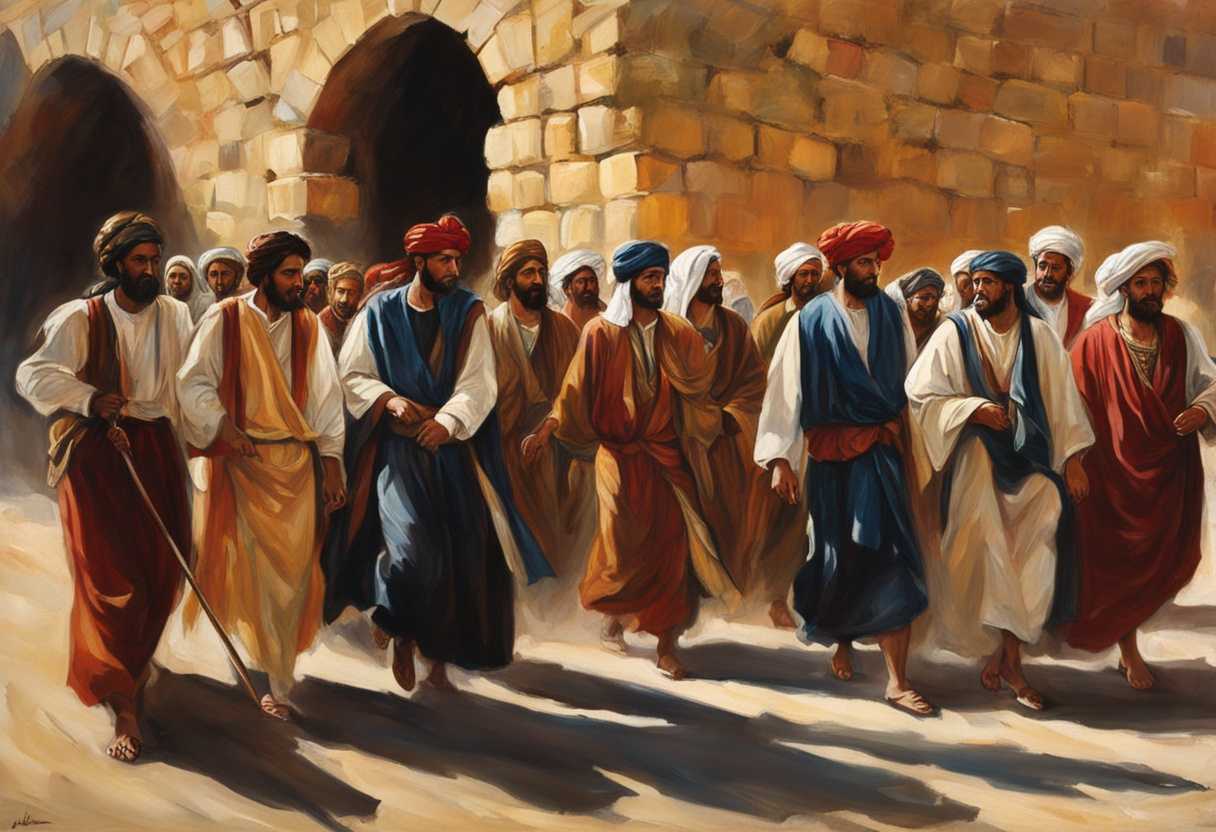
The True Meaning of Joshua 6
This chapter of the Book of Joshua recounts the dramatic events surrounding the fall of the city of Jericho, a pivotal moment in the Israelites’ conquest of the Promised Land. The author of this book is believed to be Joshua himself, the successor to the great Moses and the leader who guided the Israelites into Canaan. The Israelites’ obedience to God’s instructions ultimately led to the miraculous collapse of Jericho’s formidable walls in this chapter. This event not only demonstrated God’s power but also affirmed the Israelites’ faith and their rightful claim to the land, as foretold in the book of Deuteronomy (Deuteronomy 11:24). The Israelites’ unwavering trust in God’s plan paved the way for their victory as we delve into this chapter, despite the seemingly unconventional military strategy. This triumph foreshadows the Israelites’ continued success in conquering the land, as they remain faithful to the Lord and follow His commands.
Joshua 6:1-5
The passage in Joshua 6:1-5 begins with the Lord giving instructions to Joshua regarding the city of Jericho. The Lord instructs Joshua to march around the city each day for six days with all the armed men. They were to have seven priests carrying ram’s horn trumpets in front of the ark of the covenant. On the seventh day, they were to march around the city seven times, and the priests were to blow the trumpets. When they heard a long blast from the trumpets, all the people were to shout, and the walls of Jericho would collapse, and the Israelites would be able to take the city.
This passage highlights the importance of obedience and faith in following God’s instructions. Despite the seeming impossibility of the task – marching around the fortified city of Jericho with no visible means of conquering it – Joshua and the Israelites obeyed God’s command. This act of faith and obedience set the stage for one of the most miraculous events in the Bible, where the walls of Jericho fell without the Israelites even lifting a weapon.
The strategic plan of marching around the city for six days and then seven times on the seventh day was a test of the Israelites’ faith and patience. It required them to trust in God’s promise of victory even when the circumstances seemed unlikely. This narrative serves as a powerful reminder that God’s ways are not our ways, and His plans often defy human logic and expectations.
The mention of the ark of the covenant and the blowing of the ram’s horn trumpets are significant symbols in this passage. The ark represented the presence of God among the Israelites, and its presence signified that they were acting under His divine authority. The blowing of the trumpets was a common practice in Israel as a call to assembly or a battle signal. The Israelites used the trumpets as a symbol of declaring God’s victory and power over Jericho.
The fall of the walls of Jericho at the sound of the trumpets and the shouts of the Israelites demonstrated God’s supernatural intervention on behalf of His people. It was a display of His power and sovereignty over all things, including seemingly insurmountable obstacles. This event serves as a testament to the Israelites and to us today that nothing is too difficult for God, and that He can bring down the strongest fortresses in ways we could never imagine.
This passage in Joshua 6:1-5 resonates with other instances in the Bible where God’s power is manifested through faith and obedience. For instance, in the story of Gideon (Judges 7), God reduced Gideon’s army to a mere 300 men to demonstrate that victory comes from Him alone. Similarly, in the conquest of Jericho, God orchestrated a miraculous victory to show that it was His power, not human strength, that secured the conquest. Joshua 6:1-5 teaches us valuable lessons about the importance of faith, obedience, and trust in God’s promises. It serves as a reminder that when we align ourselves with God’s will and follow His instructions, He can do wonders in our lives that surpass our greatest expectations. Just as the walls of Jericho fell before the power of God, so too can the barriers in our own lives crumble when we place our faith in Him.
Joshua 6:6-11
The Lord gives Joshua specific instructions on how the Israelites are to conquer the city of Jericho in Joshua 6:6-11. The breakdown of this passage reveals important sections that provide meaningful insights into the narrative.
Starting with verse 6, the Lord commands Joshua to have the army of Israel march around the city once for six days. This act of obedience and faith was crucial in demonstrating the Israelites’ trust in God’s plan for victory. The act of marching around the walls of Jericho was not a conventional military strategy, but rather a test of faith and obedience to God’s commands. This demonstrates a key theme in the Bible, that obedience to God’s instructions may often go against human reasoning, but in the end, it leads to victory and fulfillment of God’s promises.
Moving on to verse 7, the Lord instructs that on the seventh day, the Israelites are to march around the city seven times, with the priests blowing the trumpets. The number seven is significant in the Bible, symbolizing completion and perfection. This act of marching seven times around Jericho emphasizes the completeness of God’s plan for the city’s downfall. The blowing of the trumpets by the priests was a symbol of worship and praise to God, indicating that the victory over Jericho was not by the strength of the Israelites but by the power of God. Joshua commands the people not to give a war cry or raise their voices as they march around the city in verse 10. This instruction highlights the importance of obedience and discipline in carrying out God’s plans. The silence maintained by the Israelites was a stark contrast to the typical sounds of a military siege, underscoring that it was God’s power, not the might of human weapons, which would bring down the walls of Jericho. This silence also symbolizes the reverence and awe the Israelites had for God’s miraculous intervention in the battle. The wall of Jericho collapsed after the Israelites had marched around the city as commanded in verse 11, allowing them to enter the city and conquer it. This dramatic event serves as a powerful reminder of God’s faithfulness in fulfilling His promises to His people. The fall of the walls of Jericho was not a result of military strategy or human strength, but a miraculous intervention by God in response to the faith and obedience of the Israelites.
Reflecting on this passage in the context of the larger narrative of the Bible, we see a consistent theme of God working through His people when they trust and obey Him wholeheartedly. The story of the fall of Jericho showcases the importance of faith, obedience, and worship in experiencing God’s power and victory. It serves as a reminder that even in the face of seemingly insurmountable obstacles, God’s plans will prevail for those who faithfully follow Him. Other verses in the Bible that reinforce these themes include Proverbs 3:5-6, which emphasizes trusting in the Lord with all your heart and not leaning on your own understanding, and Romans 8:31, which assures believers that if God is for us, who can be against us.
Joshua 6:12-14
The Israelites, under the leadership of Joshua, prepared to conquer the city of Jericho, marking a significant moment in their story in Joshua 6:12-14. The breakdown of the verse reveals several important sections:
-
“Joshua got up early the next morning.” – This shows Joshua’s obedience and readiness to follow God’s instructions promptly. Early rising symbolizes diligence, dedication, and a sense of urgency in carrying out the tasks assigned by God. This exemplifies the importance of obeying God’s commands promptly without hesitation, as Joshua understood the significance of following through with God’s plan in a timely manner.
-
“The priests took up the ark of the Lord.” – The ark of the Lord was the symbol of God’s presence among the Israelites. The priests carrying the ark signified that they were leading the Israelites into battle under the guidance and protection of God. This act shows the importance of seeking God’s presence and guidance in all our endeavors. The ark in the Bible symbolizes God’s covenant, His power, and His faithfulness to His people.
-
“The seven priests carrying the seven trumpets went forward, marching before the ark of the Lord and blowing the trumpets.” – The use of trumpets in biblical times was significant as they were used to announce important events, gather people together, and, in this case, symbolize the victory that God had promised to the Israelites. The seven priests and the seven trumpets represent completeness and perfection in God’s plan. This demonstrates the power of faith and obedience in God’s promises, even when the methods may seem unconventional or illogical from a human perspective.
This passage serves as a powerful reminder of the importance of faith, obedience, and reliance on God’s guidance in the face of daunting challenges. The story of Jericho’s conquest showcases God’s faithfulness to His promises and His ability to bring about victory in seemingly impossible situations. It underscores the significance of following God’s instructions even when they go against human understanding and trusting that His ways are higher than ours (Isaiah 55:8-9). Joshua 6:12-14 highlights the themes of obedience, faith, divine guidance, and the power of God in fulfilling His promises to His people. It encourages believers to trust in God’s plans, even when they may seem unconventional or difficult to comprehend, knowing that He is faithful to His word and will lead us to victory in the battles we face.
Joshua 6:15-19
God gave Joshua specific instructions regarding the conquest of Jericho in Joshua 6. After the Israelites had obediently followed God’s plan to march around the city once a day for six days, on the seventh day, they were instructed to march around the city seven times. At the end of the seventh round, when the priests sounded the trumpets, the people were to give a loud shout, and the walls of Jericho would collapse, allowing the Israelites to take the city.
This passage teaches several important lessons. Firstly, obedience and faith in God’s commands are essential. Despite the unconventional nature of God’s instructions, Joshua and the Israelites followed them without question. Their faith in God’s promises and power was crucial in achieving victory over Jericho. It serves as a reminder that sometimes God’s methods may seem unusual or illogical to us, but it is our duty to trust in His wisdom and follow His guidance.
Secondly, the fall of Jericho symbolizes the power of God to deliver His people from seemingly insurmountable obstacles. The massive walls of Jericho, which seemed impenetrable to human strength, crumbled at the sound of God’s chosen people obeying His commands. This event demonstrates that with God on our side, we can overcome any challenge or enemy that stands in our way. It is a testament to the strength and faithfulness of God, who fulfills His promises and fights for His people.
This narrative of the conquest of Jericho also reflects a broader biblical theme of God’s faithfulness to His covenant with His chosen people. Throughout the Old Testament, the Israelites faced numerous enemies and challenges, but God consistently intervened on their behalf, leading them to victory and fulfilling His promises. This pattern of deliverance and redemption points to God’s unwavering love and commitment to His people, underscoring the importance of trusting in His faithfulness and sovereignty. Hebrews 11:30 references the story of Jericho’s fall in the New Testament as an example of faith. The Israelites marched around the walls of Jericho for seven days, and by faith, they fell. This verse highlights the significance of unwavering faith in God’s promises and power as a key aspect of Christian belief. Just as the Israelites’ faith led to the destruction of Jericho’s walls, our faith in God can lead to miraculous victories in our own lives, as we trust in His guidance and provision.
Joshua 6:20-21
The culmination of the miraculous events surrounding the fall of Jericho is seen in Joshua 6:20-21. Let’s break this down:
“And the people shouted with a great shout, and the wall fell down flat, so that the people went up into the city, every man straight before him, and they took the city. And they utterly destroyed all that was in the city, both man and woman, young and old, and ox, and sheep, and ass, with the edge of the sword.”
The destruction of Jericho was a pivotal moment in the Israelites’ conquest of Canaan. The walls of Jericho came tumbling down after the Israelites, following the instructions of the Lord, marched around the city for seven days, blowing trumpets and shouting. The fall of Jericho was not due to military might or strategic warfare but was a testament to the power of God and the faithfulness of His people.
The destruction of all living creatures in Jericho may seem harsh and difficult to comprehend through a modern lens. However, it is important to understand that in the Old Testament, God often used the Israelites as instruments of judgment against nations that had reached a level of sin and disobedience deserving of divine punishment. It serves as a stark reminder of the consequences of turning away from God and the importance of obedience to His commands.
This event highlights the importance of faith and obedience in God’s divine plan. The Israelites’ victory at Jericho serves as a powerful example of what can be achieved when people trust in the Lord and follow His guidance wholeheartedly. This story also foreshadows the ultimate victory that comes through faith in God, as seen in the New Testament, where the walls of sin and death are brought down through the sacrifice of Jesus Christ. The fall of Jericho and the destruction of its inhabitants interweave with the themes of judgment, redemption, and the fulfillment of God’s promises in the broader context of the Bible. This event underscores God’s sovereignty over all nations and His faithfulness in carrying out His plans through His chosen people. It also serves as a warning against the consequences of disobedience and a call to repentance and faith in God’s saving grace.
Joshua 6:22-25
The verses in Joshua 6:22-25 narrate the fall of Jericho, one of the most iconic accounts in the Old Testament. Following God’s instructions, Joshua and the Israelites marched around the city of Jericho once a day for six days, then seven times on the seventh day. The priests blew trumpets, the people shouted, and the walls of Jericho fell down flat. Joshua then commanded that the city be utterly destroyed, with the exception of Rahab the prostitute and her family.
The section begins by highlighting the faith and obedience of the Israelites in following God’s specific instructions. Their trust in God’s plan, even when it seemed unconventional or illogical, resulted in the miraculous victory over Jericho. This underscores the importance of faith and obedience in the Christian journey. Sometimes, God’s ways may not make sense to us, but trusting in His plan and following His commands can lead to incredible outcomes beyond our understanding.
Rahab, the harlot mentioned in the passage, plays a crucial role in the story of Jericho. She hid the Israelite spies and in return, she and her family were spared when the city was destroyed. This act of faith and courage by Rahab, a Gentile woman, is a powerful reminder that God’s grace extends to all who have faith in Him, regardless of their background or past mistakes. Rahab’s story also foreshadows the inclusion of Gentiles in God’s redemptive plan, which is further emphasized in the New Testament.
The destruction of Jericho symbolizes the judgment of God upon a city that represented the sin and rebellion of the Canaanites. This event serves as a reminder of the consequences of disobedience and the faithfulness of God in fulfilling his promises. It also demonstrates God’s power to bring down the mighty and exalt the humble.
The sparing of Rahab and her family amidst the destruction of Jericho highlights God’s mercy and compassion. It shows that even in the midst of judgment, God offers salvation to those who turn to Him in faith. This message resonates throughout the Bible, emphasizing God’s desire for repentance and redemption for all people. The fall of Jericho and the story of Rahab in the broader context of the Bible are not isolated events but integral parts of God’s grand narrative of redemption and salvation. They foreshadow the ultimate victory that God will achieve through Jesus Christ, who overcame sin and death through His sacrifice on the cross. Just as Rahab found salvation by aligning herself with God’s people, we too can find redemption and new life by placing our faith in Jesus Christ. Joshua 6:22-25 serves as a powerful testimony to the faithfulness, mercy, and power of God. It encourages readers to trust in God’s plan, obey His commands, and seek His mercy and salvation. The story of Jericho and Rahab continues to inspire believers today to have unwavering faith in God’s promises and to recognize His redemptive work throughout history.
Joshua 6:26-27
Joshua issues a curse on anyone who tries to rebuild the city of Jericho in Joshua 6:26-27. This event marked the destruction of Jericho, one of the first major victories for the Israelites as they entered the Promised Land. After the miraculous fall of Jericho’s walls, Joshua declared, “Cursed before the Lord is the one who undertakes to rebuild this city, Jericho: ‘At the cost of his firstborn son he will lay its foundations; at the cost of his youngest he will set up its gates.’” This curse was a solemn declaration that the ruins of Jericho were to remain a desolate reminder of God’s judgment and the Israelites’ conquest.
This act of placing a curse on the city of Jericho serves as a reminder of the power and righteousness of God. It shows that God’s judgment is final and serves as a warning to those who defy His will. The destruction of Jericho and the placing of the curse were not just acts of conquest; they were demonstrations of God’s authority and faithfulness to His promises to the Israelites. The story of Jericho’s fall and the subsequent curse also highlights the importance of obedience to God’s commands. The Israelites followed God’s instructions to the letter, and as a result, they experienced His miraculous intervention in their favor.
The city of Jericho itself holds significance in biblical history. It was the first city the Israelites conquered after crossing the Jordan River into the Promised Land. The story of Jericho is a powerful demonstration of God’s faithfulness in fulfilling His promises to His people. It also underscores the importance of faith and obedience in experiencing God’s divine intervention. The fall of Jericho’s walls through the power of God, as narrated in Joshua 6, is a reminder that when we trust in God and follow His commands, even the seemingly impossible barriers in our lives can crumble before us.
The curse placed on Jericho serves as a lasting symbol of God’s justice and sovereignty. It stands as a warning against disobedience and a reminder that God’s decrees are to be taken seriously. This curse was fulfilled centuries later in the time of King Ahab of Israel, as recorded in 1 Kings 16:34. Hiel of Bethel defied Joshua’s curse and attempted to rebuild Jericho, leading to the tragic fulfillment of the curse with the loss of his sons, just as Joshua had foretold. This serves as a poignant reminder that God’s word never returns void and that His judgments are sure. Believers today can learn valuable lessons from the events surrounding the fall of Jericho and the placing of the curse by Joshua. They teach us about the power of God, the importance of obedience, and the consequences of defying His commands. The story of Jericho and the curse upon it stand as a testament to God’s faithfulness, justice, and sovereignty, as well as a warning against the dangers of rebellion. May we reflect on these historical events, be encouraged to trust in God’s promises, walk in obedience to His word, and heed His warnings with humility and reverence.
After Joshua 6
The walls of Jericho had fallen, and the Israelites had emerged victorious. The people of God stood in awe as the dust settled, their hearts filled with a mixture of triumph and reverence. The reverend knew that this was not the end of their journey, but rather the beginning of a new chapter. The Lord had shown His power and faithfulness, and the Israelites were now poised to face the challenges that lay ahead. With unwavering faith and a renewed sense of purpose, they would continue to follow the path that God had set before them, trusting in His guidance and protection every step of the way.

Reverend Michael Johnson is an experienced Church Minister with a profound expertise in spirituality and guidance. With a serene presence and a compassionate heart, he has faithfully served his congregation for over 20 years, leading them on a spiritual journey towards inner peace and enlightenment. Reverend Johnson’s extensive knowledge of religious philosophies and profound understanding of human nature have made him a trusted confidant and mentor to many, as he seamlessly weaves his profound wisdom into life teachings. Reverend Johnson’s calming demeanor and empathetic nature continue to uplift and heal souls, nurturing a sense of unity and tranquility within his community.