
1 Samuel 6:7-12 is about the Philistines seeking divine guidance through a test involving cows and a cart to determine if their misfortunes were due to God’s wrath, ultimately revealing the power and presence of the Israelite God among them.
7 Now then, take and prepare a new cart and two milk cows on which there has never come a yoke, and yoke the cows to the cart, but take their calves home, away from them.
8 And take the ark of the Lord and place it on the cart and put in a box at its side the figures of gold, which you are returning to him as a guilt offering. Then send it off and let it go its way.
9 and watch. If it goes up on the way to its own land, to Beth-shemesh, then it is he who has done us this great harm, but if not, then we shall know that it is not his hand that struck us; it happened to us by coincidence.”
10 So the men did so, and took two milk cows and yoked them to the cart and shut up their calves at home.
11 And they put the ark of the Lord on the cart and the box with the golden mice and the images of their tumors.
12 And the cows went straight in the direction of Beth-shemesh along one highway, lowing as they went. They turned neither to the right nor to the left, and the lords of the Philistines went after them as far as the border of Beth-shemesh.
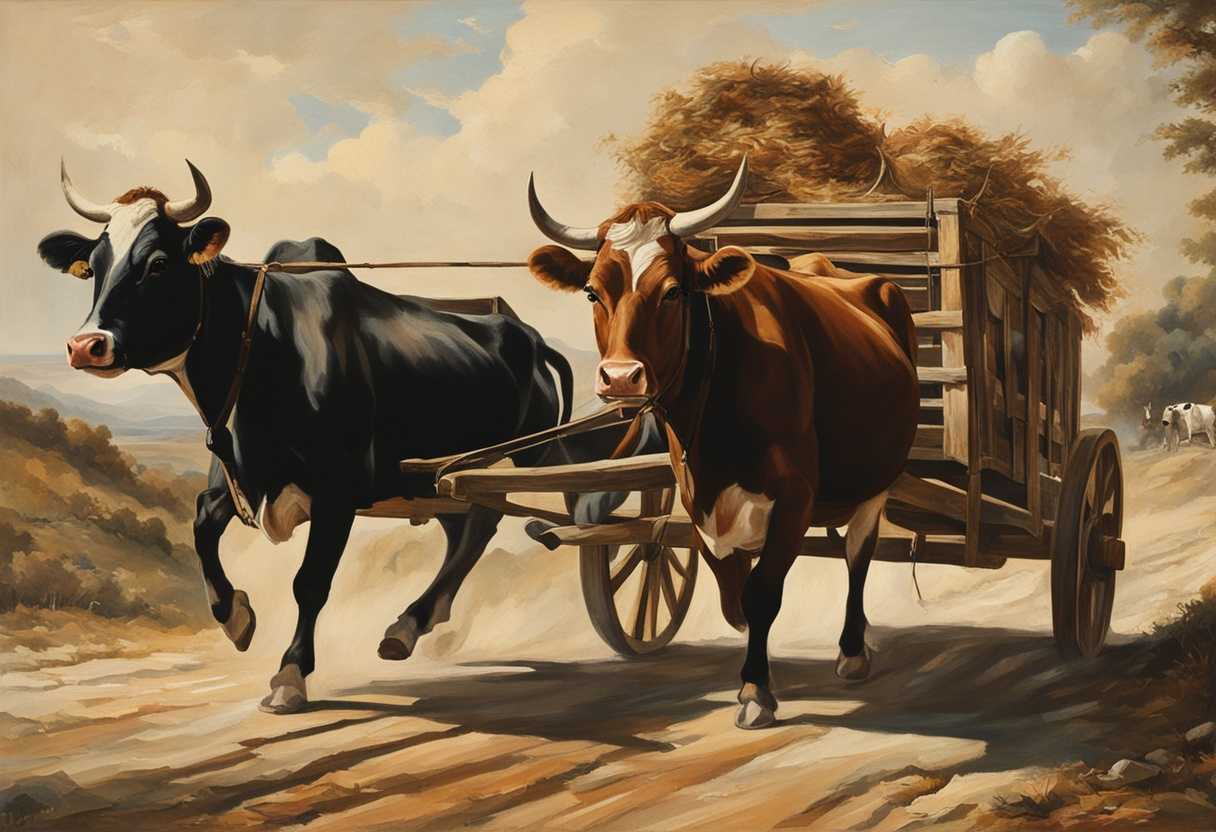
Setting the Scene for 1 Samuel 6:7-12
In 1 Samuel chapter 6, we find the Philistines facing a dilemma after capturing the Ark of the Covenant. The Philistines had taken the Ark as a spoil of war, but soon realized they were facing a series of calamities as a result. Plagues of tumors and rats afflicted the Philistine cities where the Ark was taken, prompting them to seek a resolution. The Philistine rulers and priests gathered to discuss how to handle the situation and decided to return the Ark to the Israelites along with a guilt offering.
The scene is set in a grand assembly hall within a Philistine city, with the rulers and priests convening to address the crisis at hand. The room is adorned with intricate tapestries and golden ornaments, reflecting the wealth and power of the Philistine leaders. The atmosphere is tense as they deliberate on the best course of action, knowing they must appease the God of the Israelites to end the plagues that have befallen them. The decision to return the Ark is met with a mix of fear and resignation, as they prepare the guilt offering of golden replicas of the tumors and rats that had plagued them. The Philistines set the Ark on a cart pulled by two cows, symbolizing their desire to make amends and seek favor with the God of Israel.
What is 1 Samuel 6:7-12 about?
A powerful demonstration of consequences confronts us in this verse. The Philistines had shown disrespect towards the Ark of the Covenant, a sacred symbol of God’s presence among the Israelites. This disrespectful action led to God’s judgment upon them, as their land was struck with plagues and calamities. The Philistines faced severe repercussions for their actions by disobeying and dishonoring God.
Reflecting on this verse, we are reminded of the importance of reverence and obedience towards God. It prompts us to ponder how we honor God in our own lives and how we show respect towards the things that are sacred to us. How do you uphold reverence in your actions and decisions? And how can you ensure that you honor the sacred elements in your own life, be it through faith, relationships, or values? Let this verse serve as a reminder of the profound impact that our actions can have and the significance of honoring what holds value and meaning in our lives.
Understanding what 1 Samuel 6:7-12 really means
In 1 Samuel 6:7-12, we witness a fascinating account of the Philistines grappling with the consequences of capturing the Ark of the Covenant. Their decision to return the Ark to Israel reflects a deep-seated belief in the power and significance of this sacred object. The use of a “new cart” and “two milk cows that have never been yoked” in this process symbolizes purity and untainted offering, highlighting the reverence with which the Philistines approached this act of restitution. The deliberate separation of the cows from their calves, with the expectation that they would head towards Beth-shemesh, serves as a test of divine intervention, showcasing the Philistines’ desire for a clear sign from God.
This passage resonates with broader themes found throughout the Bible, such as the construction and significance of the Ark in Exodus 25:10-22, emphasizing God’s presence among His people. The return of the Ark to Jerusalem in 2 Samuel 6:1-15 underscores the joy and reverence associated with this sacred object. Additionally, the use of unyoked cows in 1 Samuel 6:7-12 echoes the symbolism of purity seen in Numbers 19:2, drawing parallels between different biblical accounts.
Today, individuals often find themselves seeking signs from God, much like the Philistines did, as they navigate life’s challenges and uncertainties. The cows’ journey to Beth-shemesh, despite their natural instincts, serves as a powerful metaphor for the importance of faith and obedience in following God’s path, even when it contradicts our own inclinations or logic. This narrative prompts us to reflect on our own willingness to trust in God’s guidance, especially when faced with difficult decisions or unclear paths.
Consider a scenario where someone, amidst uncertainty, prays for direction and looks for signs. They receive an unexpected job offer in a different city, initially hesitant but eventually feeling a sense of peace about the decision. This anecdote mirrors the cows’ journey, illustrating the transformative power of faith and obedience in aligning ourselves with God’s will, even when it leads us down unexpected paths.
In conclusion, the story in 1 Samuel 6:7-12 reminds us of the importance of seeking divine guidance and trusting in God’s plan, even when it challenges our understanding or expectations. By contemplating this narrative, we find assurance that God is actively involved in our lives, guiding us towards His purpose with unwavering love and wisdom.
How can we honor and show reverence for God?
The Israelites recognize and honor God’s power through their actions in 1 Samuel 6:7-12. They chose to show reverence for Him by seeking the advice of the priests and offering sacrifices. This demonstration of reverence and acknowledgment of God’s authority highlights the importance of approaching Him with humility and respect.
To honor and show reverence for God, we can also follow the example set by the Israelites in this passage. We can seek guidance from spiritual leaders, engage in acts of worship and obedience, and offer our prayers and praises as a way of acknowledging God’s sovereignty. We demonstrate our belief in His power and authority over all things by choosing to honor God in our words and actions. Honoring and showing reverence for God ultimately means recognizing His greatness, submitting to His will, and giving Him the respect and worship He deserves. We honor God and strengthen our relationship with Him by living our lives in accordance with His teachings and showing gratitude for His blessings.
Application
Reflect on the lesson from 1 Samuel 6:7-12. Like the Philistines who sought guidance, let us humble ourselves before God and seek His wisdom. Do not hesitate to turn to Him for direction in your life decisions. Will you choose to obey and follow God’s commands today?

Reverend Michael Johnson is an experienced Church Minister with a profound expertise in spirituality and guidance. With a serene presence and a compassionate heart, he has faithfully served his congregation for over 20 years, leading them on a spiritual journey towards inner peace and enlightenment. Reverend Johnson’s extensive knowledge of religious philosophies and profound understanding of human nature have made him a trusted confidant and mentor to many, as he seamlessly weaves his profound wisdom into life teachings. Reverend Johnson’s calming demeanor and empathetic nature continue to uplift and heal souls, nurturing a sense of unity and tranquility within his community.