
1 Samuel 8:7-8 is about God warning the Israelites of the consequences of wanting a human king instead of trusting in Him as their ultimate ruler.
7 And the Lord said to Samuel, “Obey the voice of the people in all that they say to you, for they have not rejected you, but they have rejected me from being king over them.
8 According to all the deeds that they have done, from the day I brought them up out of Egypt even to this day, forsaking me and serving other gods, so they are also doing to you.
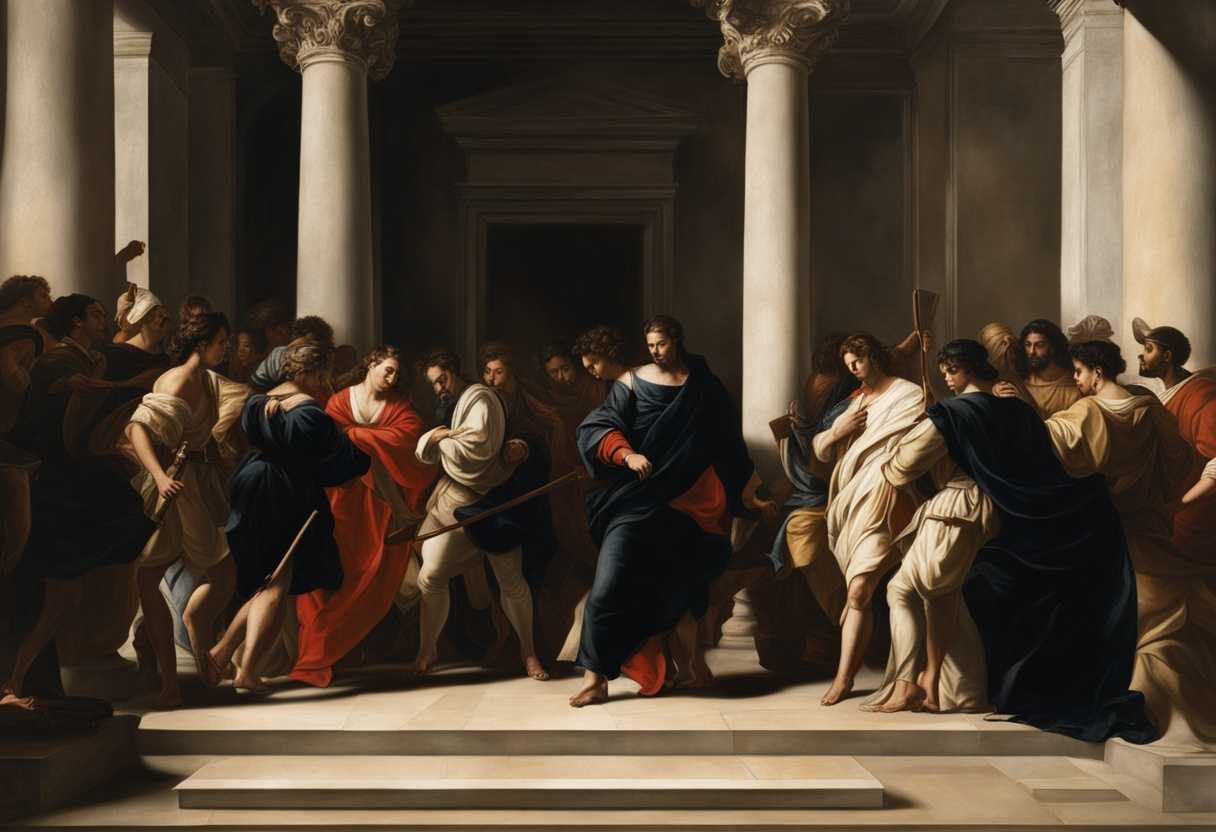
Setting the Scene for 1 Samuel 8:7-8
The scene in 1 Samuel chapter 8 unfolds in the ancient land of Israel during the time of the prophet Samuel. The people of Israel have gathered together in the town of Ramah to express their desire for a king to rule over them. Samuel, who has been serving as a judge and leader of Israel, is troubled by their request as it signifies a lack of trust in God’s sovereignty over them.
Among the crowd are prominent elders and leaders of the tribes of Israel, who have come together to make their plea for a king known to Samuel. The atmosphere is tense as Samuel listens to their demands and seeks guidance from the Lord on how to respond to their request. The setting is likely outdoors, with the people gathered in a large assembly, their voices rising in anticipation and uncertainty.
As Samuel contemplates the people’s request, he is torn between their desires and God’s plan for Israel. The scene is charged with emotion and significance as the fate of the nation hangs in the balance. The people’s call for a king reflects their desire to be like other nations around them, but Samuel knows that this decision will have far-reaching consequences for Israel’s future.
What is 1 Samuel 8:7-8 about?
God is cautioning the people of Israel in this verse about the potential consequences of desiring a human king over Him. The Israelites would be placing their trust and authority in a fallible human being instead of in God, who is all-knowing and all-powerful, by choosing a human king. This decision to prioritize a human ruler could lead to dependence on earthly power rather than divine guidance, potentially leading Israel astray from God’s intended path for them. What kind of consequences might arise if you were to choose a person to lead you instead of seeking God’s guidance and wisdom? Putting your faith in a human ruler may tempt you to prioritize their desires and agendas over God’s will, leading to spiritual and moral confusion. God’s warning serves as a reminder of the importance of seeking divine guidance and staying steadfast in faith, rather than placing our trust in fleeting earthly powers that may lead us away from God’s will.
Understanding what 1 Samuel 8:7-8 really means
In 1 Samuel 8:7-8, we witness a pivotal moment in Israel’s history where the people demand a king to rule over them, rejecting the leadership of Samuel and, ultimately, God’s direct rule. The Lord instructs Samuel to heed the people’s request but also to warn them about the consequences of having a human king. The phrase “They have not rejected you, but they have rejected me as their king” reveals the spiritual heart of the matter: the people’s desire for a human king signifies their rejection of God’s sovereignty. This rejection echoes a pattern of disobedience and ingratitude that has characterized the Israelites from their exodus from Egypt until that day.
The biblical narrative resonates with contemporary themes as we reflect on the tendency of individuals today to seek human solutions and leaders, sometimes at the expense of their faith in God’s guidance. Just as the Israelites struggled to trust in God’s leadership, we too may find ourselves leaning towards tangible, human-made solutions rather than relying on God’s invisible presence. The consequences of rejecting God’s direction, as highlighted in this passage, serve as a poignant reminder that straying from divine guidance can lead to unforeseen and often negative outcomes.
Drawing parallels from related biblical passages such as Exodus 32:1, Judges 8:23, and Hosea 13:10-11, we see a consistent theme of human frailty and the consequences of deviating from God’s plan. Gideon’s refusal of kingship in Judges 8:23 stands in stark contrast to the Israelites’ clamor for a king, emphasizing the importance of acknowledging and submitting to God’s ultimate authority. Hosea 13:10-11 further underscores God’s sorrow over Israel’s demand for a king, reinforcing the repercussions of their choice.
To illustrate the dangers of prioritizing human leadership over divine guidance, consider a community that replaces its wise and experienced founder with a new CEO. Initially, the changes brought by the new leader may seem beneficial, but over time, they lead to the organization’s decline. This scenario mirrors the Israelites’ demand for a king and serves as a cautionary tale against forsaking proven divine guidance for human leadership.
As we meditate on the implications of 1 Samuel 8:7-8, we are encouraged to reflect on areas in our lives where we may be inclined to seek human solutions instead of trusting in God’s plan. By contemplating the long-term consequences of decisions made out of impatience or a desire for control, we can realign our choices with God’s will. Through a deeper understanding of this passage and its contemporary relevance, we can learn to place our trust more fully in God’s leadership and avoid the pitfalls of relying solely on human wisdom.
Are we prioritizing God or worldly desires?
God is emphasizing the importance of prioritizing Him over worldly desires in this verse. The verse reminds us that when we choose worldly desires over God, we are essentially rejecting His guidance and authority in our lives. God wants His people to seek Him first and foremost, trusting in His wisdom and provision rather than relying on material possessions or power. We acknowledge His sovereignty and recognize that He alone can fulfill the deepest longings of our hearts by prioritizing God. When we place Him at the center of our lives, we are aligning ourselves with His will and inviting His blessings and favor to flow into every aspect of our existence. Conversely, when we chase after worldly desires, we are allowing our own selfish ambitions to take precedence over God’s perfect plan for us. The verse ultimately serves as a powerful reminder to constantly evaluate our priorities and ensure that God is at the forefront of our thoughts and actions. We demonstrate our love and devotion to God by choosing to prioritize Him above all else, and open ourselves up to the abundant blessings that come from walking in alignment with His purposes.
Application
In today’s busy world, it’s easy to get caught up in the pursuit of success at work and harmony at home. But just like managing your career or raising a family, prioritizing what’s truly important is crucial. 1 Samuel 8:7-8 reminds us that God wants to be our first priority, not just an afterthought. Think about it: Are you building your life on a foundation of fleeting achievements, or on unwavering faith? It’s time to realign your goals with God’s perfect plan. Will you make the choice to put God first and trust His guidance?

Reverend Michael Johnson is an experienced Church Minister with a profound expertise in spirituality and guidance. With a serene presence and a compassionate heart, he has faithfully served his congregation for over 20 years, leading them on a spiritual journey towards inner peace and enlightenment. Reverend Johnson’s extensive knowledge of religious philosophies and profound understanding of human nature have made him a trusted confidant and mentor to many, as he seamlessly weaves his profound wisdom into life teachings. Reverend Johnson’s calming demeanor and empathetic nature continue to uplift and heal souls, nurturing a sense of unity and tranquility within his community.