
1 Adam, Seth, Enosh;
2 Abraham was the father of Isaac, and Isaac the father of Jacob, and Jacob the father of Judah and his brothers,
3 The sons of Gomer: Ashkenaz, Riphath, and Togarmah.
4 Noah, Shem, Ham, and Japheth.
5 The sons of Japheth: Gomer, Magog, Madai, Javan, Tubal, Meshech, and Tiras.
6 The sons of Gomer: Ashkenaz, Riphath, and Togarmah.
7 The sons of Javan: Elishah, Tarshish, Kittim, and Rodanim.
8 The sons of Ham: Cush, Egypt, Put, and Canaan.
9 The sons of Cush: Seba, Havilah, Sabta, Raamah, and Sabteca. The sons of Raamah: Sheba and Dedan.
10 Cush fathered Nimrod. He was the first on earth to be a mighty man.
11 Mizraim fathered the people of Lud, Anam, Lehab, Naphtuh,
12 Ophir, Havilah, and Jobab. All these were the sons of Joktan.
13 Canaan fathered Sidon his firstborn and Heth,
14 The sons of Abraham: Isaac and Ishmael.
15 The sons of Pharaoh’s daughter: his wife’s name was Tahpenes the daughter of Anahath the daughter of Shaphan.
16 the sons of Ishmael: Nebaioth, and Kedar, Adbeel, Mibsam,
17 The sons of Shem: Elam, Asshur, Arpachshad, Lud, and Aram. And the sons of Aram: Uz, Hul, Gether, and Meshech.
18 The sons of Aram: Uz, Hul, Gether, and Mash.
19 Ezer, Dishan, and Dishan.
20 Ophir, Havilah, and Jobab; all these were the sons of Joktan.
21 Hadoram, Uzal, Diklah,
22 Ebal, Abimael, Sheba, Ophir, Havilah, and Jobab; all these were the sons of Joktan.
23 Oholibamah bore Jeush, Jalam, and Korah. These are the sons of Esau who were born to him in the land of Canaan.
24 Shem, Arpachshad, Shelah;
25 Eber, Peleg, Reu,
26 Dishan, Ezer, and Dishan.
27 Abram, that is, Abraham.
28 The sons of Abraham: Isaac and Ishmael.
29 These are their genealogies: the firstborn of Ishmael, Nebaioth, and Kedar, Adbeel, Mibsam,
30 Mishma, Dumah, Massa, Hadad, Tema,
31 Jetur, Naphish, and Kedemah. These are the sons of Ishmael.
32 The sons of Keturah, Abraham’s concubine: she bore Zimran, Jokshan, Medan, Midian, Ishbak, and Shuah. The sons of Jokshan: Sheba and Dedan.
33 The sons of Midian: Ephah, Epher, Hanoch, Abida, and Eldaah. All these were the descendants of Keturah.
34 Abraham fathered Isaac. The sons of Isaac: Esau and Israel.
35 The sons of Esau: Eliphaz, Reuel, Jeush, Jalam, and Korah.
36 The sons of Eliphaz: Teman, Omar, Zepho, Gatam, Kenaz, and of Timna, Amalek.
37 The sons of Reuel: Nahath, Zerah, Shammah, and Mizzah.
38 The sons of Seir: Lotan, Shobal, Zibeon, Anah, Dishon, Ezer, and Dishan.
39 The sons of Lotan: Hori and Hemam; and Lotan’s sister was Timna.
40 The sons of Shobal: Alian, Manahath, Ebal, Shephi, and Onam. The sons of Zibeon: Aiah and Anah.
41 The sons of Anah: Dishon. And the sons of Dishon: Hemdan, Eshban, Ithran, and Cheran.
42 The sons of Ezer: Bilhan, Zaavan, and Akan.
43 Now these are the kings who reigned in the land of Edom before any king reigned over the people of Israel: Bela the son of Beor, the name of his city being Dinhabah.
44 Bela died, and Jobab the son of Zerah of Bozrah reigned in his place.
45 Jobab died, and Husham of the land of the Temanites reigned in his place.
46 Husham died, and Hadad the son of Bedad, who defeated Midian in the country of Moab, reigned in his place, the name of his city being Avith.
47 When Hadad died, Samlah of Masrekah reigned in his place.
48 When Samlah died, Shaul of Rehoboth on the Euphrates reigned in his place.
49 When Shaul died, Baal-hanan the son of Achbor reigned in his place.
50 When Husham died, Hadad the son of Bedad, who defeated Midian in the country of Moab, reigned in his place, and the name of his city was Avith.
51 Hadad died.
52 Oholibamah bore Jeush, Jalam, and Korah. These are the sons of Esau who were born to him in the land of Canaan.
53 Magdiel, Iram.
54 Magdiel, Iram.
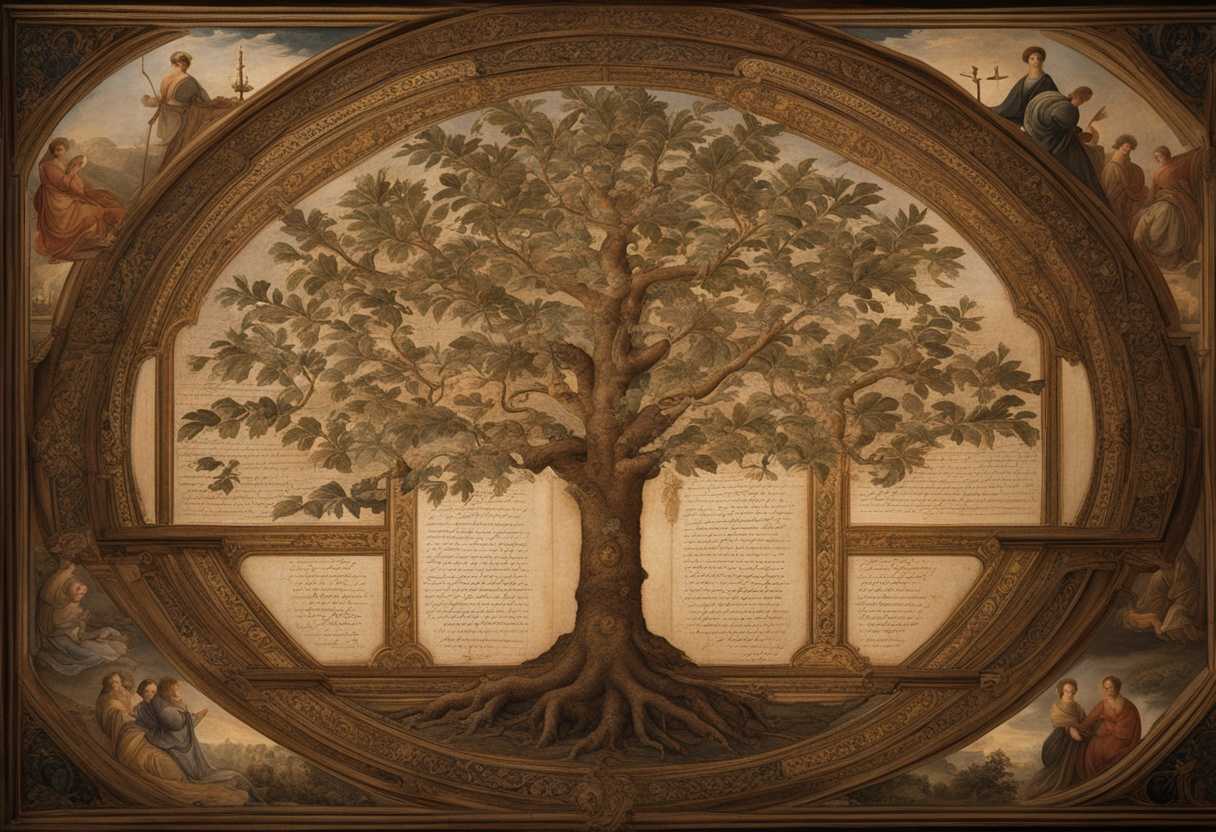
The True Meaning of 1 Chronicles 1
This passage from 1 Chronicles provides a detailed genealogy tracing the lineage of the Israelites from Adam to the sons of Jacob. The author, believed to be Ezra the scribe, compiles this extensive list to establish the historical roots of God’s chosen people.
The chapter begins by recounting the creation of the world and the first man, Adam. It then follows the descendants of Adam through the generations, highlighting key figures such as Noah, Abraham, and the twelve tribes of Israel. This genealogy serves as a foundation for understanding the broader narrative of the Bible, connecting the Israelites to their patriarchal origins.
Throughout the passage, we see the hand of God guiding the course of history, fulfilling his promises to his people. The inclusion of specific names and details underscores the importance of each individual in the grand scheme of God’s plan. As we delve into this chapter, we will gain a deeper appreciation for the rich heritage of the Israelites and the faithfulness of our Almighty Creator.
1 Chronicles 1:1-4
-
“Adam, Seth, Enosh, Kenan, Mahalalel, Jared, Enoch, Methuselah, Lamech, Noah. The sons of Noah: Shem, Ham, and Japheth.”
-
This verse in 1 Chronicles 1:1-4 serves as a genealogy, tracing the lineage from the very beginning of creation to the time of Noah and his sons. This genealogy is crucial as it outlines the ancestors of the Israelites, connecting them back to Adam, the first man created by God. It highlights the continuity of God’s plan throughout history, showing the fulfillment of His promises through generations.
Adam, as the first man, represents the beginning of humanity. His story in Genesis showcases the fall of man due to sin but also God’s grace and promise of redemption through the future Messiah. Seth was Adam and Eve’s son and the beginning of the righteous line after Abel’s death. Enosh was Seth’s son and someone who is noted for beginning the practice of calling upon the name of the Lord (Genesis 4:26), emphasizing the importance of worship and communication with God.
The mention of Noah and his sons, Shem, Ham, and Japheth, is significant as they were the survivors of the great flood. This catastrophic event, as described in Genesis 6-9, marked a new beginning for humanity and established a covenant between God and Noah, ensuring the preservation of life on earth. The division of the earth among Noah’s sons, which is elaborated later in 1 Chronicles, also lays the foundation for the nations that would come from them.
- This genealogy sets the stage for the rest of 1 Chronicles, showing how God’s sovereign plan unfolds through history and how the Israelites fit into His larger narrative. It underlines the continuity of God’s covenant and His faithfulness to His people. It also serves as a reminder of the importance of remembering one’s origins and heritage, understanding the legacy of faith passed down from generations. Just as these individuals were part of God’s plan, each person has a role in God’s greater story and should strive to live in accordance with His will.
1 Chronicles 1:5-7
The verses in 1 Chronicles 1:5-7 outline the genealogy of the sons of Japheth, who was one of Noah’s three sons, along with Shem and Ham. Japheth’s descendants are listed as Gomer, Magog, Madai, Javan, Tubal, Meshech, and Tiras. These names may seem unfamiliar to many readers, but they represent various nations and peoples that flourished after the great flood. This genealogy serves as a record of how humanity spread and diversified across the earth after the cataclysmic event of the flood, as well as setting the stage for the nations that would later interact with the people of Israel.
Digging deeper into the names mentioned, Gomer is believed to have descendants who settled in what is now modern-day Turkey. Magog is often associated with regions to the north of Israel, possibly referring to the Scythians or other northern tribes. Madai likely represents the Medes, an ancient Iranian people. Javan is commonly linked to the Greeks, Tubal and Meshech are often identified with peoples in Asia Minor, and Tiras may point to the Etruscans in Italy. Each of these names symbolizes the scattering and diversification of peoples across the known world at that time.
The inclusion of these genealogies in the Bible emphasizes the intricate tapestry of God’s creation and His divine plan for all nations. It showcases how God’s covenant with Noah after the flood, promising never to destroy the world in the same way again, was fulfilled as humanity replenished the earth. These verses also reflect the overarching theme of God’s sovereignty over all peoples and His inclusive love for the entire world, not just a particular group or nation. It sets the stage for future events where these diverse nations would interact with God’s chosen people, such as in the stories of the Assyrians, Babylonians, Persians, and Greeks as they impacted Israel throughout the Old Testament. The genealogies in the Bible serve as a reminder of the importance of roots, heritage, and lineage. They underscore the significance of knowing one’s history and how past events and decisions can shape future outcomes. Just as these genealogies were meticulously recorded in the Scriptures, we are encouraged to appreciate and learn from our own family histories and to recognize the broader context in which our lives and actions unfold. This chapter in 1 Chronicles lays a foundation for understanding the interconnectedness of all humanity and the diverse tapestry of cultures that make up God’s creation.
1 Chronicles 1:8-16
The verses in 1 Chronicles 1:8-16 list the descendants of Ham, one of Noah’s three sons. The passage begins by mentioning that Cush fathered Nimrod, who became a mighty warrior on the earth. Nimrod’s name is significant because he is often associated with the building of cities and the establishment of kingdoms. According to tradition, Nimrod was a tyrant who opposed God and endeavored to build the Tower of Babel to usurp God’s authority. This act of rebellion led to the dispersion of people into different nations and languages, as described in Genesis 11:1-9.
Continuing with the genealogy of Ham, the passage mentions that Mizraim was the father of the Ludites, Anamites, Lehabites, Naphtuhites, Pathrusites, Casluhites (from whom the Philistines came), and Caphtorites. The Philistines were known adversaries of the Israelites throughout the Old Testament, particularly during the time of the judges and kings of Israel. The conflicts and interactions between the Philistines and the Israelites serve as a backdrop to many narratives in the Bible, such as the story of Samson and Delilah, David and Goliath, and the capture of the Ark of the Covenant.
Additionally, the descendants of Canaan, another son of Ham, are enumerated in these verses. Canaan’s offspring include the Jebusites, Amorites, Girgashites, Hivites, Arkites, Sinites, Arvadites, Zemarites, and Hamathites. The Canaanites were the inhabitants of the promised land before the Israelites, and the conquest of Canaan is a central theme in the book of Joshua. Their presence in the land was seen as a challenge to the sovereignty of God over His chosen people, and the Israelites were commanded to drive out the Canaanite nations to establish the land promised to them. The genealogy provided in these verses serves to trace the lineage of various nations and tribes that played significant roles in the history of Israel. It highlights the interconnectedness of these peoples and their interactions with the nation of Israel throughout the Old Testament. The narrative underscores themes of obedience to God’s commands, the consequences of rebellion and sin, the fulfillment of divine promises, and the overarching sovereignty of God over the affairs of humanity. It also sets the stage for the unfolding of God’s redemptive plan through the history of Israel and ultimately culminating in the coming of Jesus Christ as the Savior of the world.
1 Chronicles 1:17-23
The verses in 1 Chronicles 1:17-23 provide a genealogy tracing the descendants of Shem, one of Noah’s sons. It begins with Shem’s offspring listed, including Elam, Asshur, Arphaxad, Lud, and Aram. This genealogy is significant as it links back to the line of Noah and underscores the continuity of God’s covenant throughout generations. Shem is particularly important in biblical history as his line leads to Abraham, the patriarch of the Israelites. It is through Abraham that God made a covenant, promising to make him a great nation, which eventually leads to the birth of Jesus Christ.
The mention of Arphaxad is crucial as he is the father of Shelah, who in turn is the father of Eber. Eber is notable because his name means “beyond” or “the region beyond,” which is where the term Hebrew is derived. Eber is an ancestor of Abraham and the Hebrew people, highlighting the connection between the genealogy in 1 Chronicles and the later events in the Bible.
The genealogy continues with the descendants of Joktan, another son of Eber. Joktan’s lineage includes Almodad, Sheleph, Hazarmaveth, Jerah, Hadoram, Uzal, Diklah, Obal, Abimael, Sheba, Ophir, Havilah, and Jobab. While these names may seem like just a list of ancestors, they contribute to the larger narrative of God’s faithfulness and the fulfillment of His promises. The mention of Ophir is interesting because it is associated with a land known for its wealth in gold and other precious resources, which plays a role in later biblical narratives such as Solomon’s reign (1 Kings 10:22). The genealogy presented in these verses serves to establish a historical and spiritual connection between the ancient patriarchs and the Israelites. It emphasizes the lineage through which God’s plan for salvation unfolds, ultimately leading to the birth of Jesus Christ. It reminds readers of the importance of ancestry, heritage, and the faithfulness of God in fulfilling His promises through generations.
1 Chronicles 1:24-27
1 Chronicles 1:24-27 focuses on the genealogy of Nahor, the brother of Abraham. It reads, “Shem, Arphaxad, Shelah, Eber, Peleg, Reu, Serug, Nahor, Terah, and Abram (that is, Abraham).” This lineage traces back to Shem, one of the sons of Noah, and culminates with the mention of Abraham, who is a pivotal figure in the history of Israel.
Shem, as one of Noah’s sons, played a significant role in the post-flood world. He was blessed by Noah, and his descendants would ultimately lead to the line of Abraham, who would become the father of many nations and a key figure in the development of God’s chosen people. The mention of Shem in this genealogy serves as a reminder of God’s covenant and promises to His people, emphasizing the importance of lineage and heritage in the biblical narrative.
Nahor, the brother of Abraham, is also mentioned in this lineage. While not as prominent as Abraham, Nahor still played a part in the unfolding story of God’s people. His descendants would go on to be important figures in the history of Israel, and his inclusion in this genealogy highlights the interconnectedness of the various family lines in the Bible.
Abraham’s name being listed at the end of this genealogy is significant because it ties this lineage back to the patriarch who was called by God to leave his homeland and journey to a new land that God would show him. Abraham’s story is one of faith, obedience, and ultimately, blessing. Through him, God established a covenant that would be fulfilled through his descendants, ultimately leading to the birth of Jesus Christ, the Savior of the world.
This genealogy in 1 Chronicles 1:24-27 not only serves to establish the lineage of Abraham but also to reinforce the historical continuity of God’s plan throughout the Old Testament. It shows the importance of family ties, faithfulness to God’s promises, and the ultimate fulfillment of those promises through the generations. It connects the past with the present and points forward to the future, demonstrating God’s faithfulness and sovereignty over the course of history. Other passages in the Bible that trace the lineage of Jesus Christ back to Abraham include Matthew 1:1-17 and Luke 3:23-38. These genealogies further emphasize the importance of understanding and tracing the ancestral lines of key figures in the Bible to appreciate the interconnectedness and divine plan that unfolds throughout the biblical narrative.
1 Chronicles 1:28-31
The passage in 1 Chronicles 1:28-31 traces the descendants of Abraham through his sons, Isaac and Ishmael. The verse reads, “The sons of Abraham: Isaac and Ishmael. These are their genealogies: the firstborn of Ishmael, Nebaioth, and Kedar, Adbeel, Mibsam, Mishma, Dumah, Massa, Hadad, Tema, Jetur, Naphish, and Kedemah. These are the sons of Ishmael.”
This section is significant as it highlights the fulfillment of God’s promise to Abraham of becoming the father of many nations. Through Isaac and Ishmael, we see the foundations of two great nations being laid. Isaac is portrayed as the promised child through whom God’s covenant will continue, leading eventually to the birth of Jacob, who becomes Israel, the father of the twelve tribes. On the other hand, Ishmael, as the son of Hagar, represents a different lineage. These verses not only serve as a historical record of lineage but also underscore the diverse paths through which God’s plan unfolds.
The mention of Ishmael’s descendants is crucial in understanding the wider context of biblical history. Ishmael was born of Abraham and Hagar, Sarah’s maidservant, when Sarah was unable to conceive. Despite not being the child of the covenant promise, Ishmael was still blessed by God and became the father of twelve princes. Their names signify various tribes and regions, reflecting the vastness and diversity of Ishmael’s descendants. This inclusivity is a reminder of God’s providence extending to all His creation, regardless of their origins.
The lineage of Ishmael is also significant in the broader biblical narrative as it foreshadows the division between the Israelites and the Ishmaelites, who would become known as the Arab nations. This division and subsequent interactions between the two groups are evident throughout the Old Testament and have ongoing implications in the region even today. Understanding these familial relationships helps to grasp the complexities of the relationships between different nations and peoples in the biblical narrative and the modern world. God’s faithfulness in fulfilling His promises is testified by the genealogy presented in these verses. Despite human shortcomings, such as Abraham’s attempt to fulfill God’s promise through Ishmael, God’s plan prevails. This theme of God’s sovereignty and faithfulness resonates throughout the Bible, reinforcing the idea that God’s purposes will always come to fruition, even if through unexpected or unconventional means. It’s a reminder that God works through imperfect human vessels to accomplish His perfect will, showcasing His grace and mercy towards all of humanity.
1 Chronicles 1:32-33
Verse 32 of 1 Chronicles 1 reads, “The sons born to Keturah, Abraham’s concubine: Zimran, Jokshan, Medan, Midian, Ishbak, and Shuah. The sons of Jokshan: Sheba and Dedan.” This section of the verse sheds light on Abraham’s lineage through his concubine Keturah. Abraham, known as the father of many nations in the Bible, had several sons aside from Isaac, the son of promise. These sons mentioned here were born after Sarah’s death, and although they were not part of the promised lineage through Isaac, they are still significant in the history of God’s people.
The mention of Medan and Midian is notable as they would later become ancestors of significant tribes. Midian, in particular, plays a role in the story of Moses. It was in Midian that Moses fled after killing an Egyptian, and it was there that he met his wife Zipporah, the daughter of Jethro, a priest of Midian. This encounter ultimately led to Moses’ call by God to lead the Israelites out of Egypt, showing how God weaves together the stories of His people across generations.
Moving on to verse 33 which focuses on Jokshan’s sons, it mentions Sheba and Dedan. Sheba is remembered in the Bible not only as a descendent of Abraham but also as a region associated with wealth and wisdom. The Queen of Sheba, known for her visit to King Solomon, is one of the most well-known figures linked to this region. Her journey to visit Solomon is recorded in the books of 1 Kings and 2 Chronicles, showcasing her desire for wisdom and her acknowledgment of God’s blessings upon Solomon.
Through these genealogical records, we see how God’s plan unfolds through various generations and bloodlines. Even those who may seem on the periphery of the central narrative, like the sons of Keturah, still play a role in God’s grand design. This highlights the intricate ways in which God works through history, using ordinary individuals to accomplish His extraordinary purposes. It also underscores the importance of recognizing and honoring even the lesser-known figures in God’s story, for each person has a part to play in the overarching narrative of redemption and salvation.
1 Chronicles 1:34
Abraham became the father of Isaac in 1 Chronicles 1:34. The sons of Isaac: Esau and Israel.” This verse holds significant importance in tracing the lineage of Abraham and Isaac, who are key figures in the history of Christianity and Judaism. Abraham, known as the father of faith, was a central figure in the Old Testament. He was promised by God to be the father of a great nation, and through his son Isaac, this promise began to unfold.
Isaac, the son of Abraham and Sarah, was the child of promise. His birth was a miracle as Sarah was barren and well beyond childbearing age. Through Isaac, the covenant that God established with Abraham was passed down, signifying the covenantal relationship between God and His people. The mention of Esau and Israel (Jacob) as the sons of Isaac is significant in understanding the history of Israel. Esau, the elder twin, sold his birthright to Jacob for a bowl of stew, showing his disregard for his birthright and the blessings that came with it. Jacob, who later became known as Israel, received the blessings and the covenant from Isaac.
This family lineage is crucial in the Bible because it sets the stage for the development of the nation of Israel, its tribes, and ultimately, the fulfillment of God’s promise to Abraham. Through the line of Abraham, Isaac, and Jacob, the nation of Israel was established as God’s chosen people. It is through these family lines that we see the fulfillment of God’s promises and His faithfulness throughout generations.
The mention of Abraham, Isaac, Esau, and Israel in this verse serves as a reminder of the faithfulness of God to His promises and His ability to work through imperfect human beings to accomplish His divine plans. It also highlights the importance of family lineage in the context of biblical history and the significance of generational blessings and promises. This verse not only connects the past to the present but also points towards the future fulfillment of God’s ultimate plan through the lineage of Abraham, Isaac, and Jacob.
1 Chronicles 1:35-37
The verses in 1 Chronicles 1:35-37 mention an individual named Esau, the firstborn son of Isaac and Rebekah. Esau was the older twin brother of Jacob and played a significant role in biblical history. These verses serve as a brief summary of Esau’s descendants and their genealogy.
Esau is a vital figure in the Bible due to the conflict and rivalry he had with his brother Jacob. It is well known that Esau sold his birthright to Jacob for a bowl of stew, showing his disregard for his birthright as the firstborn son (Genesis 25:29-34). Later, Jacob, with his mother’s help, deceived his father Isaac and received Esau’s blessing as the firstborn (Genesis 27). This deceit led to Esau’s deep anger and resentment towards Jacob, causing Jacob to flee for his life. This event highlights themes of sibling rivalry, consequences of deception, and God’s sovereignty in fulfilling His plans through imperfect human actions.
The verses in 1 Chronicles serve as a reminder of the consequences of Esau’s choices and the continuation of his lineage despite his lost birthright and blessing. The mentioning of Esau’s descendants in these verses emphasizes the importance of understanding the implications of our decisions and how they can impact future generations. It also reflects God’s faithfulness to His promises, as He had also promised to make a great nation of Esau (Genesis 27:39-40).
For readers, these verses in 1 Chronicles serve as a connection to the broader narrative of the Bible, illustrating how the actions of individuals like Esau have bearing on the overarching story of God’s people. It prompts reflection on themes of forgiveness, redemption, and the sovereignty of God in using even flawed individuals to bring about His plans. The story of Esau and his descendants ultimately underscores the timeless message of God’s faithfulness and the complex interplay of human decisions within His divine purposes.
1 Chronicles 1:38-42
-
“The sons of Seir: Lotan, Shobal, Zibeon, Anah, Dishon, Ezer, and Dishan. The sons of Lotan: Hori and Homam; and Timna was Lotan’s sister. The sons of Shobal: Alvan, Manahath, Ebal, Shepho, and Onam. The sons of Zibeon: Aiah and Anah. The son of Anah: Dishon. The sons of Dishon: Hemdan, Eshban, Ithran, and Cheran. The sons of Ezer: Bilhan, Zaavan, and Akan. The sons of Dishan: Uz and Aran.”
-
These verses from 1 Chronicles 1 delve into the genealogy of the descendants of Seir. Seir was the Horite, whose descendants lived in the region later inhabited by the Edomites. This genealogy is crucial in establishing the lineage of various peoples and illustrating the interconnectedness of different families. The careful documentation of genealogies in the Bible serves to emphasize the continuity and lineage of God’s people.
Among the descendants of Seir mentioned are Lotan, Shobal, Zibeon, Anah, Dishon, Ezer, and Dishan. Each of these names represents a branch of the family tree, with their own descendants listed. This meticulous detailing reflects the importance placed on lineage and ancestry in ancient times. It was essential for the Israelites to trace their roots back to their patriarchs to maintain a sense of identity and heritage.
Timna, mentioned as Lotan’s sister, is notable as she later becomes the concubine of Eliphaz, the son of Esau (Genesis 36:12). This union resulted in the birth of Amalek, who went on to become a significant figure in Israel’s history, as the Amalekites were longtime adversaries of the Israelites (Exodus 17:8-16).
The interconnectedness of these genealogies also serves as a reminder of God’s sovereignty over all nations and peoples. Even seemingly insignificant names in these lists play a part in the grand narrative of God’s plan for humanity. It reinforces the idea that every individual, no matter how obscure, has a role in the unfolding of God’s divine purposes.
Furthermore, the inclusion of genealogies in the Bible emphasizes the importance of heritage and lineage in the understanding of biblical history. It provides a foundation for tracing the lineage of Jesus in the New Testament, fulfilling prophecies and establishing Jesus’ qualifications as the Messiah descended from the line of David (Matthew 1:1-17). A deeper significance of lineage, heritage, and the intricate tapestry of God’s plan for His people lies within these verses that might seem like a list of names. It reminds us that our lives are part of a broader narrative orchestrated by God, and even the smallest details are essential in fulfilling His purposes.
1 Chronicles 1:43-50
The genealogy of the Edomites, who are descendants of Esau, the brother of Jacob, is seen in 1 Chronicles 1:43-50. This genealogy spans from Esau to various chiefs and kings who reigned in Edom. This section of the genealogy highlights the lineage of Esau, the older twin brother of Jacob, and the consequences of his choices.
Esau, also known as Edom, famously sold his birthright to his younger brother Jacob for a bowl of lentil stew (Genesis 25:29-34). This impulsive act had profound consequences for him and his descendants. The lineage of the Edomites is symbolic of worldly desires and shortsightedness, contrasting with the inheritance of the chosen people of God through Jacob’s line.
The Edomites settled in the region of Seir after Esau and his descendants were driven out of Canaan by Jacob and his family. The Edomites were often in conflict with the Israelites throughout the Old Testament, serving as a reminder of the consequences of choosing worldly gain over spiritual blessings.
This genealogy serves as a reminder of the importance of faithfulness and the consequences of our choices. The Edomites, despite being descendants of Isaac, did not inherit the promises and blessings of God as the Israelites did. It illustrates the biblical theme of God’s faithfulness to His chosen people and the repercussions of straying from His path. The book of Romans in the New Testament references the struggle between Esau and Jacob, speaking about God’s sovereignty in choosing Jacob over Esau before they were even born (Romans 9:10-13). This further emphasizes the importance of God’s divine plan and the significance of following His will rather than yielding to temporal desires. This genealogy of the Edomites in 1 Chronicles 1 serves as a reminder of the enduring consequences of our choices, the faithfulness of God to His promises, and the importance of seeking spiritual blessings above worldly gain. It offers a cautionary tale about the dangers of prioritizing material wealth over the eternal inheritance offered by God.
1 Chronicles 1:51-54
Hadad also died in 1 Chronicles 1:51-54. And the chiefs of Edom were: Chiefs Timna, Aliah, Jetheth, Oholibamah, Elah, Pinon, Kenaz, Teman, Mibzar, Magdiel, and Iram. These were the chiefs of Edom.” At first glance, these verses may seem like a simple list of names, but each name holds significance in tracing the lineage and history of Edom.
Hadad mentioned in verse 51 was a name that appears multiple times in the Bible, often referring to different individuals. One prominent Hadad was a royal prince of Edom who fled to Egypt during King David’s reign, seeking refuge after Joab, David’s commander, had killed every male in Edom. This event is recorded in 1 Kings 11:14-22, reflecting the historical and political tensions between Israel and Edom.
The list of chiefs in Edom provided in verse 52 gives insight into the leadership structure of the Edomite people. These chiefs were influential figures who held power and authority within their community. Their names were not merely mentioned for record-keeping but to acknowledge their significance in the history of Edom.
Among the names listed, Teman stands out as a notable figure in Edomite history. Teman was not only the name of a chief but also a region in Edom known for its wisdom and wise men. Jeremiah mentions Teman in connection with wisdom and understanding in the book (Jeremiah 49:7). This highlights the reputation of the region and its people for possessing knowledge and insight.
The mention of these chiefdoms and their leaders serves to establish the historical context of Edom, a nation often in conflict with Israel. The rivalry between Edom and Israel can be traced back to the descendants of Esau (Edom) and Jacob (Israel), whose animosity is reflected throughout the Bible. This animosity symbolizes the struggle between fleshly desires and spiritual values, as Esau represents the fleshly desires and Jacob the spiritual inheritance. Seemingly genealogical lists and historical accounts in the Bible reveal valuable lessons about human nature, the consequences of choices, and God’s faithfulness throughout generations. The mention of these chiefs of Edom reminds us of the intricate tapestry of relationships, conflicts, and ultimately, the redemptive plan of God unfolding through history, connecting individuals and nations to His sovereign purposes.
After 1 Chronicles 1
The chapter concluded with the genealogies of the descendants of Noah. It traced the lineage from Shem, Ham, and Japheth, the sons of Noah, down to the nations that emerged from them. This provided a comprehensive overview of the origins of the various peoples that inhabited the known world at the time. The narrative will shift its focus to the specific lineage of the Israelites as we move forward. This will be a crucial part of the story, as it lays the foundation for understanding the chosen people of God and their role in the unfolding of His divine plan. The next chapter will reveal the intricate tapestry of the Israelites’ heritage and the significance it holds for the rest of the biblical narrative by delving deeper into their ancestry.

Reverend Michael Johnson is an experienced Church Minister with a profound expertise in spirituality and guidance. With a serene presence and a compassionate heart, he has faithfully served his congregation for over 20 years, leading them on a spiritual journey towards inner peace and enlightenment. Reverend Johnson’s extensive knowledge of religious philosophies and profound understanding of human nature have made him a trusted confidant and mentor to many, as he seamlessly weaves his profound wisdom into life teachings. Reverend Johnson’s calming demeanor and empathetic nature continue to uplift and heal souls, nurturing a sense of unity and tranquility within his community.