
1 Now Ahab had seventy sons in Samaria. So Jehu wrote letters and sent them to Samaria, to the rulers of the city, to the elders, and to the guardians of the sons of Ahab, saying,
2 “Now, when this letter comes to you, seeing your master’s sons are with you, and there are with you chariots and horses, a fortified city also, and weapons,”
3 So take the heads of your master’s sons and come to me at Jezreel tomorrow about this time.” Now the king’s sons, seventy persons, were with the great men of the city, who were bringing them up.
4 But they were exceedingly afraid and said, “Behold, the two kings could not stand before him. How then can we stand?”
5 So he who was over the palace, and he who was over the city, together with the elders and the guardians, sent to Jehu, saying, “We are your servants, and we will do all that you tell us. We will not make anyone king. Do whatever is good in your eyes.”
6 Then he wrote to them a second letter, saying, “If you are on my side, and if you are ready to obey me, take the heads of your master’s sons and come to me at Jezreel tomorrow at this time.” Now the king’s sons, seventy persons, were with the great men of the city, who were bringing them up.
7 And when the letter came to them, they took the king’s sons and slaughtered them, seventy persons, and put their heads in baskets and sent them to him at Jezreel.
8 And the messenger came and told him, “They have brought the heads of the king’s sons.” And he said, “Lay them in two heaps at the entrance of the gate until the morning.”
9 And in the morning, when the sacrifice was offered, Jehu commanded all the people, “You are righteous. Behold, I conspired against my master and killed him, but who struck down all these?
10 Know then that there shall fall to the earth nothing of the word of the Lord, which the Lord spoke concerning the house of Ahab, for the Lord has done what he said by his servant Elijah.
11 So Jehu struck down all who remained of the house of Ahab in Jezreel, all his great men and his close friends and his priests, until he left him none remaining.
12 Then he set out and went to Samaria. On the way, when he was at Beth-eked of the Shepherds,
13 Jehu met the relatives of Ahaziah king of Judah, and he said, “Who are you?” And they answered, “We are the relatives of Ahaziah, and we came down to visit the royal princes and the sons of the queen mother.”
14 And he said, “Take them alive.” And they took them alive, and slaughtered them at the pit of Beth-eked, forty-two persons, and he spared none of them.
15 And when he departed from there, he met Jehonadab the son of Rechab coming to meet him. And he greeted him and said to him, “Is your heart true to my heart as mine is to yours?” And Jehonadab answered, “It is.” Jehu said, “If it is, give me your hand.” So he gave him his hand. And Jehu took him up with him into the chariot.
16 And he said, “Come with me, and see my zeal for the Lord.” So he had him ride in his chariot.
17 And when he came to Samaria, he struck down all who remained to Ahab in Samaria, till he had wiped them out, according to the word of the Lord that he spoke to Elijah.
18 Then Jehu assembled all the people and said to them, “Ahab served Baal a little, but Jehu will serve him much.
19 Now therefore call to me all the prophets of Baal, all his worshipers, and all his priests. Let none be missing, for I have a great sacrifice to offer to Baal. Whoever is missing shall not live.” But Jehu did it with cunning in order to destroy the worshipers of Baal.
20 And Jehu said, “Sanctify a solemn assembly for Baal.” So they proclaimed it.
21 And Jehu sent throughout all Israel, and all the worshipers of Baal came, so that there was not a man left who did not come. And they entered the house of Baal, and the house of Baal was filled from one end to the other.
22 He said to him who was in charge of the wardrobe, “Bring out the vestments for all the worshipers of Baal.” So he brought out the vestments for them.
23 Then Jehu went into the house of Baal with Jehonadab the son of Rechab, and he said to the worshipers of Baal, “Search, and see that there is no servant of the Lord here among you, but only the worshipers of Baal.”
24 Then they went in to offer sacrifices and burnt offerings. Now Jehu had stationed eighty men outside and said, “The man who allows any of those whom I give into your hands to escape shall forfeit his life.”
25 So as soon as he had made an end of offering the burnt offering, Jehu said to the guard and to the officers, “Go in and strike them down; let not a man escape.” So when they put them to the sword, the guard and the officers cast them out and went into the inner room of the house of Baal.
26 And they brought out the pillar that was in the house of Baal, and burned it.
27 They demolished the pillar of Baal, and demolished the house of Baal, and made it a latrine to this day.
28 Thus Jehu wiped out Baal from Israel.
29 But Jehu did not turn aside from the sins of Jeroboam the son of Nebat, which he made Israel to sin—that is, the golden calves that were in Bethel and in Dan.
30 And the Lord said to Jehu, “Because you have done well in carrying out what is right in my eyes, and have done to the house of Ahab according to all that was in my heart, your sons of the fourth generation shall sit on the throne of Israel.”
31 But Jehu was not careful to walk in the law of the Lord, the God of Israel, with all his heart. He did not turn from the sins of Jeroboam, which he made Israel to sin.
32 In those days the Lord began to cut off parts of Israel.
33 from the Jordan eastward, all the land of Gilead, the Gadites, and the Reubenites, and the Manassites, from Aroer, which is by the Valley of the Arnon, that is, Gilead and Bashan.
34 Now the rest of the acts of Jehu and all that he did, and all his might, are they not written in the Book of the Chronicles of the Kings of Israel?
35 In those days the Lord began to cut off parts of Israel.
36 and the time that Jehu reigned over Israel in Samaria was twenty-eight years.
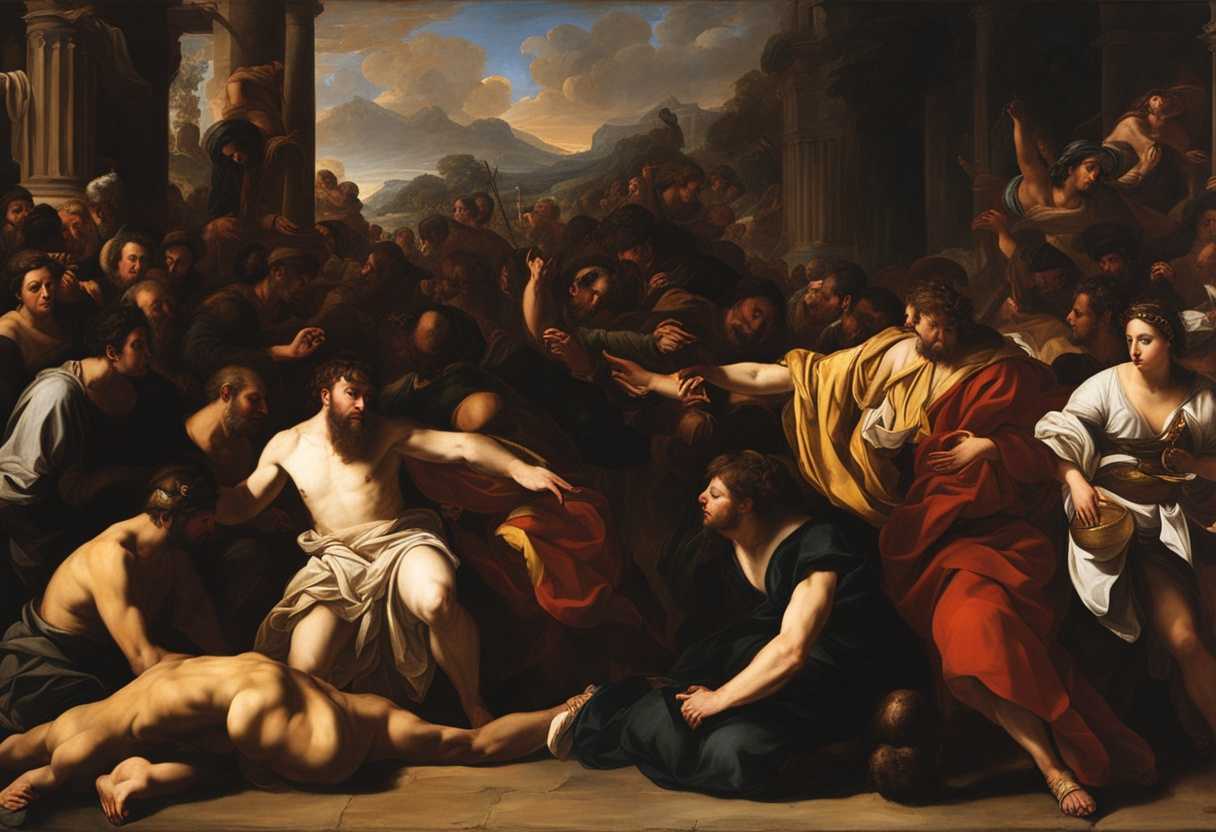
The True Meaning of 2 Kings 10
The Book of 2 Kings was written by an anonymous author, likely a prophet or scribe, who chronicled the history of the Kingdom of Israel and Judah after the reign of King David. This particular chapter details the continuation of the downfall of the House of Ahab and the rise of Jehu as the new king of Israel. Jehu carried out a brutal purge in this passage to eliminate the remaining followers of Baal and the House of Ahab. The chapter opens with Jehu’s ruthless execution of Ahaziah, the king of Judah, and the forty-two princes who accompanied him. This sets the stage for the dramatic events that unfold, as Jehu’s zeal for reform and his desire to consolidate power lead him to take drastic measures.
The chapter also highlights the importance of obedience to God’s commands, as seen in Jehu’s adherence to the divine instructions given to him through the prophet Elijah (1 Kings 19:16-17). This theme of divine judgment and the consequences of disobedience is a recurring motif throughout the Book of Kings, echoing the warnings found in Deuteronomy 28 and the prophetic messages of figures like Elijah and Elisha.
2 Kings 10:1-5
Jehu, who had been anointed by Elisha as king of Israel, sends letters to the officials and elders of Samaria summoning them to gather and witness his zeal for the Lord in 2 Kings 10:1-5. Jehu falsely claimed that he was going to serve Baal with a great sacrifice but actually intended to destroy all the worshipers of Baal. This deception was a strategic move by Jehu to eliminate any opposition or potential betrayal from those who remained loyal to the worship of Baal.
This passage highlights the complex nature of Jehu’s character and actions. While he presented himself as a zealous servant of the Lord, his methods, including using deceit and violence, raise ethical questions about the means justifying the end. Jehu’s zeal for the Lord led him to execute a ruthless purge of Baal worshipers, even though his zeal was accompanied by deceit and violence.
This story shows the dangers of religious zeal when mixed with human ambition and a lack of adherence to ethical principles. While it is important to be fervent in one’s faith, the Bible warns against using deceit and violence in the name of religious righteousness. Jehu’s actions may have been part of God’s judgment on the house of Ahab and the eradication of Baal worship, but the means he employed reflect the complexities of human nature and the potential for corruption even in the pursuit of what one believes to be righteous.
This account of Jehu’s actions also ties back to the prophecy given to Ahab and Jezebel regarding their descendants and the punishment for their sins. Throughout the Bible, there are instances where individuals are chosen by God to carry out specific tasks or judgments, but the moral implications of their actions are not always clear-cut. The story of Jehu serves as a reminder that obedience to God’s commands should be coupled with integrity and righteousness in all aspects of life, including the methods used to achieve God’s purposes. We can see parallels with other figures who were called to execute God’s judgments when considering Jehu’s story in the broader context of the Bible. For example, in the book of Joshua, the Israelites were instructed to utterly destroy the inhabitants of Canaan as part of God’s judgment on their idolatry and sin. The methods used in these instances may be difficult to comprehend from a human perspective, but they serve as reminders of God’s sovereignty and the consequences of disobedience to His commands.
2 Kings 10:6-11
Jehu orchestrates a gruesome incident in 2 Kings 10:6-11 as part of his mission to destroy the house of Ahab, the newly anointed king of Israel. Ahab and his descendants had led Israel into idolatry and wickedness, and God had pronounced judgment on them through the prophet Elijah. Jehu, who was chosen by God to execute this judgment, was ruthless in his pursuit to eliminate the wicked lineage of Ahab. Jehu sends letters to the rulers and officials of Samaria in this passage, instructing them to select the best and most worthy of Ahab’s seventy sons to set him on his father’s throne and prepare to fight to defend him. However, this was all a trap set by Jehu to lure these men into a trap. Once the sons of Ahab were gathered in one place and the appointed guards were there to protect them, Jehu ordered their execution. Not only did he kill all seventy sons of Ahab, but he also sought out all who were associated with the house of Ahab, as well as the priests and supporters of Baal.
This horrific violence may be unsettling to read, but it serves as a stark reminder of God’s justice and the consequences of disobedience. The house of Ahab had brought great evil upon the land, leading the people of Israel astray with their worship of Baal and rejection of the true God. The eradication of this family was a fulfillment of God’s prophetic word and a purging of the evil that had plagued Israel.
Jehu’s actions, while violent, were carried out according to God’s will. However, it is essential to note that Jehu’s obedience to God was not without fault. Although he eliminated the house of Ahab as instructed, he did not remove the golden calves at Bethel and Dan, which became a stumbling block for the people of Israel, leading them into sin (2 Kings 10:29-31). This highlights the importance of complete obedience to God’s commands and the dangers of selective obedience.
The events in 2 Kings 10:6-11 also demonstrate the complexities of human nature and the mix of divine judgment and human agency. While Jehu was chosen by God to carry out this task, his methods and motivations were not always pure. Jehu’s zealousness in executing judgment on the house of Ahab should serve as a sobering reminder of the importance of discerning God’s will correctly and following it completely. It is a cautionary tale of the dangers of self-righteousness and partial obedience. When studying this passage, consider the broader themes of justice, obedience, and the consequences of sin present throughout the Bible. The story of Jehu and the destruction of the house of Ahab serves as a reminder that God’s justice will prevail, and those who persist in rebellion against Him will ultimately face the consequences of their actions. It also underscores the importance of heeding God’s word completely and faithfully, without compromise or selective obedience.
2 Kings 10:12-14
He set out and went to Samaria in 2 Kings 10:12-14. On the way, when he was at Beth-eked of the Shepherds, Jehu met the relatives of Ahaziah king of Judah and said, ‘Who are you?’ And they answered, ‘We are the relatives of Ahaziah, and we came down to visit the royal princes and the sons of the queen mother.’ He said, ‘Take them alive!’ And they took them alive, and slaughtered them at the pit of Beth-eked, forty-two persons; he spared none of them. Jehu, who had been anointed king by God to destroy the house of Ahab, encounters the relatives of Ahaziah, the king of Judah in this section. Ahaziah was part of the wicked lineage of Ahab and Jezebel, who were notorious for leading Israel into idolatry and immorality. Jehu asked, “Who are you?”” he is not seeking their identity but rather their allegiance. They aligned themselves with the sinful lineage of Ahab by identifying themselves as relatives of Ahaziah, making them targets for Jehu’s wrath.
Jehu’s command to take them alive and then ultimately slaughtering them signifies his ruthless nature and his determination to eradicate all remnants of Ahab’s family. This brutal act was seen as part of God’s judgment on the house of Ahab, fulfilling the prophecy given to Elijah. The number forty-two represents completeness and the execution of divine justice.
This passage serves as a sobering reminder of the consequences of disobedience and the faithfulness of God’s word. The fall of Ahab’s house illustrates the principle of reaping what one sows, emphasizing the importance of living in obedience to God’s commandments. Additionally, it highlights the themes of justice and judgment found throughout the Bible. God’s righteous judgment will ultimately prevail, as seen in other parts of Scripture, such as in the story of the Israelites’ conquest of Canaan or the destruction of Sodom and Gomorrah. Jehu’s actions, though harsh, were carried out according to God’s will in purging Israel of idolatry and wickedness.
2 Kings 10:15-17
Jehu gathers all the people together and makes a bold declaration in 2 Kings 10:15-17. Jehu calls for the support of all the people who were with him in his mission to rid Israel of the worship of Baal. This event comes after Jehu has just executed all of Ahab’s descendants, Jezebel, and the priests of Baal. He is now solidifying his position and seeking the backing of the people to ensure he can maintain power.
Jehu uses this moment to emphasize his own zeal for the worship of Yahweh over the worship of Baal. He cleverly manipulates the situation by presenting himself as a devoted servant of Yahweh, despite his known reputation for his methods which were often brutal and violent. Jehu consolidates his power and maintains control over the kingdom of Israel by using the guise of religious zeal.
This passage raises important questions about the nature of power, religious manipulation, and the complex intersection of politics and religion. It serves as a cautionary tale about how power can corrupt, and how individuals may use religion for their own agendas. Jehu’s actions remind us that outward displays of religious devotion are not always indicative of true piety, but can sometimes be used as a tool for personal gain or control.
Throughout the Bible, we see various examples of leaders who have used religion to manipulate people and maintain power. King Solomon, for example, started out with great wisdom and reverence for God, but his later years were marked by idolatry and a turning away from the Lord (1 Kings 11:4-10). The story of Jehu serves as a reminder of the importance of staying true to one’s faith and not allowing power or ambition to corrupt one’s relationship with God. Jehu’s reign as king of Israel was ultimately marked by bloodshed and violence, and although he did rid the kingdom of Baal worship, his methods were extreme. This passage challenges readers to reflect on the complexities of leadership, faith, and the moral dilemmas that arise when power and religion intersect. It serves as a reminder to seek genuine faith and obedience to God, rather than using religion as a tool for personal gain or control.
2 Kings 10:18-20
The verse in 2 Kings 10:18-20 describes an encounter between Jehu, the new king of Israel who had just carried out a ruthless purge of the house of Ahab, and the people of the city of Samaria. This encounter reveals some important aspects that shed light on the themes of authority, obedience, and the consequences of following God’s will.
Jehu calls for a gathering of all the people and announces his dedication to the worship of Baal. While this might seem contradictory to the earlier actions Jehu took to destroy the worship of Baal in Israel, it’s essential to understand that Jehu was manipulating the situation to root out those who worshipped Baal in secret. He effectively drew out his enemies who had concealed their true allegiance by proclaiming a great sacrifice to Baal.
The followers of Baal are unknowingly summoned to the temple, thinking they will partake in a grand ceremony honoring their god. However, Jehu’s true intentions are revealed when he commands his men to kill every worshipper of Baal in the temple. This was a significant moment in Jehu’s reign as it solidified his commitment to eradicate the worship of false gods in Israel, as commanded by God. This event serves as a reminder of the consequences of straying away from the true path of faith and the importance of pure worship to God alone.
This scene also highlights the concept of divine judgment and the swift and decisive actions God can take against those who choose to follow idols. Throughout the Bible, we see instances where God demonstrates His power and authority over the false gods worshipped by the people. The fall of Baal worship in Samaria serves as a testament to the supremacy of the one true God and His expectations of unwavering devotion from His people in this context.
The actions of Jehu in purging the worship of Baal are reminiscent of the commandments given by God to the Israelites in the book of Deuteronomy. For example, in Deuteronomy 13:4, it is stated, “It is the Lord your God you must follow, and him you must revere. Keep his commands and obey him; serve him and hold fast to him.” Jehu’s unwavering commitment to carry out God’s will by eliminating idolatry among the Israelites aligns with the core principles of serving and obeying the one true God. The events described in 2 Kings 10:18-20 underscore the importance of loyalty to God, the consequences of idolatry, and the presence of divine judgment in the history of Israel. Jehu’s actions, though drastic, were in accordance with God’s command to rid the land of false worship. This passage serves as a powerful reminder of the need for uncompromising faith and obedience to God’s will in the face of temptation and adversity.
2 Kings 10:21-24
King Jehu of Israel encounters a pivotal moment in his reign in 2 Kings 10:21-24. Let’s break down the verse into important sections for a detailed analysis.
Firstly, we have Jehu summoning all the worshippers of Baal to a great assembly in the temple of Baal. Jehu’s intention here is to eliminate the worship of Baal from Israel, as he was instructed by the Lord to destroy the house of Ahab (2 Kings 9:7). This is a significant event as it marks Jehu’s commitment to rid the land of idolatry and uphold the worship of the one true God, a theme that resonates throughout the Bible. The conflict between worshipping the true God and falling into idolatry is a recurring theme in the Old Testament, emphasizing the importance of serving God alone and not turning to other gods (Exodus 20:3-5).
Secondly, Jehu devises a plan to ensure that only true worshippers of the Lord are present at the assembly. He cunningly declares that there will be a great sacrifice to Baal, inviting all worshippers of Baal to attend. Jehu sets a trap to identify and eliminate the followers of Baal by using this deception. This strategic move by Jehu showcases his zeal for carrying out the commands of the Lord, even if it involves subterfuge. It raises ethical questions about the means justifying the ends and the boundaries of using deceit for a greater purpose, a theme that is also explored in the Bible (Proverbs 12:22).
Thirdly, as the worshippers of Baal gather in the temple, Jehu ensures that only worshippers of Baal are present, with no worshippers of the Lord among them. Jehu prevents any innocent deaths of those faithful to the Lord and specifically targets those who have been involved in idolatry by doing so. This act highlights the importance of discernment and separation from evil influences, as believers are called to be vigilant in guarding their faith and avoiding entrapment by false teachings (1 Corinthians 15:33).
Lastly, when Jehu’s men strike down all the worshippers of Baal in the temple, it is a violent and bloody event, resulting in the destruction of Baal’s worshippers and the demolition of the temple itself. This act symbolizes the eradication of idolatry from the land of Israel under Jehu’s reign. It also serves as a reminder of God’s judgment on those who turn away from Him and embrace false gods. Throughout the Bible, we see instances where idolatry leads to destruction and God’s wrath, emphasizing the importance of wholehearted devotion and worship to the true God (Jeremiah 25:6). Jehu’s unwavering commitment to abolishing idolatry and upholding the worship of the Lord in Israel is portrayed in 2 Kings 10:21-24. It underscores timeless themes of loyalty to God, discernment in faith, and the consequences of turning away from the true God. The narrative serves as a compelling reminder for believers to stay true to their faith, resist temptation, and serve the Lord wholeheartedly in a world filled with distractions and false idols.
2 Kings 10:25-27
King Jehu orchestrates a cunning plan to eliminate the worshipers of the god Baal in Israel, as described in 2 Kings 10:25-27. Jehu invites all the worshipers of Baal to a great sacrifice, gathering them in the temple of Baal. Jehu then fills the house with worshippers, ensuring only followers of Baal are present. This event takes place after Jehu had previously slaughtered the family of Ahab as part of God’s judgment on the house of Ahab, known for their idolatry and wickedness.
The execution of the worshippers of Baal holds profound symbolism and teaches a powerful lesson about loyalty and faithfulness to God. Baal worship was a common practice in Israel, often leading the people away from the true worship of God. Jehu is carrying out God’s command to remove idolatry from Israel by purging the land of Baal worship. This event highlights the importance of remaining devoted to the one true God and the consequences of turning away from Him.
Furthermore, the cunning strategy employed by Jehu reveals his determination and ruthlessness in carrying out God’s judgment. While Jehu’s actions may seem harsh, they demonstrate his obedience to God’s will in eradicating idolatry. This event serves as a reminder that God’s judgment is just and demands unwavering obedience.
This passage also echoes the broader narrative in the Bible about the dangers of idolatry and the significance of staying faithful to God. Throughout the Bible, idol worship is repeatedly condemned, emphasizing the importance of worshiping God alone. This event in 2 Kings 10 showcases God’s intolerance towards idolatry and the consequences that befall those who stray from His commandments. Jesus quotes Deuteronomy 6:13 in Matthew 4:10, reiterating the concept of worshiping God alone.” This reaffirms the timeless message of the dangers of idolatry and the importance of wholeheartedly committing to God. The account of Jehu’s actions in 2 Kings 10 serves as a stark reminder of the need for faithfulness and obedience in worshiping God.
2 Kings 10:28-31
Jehu, a king of Israel known for his zeal in executing God’s judgment on the house of Ahab, is described in 2 Kings 10:28-31. The verses read: “So Jehu destroyed Baal worship from Israel. However, he did not turn away from the sins of Jeroboam son of Nebat, which he had caused Israel to commit—the worship of the golden calves at Bethel and Dan. The Lord said to Jehu, ‘Because you have done well in accomplishing what is right in my eyes and have done to the house of Ahab all I had in mind to do, your descendants will sit on the throne of Israel to the fourth generation.’ Yet Jehu was not careful to keep the law of the Lord, the God of Israel, with all his heart. He did not turn away from the sins of Jeroboam, which he had caused Israel to commit. Jehu is portrayed in a complex manner in this passage. On one hand, he is commended by God for carrying out His judgment on the wicked house of Ahab and eliminating Baal worship in Israel. This underscores the importance of obedience to God’s commands and the need to eradicate all forms of idolatry in our lives. Just like Jehu was called to cleanse Israel of false worship, we are also called to remove anything in our lives that hinders our relationship with God.
However, despite Jehu’s initial zeal and success in fulfilling God’s commands with regards to the house of Ahab, he falls short in fully following the ways of the Lord. He continues the sins of Jeroboam – the worship of the golden calves at Bethel and Dan. This serves as a cautionary tale about the danger of partially obeying God’s commands. We are called not only to carry out specific tasks God sets before us but also to live out His commandments fully in our daily lives. Obedience should encompass every aspect of our lives, not just selective areas.
Furthermore, the mention of Jehu’s descendants sitting on the throne of Israel to the fourth generation as a reward for his actions reminds us of the concept of generational blessings and curses in the Bible. The actions of one generation can have far-reaching consequences for their descendants. This idea is echoed in Exodus 20:5-6, where God speaks of visiting the iniquity of the fathers on the children to the third and fourth generations of those who hate Him, but showing steadfast love to thousands of generations of those who love Him and keep His commandments. This highlights the importance of living faithfully not just for our own sake, but for the well-being of future generations as well.
2 Kings 10:32-36
Jehu’s actions and their consequences during his time as king are seen in 2 Kings 10:32-36.
Firstly, the verse mentions the length of time Jehu reigned over Israel. It states that he reigned over Israel in Samaria for twenty-eight years. This long reign indicates Jehu’s significant influence and power over the kingdom during this period. Jehu was the commander of the army of Israel and was anointed by a prophet of the Lord to become king and execute judgment on the house of Ahab for their sins and idolatry. God used Jehu to bring about justice, as Ahab and his descendants had led Israel into idolatry and away from the true worship of God.
During his reign, Jehu continued to walk in the ways of Jeroboam, the son of Nebat, who had caused Israel to sin by leading them into idol worship. Despite his initial zeal in executing judgment on the house of Ahab and destroying Baal worship from Israel, Jehu did not turn away from the sins of Jeroboam. This failure to fully follow the ways of the Lord and rid Israel of idolatry ultimately led to the kingdom’s downfall.
The verse also mentions the various tribulations that befell the kingdom of Israel during Jehu’s reign, including attacks from Hazael, the king of Aram. Hazael was used by God as a tool of discipline against Israel due to their continued disobedience and idolatry. This highlights the biblical theme of God’s discipline and judgment on His people when they turn away from Him and follow after idols. Jehu’s reign in the broader context of the Bible serves as a reminder of the importance of obedience to God’s commands. While Jehu was initially used by God to execute judgment on the house of Ahab, his failure to fully follow the ways of the Lord resulted in consequences for the kingdom of Israel. This underscores the need for wholehearted devotion to God and a complete turning away from sin.
Additionally, Jehu’s story serves as a cautionary tale about the dangers of outward obedience without genuine repentance and transformation of the heart. Despite his initial zeal for purging idolatry from Israel, Jehu’s ultimate legacy was tainted by his failure to fully obey God’s commands. This challenges us to examine our own hearts and motives in serving God, ensuring that our actions are rooted in genuine love and obedience to Him. 2 Kings 10:32-36 provides important insights into the reign of Jehu, the consequences of disobedience, and the need for wholehearted devotion to God. It serves as a sobering reminder of the dangers of spiritual compromise and the importance of faithfully following God’s commands.
After 2 Kings 10
The chapter concluded with the brutal annihilation of the house of Ahab. Jehu had carried out the Lord’s command to the letter, leaving no one from Ahab’s line alive. Yet, as the dust settled, a sobering realization dawned. The work of the Lord’s justice was done, but at what cost? The path forward was unclear, for the land still lay in the grip of wickedness. Jehu’s zeal for the Lord would endure in the days to come, or he too would succumb to the allure of power and self-interest. The road ahead was fraught with peril, and only by remaining steadfast in their faith could the people of God hope to find the way to true restoration.

Reverend Michael Johnson is an experienced Church Minister with a profound expertise in spirituality and guidance. With a serene presence and a compassionate heart, he has faithfully served his congregation for over 20 years, leading them on a spiritual journey towards inner peace and enlightenment. Reverend Johnson’s extensive knowledge of religious philosophies and profound understanding of human nature have made him a trusted confidant and mentor to many, as he seamlessly weaves his profound wisdom into life teachings. Reverend Johnson’s calming demeanor and empathetic nature continue to uplift and heal souls, nurturing a sense of unity and tranquility within his community.