
2 Kings 18:3-6 is about King Hezekiah of Judah, who initiates a religious reform by removing idols and high places, demonstrating his commitment to worshiping Yahweh alone and restoring the covenant relationship between God and His people, which signifies the importance of fidelity to divine commandments in the context of national identity and spiritual integrity.
3 And he did what was right in the eyes of the Lord, according to all that David his father had done.
4 He removed the high places and broke the pillars and cut down the Asherah. And he broke in pieces the bronze serpent that Moses had made, for until those days the people of Israel had made offerings to it (it was called Nehushtan).
5 He trusted in the Lord, the God of Israel, so that there was none like him among all the kings of Judah after him, nor among those who were before him.
6 For he held fast to the Lord. He did not depart from following him, but kept the commandments that the Lord commanded Moses.
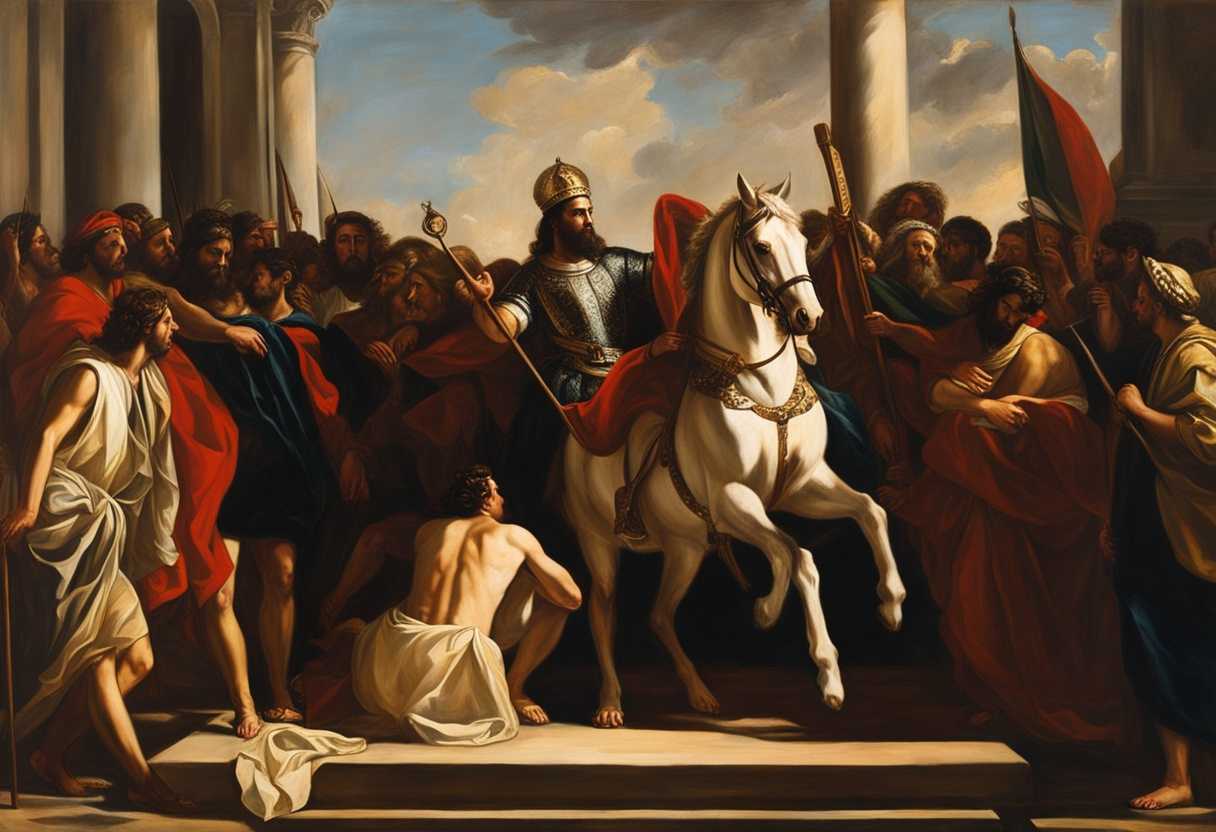
Setting the Scene for 2 Kings 18:3-6
In the ancient kingdom of Judah, the air was thick with tension and uncertainty as King Hezekiah ascended to the throne. The sun hung low in the sky, casting long shadows over the city of Jerusalem, where the towering walls and majestic temple stood as symbols of faith and resilience. Hezekiah, a young and determined ruler, had inherited a kingdom fraught with challenges, including the looming threat of the Assyrian Empire, which had already begun its campaign of conquest across the region. The people of Judah were weary from years of oppression and idolatry, having witnessed the downfall of their neighbors and the destruction of their own faith.
Hezekiah, however, was resolute in his mission to restore the worship of Yahweh and cleanse the land of the pagan practices that had taken root during the reign of his father, Ahaz. With a heart full of conviction, he gathered the leaders of Judah and the priests, calling them to join him in a covenant to return to the ways of their ancestors. The atmosphere was charged with hope and determination as they gathered in the temple courtyard, surrounded by the ancient stones that had witnessed generations of worship. The scent of incense wafted through the air, mingling with the sounds of the people’s prayers and the rustling of scrolls as they sought guidance from the Scriptures.
As Hezekiah spoke, his voice resonated with authority and passion, urging his people to turn away from the idols that had led them astray. He recounted the stories of their forefathers, reminding them of the mighty acts of God that had delivered them from bondage and sustained them through trials. The crowd listened intently, their hearts stirred by his words, as they began to envision a future where their nation could stand strong against the encroaching darkness. In that moment, the king’s vision of a united and faithful Judah began to take root, setting the stage for a remarkable transformation that would echo through the annals of history.
What is 2 Kings 18:3-6 about?
We uncover a vibrant narrative of transformation and renewed faith when we delve into the story of Hezekiah and his reforms. Hezekiah becomes a pivotal figure in illustrating the profound impact that one person’s commitment to spiritual integrity can have on an entire nation. Hezekiah fosters a national revival by removing idols and redirecting the people’s trust solely towards the Lord, focusing on internal heart changes as well as external worship practices. Have you ever considered how the distractions and “idols” in our own lives might hinder our spiritual growth? This verse invites us to reflect on what we might need to remove in our lives to foster a deeper relationship with God.
Hezekiah’s actions demonstrate a powerful principle: true revival begins with individual commitment to faithfulness. This transformation was not only about aesthetics—knocking down physical idols—but about cultivating a community that leaned into their dependence on God, seeking His guidance and protection. It prompts us to ask ourselves: Are there areas in our lives where we place our trust in worldly things rather than God? The national revival Hezekiah initiated serves as a testament to the ripple effect of faithfulness—when one person decides to follow God wholeheartedly, it can inspire others to do the same. We can be agents of change in our communities in our current context by reflecting a faith that encourages collective trust in God.
Understanding what 2 Kings 18:3-6 really means
In 2 Kings 18:3-6, we encounter King Hezekiah of Judah, a figure whose reign stands out in a tumultuous period marked by idolatry and moral decay. Hezekiah is celebrated for his unwavering faithfulness to God, which is particularly significant given the context of his leadership. His commitment to restoring true worship and adhering to God’s commandments serves as a powerful example for us today. How often do we find ourselves in positions where our integrity is tested?
One of the key themes in this passage is Hezekiah’s faithfulness to God. The text states that he “did what was right in the eyes of the Lord,” a phrase that resonates deeply. It challenges us to consider our own actions and whether they align with our beliefs. Are we making choices that reflect our commitment to God, or are we swayed by external pressures? Hezekiah’s example encourages us to prioritize our relationship with God above all else, even when faced with societal expectations that may conflict with our faith.
The covenant relationship between God and His people is another significant theme in this passage. Hezekiah’s reforms, including the removal of high places and idols, underscore the blessings that come from obedience. This echoes the teachings found in Deuteronomy 28, where blessings for faithfulness are clearly outlined. In our own lives, we must ask ourselves: what are the “high places” we need to remove? What distractions or false idols are hindering our relationship with God?
Hezekiah’s story is not just a historical account; it has profound relevance for our contemporary lives. In a world filled with distractions and competing ideologies, his steadfast faith serves as a reminder of the importance of commitment to God. Consider a modern leader who, despite pressure to compromise ethical standards for profit, chooses to uphold integrity. This leader’s actions can inspire a culture of trust and respect, much like Hezekiah’s influence on his nation. How can we embody this kind of leadership in our own spheres of influence?
The phrases within this passage carry significant weight. When we read that Hezekiah “trusted in the Lord,” we are invited to reflect on our own trust in God. Trusting in God means relying on His promises, especially during uncertain times. It prompts us to consider how we respond to challenges in our lives. Are we leaning on our own understanding, or are we seeking God’s guidance?
In conclusion, Hezekiah’s story is a powerful reminder of the impact of faithfulness and integrity. As we navigate our own lives, we are called to emulate his example. This passage encourages us to be leaders in our own contexts, influencing others through our commitment to righteousness and faith. Let us strive to remove distractions that hinder our relationship with God and trust in Him wholeheartedly, just as Hezekiah did. How might your life change if you fully embraced this call to faithfulness?
How can I fully trust in God today?
To fully trust in God today, reflect on the importance of choosing to follow His path and embody the values He represents. This involves committing to a life of obedience and righteousness, adhering to the principles that align you with His will. When faced with challenges or uncertainties, remember that a steadfast heart anchored in faith empowers you to make decisions that are pleasing to God. Embrace a lifestyle that prioritizes your relationship with Him, recognizing that your trust is not just in His power but also in His goodness and wisdom.
Engagement in consistent spiritual practices, such as prayer, reading scripture, and seeking community support, can strengthen your trust. These activities serve as reminders of His promises and past faithfulness, reinforcing the conviction that God is always present and reliable, even in difficult circumstances. Allowing yourself to be vulnerable in His presence can cultivate a deeper intimacy, which is fundamental to building unwavering trust. When you actively seek His guidance in your daily life, you become more attuned to His direction and more confident in your dependence on Him.
Lastly, surround yourself with testimonies of faith, both from scripture and from the experiences of others. Witnessing how God has supported and delivered those around you can inspire your own journey of trust. Let His past actions and the countless ways He has shown love and care shape your perspective today as you focus on them. By acknowledging His faithfulness, you can move forward with assurance, ready to embrace whatever comes your way, grounded in the belief that you are never alone on this path.
Application
Just like a busy parent must decide to eliminate distractions to create a loving home, we too must choose to let go of what holds us back spiritually. King Hezekiah made a brave choice to put God first, and we can do the same in our daily lives. Take a moment to identify the distractions that pull you away from your purpose—whether it’s that endless to-do list at work or the demands of family. This week, take one bold step towards aligning your actions with your values and beliefs. What will you choose to let go of to create a stronger connection with what truly matters?

Reverend Michael Johnson is an experienced Church Minister with a profound expertise in spirituality and guidance. With a serene presence and a compassionate heart, he has faithfully served his congregation for over 20 years, leading them on a spiritual journey towards inner peace and enlightenment. Reverend Johnson’s extensive knowledge of religious philosophies and profound understanding of human nature have made him a trusted confidant and mentor to many, as he seamlessly weaves his profound wisdom into life teachings. Reverend Johnson’s calming demeanor and empathetic nature continue to uplift and heal souls, nurturing a sense of unity and tranquility within his community.