
2 Kings 23:2 is about King Josiah of Judah gathering all the elders and people to the temple to read aloud the Book of the Law, signifying a national renewal of covenantal commitment to God’s commandments and a call to reform the moral and spiritual life of the nation.
2 And the king went up to the house of the Lord, and with him all the men of Judah and all the inhabitants of Jerusalem and the priests and the prophets, all the people, both small and great. And he read in their hearing all the words of the Book of the Covenant that had been found in the house of the Lord.
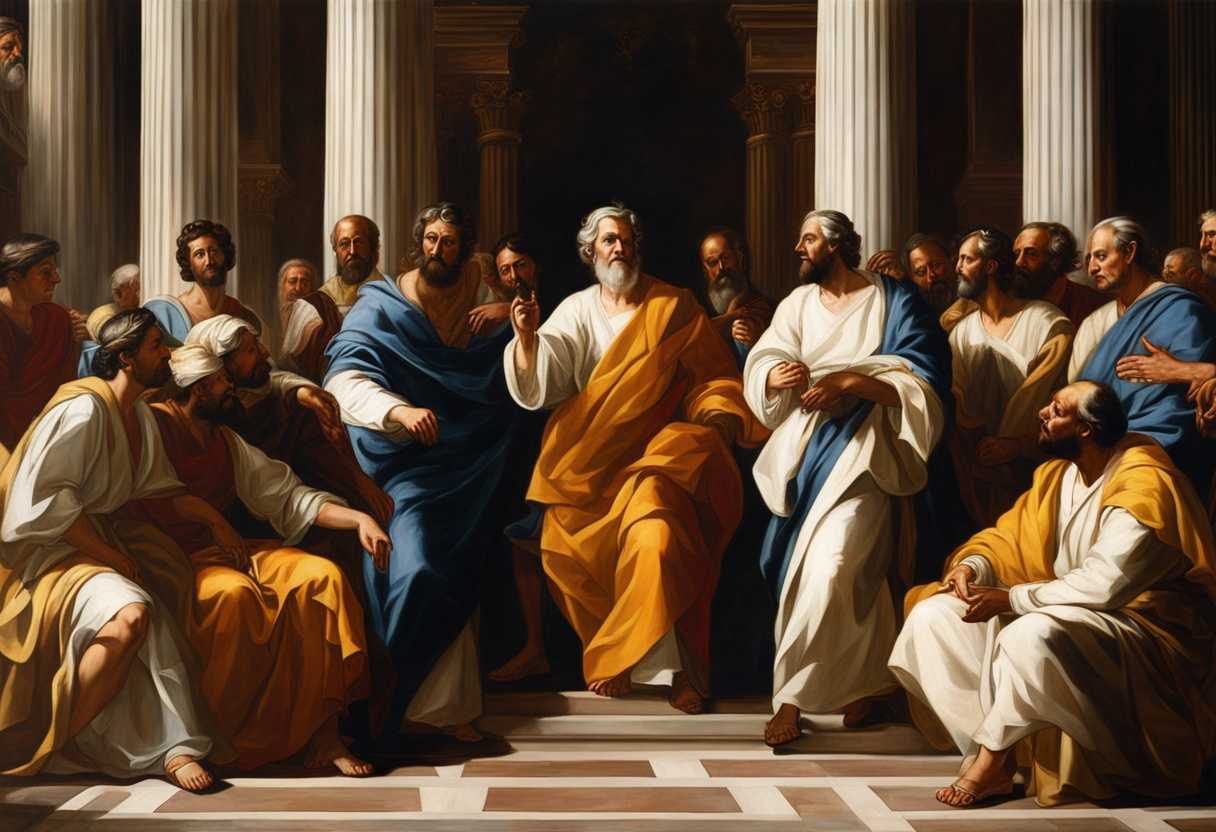
Setting the Scene for 2 Kings 23:2
In the heart of Jerusalem, the air was thick with anticipation and reverence as King Josiah prepared to address the people of Judah. The sun hung low in the sky, casting a warm golden hue over the Temple, which stood as a symbol of their covenant with God. The walls of the Temple, adorned with intricate carvings and vibrant tapestries, echoed the history of a nation that had strayed from its roots. Josiah, a young king who had ascended to the throne at just eight years old, had spent years seeking the Lord and rediscovering the lost teachings of the Law. His heart was burdened with the knowledge of the idolatry and corruption that had plagued his kingdom, and he felt a deep calling to lead his people back to righteousness.
As the crowd gathered, a diverse assembly of men, women, and children filled the courtyard, their faces reflecting a mixture of hope and uncertainty. Among them were the priests, who had long been tasked with maintaining the sacred traditions, yet had often faltered in their duties. The elders of the city stood nearby, their expressions grave as they recalled the dark days of previous kings who had led the nation astray. Josiah’s trusted advisors, including the prophetess Huldah, who had confirmed the authenticity of the scrolls found in the Temple, were also present, ready to support the king in his mission. The atmosphere was charged with a sense of urgency, as the people sensed that a pivotal moment in their history was about to unfold.
As Josiah took his place before the assembly, he held the newly discovered Book of the Law, its pages worn yet sacred, a testament to the covenant that had been forgotten. The king’s voice rang out, clear and resolute, as he read the words that had been lost to generations. The crowd listened intently, their hearts stirred by the call to repentance and renewal. The Temple, once a place of neglect, now became a focal point of revival, as Josiah urged the people to turn away from their idols and return to the worship of the one true God. The scene was one of profound transformation, a moment where the past met the present, and the hope for a restored future flickered brightly in the hearts of the people of Judah.
What is 2 Kings 23:2 about?
This verse is a significant moment in the narrative of King Josiah’s reign, reflecting both a commitment to rediscover and uphold the covenant between the people and God. When Josiah reads the Book of the Law to the people, he is not simply presenting a collection of ancient texts; rather, he is reigniting a covenantal relationship that had been neglected or forgotten over time. Think about it—how often do we, too, find ourselves in situations where we need to reconnect with the values and principles that guide our lives? What texts or traditions serve as touchstones in your own life, just as the book served as a reminder for the Israelites?
Josiah’s act of reading these laws is more than a ceremonial gesture; it’s a call to collective action and introspection. It prompts us to consider what it means to be in relationship with something greater than ourselves. Are we attentive to the agreements we make, both with one another and with our faith? Josiah’s passionate commitment helps the people understand that their lives are intertwined with their adherence to these laws—they cannot separate their identity as God’s people from the actions they take in honoring that covenant. We might re-evaluate our own commitments, especially in times when our society seems to drift away from core values. This moment invites us all to reflect deeply on our own spiritual journeys and consider how we might renew our own covenants, individually and collectively.
Understanding what 2 Kings 23:2 really means
In 2 Kings 23:2, we witness a pivotal moment in the history of Judah during King Josiah’s reign. This verse captures the essence of a significant religious reform, where Josiah gathers all the people to hear the words of the Book of the Law. This act is not merely ceremonial; it signifies a profound commitment to restoring true worship and covenant faithfulness among the people. Have you ever considered the impact of gathering together to hear Scripture?
The public reading of Scripture is a key theme in this passage. By bringing the community together, Josiah emphasizes the importance of God’s Word as a guiding force in their lives. This act serves as a reminder that Scripture is not just for individual reflection but is meant to be shared and discussed within the community. In our modern context, how often do we prioritize communal engagement with the Bible?
Covenant renewal is another significant theme in this verse. Josiah’s actions represent a recommitment to the covenant between God and His people. This moment underscores the need for collective accountability and spiritual revival. It prompts us to reflect on our own commitments to God and to one another. Are we actively seeking to renew our covenant with God in our communities today?
Related passages, such as Deuteronomy 31:10-13 and Nehemiah 8:1-3, further illuminate the importance of reading the Law to the people. These scriptures reinforce the idea that God’s Word should be central to community life. They remind us that the act of hearing and understanding Scripture is vital for spiritual growth and unity. How can we create spaces in our lives where God’s Word is regularly proclaimed and discussed?
The relevance of this passage extends into our contemporary world, where many feel disconnected from spiritual truths. Gathering to hear Scripture can serve as a powerful reminder of our need for guidance and community. It encourages believers to engage with the Word actively and to seek collective understanding and application of its teachings. Have you experienced a moment where Scripture brought people together in a meaningful way?
Reflecting on my own experiences, I recall a community Bible reading event organized by our church. People from various backgrounds came together, some familiar with Scripture and others hearing it for the first time. As we read aloud, the atmosphere shifted; there was a palpable sense of unity and purpose. This experience echoed Josiah’s gathering, where the Word of God ignited a desire for renewal and deeper faith among the participants.
In conclusion, the actions of King Josiah serve as a powerful model for us today. They remind us of the importance of Scripture in our lives and the need for communal engagement with God’s Word. As we gather to read and reflect, we open ourselves to transformation and renewal, just as the people of Judah did in their time. How can we take inspiration from Josiah’s example to foster a deeper connection with God’s Word in our communities?
How can we seek to understand God’s word today?
To seek understanding of God’s word today, we can approach the text with an open heart and a willingness to engage with its teachings actively. This involves not just reading the scripture but also considering the historical and cultural context in which it was written. Engaging in this way helps us discern the moral and spiritual principles contained within the text, allowing us to apply these lessons to our lives. We invite deeper insights into how God’s word applies to our current circumstances by immersing ourselves in the practices of prayer, meditation, and reflection.
Furthermore, gathering in community can enrich our understanding, as discussions allow for various interpretations and perspectives. We collectively unpack the meanings and implications of scripture by sharing insights with others, fostering a more robust comprehension of its relevance today. Involvement in study groups or church activities helps cultivate fellowship, where questions can be raised, and interpretations can be tested, leading to a richer understanding.
Lastly, it is essential to allow the transformative power of the scripture to take root in our lives. This means not only grasping the concepts but also embodying the teachings through our actions and decisions. Living out the principles of faith can turn knowledge into wisdom, demonstrating how God’s word informs our morality and shapes our character. We create space for personal growth and a closer relationship with the divine by continually seeking to align our lives with the greater purpose outlined in scripture.
Application
Just like a busy workplace needs a team huddle to refocus, it’s time for you to gather your own thoughts and intentions. Think of your life like a family that thrives on strong values—what can you do to strengthen your commitment to those values? Reflect on your daily actions: are they aligning with the life you want to lead? Identify those areas in your heart or community that could use a fresh dose of inspiration and commitment. Don’t wait for change; be the spark that ignites it! What’s stopping you from making this vital connection today?

Reverend Michael Johnson is an experienced Church Minister with a profound expertise in spirituality and guidance. With a serene presence and a compassionate heart, he has faithfully served his congregation for over 20 years, leading them on a spiritual journey towards inner peace and enlightenment. Reverend Johnson’s extensive knowledge of religious philosophies and profound understanding of human nature have made him a trusted confidant and mentor to many, as he seamlessly weaves his profound wisdom into life teachings. Reverend Johnson’s calming demeanor and empathetic nature continue to uplift and heal souls, nurturing a sense of unity and tranquility within his community.