
2 Kings 3:13-20 is about the prophet Elisha summoning the power of God to provide water and victory to the Israelites, demonstrating that with faith and obedience, God can bring forth miracles and deliverance in times of desperation.
13 And Elisha said to the king of Israel, “What have I to do with you? Go to the prophets of your father and to the prophets of your mother.” But the king of Israel said to him, “No; it is the Lord who has called these three kings to give them into the hand of Moab.”
14 And Elisha said, “As the Lord of hosts lives, before whom I stand, were it not that I have regard for Jehoshaphat the king of Judah, I would neither look at you nor see you.
15 But now bring me a musician.” And when the musician played, the hand of the Lord came upon him.
16 And he said, “Thus says the Lord, ‘Make this valley full of trenches.’
17 For thus says the Lord, ‘You shall not see wind or rain, but that streambed shall be filled with water, so that you shall drink, you, your livestock, and your animals.’
18 This is a light thing in the sight of the Lord. He will also give the Moabites into your hand,
19 And you shall attack every fortified city and every choice city, and shall fell every good tree and stop up all springs of water and ruin every good piece of land with stones.”
20 The next morning, about the time of offering the sacrifice, behold, water came from the direction of Edom, till the country was filled with water.
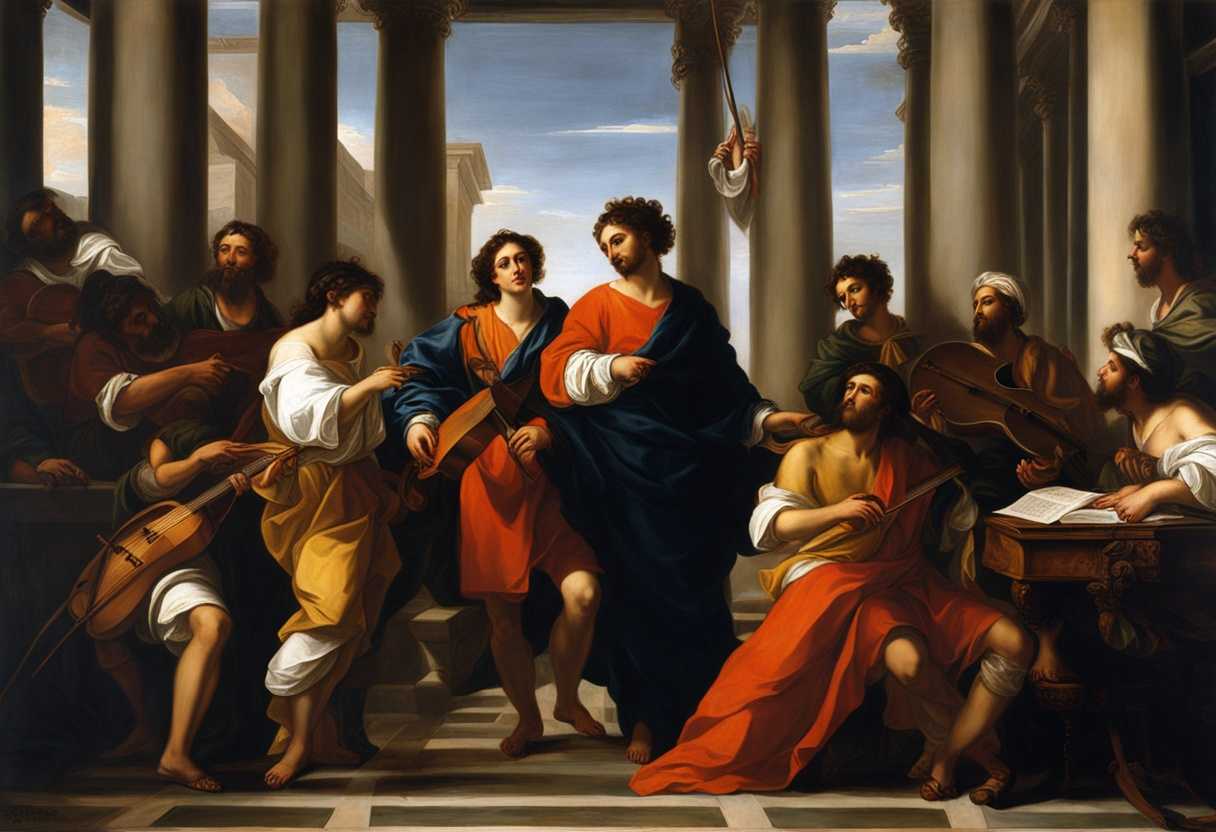
Setting the Scene for 2 Kings 3:13-20
In 2 Kings chapter 3, we find King Jehoram of Israel teaming up with King Jehoshaphat of Judah and the King of Edom to go to war against the Moabites. The scene is set in the wilderness of Edom, a rugged and barren land with rocky terrain and scarce resources. The armies are facing a dire situation as they have been marching for seven days without finding water for themselves or their livestock.
As desperation sets in, King Jehoshaphat suggests seeking the counsel of a prophet. They are directed to Elisha, the prophet who had served Elijah. Elisha agrees to help them and calls for a musician to play. As the musician plays, the hand of the Lord comes upon Elisha, and he prophesies that the valley will be filled with water, even though there is no sign of rain. He assures them that the Lord will provide water and deliver the Moabites into their hands.
The next morning, as promised by Elisha, water fills the valley, and the armies and their livestock are able to drink. The Moabites, seeing the water and mistaking it for blood, come out to plunder, only to be defeated by the alliance of Israel, Judah, and Edom. This miraculous provision of water in the wilderness showcases the power of God and the importance of seeking His guidance in times of need.
What is 2 Kings 3:13-20 about?
This verse conveys a message of hope and faith in the face of challenges. Elisha’s prophecy of victory through the valley of blood, water, and provision from God reminds us that even in the midst of difficult or seemingly impossible situations, we can trust in God’s provision and ultimate victory. The imagery of blood and water symbolizes struggles and purification, while the promise of provision from God signifies his faithfulness and care for his people.
Have you ever faced a situation that felt overwhelming or filled with obstacles? Just like Elisha’s prophecy, this verse reminds us that God can bring us through even the most challenging times. It serves as a reminder to hold onto our faith and trust in God’s plan, knowing that he will provide for us and lead us to victory. We can navigate through the valleys of life with confidence and hope by staying steadfast in our belief in God’s power and provision.
Understanding what 2 Kings 3:13-20 really means
In the historical setting of 2 Kings 3:13-20, we find ourselves amidst the reign of King Jehoram of Israel, King Jehoshaphat of Judah, and the King of Edom, united in a campaign against Moab. The pivotal figure in this narrative is the prophet Elisha, who is sought out for guidance and divine intervention. Elisha’s response to the kings’ plea is crucial in unraveling the deeper meanings of this passage.
When King Jehoram first approaches Elisha, the prophet’s terse response, “What have I to do with you?” sets the tone for the tension between the prophet and a king who has not remained faithful to God. Elisha’s subsequent request for a musician before delivering a message underscores the significance of worship and creating a conducive atmosphere for receiving God’s word. The command to “Make this valley full of ditches” symbolizes the importance of preparation and faith. The people are called to act in faith, digging ditches without immediate evidence of God’s provision.
The promise that “You shall not see wind or rain, but that valley shall be filled with water” showcases God’s miraculous provision, transcending natural means. This theme of trusting in God’s unseen provision resonates with passages like Psalm 46:10, urging believers to be still and trust in God’s sovereignty. Hebrews 11:1 further reinforces the concept of faith in the unseen, emphasizing the assurance of things hoped for. Isaiah 55:8-9 reminds us of the incomprehensible ways in which God works, surpassing human understanding.
The relevance of this passage extends to contemporary life, where individuals are often called to exercise faith in God’s provision without immediate clarity. Just as the Israelites dug ditches in faith, modern believers are encouraged to prepare and trust in God’s timing. The narrative prompts us to remain open to divine intervention, even when it arrives in unexpected ways.
Illustrating this faith and preparation, imagine a farmer planting seeds in a drought, trusting in God’s provision despite skepticism from others. Similarly, a young entrepreneur investing in a business idea during economic uncertainty exemplifies faith and preparation leading to unexpected success. These anecdotes mirror the themes of trust and obedience found in the passage.
In conclusion, 2 Kings 3:13-20 serves as a poignant reminder to trust in God’s provision and timing, even when it surpasses human understanding. It calls readers to active faith, urging them to take steps in obedience and preparation, confident that God will fulfill His promises in His own perfect way and time.
How can we seek guidance from God in crises?
We can seek guidance from God in times of crisis by turning to Him in prayer with humility and sincerity. We should acknowledge our dependence on Him and ask for His wisdom and guidance to navigate the challenges we are facing. We can seek out spiritual mentors, trusted friends, or clergy members for advice and support during difficult times, just as the kings in 2 Kings 3 sought out the prophet Elisha for guidance and direction.
Additionally, we can seek guidance from God by spending time in His word, the Bible, and meditating on His teachings and promises. We can find comfort, strength, and direction for the challenges we are facing by seeking solace and wisdom through scripture. It is through prayer, seeking wise counsel, and meditating on God’s word that we can open our hearts to His guidance and trust that He will lead us through crises with His wisdom and love.
Application
In the hustle and bustle of our modern lives, it’s easy to get caught up in the chaos and forget that we can always turn to a higher power for guidance. Just like Elisha provided a way out for the kings, let’s remember to seek God’s wisdom in our moments of need. Trusting in our own understanding can only get us so far, but with God’s guidance, we can navigate even the toughest challenges. So, will you take a moment today to seek God’s counsel in your own situations? Let’s invite His wisdom into our lives and see the difference it can make.

Reverend Michael Johnson is an experienced Church Minister with a profound expertise in spirituality and guidance. With a serene presence and a compassionate heart, he has faithfully served his congregation for over 20 years, leading them on a spiritual journey towards inner peace and enlightenment. Reverend Johnson’s extensive knowledge of religious philosophies and profound understanding of human nature have made him a trusted confidant and mentor to many, as he seamlessly weaves his profound wisdom into life teachings. Reverend Johnson’s calming demeanor and empathetic nature continue to uplift and heal souls, nurturing a sense of unity and tranquility within his community.