
1 Now Absalom, David’s son, had a beautiful sister, whose name was Tamar. And after a time Amnon, David’s son, loved her.
2 And Amnon was so tormented that he made himself ill because of his sister Tamar, for she was a virgin, and it seemed impossible to Amnon to do anything to her.
3 But Amnon had a friend, whose name was Jonadab, the son of Shimeah, David’s brother. And Jonadab was a very crafty man.
4 And he said to him, “O son of the king, why are you so haggard morning after morning? Will you not tell me?” Amnon said to him, “I love Tamar, my brother Absalom’s sister.”
5 But Jonadab said to him, “Lie down on your bed and pretend to be ill. And when your father comes to see you, say to him, ‘Let my sister Tamar come and give me bread to eat, and prepare the food in my sight, that I may see it and eat it from her hand.’”
6 So Amnon lay down and pretended to be ill. And when the king came to see him, Amnon said to the king, “Please let my sister Tamar come and make a couple of cakes in my sight, that I may eat from her hand.”
7 Then David sent home to Tamar, saying, “Go to your brother Amnon’s house and prepare food for him.”
8 So Tamar went to her brother Amnon’s house, where he was lying down. And she took dough and kneaded it and made cakes in his sight and baked the cakes.
9 Then she took a pan and baked unleavened bread and served it before him.
10 Then Amnon said to Tamar, “Bring the food into the chamber, that I may eat from your hand.” And Tamar took the cakes she had made and brought them into the chamber to Amnon her brother.
11 But when she brought them near him to eat, he took hold of her and said to her, “Come, lie with me, my sister.”
12 But she said to him, “No, my brother, for this wrong in sending me away is greater than the other that you did to me.” But he would not listen to her.
13 But he would not listen to her, and being stronger than she, he violated her and lay with her.
14 But he would not listen to her, and being stronger than she, he violated her and lay with her.
15 Then Amnon hated her with very great hatred, so that the hatred with which he hated her was greater than the love with which he had loved her. And Amnon said to her, “Get up! Go!”
16 But she said to him, “No, my brother, for this wrong in sending me away is greater than the other that you did to me.” But he would not listen to her.
17 Then he called his young man who served him and said, “Put this woman out of my presence and bolt the door after her.”
18 Now she was wearing a long robe with sleeves, for thus were the virgin daughters of the king dressed. So his servant put her out and bolted the door after her.
19 And Tamar put ashes on her head and tore the long robe that she wore. And she laid her hand on her head and went away, crying aloud as she went.
20 And her brother Absalom said to her, “Has Amnon your brother been with you? Now hold your peace, my sister. He is your brother; do not take this to heart.” So Tamar lived, a desolate woman, in her brother Absalom’s house.
21 But when King David heard of all these things, he was very angry.
22 But Absalom spoke to Amnon neither good nor bad, for Absalom hated Amnon, because he had violated his sister Tamar.
23 After two full years Absalom had sheepshearers at Baal-hazor, which is near Ephraim, and Absalom invited all the king’s sons.
24 And Absalom came to the king and said, “Behold, your servant has sheepshearers. Please let the king and his servants go with your servant.”
25 But the king would not listen to all the people, for it was a turn of affairs brought about by the Lord that he might fulfill his word, which the Lord spoke by Ahijah the Shilonite to Jeroboam the son of Nebat.
26 Then Absalom said, “If not, please let my brother Amnon go with us.” And the king said to him, “Why should he go with you?”
27 But Absalom pressed him until he let Amnon and all the king’s sons go with him.
28 Then Absalom commanded his servants, “Mark when Amnon’s heart is merry with wine, and when I say to you, ‘Strike Amnon,’ then kill him. Fear not; have I not commanded you? Be courageous and be valiant.”
29 And the servants of Absalom did to Amnon as Absalom had commanded. Then all the king’s sons arose, and each mounted his mule and fled.
30 But Absalom had commanded his servants, saying, “Mark when Amnon’s heart is merry with wine, and when I say to you, ‘Strike Amnon,’ then kill him. Do not fear; have I not commanded you? Be courageous and be valiant.”
31 Then the king arose and tore his garments and lay on the earth. And all his servants who were standing by tore their garments.
32 But Jonadab the son of Shimeah, David’s brother, said, “Let not my lord suppose that they have killed all the young men the king’s sons, for Amnon alone is dead.
33 Now therefore let not my lord the king so take it to heart as to suppose that all the king’s sons are dead, for Amnon alone is dead.”
34 But Absalom fled. And the young man who kept the watch lifted up his eyes and looked, and behold, many people were coming from the road behind him by the side of the mountain.
35 But Jonadab the son of Shimeah, David’s brother, said, “Let not my lord suppose that they have killed all the young men the king’s sons, for Amnon alone is dead.
36 While he was yet speaking, the king’s sons came, and lifted up their voice and wept. And the king also and all his servants wept very bitterly.
37 But Absalom fled and went to Talmai the son of Ammihud, king of Geshur. And David mourned for his son day after day.
38 So Absalom fled and went to Geshur, and was there three years.
39 And the spirit of the king longed to go out to Absalom, because he was comforted about Amnon, since he was dead.
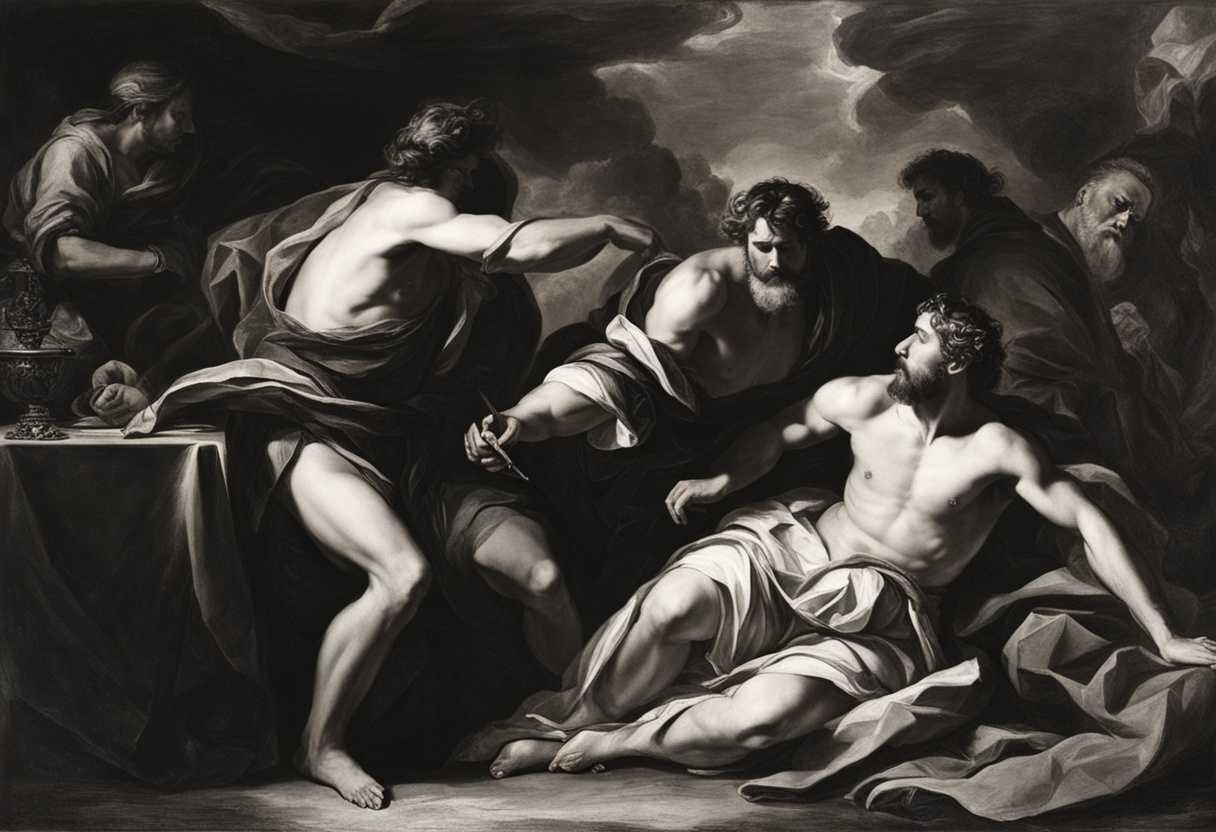
The True Meaning of 2 Samuel 13
The book of 2 Samuel was written by the prophet Nathan, who was a close advisor to King David. This chapter recounts a dark and tragic event in the life of David’s family, as his son Amnon commits a heinous act against his half-sister Tamar. Amnon’s twisted desires and the manipulation of his cunning friend Jonadab drive the unfolding of a sinister plot in this passage. The consequences of Amnon’s actions will reverberate throughout the kingdom, leading to a chain of events that will test the very fabric of David’s family. As we delve into this chapter, we must keep in mind the broader context of the Bible, where we have seen the importance of maintaining purity and righteousness within the royal household. The actions of Amnon stand in stark contrast to the teachings of the Lord, and we will see how this sin will ultimately lead to further turmoil and division.
2 Samuel 13:1-5
The tragic story of Amnon, one of King David’s sons, is introduced in 2 Samuel 13:1-5. The passage begins by setting the scene and describing Amnon’s infatuation with his half-sister Tamar. Amnon was consumed by a forbidden desire for Tamar, so much so that he became lovesick and distressed.
This section sheds light on the consequences of unchecked lust and the dangers of allowing desires to control one’s actions. Amnon’s infatuation with Tamar ultimately leads to a series of devastating events that not only impact him but also his entire family. It serves as a cautionary tale about the destructive power of sin and the importance of self-control.
The dysfunctional dynamics within King David’s family, filled with jealousy, betrayal, and tragedy, are prominently highlighted in this passage. The sins of David, such as his affair with Bathsheba and the subsequent murder of her husband Uriah, have far-reaching consequences that ripple through his household. The repercussions of David’s sins are seen in the actions of his children, like Amnon’s sinful desires for Tamar.
The story of Amnon and Tamar also echoes the theme of the consequences of sin that reverberates throughout the Bible. From Adam and Eve’s disobedience in the Garden of Eden to the betrayal of Judas Iscariot in the New Testament, the Bible repeatedly showcases how sin leads to pain, brokenness, and separation from God. The narrative of Amnon and Tamar serves to reinforce the biblical principle that sin not only affects the individual committing it but also impacts those around them. We reflect on this passage, reminding us of the importance of guarding our hearts and minds against sinful desires. Guard your heart above all else, for everything you do flows from it, as instructed in Proverbs 4:23. We can avoid the pitfalls of sin and prevent the kind of tragedy we see unfolding in the story of Amnon and Tamar by maintaining a close relationship with God, seeking His guidance, and practicing self-control.
2 Samuel 13:6-10
The narrative in 2 Samuel 13:6-10 sets the stage for a tragic event. The section begins with Amnon, King David’s son, consumed by his desire for his half-sister Tamar. This desire leads him to manipulate a situation where he pretends to be sick and requests Tamar to bring him food. This deceitful scheme highlights Amnon’s selfish and sinful nature, driven by impure thoughts and lust. It also reflects a lack of respect and regard for his sister, Tamar, which is a violation of God’s command to love one another and treat each other with dignity and respect (Matthew 22:39).
Tamar, on the other hand, innocently falls into Amnon’s trap and goes to his house with the food. The text emphasizes her concern for her brother’s well-being and her willingness to serve him, which portrays her as a caring and dutiful sister. This event foreshadows the injustice and abuse Tamar will face at the hands of Amnon, revealing the vulnerability of the innocent at the hands of the wicked. Amnon seizes the opportunity and asks everyone to leave, leaving him alone with Tamar as the story progresses. His intentions become clear as he makes a sinful advance towards her. Tamar, rightfully shocked and distressed by his actions, pleads with him not to force himself on her, reminding him of the shame and dishonor such an act would bring upon her. Tamar’s desperate appeal to Amnon reflects her virtue and purity, standing in stark contrast to Amnon’s wicked desires driven by selfishness and disregard for God’s laws.
This passage serves as a reminder of the consequences of succumbing to sinful desires and the devastating impact it can have on individuals and relationships. It also underscores the importance of honoring and respecting one another, regardless of gender, and upholding the sanctity of human dignity and purity. The tragic events that unfold in this narrative lay bare the destructive nature of sin and the need for repentance and forgiveness in the face of such grievous transgressions. This passage ultimately sheds light on the brokenness and fallen nature of humanity, emphasizing the need for redemption and restoration through God’s grace and mercy.
2 Samuel 13:11-14
A disturbing and tragic event involving King David’s son Amnon and his half-sister Tamar unfolds in 2 Samuel 13:11-14. Amnon, in this passage, is consumed with a strong desire for Tamar, to the point where he becomes physically ill. His friend, Jonadab, devises a plan for Amnon to feign sickness and request that Tamar come and prepare food for him. Following Jonadab’s advice, Amnon tricks Tamar into his chambers and commits a horrendous act of sexual assault against her.
This story is a stark example of the consequences of unchecked desire and the devastating effects of sin. Amnon’s uncontrolled lust for Tamar led him to commit a heinous act that not only dishonored Tamar but also caused deep pain and division within the royal family. The betrayal and violation experienced by Tamar at the hands of her own brother highlight the brokenness and dysfunction that can result from giving in to sinful impulses.
The role of Jonadab in this narrative is also significant. Jonadab’s cunning advice and encouragement fueled Amnon’s sinful actions, illustrating the danger of surrounding oneself with those who promote and enable sinful behavior. Jonadab’s lack of regard for the well-being of others and his willingness to manipulate for his own gain serve as a cautionary example of the destructive impact of influence.
This passage in 2 Samuel serves as a reminder of the importance of self-control, the destructive nature of sin, and the far-reaching consequences of one’s actions. It also sheds light on the prevalence of abuse and exploitation, even within families and communities. The story of Amnon and Tamar serves as a poignant reminder of the need for justice, protection, and compassion for the vulnerable and oppressed, as well as the importance of seeking forgiveness and reconciliation in the face of broken relationships and shattered trust. Believers must guard their hearts and minds against sinful desires and actively resist the temptation to act upon them in light of this account. The Bible offers guidance on the importance of purity, self-control, and honoring others, such as in 1 Thessalonians 4:3-5 which states, “It is God’s will that you should be sanctified: that you should avoid sexual immorality; that each of you should learn to control your own body in a way that is holy and honorable, not in passionate lust like the pagans, who do not know God.”
2 Samuel 13:15-19
A heartbreaking scene unfolds within King David’s family in this passage from 2 Samuel 13:15-19. Tamar, the daughter of King David and full sister of Absalom, has just been sexually violated by her half-brother Amnon. Amnon callously rejects Tamar’s deep distress and pleas, further inflicting pain upon her. Tamar’s devastation is palpable as she tears her robe, a symbolic act showing her mourning and shame.
The tragic story of Tamar and Amnon serves as a powerful lesson on the consequences of lust, deception, and abuse of power within families and societies. It highlights the devastating impact of sinful desires and actions on individuals and families. Tamar’s vulnerability and betrayal by her own blood reveal the brokenness that results from disobedience to God’s commands and the lack of respect for others.
The characters in this narrative serve as cautionary examples of the dangers of unchecked desires and the importance of treating others with dignity and respect. Amnon’s lustful and devious actions lead to his own downfall, while Tamar’s innocence and purity are brutally violated. The aftermath of this tragedy will reverberate throughout David’s household and ultimately contribute to the unraveling of his family and kingdom.
This passage also invites us to reflect on themes of justice, mercy, and the need for righteous leadership. We will delve into the larger narrative of King David’s reign, and his failure to address the injustices committed within his family will have far-reaching consequences. David’s silence and inaction in response to Amnon’s sin will contribute to a chain of events that will culminate in further bloodshed and betrayal within his own family. This story reminds us of the pervasive presence of sin and its destructive effects on relationships and communities in the broader context of the Bible. It underscores the need for accountability, repentance, and the pursuit of righteousness in order to prevent the spread of evil and restore brokenness. We are reminded of the redemptive power of God’s grace and the call to seek forgiveness and reconciliation in the face of wrongdoing as we examine the consequences of the sins committed by Tamar, Amnon, and David.
2 Samuel 13:20-22
The heartbreaking scene in the aftermath of Tamar being raped by her half-brother Amnon is presented in 2 Samuel 13:20-22. Let’s break down these verses to gain a deeper understanding of their significance.
Firstly, verse 20 states, “Her brother Absalom said to her, ‘Has that Amnon, your brother, been with you? Be quiet for now, my sister; he is your brother. Don’t take this thing to heart.’ And Tamar lived in her brother Absalom’s house, a desolate woman.” Absalom, Tamar’s full brother, advises her to remain quiet and not to dwell on what happened. This response seems to be an attempt to protect his sister and prevent further escalation of the situation. However, the phrase “a desolate woman” captures the devastating impact of the assault on Tamar, as it suggests a state of utter desolation and despair. This betrayal and violation not only affected Tamar physically but also left her emotionally shattered.
Next, verse 21 reveals, “When King David heard all this, he was furious.” King David’s reaction upon learning about what happened to Tamar is one of fury. However, his response appears more about his anger towards Amnon’s actions rather than profound empathy for Tamar’s suffering. This lack of immediate action to address the injustice done to Tamar showcases David’s flawed judgment as a father and a leader. His failure to administer justice in this situation sets the stage for further tragedy in his family.
Finally, in verse 22, we read, “Absalom never said a word to Amnon, either good or bad; he hated Amnon because he had disgraced his sister Tamar.” Absalom’s response to the situation is complex. While he initially advised Tamar to keep quiet, his hatred towards Amnon is evident. This brewing hatred would eventually lead to Absalom’s plot to avenge Tamar’s honor by killing Amnon, an act that would have significant repercussions on the kingdom and David’s reign. Absalom’s story arc is one of vengeance and rebellion, culminating in him attempting to overthrow his father David’s kingdom, showcasing the destructive consequences of unchecked anger and unresolved conflicts within families.
These verses from 2 Samuel 13 highlight various themes such as betrayal, injustice, consequences of sin, and the importance of seeking justice and reconciliation. They serve as a cautionary tale about the damaging effects of sin and the need for wise and just leadership within families and communities. The aftermath of Tamar’s assault sets in motion a chain of events that ultimately result in tragedy and upheaval within David’s family, emphasizing the importance of addressing wrongdoing promptly and seeking healing and redemption.
2 Samuel 13:23-27
A tragic event unfolds in the house of David in 2 Samuel 13:23-27. This passage recounts the aftermath of Amnon’s despicable act of raping his half-sister Tamar, David’s daughter. Let’s break down this section into key parts for a closer look at its significance.
Firstly, we see that after Amnon violated Tamar, “she put ashes on her head and tore the long robe that she was wearing. And she laid her hand on her head and went away, crying aloud as she went” (2 Samuel 13:19). Tamar’s actions of mourning and displaying outward signs of distress were manifestations of her deep anguish and the violation of her body and dignity. This scene reflects the heartbreaking consequences of sin and the devastating impact it can have on individuals, particularly on the innocent and vulnerable. Tamar’s experience highlights the importance of treating others with respect, dignity, and compassion, and serves as a stark reminder of the consequences of unchecked desires and selfishness.
Secondly, the passage continues with the reaction of Absalom, Tamar’s full brother, upon learning about what had happened to his sister. Absalom harbored a deep sense of anger and bitterness towards Amnon for his heinous actions. Despite being the eldest son, Amnon’s behavior disqualified him from being the rightful heir to David’s throne due to the severity of his sin. This incident sets the stage for the eventual downfall and tragic end of Amnon, as Absalom, fueled by a desire for revenge and justice, meticulously plans and executes Amnon’s murder (2 Samuel 13:28-29).
The ripple effects of Amnon’s sin permeate through the subsequent chapters of 2 Samuel, leading to further intrigue, betrayal, and destruction within David’s family. This tragic episode serves as a cautionary tale about the dangers of unchecked lust, the devastating consequences of sin, and the importance of seeking justice and holding perpetrators accountable for their actions. We are reminded of the flawed nature of humanity and the devastating impact of sin as we contemplate this passage in the context of the broader narrative of David’s life. Despite being a man after God’s own heart, David’s family is marred by dysfunction, violence, and tragedy. This serves as a poignant reminder that even those who are closest to God are not immune to the destructive power of sin and its consequences. This passage ultimately underscores the biblical principles of justice, mercy, and the importance of upholding the dignity and rights of all individuals. It challenges us to examine our own actions and relationships, reminding us of the need to treat others with kindness, respect, and compassion, and to seek reconciliation and restoration in the face of brokenness and tragedy.
2 Samuel 13:28-29
Events that occur after Absalom’s revenge on his half-brother Amnon for raping his sister Tamar are read about in 2 Samuel 13:28-29. Absalom gives orders to his servants to kill Amnon after getting him intoxicated at a feast and executing his revenge in these verses. This act was a part of Absalom’s plan to avenge the wrong done to his sister and to secure his own position and power within the family.
Absalom’s actions here are a result of the deep-seated issues within King David’s family. The rape of Tamar by her half-brother Amnon and Absalom’s subsequent murder of Amnon are symbolic of the consequences of sin and the breakdown of relationships within a family. The use of deception and violence further illustrates the destructive nature of sin and its impact not only on the individuals involved but also on those around them. This tragic event serves as a warning about the importance of addressing sin and conflict within families before they escalate to such dire consequences.
The story of David’s family is one that is filled with both moments of great triumph and tragic downfall. David, a man after God’s own heart, had numerous flaws and failures as a father, which had lasting repercussions on his children. The tragedy that unfolds in 2 Samuel 13 is a testament to the ripple effect of sin and how it can spread through generations if not dealt with.
These verses also highlight the theme of justice and vengeance, which are recurring motifs in the Bible. While Absalom may have felt justified in seeking revenge for his sister Tamar, his actions ultimately lead to further pain and turmoil within his family. The Bible is clear that vengeance belongs to the Lord (Romans 12:19), and seeking revenge only perpetuates a cycle of violence and destruction. 2 Samuel 13:28-29 serves as a somber reminder of the consequences of sin, the importance of seeking reconciliation and forgiveness within families, and the destructive nature of vengeance. It also points to the need for individuals to turn to God for justice and healing rather than taking matters into their own hands. Ultimately, seeking redemption and restoration in the face of brokenness and tragedy is a call.
2 Samuel 13:30-33
The aftermath of the tragic events that unfolded in the house of David is seen in 2 Samuel 13:30-33. Absalom, David’s son, had avenged the rape of his sister Tamar by killing his brother Amnon. Upon hearing the news, King David was understandably distraught, as his sons had turned against each other in a terrible display of violence and betrayal. A series of messengers approach David with differing reports of what had occurred in these verses. The first message suggests that all of David’s sons had been killed, striking fear and shock in the king. Another messenger arrives with a more specific report, revealing that only Amnon had been slain by Absalom as David tears his clothes in grief.
This moment captures the emotional turmoil and confusion that David experiences upon learning about the violent act committed by Absalom. It also highlights the consequences of David’s own past sins and failures as a father, as the dysfunction within his family leads to such a tragic and violent event. The cycle of violence and betrayal within David’s household serves as a warning against the destructive nature of sin and the importance of addressing and resolving conflicts before they escalate.
Throughout the Bible, we see instances where the sins of the fathers have profound effects on their children and future generations. David’s own sins of adultery with Bathsheba and his murder of her husband Uriah had far-reaching consequences that reverberated throughout his family. The story of David’s family serves as a reminder of the need for repentance, forgiveness, and reconciliation in order to break the cycle of sin and prevent further harm. We, as Christians, can learn from this passage the importance of addressing conflicts and sins in our own lives and families. We must strive to seek reconciliation, forgiveness, and peace, following the example of Jesus Christ who came to bring healing and redemption to a broken world. Through prayer, repentance, and humility, we can work towards restoring relationships and preventing the devastating consequences of unchecked sin.
2 Samuel 13:34-36
An important development in the aftermath of the tragic events that unfolded in David’s household is seen in 2 Samuel 13:34-36. Let’s break down this verse into sections:
-
“Meanwhile, Absalom had fled. Now the young man standing watch looked up and saw many people on the road west of him, coming down the side of the hill. And the watchman went and told the king, ‘I see men in the direction of Horonaim, on the side of the hill. Absalom, David’s son, fled after orchestrating the murder of his half-brother Amnon in this part of the verse. Absalom’s actions were driven by a desire to avenge the rape of his sister Tamar by Amnon, indicating the deep-seated dysfunction within David’s family. Absalom’s flight is significant as it marks the beginning of his rebellion against his father, King David.
-
“Jonadab said to the king, ‘See, the king’s sons have come. It has happened as your servant said. The king’s sons came in, wailing loudly as he finished speaking. The king, too, and all his attendants wept very bitterly.”
Jonadab, the son of David’s brother Shimeah, played a sinister role in advising Amnon on how to carry out the despicable act against Tamar. Despite his counsel leading to tragedy, Jonadab now shows no remorse and, in fact, uses the situation to his advantage by informing David about the return of his sons. This scene is a poignant moment as it showcases the grief and pain within David’s family. The weeping and bitterness of the king and his attendants reflect the consequences of sin and the sorrow that accompanies it.
- “Absalom fled and went to Talmai son of Ammihud, the king of Geshur. But King David mourned many days for his son.”
Absalom seeks refuge with his maternal grandfather, the king of Geshur, after he flees from Jerusalem. This was a pivotal turning point for Absalom, as it signified his separation from his father and his decision to challenge David’s reign. Despite Absalom’s treacherous actions, David, as a father, mourns for his son. This aspect of the narrative highlights the complexities of familial relationships and the enduring love and grief felt between parent and child.
These verses from 2 Samuel 13 provide us with profound insights into themes of betrayal, vengeance, grief, and family dynamics. It serves as a grim reminder of the repercussions of sin and the importance of dealing with conflict and injustice in a righteous manner. The intricate web of relationships in this passage also underscores the intricacies of human nature and the need for repentance and forgiveness in the face of turmoil and tragedy. The consequences of unchecked sin within a family can lead to devastating outcomes, as seen in the tragic events unfolding in David’s household. Through these narratives, we are reminded of the timeless truths about the human condition and the necessity of seeking redemption and reconciliation in the face of brokenness.
2 Samuel 13:37-39
Let’s break down the important sections in 2 Samuel 13:37-39. “But Absalom fled and went to Talmai son of Ammihud, the king of Geshur. And David mourned for his son every day.”
2. “So Absalom fled and went to Geshur, and stayed there three years.”
3. “The heart of King David longed to go to Absalom, for he was consoled concerning Amnon’s death. Absalom flees to Geshur in the first section, seeking refuge with his maternal grandfather, Talmai. This move reflects Absalom’s frustration and desire for revenge against his half-brother, Amnon, who had violated his sister Tamar. Absalom’s actions not only speak to his quest for justice but also signify a fracturing of the family under King David’s rule. David, on the other hand, is depicted as a grieving father, mourning the loss of his son Amnon and now having to deal with the estrangement of his son Absalom. This illustrates the consequences of David’s inaction after Amnon’s sin, as unaddressed sins within a family can lead to devastating outcomes. Absalom remains in Geshur for three years in the second section. This period of exile further exacerbates the distance between him and King David. The prolonged absence of Absalom highlights the rift within the family and David’s struggle to reconcile with his son. The passage of time underscores the importance of timely intervention in family conflicts and the need for swift justice to prevent escalating tensions. It also reflects the theme of exile and separation, which is a recurring motif in the Bible, symbolizing both physical and spiritual distance from God and loved ones. Absalom’s exile serves as a consequence of his actions and emphasizes the repercussions of seeking revenge instead of pursuing reconciliation. David’s longing to be reunited with Absalom is witnessed in the third section, despite the circumstances that led to their separation. David’s conflicted emotions reveal the complexities of familial relationships and the tension between justice and mercy. Despite Absalom’s rebellion and wrongdoing, David’s paternal instinct and love for his son persist. This passage echoes the biblical theme of forgiveness and restoration, portraying the compassionate and merciful nature of God towards His wayward children. David’s desire to reconcile with Absalom foreshadows the eventual reunion between them, shedding light on the power of forgiveness and redemption within the family unit. This passage from 2 Samuel 13 offers profound insights into the dynamics of family relationships, the consequences of unresolved conflicts, and the enduring hope for reconciliation and restoration. It underscores the importance of addressing sins and grievances promptly, the significance of forgiveness and mercy in healing broken relationships, and the enduring bond between family members despite trials and tribulations. This passage resonates with readers on a personal level by delving into the complexities of human emotions and choices, inviting reflection on their own relationships and the transformative power of love and forgiveness as demonstrated in the biblical narrative.
After 2 Samuel 13
The events that unfolded in the palace were truly tragic. Amnon’s despicable actions had torn the royal family apart. Yet, as the dust settled, a new chapter began to unfold. Absalom, the wronged brother, now harbored a deep resentment that would soon boil over. The stage was set for a reckoning, one that would shake the very foundations of David’s kingdom. The road ahead would be paved with more sorrow and conflict, testing the faith and resilience of all who were caught in its wake.

Reverend Michael Johnson is an experienced Church Minister with a profound expertise in spirituality and guidance. With a serene presence and a compassionate heart, he has faithfully served his congregation for over 20 years, leading them on a spiritual journey towards inner peace and enlightenment. Reverend Johnson’s extensive knowledge of religious philosophies and profound understanding of human nature have made him a trusted confidant and mentor to many, as he seamlessly weaves his profound wisdom into life teachings. Reverend Johnson’s calming demeanor and empathetic nature continue to uplift and heal souls, nurturing a sense of unity and tranquility within his community.