
2 Samuel 13:23-27 is about the tragic consequences of King David’s failure to address the sin and violence within his own family, leading to the rape of Tamar by her half-brother Amnon and ultimately resulting in a cycle of revenge and bloodshed.
23 After two full years Absalom had sheepshearers at Baal-hazor, which is near Ephraim, and Absalom invited all the king’s sons.
24 And Absalom came to the king and said, “Behold, your servant has sheepshearers. Please let the king and his servants go with your servant.”
25 But the king would not listen to all the people, for it was a turn of affairs brought about by the Lord that he might fulfill his word, which the Lord spoke by Ahijah the Shilonite to Jeroboam the son of Nebat.
26 Then Absalom said, “If not, please let my brother Amnon go with us.” And the king said to him, “Why should he go with you?”
27 But Absalom pressed him until he let Amnon and all the king’s sons go with him.
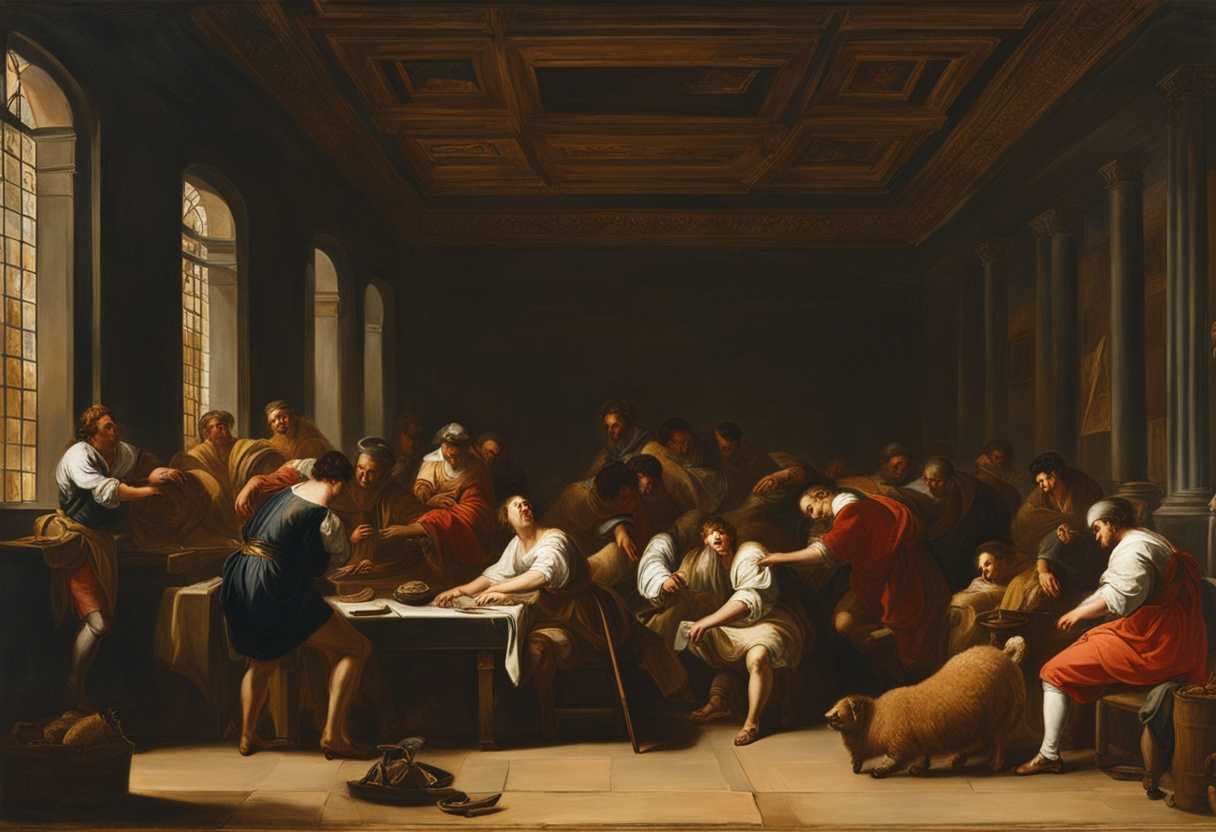
Setting the Scene for 2 Samuel 13:23-27
In 2 Samuel 13:23-27, we find a tumultuous scene unfolding in the palace of King David. The main characters in this narrative are Amnon, David’s eldest son, and Absalom, his brother. The events leading up to this moment are filled with betrayal and tragedy. Amnon, consumed by his desire for his half-sister Tamar, deceives and violates her, causing immense pain and shame. Absalom, Tamar’s full brother, is devastated by what happened to his sister and harbors a deep-seated anger towards Amnon.
As the story progresses, Absalom bides his time, waiting for the right moment to avenge Tamar’s honor. The tension in the palace is palpable as Absalom’s plan comes to fruition. In a calculated move, Absalom orchestrates a feast where he commands his servants to kill Amnon, exacting his revenge for the wrong done to his sister. The scene is filled with a mix of emotions – anger, grief, and a thirst for justice. The palace, once a place of grandeur and power, is now a setting for a tragic family drama that will have far-reaching consequences for King David’s household.
What is 2 Samuel 13:23-27 about?
We encounter a tumultuous situation filled with complex emotions and deep-seated family strife when we delve into this verse. Absalom, a brother to Tamar, stands in the shadow of betrayal as he witnesses the violation of his sister by Amnon. The desire for revenge burns within Absalom as he grapples with the injustice inflicted upon his family. This verse encapsulates the raw intensity of seeking justice and retribution in the face of grave wrongdoing. We reflect on this verse and ponder the power dynamics at play within families and the lengths to which one may go to protect their loved ones. What drives Absalom to seek revenge, and what does this say about the bonds of blood and loyalty? How do we navigate the complexities of seeking justice while also grappling with the consequences of our actions? This verse serves as a poignant reminder of the enduring consequences of betrayal and the insurmountable force of familial ties that shape our decisions and actions. Unresolved conflicts and lasting scars left by acts of violence and violation confront us as we explore this verse. Absalom’s quest for retribution raises profound questions about the nature of justice and the boundaries of forgiveness within the context of family dynamics. How do we reconcile the need for justice with the potential for further harm and escalation of violence? This verse ultimately challenges us to confront the complexities of human nature, morality, and the enduring pursuit of justice in the face of personal vendettas and familial loyalties.
Understanding what 2 Samuel 13:23-27 really means
In 2 Samuel 13:23-27, we delve into a pivotal moment in the narrative of Absalom’s revenge against his brother Amnon for the heinous act of raping their sister Tamar. Absalom’s cunning plan unfolds as he invites all the king’s sons to a sheep-shearing event, a time traditionally associated with celebration and joy. However, beneath the veneer of festivity lies Absalom’s dark intention to avenge his sister’s honor by killing Amnon, showcasing the depths of his deceit and strategic plotting.
The phrase “sheep-shearing event” holds symbolic significance, representing a facade of peace and merriment that masks Absalom’s true motives. This contrast between outward appearances and hidden agendas serves as a cautionary tale about the dangers of deception and unresolved anger. Absalom’s calculated move to invite all the king’s sons underscores his shrewdness and underscores the far-reaching implications of his actions on the royal family and the kingdom’s future.
Drawing parallels to biblical passages such as Genesis 4:8 and Proverbs 26:24-26, we are reminded of the age-old warning against the treachery of those who cloak malice with kindness. The narrative resonates with contemporary relevance, urging us to be discerning of individuals who may harbor ill intentions behind a facade of friendliness or familial ties. Just as Jesus advised His disciples in Matthew 10:16 to be wise as serpents and innocent as doves, we are called to navigate relationships with prudence and integrity.
Transposing the biblical account to a modern workplace scenario, we envision the toxic repercussions of harboring grudges and resorting to deceitful tactics to settle scores. The anecdote underscores how unchecked resentment and hidden agendas can poison environments, leading to fractured relationships and escalating conflicts. It serves as a poignant reminder of the importance of transparency, forgiveness, and seeking justice through righteous means rather than succumbing to the destructive cycle of vengeance.
In conclusion, the narrative of Absalom and Amnon serves as a stark reminder of the perils of revenge and duplicity. It prompts us to reflect on the consequences of unresolved anger and the necessity of pursuing justice and reconciliation through paths that foster healing and peace. By heeding the lessons embedded in this biblical account, we are challenged to confront our own tendencies towards deceit and retribution, striving instead towards a path of grace, forgiveness, and restoration.
Do we seek justice and stand against evil?
The verse in 2 Samuel urges us to seek justice and stand against evil. It calls for us to confront and address wrongdoing, not turning a blind eye to injustice. We uphold righteousness and ensure accountability for those who commit wrongs by taking a stand against evil.
When we choose to confront evil and seek justice, we demonstrate our commitment to upholding ethical and moral standards. This empowers us to make a positive impact in our communities and strive towards a more just and equitable society. Standing against evil is not only a responsibility but also a way to protect and defend those who may be vulnerable to harm. We align ourselves with the values of fairness, compassion, and integrity by standing against evil and seeking justice. It is through our actions that we can challenge wrongdoing and promote righteousness in the world around us. We contribute to the greater good and work towards building a more just and righteous society.
Application
Reflect on the story of 2 Samuel 13:23-27 as a mirror to your own relationships. Dive deep into the necessity of discernment in your interactions. Uncover the layers of emotions and intentions, and equip yourself with the insight to gracefully maneuver through complex dynamics with wisdom and understanding. How will you integrate this illumination into your daily connections with those around you?

Reverend Michael Johnson is an experienced Church Minister with a profound expertise in spirituality and guidance. With a serene presence and a compassionate heart, he has faithfully served his congregation for over 20 years, leading them on a spiritual journey towards inner peace and enlightenment. Reverend Johnson’s extensive knowledge of religious philosophies and profound understanding of human nature have made him a trusted confidant and mentor to many, as he seamlessly weaves his profound wisdom into life teachings. Reverend Johnson’s calming demeanor and empathetic nature continue to uplift and heal souls, nurturing a sense of unity and tranquility within his community.