
1 Now Joab the son of Zeruiah knew that the king’s heart went out to Absalom.
2 And Joab sent to Tekoa and brought from there a wise woman and said to her, “Pretend to be a mourner and put on mourning garments. Do not anoint yourself with oil, but behave like a woman who has been mourning many days for the dead.
3 And go to the king and speak thus to him.” So Joab put the words in her mouth.
4 When the woman of Tekoa came to the king, she fell on her face to the ground and paid homage and said, “Save me, O king.”
5 And the king said to her, “What is your trouble?” She answered, “Truly I am a widow, for my husband is dead.
6 Your servant had two sons, and they quarreled with one another in the field. There was no one to separate them, and one struck the other and killed him.
7 And now the king, my lord, the word that I speak to you is in fact: for the king is like an angel of God in discerning good and evil. The Lord your God be with you.”
8 Then the king said to the woman, “Go to your house, and I will give orders concerning you.”
9 And the woman of Tekoa said to the king, “On me be the guilt, my lord the king, and on my father’s house; let the king and his throne be guiltless.”
10 But the king said, “If anyone says anything to you, bring him to me, and he shall never touch you again.”
11 Then she said, “Please let the king invoke the Lord your God, that the avenger of blood kill no more, and my son be not destroyed.” He said, “As the Lord lives, not one hair of your son shall fall to the ground.”
12 Then the woman said, “Please let your servant speak a word to my lord the king.” And he said, “Speak.”
13 And the woman said, “Why then have you planned such a thing against the people of God? For in giving this decision the king convicts himself, inasmuch as the king does not bring his banished one home again.
14 For we will surely die and are like water spilled on the ground, which cannot be gathered up again. But God will not take away life, and he devises means so that the banished one will not remain an outcast.
15 Now I have come to speak of this matter to my lord the king because the people have made me afraid, and your servant thought, ‘I will speak to the king; it may be that the king will perform the request of his servant.
16 For the king will hear and deliver his servant from the hand of the man who would destroy me and my son together from the heritage of God.
17 Then your servant said, ‘Please let the word of my lord the king bring rest, for as the angel of God, so is my lord the king to discern good and evil. And may the Lord your God be with you.’”
18 Then the king answered the woman, “Do not hide from me anything I ask you.” And the woman said, “Let my lord the king speak.”
19 And the king said, “Is the hand of Joab with you in all this?” The woman answered and said, “As surely as you live, my lord the king, one cannot turn to the right hand or to the left from anything that my lord the king has said. It was your servant Joab who commanded me; it was he who put all these words in the mouth of your servant.
20 In order to change the course of things your servant Joab did this. But my lord has wisdom like the wisdom of the angel of God to know all things that are on the earth.”
21 Then the king said to Joab, “Behold now, I grant this; go, bring back the young man Absalom.”
22 Joab fell on his face to the ground and paid homage and blessed the king. And Joab said, “Today your servant knows that I have found favor in your sight, my lord the king, in that the king has granted the request of his servant.”
23 So Joab arose and went to Geshur and brought Absalom to Jerusalem.
24 And the king said, “Let him dwell apart in his own house; he is not to come into my presence.” So Absalom lived apart in his own house and did not come into the king’s presence.
25 Now in all Israel there was no one so much to be praised for his handsome appearance as Absalom. From the sole of his foot to the crown of his head there was no blemish in him.
26 And when he cut the hair of his head (for at the end of every year he used to cut it; when it was heavy on him, he cut it), he weighed the hair of his head, two hundred shekels by the king’s weight.
27 And to Absalom there were born three sons, and one daughter whose name was Tamar. She was a beautiful woman.
28 And Absalom lived two full years in Jerusalem, without coming into the king’s presence.
29 Then Absalom sent for Joab, to send him to the king, but Joab would not come to him. And he sent a second time, but Joab would not come.
30 Then he said to his servants, “See, Joab’s field is next to mine, and he has barley there; go and set it on fire.” So Absalom’s servants set the field on fire.
31 Then Joab arose and went to Absalom at his house and said to him, “Why have your servants set my field on fire?”
32 Absalom answered Joab, “Behold, I sent word to you, ‘Come here, that I may send you to the king, to ask, “Why have I come from Geshur? It would be better for me to be there still.” Now therefore let me go into the presence of the king, and if there is guilt in me, let him put me to death.”
33 Then Joab went to the king and told him, and he summoned Absalom. So he came to the king and bowed himself on his face to the ground before the king, and the king kissed Absalom.
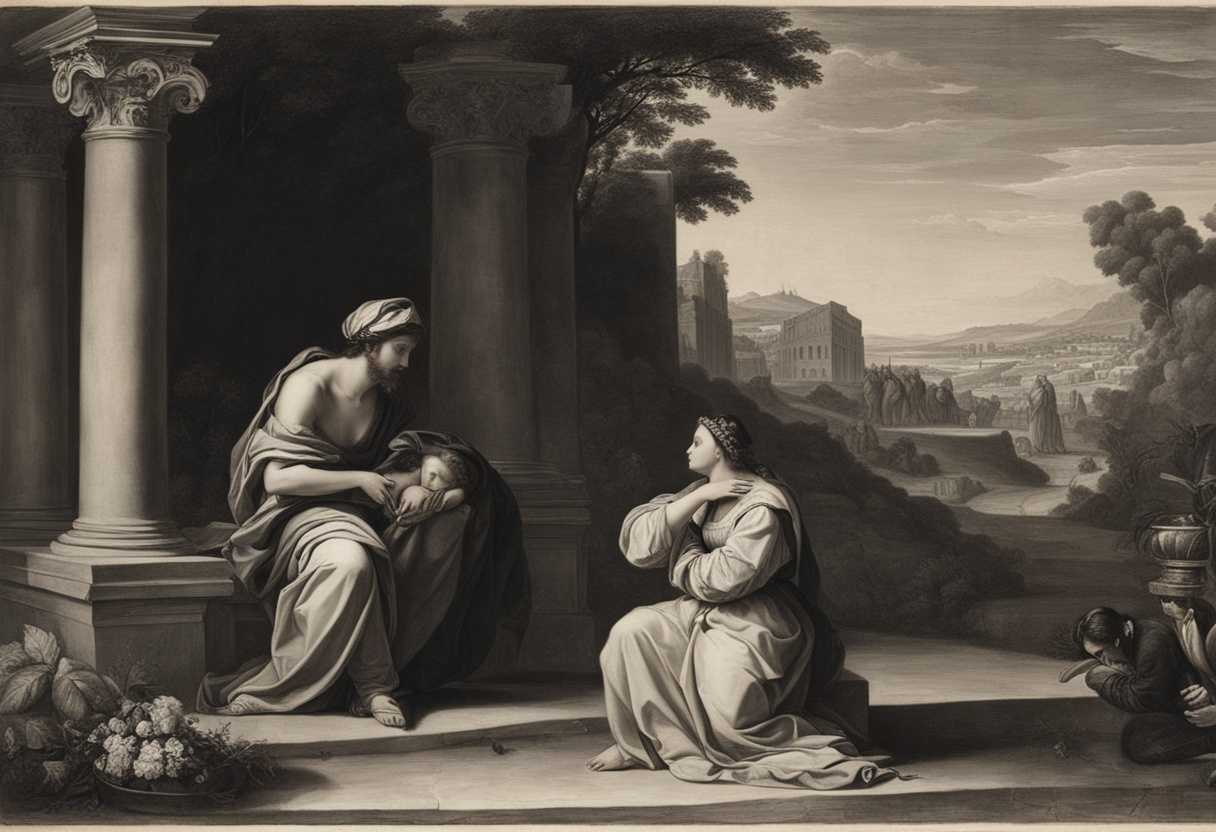
The True Meaning of 2 Samuel 14
The book of 2 Samuel was written by the prophet Nathan, who was a close advisor to King David. This chapter provides insight into the complex family dynamics and political intrigue that unfolded during David’s reign. David’s son Absalom killed his half-brother Amnon, and in this passage, we see the aftermath of the tragic events that occurred in the previous chapter. Now, Absalom has been living in exile, and his return to Jerusalem becomes the central focus. The chapter foreshadows the brewing conflict between Absalom and his father, King David, as Absalom seeks to reclaim his rightful place in the kingdom.
The chapter also highlights the role of Joab, the commander of David’s army, who orchestrates a scheme to bring Absalom back to Jerusalem. This sets the stage for the eventual confrontation between father and son, which will have far-reaching consequences for the kingdom of Israel. The themes of forgiveness, reconciliation, and the struggle for power intertwine, echoing the broader narratives found throughout the books of Samuel and the wider biblical canon as we delve into this chapter.
2 Samuel 14:1-3
Joab, King David’s military commander, devises a plan to reconcile the estranged relationship between David and his son Absalom in 2 Samuel 14:1-3. It is important to note that Absalom had killed his half-brother Amnon in revenge for the rape of their sister Tamar, which had caused a rift in the family. Joab, understanding the significance of family and the need for reconciliation, orchestrated a scheme using a wise woman from Tekoa to appeal to David’s sense of mercy and justice. Joab understood that the kingdom would be stronger if David and Absalom reconciled, as Absalom was liked by the people and thus had the potential to incite division.
This passage offers a timeless message about the power of forgiveness and reconciliation within families. Despite the heinous acts committed by Absalom, there is still an underlying hope for restoration and healing within the family unit. Joab’s intervention highlights the importance of seeking peace and unity, even in the face of deep-seated conflicts. It also showcases the wisdom of using discretion and strategy to bring about reconciliation, rather than letting anger and resentment rule the day. The theme of reconciliation and forgiveness is woven throughout various narratives in the broader context of the Bible. Joseph forgiving his brothers who had betrayed him (Genesis 45:4-15), the parable of the prodigal son (Luke 15:11-32), and Jesus’ teachings on forgiveness (Matthew 18:21-22) all emphasize the importance of reconciliation and forgiveness in relationships. These stories serve as reminders of the redemptive power of grace and mercy, even in the most strained of relationships.
Joab’s initiative in reaching out to David on behalf of Absalom also speaks to the role of mediators in conflict resolution. Christians are called to be peacemakers and mediators in their relationships, just as Joab acted as a mediator between David and Absalom (Matthew 5:9). Believers can reflect the love and grace of God to those around them by humbly seeking reconciliation and facilitating peaceful resolutions. The passage in 2 Samuel 14:1-3 reminds us of the transformative impact of forgiveness, reconciliation, and the role of wise counsel in navigating complex family dynamics. It challenges us to pursue peace, seek restoration, and extend grace even in the face of brokenness and betrayal.
2 Samuel 14:4-11
Verse 4 of 2 Samuel 14 begins with a woman from Tekoa entering the scene. She approaches King David with a carefully crafted story, portraying a situation that David could relate to – a mother pleading for the life of her son in a case where justice seems harsh. This woman’s story is a clever ploy to appeal to David’s sense of justice and fatherly love, aiming to persuade him to act with mercy. This narrative sets the stage for the unfolding drama and the lesson on compassion and justice that David will wrestle with in the following verses. The woman in the subsequent verses 5-7 continues her plea, drawing parallels between the king’s own experiences of reconciliation and his dealings with Absalom. She alludes to David’s actions in reconciling with his estranged son, Absalom, highlighting the king’s understanding of forgiveness and reconciliation. The woman subtly challenges the king to extend the same compassion and forgiveness to her situation by invoking David’s personal experiences. This illustrates the power of empathy and personal connection in influencing decisions and appealing to one’s sense of fairness and mercy.
The woman’s speech in verses 8-11 expands on her plea by emphasizing the finality of death and the ability of God to work redemption in difficult circumstances. She acknowledges the fear of death and separation but underscores the importance of forgiveness and reconciliation that can bring about restoration and renewal. This message not only reflects the woman’s own desperation but also encapsulates a deeper biblical truth about God’s capacity for redemption and the transformative power of forgiveness. It echoes themes found throughout the Bible, such as in Psalm 103:10-12, where it says, “He does not treat us as our sins deserve or repay us according to our iniquities. For as high as the heavens are above the earth, so great is his love for those who fear him. These verses in 2 Samuel 14 demonstrate the complexities of justice, mercy, and reconciliation. They highlight the struggles of dealing with difficult situations, the power of storytelling and persuasion, and the importance of empathy and understanding in making decisions that align with God’s principles. The unfolding drama in this passage sets the stage for David’s subsequent actions and the moral dilemmas that will test his leadership and character.
2 Samuel 14:12-17
A conversation between Joab and a wise woman from Tekoa, who was sent to King David to persuade him to reconcile with his son Absalom, is seen in 2 Samuel 14:12-17. The wise woman uses a cleverly crafted allegory to appeal to David’s sense of justice and mercy. She asks David to pardon her fictional son who had killed his brother, symbolizing the strife between David’s sons, Amnon and Absalom.
This section of the verse emphasizes the importance of forgiveness, reconciliation, and the consequences of estrangement within families. The story of David and Absalom is a tragic one, filled with betrayal, revenge, and ultimately, the pain of a father who lost his son. Despite Absalom’s rebellion against his father, David still yearned for him, showing the enduring love of a parent even in the face of betrayal. This narrative serves as a cautionary tale about the destructive nature of unresolved conflicts within families and the importance of forgiveness in healing relationships.
The wise woman’s plea to David mirrors the concept of repentance and seeking forgiveness that is prevalent throughout the Bible. It reflects the biblical theme of restoration and second chances, as we see with characters like David himself, who despite his grave sins, found forgiveness and redemption in God’s eyes. The message here is that no matter how far we have strayed or how deep our transgressions, there is always hope for reconciliation if we humble ourselves, seek forgiveness, and extend mercy to others.
Furthermore, this passage underscores the role of intermediaries in facilitating reconciliation and conveying difficult messages. Joab, in his wisdom, recognized the need for a mediator to soften David’s heart towards Absalom. This can be compared to the role of Christ as the ultimate Mediator between God and humanity, advocating for our forgiveness and reconciliation with the Father. Christ intercedes for us, bridging the gap between our sinful state and God’s mercy and grace, just as the wise woman and Joab intervene on Absalom’s behalf. We are challenged to examine our own relationships and willingness to forgive in reflecting on 2 Samuel 14:12-17. It prompts us to consider the power of reconciliation and the transformative impact of extending grace to those who have wronged us. It also serves as a reminder that forgiveness is not just for the benefit of the offender but also for the liberation of the wounded soul. May we heed the lessons from this passage and strive to emulate God’s boundless mercy and love in our interactions with others.
2 Samuel 14:18-20
A conversation between Joab and a wise woman from Tekoa is seen in 2 Samuel 14:18-20. This woman was sent by Joab to speak to King David in order to persuade him to reconcile with his son Absalom, who was in exile after having killed his brother Amnon. The woman uses a parable to appeal to David’s sense of mercy and justice, implying that the estrangement between David and Absalom could have devastating consequences if left unresolved.
Firstly, this passage highlights the wisdom and shrewdness of the woman from Tekoa in using a parable to deliver a message that would resonate with David. It showcases the power of storytelling and persuasive communication in conveying important truths. This woman’s role in intermediating between David and Absalom sheds light on the complexities of family relationships and the need for reconciliation even in the face of grievous offenses.
The narrative of David, Absalom, and their tumultuous relationship serves as a cautionary tale about the consequences of unresolved conflicts within families. David’s failures as a father, particularly his lack of discipline and justice in handling his sons’ actions, show the repercussions of neglecting familial responsibilities. It also portrays the far-reaching impacts of sin within a family unit and the importance of seeking forgiveness and restoration.
This passage echoes the themes of forgiveness and redemption that are prevalent throughout the Bible. It illuminates the human struggle with pride, anger, and the need for reconciliation. David’s eventual reconciliation with Absalom, though not without its own challenges and tragedies, points to the possibility of healing and restoration even in the midst of broken relationships.
The story of David and Absalom foreshadows the ultimate example of reconciliation and redemption through Jesus Christ. God offers forgiveness and restoration to all who seek Him, just as David eventually welcomed Absalom back into his presence. The narrative of brokenness and reconciliation within the family of David serves as a mirror for the larger story of humanity’s relationship with God, highlighting the grace and mercy that flow from genuine repentance and forgiveness. 2 Samuel 14:18-20 encapsulates the themes of reconciliation, forgiveness, and the complexities of familial relationships. It serves as a poignant reminder of the importance of addressing conflicts, seeking reconciliation, and extending grace to those who have wronged us. Through the lens of this passage, we are invited to reflect on our own relationships and seek to emulate the mercy and compassion demonstrated by both the wise woman from Tekoa and ultimately by God Himself.
2 Samuel 14:21-24
Joab and King David engage in an intriguing dialogue in 2 Samuel 14:21-24. Let’s break down this section for a deeper understanding.
Firstly, in verse 21, Joab, David’s commander, comes up with a plan to appeal to the king’s emotions and persuade him to bring Absalom back to Jerusalem. Joab employs a wise woman from Tekoa to craft a fictional story about a family dispute to mirror David’s own situation with Absalom. This strategy is a clever way to stir David’s paternal instincts and lead him to see the importance of reconciling with his estranged son.
Secondly, in verse 22, the woman presents her case to David, emphasizing the need for forgiveness and reconciliation. The woman cleverly maneuvers David into seeing the parallels between the story and his own relationship with Absalom by using this allegory. Through her words, David is indirectly challenged to make a judgment that would reflect his own desire for reconciliation with his son.
Moving along to verse 23, David acknowledges the wisdom in the woman’s words and agrees to bring Absalom back to Jerusalem. This decision showcases David’s vulnerability and longing for restoration within his family. Despite Absalom’s grievous act of killing his half-brother Amnon, David’s forgiveness and willingness to reconcile exhibit the profound biblical theme of mercy and restoration.
Finally, in verse 24, David commands Joab to bring Absalom back, but with a stipulation that Absalom should not come into David’s presence. This restriction may reflect David’s inner conflict regarding how to handle the situation with Absalom. David’s inability to completely embrace Absalom at this point foreshadows future conflicts and tragedies within his own family. It highlights the complexities of relationships and the consequences of unresolved conflicts.
This passage resonates with timeless messages found throughout the Bible. It underscores the importance of forgiveness, reconciliation, and the consequences of broken relationships. It also reveals the human side of King David, showcasing his struggles, vulnerabilities, and moments of compassion. The narrative of David and Absalom is woven with complexities, illustrating the impact of sins and the need for repentance and restoration within families. These themes are prevalent throughout the Bible, reflecting God’s ultimate desire for reconciliation with humanity through the sacrifice of Jesus Christ. This passage reminds us of the power of forgiveness and the transformative nature of reconciliation, urging us to emulate these virtues in our own relationships and seek healing and restoration where there is brokenness.
2 Samuel 14:25-27
Absalom, one of King David’s sons, is the focus in 2 Samuel 14:25-27. The passage begins by describing Absalom’s physical appearance, stating that “Now in all Israel there was no one who was praised as much as Absalom for his good looks.” This portrayal of Absalom as handsome and attractive is significant because it sets the stage for his rise to power and influence later in the story. Despite his outward charm, Absalom’s story is marked by deceit, betrayal, and ultimately tragedy.
Absalom’s striking appearance is contrasted with his inner bitterness and rebellion against his father, King David. The passage goes on to describe Absalom’s luxuriant hair, which was not cut, symbolizing his pride and defiance. This detail foreshadows Absalom’s arrogance and ambition, which will lead to his downfall in the future. Absalom also had three sons and one daughter, indicating his status as a prominent figure with a family of his own.
The mention of Absalom’s sister, Tamar, is crucial to understanding his story. Tamar was raped by her half-brother Amnon, which led to Absalom’s deep-seated anger and desire for revenge. This event sets off a chain of tragic events within David’s family, highlighting the consequences of sin and the importance of seeking justice and forgiveness. Absalom’s vengeful nature and inability to forgive Amnon ultimately lead to his own demise as he seeks to usurp his father’s throne.
The story of Absalom serves as a cautionary tale about the dangers of pride, rebellion, and seeking revenge. Despite his outward beauty and charisma, Absalom’s heart was filled with bitterness and a thirst for power that ultimately led to his untimely death. The Bible warns against the pursuit of worldly pleasures and the temptation to rebel against authority, emphasizing the importance of humility, forgiveness, and obedience to God’s will. Absalom’s character is established with layers of complexity in 2 Samuel 14:25-27, from his physical appearance to his inner turmoil and ambition. This passage sets the stage for the tragic events that will unfold in Absalom’s life, highlighting the consequences of sin and the importance of seeking redemption and reconciliation. The story of Absalom serves as a stark reminder of the destructive nature of pride and the need for repentance and forgiveness in the face of betrayal and injustice. The narrative of Absalom in 2 Samuel 14 teaches a powerful lesson on the dangers of unchecked ambition and the importance of seeking God’s will above our own desires. It is a sobering reminder that outward appearances can be deceiving, and true beauty lies in a heart that is humble, repentant, and aligned with God’s purposes. The story of Absalom challenges us to examine our own motivations and priorities, reminding us that true greatness is found in surrendering to God’s will and trusting in His plans for our lives.
2 Samuel 14:28-33
Absalom, the rebellious son of King David, is involved in an intriguing narrative in 2 Samuel 14:28-33. Absalom was known for his striking appearance, particularly his abundant head of hair, which symbolized his charisma and appeal. His hair was so heavy that it required cutting it annually, with the clippings weighing around 200 shekels by the royal standard. Absalom’s hair not only served as a physical trait but also as a symbolic representation of his pride and vanity.
Despite Absalom’s outward attractiveness, he harbored deep-seated resentment towards his father, King David, stemming from the lack of justice for his sister Tamar after she was violated by their half-brother Amnon. This incident led Absalom to plot revenge and eventually resulted in him orchestrating Amnon’s murder before fleeing to Geshur for safety. The tension between Absalom and King David intensified as Absalom’s thirst for power and justice fueled his ambition to overthrow his father’s reign.
Absalom’s actions and character reflect the consequences of unresolved familial issues and the perils of unchecked ambition. His story serves as a cautionary tale about the destructive nature of rebellion, pride, and vengeance. Despite being favored by many people due to his charm and charisma, Absalom’s eventual downfall showcases the importance of humility, obedience, and forgiveness in the biblical narrative.
The relationship dynamics within Absalom’s family mirror themes of betrayal, forgiveness, and redemption found throughout the Bible. King David’s struggle with Absalom echoes the complexities of parental love, discipline, and the consequences of sin. It illustrates the repercussions of David’s own shortcomings as a father and leader, which contributed to the breakdown of trust and loyalty within his household, ultimately resulting in a tragic outcome for his family and kingdom. 2 Samuel 14:28-33 encapsulates a pivotal moment in Absalom’s narrative, highlighting his physical attributes, inner turmoil, and tumultuous relationship with King David. Through this passage, readers are reminded of the importance of addressing conflicts, practicing forgiveness, and upholding righteousness in the face of personal grievances and ambitions. We reflect on Absalom’s story, seeking reconciliation, humility, and God’s grace to avoid the pitfalls of pride and rebellion that can lead to our own downfall, echoing themes reiterated throughout the Bible.
After 2 Samuel 14
The widow’s words had struck a chord within the king’s heart. He recognized the wisdom in her plea and the need for justice to be tempered with mercy. The reverend knew that the path ahead would not be an easy one as the chapter drew to a close. The king had made a decision that would have far-reaching consequences, both for himself and for the kingdom. The next chapter would reveal how this pivotal moment would shape the future, and the reverend could only hope that the lessons learned would guide the king’s hand as he navigated the challenges that lay ahead.

Reverend Michael Johnson is an experienced Church Minister with a profound expertise in spirituality and guidance. With a serene presence and a compassionate heart, he has faithfully served his congregation for over 20 years, leading them on a spiritual journey towards inner peace and enlightenment. Reverend Johnson’s extensive knowledge of religious philosophies and profound understanding of human nature have made him a trusted confidant and mentor to many, as he seamlessly weaves his profound wisdom into life teachings. Reverend Johnson’s calming demeanor and empathetic nature continue to uplift and heal souls, nurturing a sense of unity and tranquility within his community.