
1 Moreover, Ahithophel said to Absalom, “Let me choose twelve thousand men, and I will arise and pursue David tonight.
2 And I will come upon him while he is weary and discouraged and throw him into a panic, and all the people who are with him will flee. I will strike down only the king,
3 And I will bring all the people back to you as a bride comes back to her husband. You seek the life of only one man, and all the people will be at peace.”
4 And the advice seemed right in the eyes of Absalom and all the elders of Israel.
5 Then Absalom said, “Call Hushai the Archite also, and let us hear what he has to say.”
6 So Hushai came to Absalom, and Absalom said to him, “Thus has Ahithophel spoken; shall we do as he says? If not, you speak.”
7 And Hushai said to Absalom, “This time the counsel that Ahithophel has given is not good.”
8 Hushai said, “You know that your father and his men are mighty men, and that they are enraged, like a bear robbed of her cubs in the field. And your father is an expert in war; he will not spend the night with the people.
9 Behold, even now he has hidden himself in one of the pits or in some other place. And as soon as some of the people fall at the first attack, whoever hears it will say, ‘There has been a slaughter among the people who follow Absalom.’
10 Then even the valiant man, whose heart is like the heart of a lion, will utterly melt with fear, for all Israel knows that your father is a mighty man, and that those who are with him are valiant men.
11 But my counsel is that all Israel be gathered to you, from Dan to Beersheba, as the sand by the sea for multitude, and that you go to battle in person.
12 So we shall come upon him in some place where he is to be found, and we shall light upon him as the dew falls on the ground, and of him and all the men with him not one will be left.
13 Moreover, if he is hidden in a pit or in some other place, and as soon as some of the people fall at the first attack, whoever hears it will say, ‘There has been a slaughter among the people who follow Absalom.’
14 And Absalom and all the men of Israel said, “The counsel of Hushai the Archite is better than the counsel of Ahithophel.” For the Lord had ordained to defeat the good counsel of Ahithophel, so that the Lord might bring harm upon Absalom.
15 Then Hushai said to Zadok and Abiathar the priests, “Thus and so did Ahithophel counsel Absalom and the elders of Israel, and thus and so have I counseled.
16 Now therefore send quickly and tell David, ‘Do not stay tonight at the fords of the wilderness, but by all means pass over, lest the king and all the people who are with him be swallowed up.’”
17 Now Jonathan and Ahimaaz were waiting at En-rogel. A female servant was to go and tell them, and they were to go and tell King David, for they were not to be seen entering the city.
18 But a young man saw them and told Absalom. So both of them went away quickly and came to the house of a man at Bahurim, who had a well in his courtyard. And they went down into it.
19 And the woman took a covering and spread it out over the well’s mouth and scattered grain on it, and nothing was known of it.
20 When Absalom’s servants came to the woman at the house, they said, “Where are Ahimaaz and Jonathan?” And the woman said to them, “They have gone over the brook of water.” And when they had sought and could not find them, they returned to Jerusalem.
21 When Ahithophel saw that his counsel was not followed, he saddled his donkey and went off home to his own city. He set his house in order and hanged himself, and he died and was buried in the tomb of his father.
22 Then David arose, and all the people who were with him, and they crossed the Jordan. By daybreak not one was left who had not crossed the Jordan.
23 When Ahithophel saw that his counsel was not followed, he saddled his donkey and went off home to his own city. He set his house in order and hanged himself, and he died and was buried in the tomb of his father.
24 Then David came to Mahanaim. And Absalom crossed the Jordan with all the men of Israel.
25 Now Absalom had set Amasa over the army instead of Joab. Amasa was the son of a man named Ithra the Ishmaelite, who had married Abigal the daughter of Nahash, sister of Zeruiah, Joab’s mother.
26 And Israel and Absalom encamped in the land of Gilead.
27 When David came to Mahanaim, Shobi the son of Nahash from Rabbah of the Ammonites, and Machir the son of Ammiel from Lo-debar, and Barzillai the Gileadite from Rogelim,
28 brought beds, basins, and earthen vessels, wheat, barley, flour, parched grain, beans and lentils,
29 honey, curds, sheep, and cheese from the herd, for David and the people with him to eat, for they said, “The people are hungry and weary and thirsty in the wilderness.”
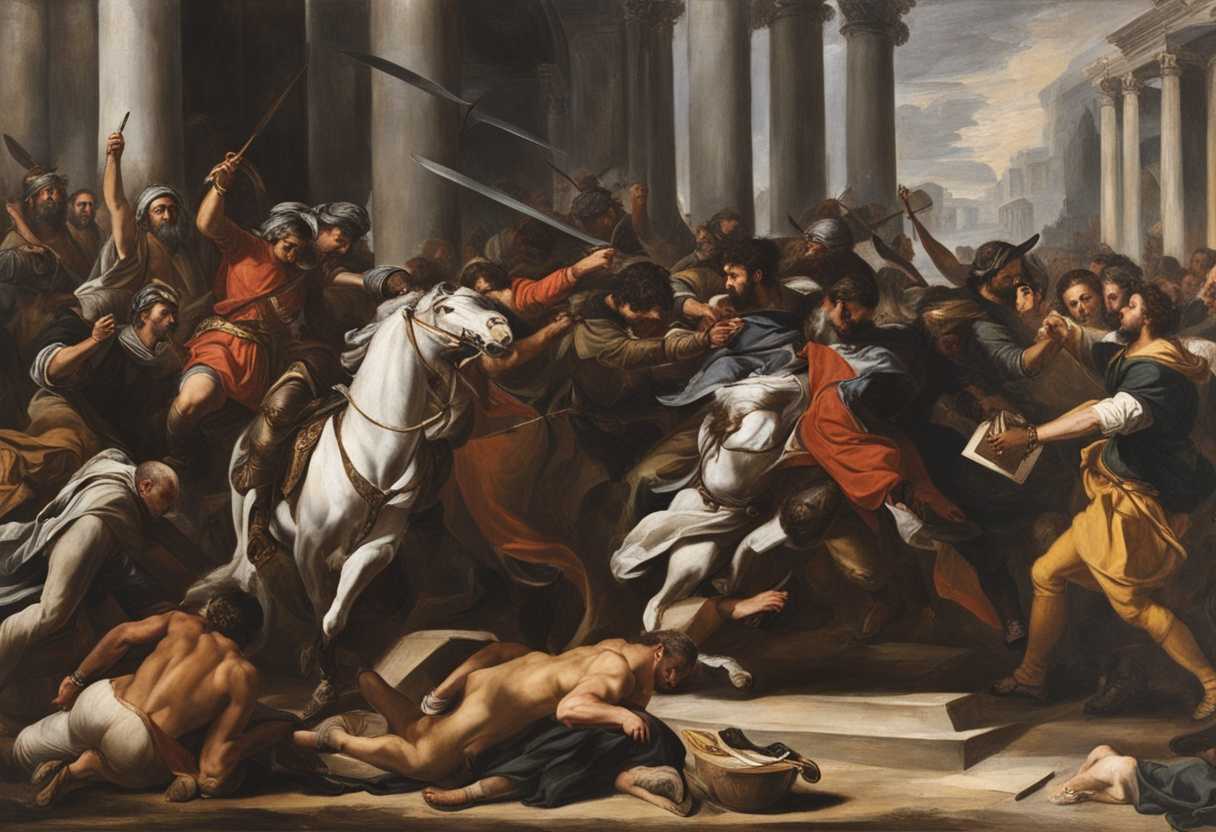
The True Meaning of 2 Samuel 17
The Book of 2 Samuel was written by the prophet Nathan, who was a close advisor to King David. This chapter describes the events following the rebellion of David’s son, Absalom, against his father’s rule. Hushai seeks to thwart Ahithophel’s plans as we see the cunning schemes of Absalom’s advisor, Ahithophel, and the intervention of another counselor in this chapter. The chapter foreshadows the eventual downfall of Absalom’s rebellion and the restoration of David’s kingdom.
Interestingly, we see echoes of earlier biblical events, such as the rebellion of Korah against Moses’ leadership in the book of Numbers. We see God working to preserve David’s rightful rule just as He protected Moses. The chapter also highlights the importance of seeking wise counsel, as Absalom’s rejection of Ahithophel’s advice ultimately contributes to his undoing. We will delve into this chapter, and God’s plan will prevail, even in the face of human rebellion and scheming. The events described here serve as a powerful testimony to the sovereignty of the Almighty and the futility of opposing His will.
2 Samuel 17:1-4
Ahithophel gives counsel to Absalom regarding the strategy to defeat King David in 2 Samuel 17:1-4. Ahithophel was a wise and respected counselor who had joined Absalom’s rebellion against David. He suggests a plan to swiftly pursue David with a select group of men while David is still weary and weak from his escape, proposing to strike him down while he is vulnerable in these verses.
This plan was not just about military strategy but also about exploiting David’s personal situation at that moment. Ahithophel’s advice was not only tactical but also intended to strike fear and confusion in the hearts of David and his followers. The cunning and treachery in this plan are evident, reflecting the deep betrayal and complexity of human relationships, especially within the royal court.
This passage serves as a reminder of the tension and conflict that can arise even within families and among trusted advisors. It highlights the peril of turning away from God’s ways, as Absalom’s rebellion was rooted in his desire for power and revenge. Ahithophel’s involvement shows how wisdom and intelligence can be corrupted when driven by personal vendettas and disregard for righteousness. The consequences of such actions are often far-reaching and destructive, leading to further turmoil and suffering, as we see in the events that follow in David’s life. This narrative reflects themes of loyalty, betrayal, and the consequences of choosing worldly wisdom over God’s guidance in the broader context of the Bible. It also points to the importance of seeking counsel from the Lord and surrounding oneself with trustworthy and godly advisors. Proverbs 19:21 reminds us, “Many are the plans in the mind of a man, but it is the purpose of the Lord that will stand. Human schemes, no matter how well thought out, are ultimately subject to God’s will and purposes, as we see in this account.
2 Samuel 17:5-14
2 Samuel 17:5-14 reads: “Then Absalom said, ‘Call also Hushai the Archite, and let us hear what he has to say.’ And when Hushai came to Absalom, Absalom said to him, ‘Thus has Ahithophel spoken; shall we do as he says? If not, you speak.’ Then Hushai said to Absalom, ‘This time the counsel that Ahithophel has given is not good.’ Hushai continued, ‘You know that your father and his men are mighty men, and that they are enraged, like a bear robbed of her cubs in the field. Besides, your father is expert in war; he will not spend the night with the people. Behold, even now he has hidden himself in one of the pits or in some other place. And as soon as some of the people fall at the first attack, whoever hears it will say, “There has been a slaughter among the people who follow Absalom.” Then even the valiant man, whose heart is like the heart of a lion, will utterly melt with fear, for all Israel knows that your father is a mighty man, and that those who are with him are valiant. But my counsel is that all Israel be gathered to you, from Dan to Beersheba, as the sand by the sea for multitude, and that you go to battle in person. So we shall come upon him in some place where he is to be found, and we shall light upon him as the dew falls on the ground, and of him and all the men with him not one will be left. If he withdraws into a city, then all Israel will bring ropes to that city, and we shall drag it into the valley, until not even a pebble is to be found there.’ And Absalom and all the men of Israel said, ‘The counsel of Hushai the Archite is better than the counsel of Ahithophel.’ For the Lord had ordained to defeat the good counsel of Ahithophel, so that the Lord might bring harm upon Absalom. We witness a pivotal moment in the story of Absalom’s rebellion against his father, King David in this passage from 2 Samuel 17. Absalom seeks the counsel of Hushai the Archite, alongside that of Ahithophel, to guide him on the best course of action in dealing with his father, David. Ahithophel, a trusted advisor of David who had defected to Absalom, initially proposes a strategy that would lead to a decisive and swift defeat of David’s forces. However, Hushai, who was secretly loyal to David, cunningly undermines Ahithophel’s counsel by appealing to Absalom’s pride and overconfidence in his own strength and the size of his supporters.
Hushai’s strategic manipulation of the situation plays a crucial role in shaping the events that follow. Hushai effectively buys time for David to prepare his defenses and rally his forces by highlighting David’s reputation as a skilled and fierce warrior and by planting seeds of doubt in Absalom’s mind about the practicality and success of Ahithophel’s plan. This intervention ultimately leads Absalom to reject Ahithophel’s sound advice in favor of Hushai’s deceptive but ultimately flawed strategy.
This passage underscores the themes of loyalty, deception, and the sovereignty of God in human affairs. While Hushai’s actions may seem deceitful, his loyalty to King David and his commitment to thwarting Absalom’s rebellion align with the bigger picture of God’s plan for David’s kingship. Throughout the Bible, we see instances where God works through imperfect individuals and their actions to fulfill His greater purposes. Hushai’s intervention serves as a reminder that God can use even our flawed efforts to bring about His divine will.
Additionally, the downfall of Ahithophel, whose wise counsel was rejected in favor of deceitful advice, serves as a cautionary tale about the consequences of betraying loyalty and integrity. Ahithophel’s subsequent despair and eventual suicide (2 Samuel 17:23) highlight the destructive effects of allowing bitterness and pride to cloud one’s judgment and lead to tragic outcomes. We are reminded of the complexities of human motives and actions, the importance of discerning counsel, and the overarching role of God’s providence in shaping the course of history in examining this passage. It prompts us to reflect on the implications of our choices, the value of loyalty and integrity, and the necessity of seeking God’s guidance in all our decisions.
2 Samuel 17:15-22
Events unfold during Absalom’s rebellion against his father David in 2 Samuel 17:15-22. Ahithophel, one of David’s trusted counselors, advises Absalom to pursue David immediately with only a select group of men, giving them the best chance to capture David while he is still weary and discouraged from his escape. Absalom and all the men of Israel agreed that Ahithophel’s plan was wise and took immediate action to implement it.
Ahithophel’s advice to pursue David quickly reflects the betrayal he felt towards David. It’s significant to note that Ahithophel’s betrayal stemmed from a personal vendetta. Ahithophel’s real motive seems to have been driven by his daughter Bathsheba, the same Bathsheba who was involved in the scandalous affair with David. Ahithophel was Bathsheba’s grandfather, so he felt the betrayal deeply and sought revenge against David. This personal vendetta highlights the consequences of David’s sin with Bathsheba, showing how sin can have a far-reaching impact beyond the immediate parties involved.
Furthermore, Ahithophel’s counsel being favored over Hushai’s (David’s spy) advice also sheds light on the concept of wisdom, loyalty, and trusting in God’s guidance. While Ahithophel was indeed a wise advisor, his motives were driven by personal vengeance, which clouded his judgment. On the other hand, Hushai, although his counsel was not initially heeded, ultimately proved loyal to David and acted in God’s interest by misleading Absalom to buy David time to prepare for battle. This showcases the importance of seeking counsel not just from those who appear wise, but from those who are aligned with God’s will and have pure intentions.
This passage serves as a reminder of the consequences of sin, the importance of seeking wise counsel, and the sovereignty of God’s plans despite the schemes of men. It also highlights the tangled web of relationships and consequences that can arise from our actions, emphasizing the need for repentance, forgiveness, and ultimately, redemption through God’s grace. The narrative of Ahithophel, Bathsheba, David, Absalom, and Hushai provides a complex tapestry of human emotions, loyalties, and consequences that speak to the universal themes of sin, betrayal, loyalty, and divine providence found throughout the Bible.
2 Samuel 17:23-29
The passage in 2 Samuel 17:23-29 details the aftermath of Hushai’s interference undermining the counsel of Absalom’s advisors during Absalom’s rebellion against King David. Ahithophel, one of Absalom’s key advisors, realized that his advice had been disregarded, and in anguish over his failure, he went home, set his household in order, and took his own life. This act of suicide portrays the intensity of Ahithophel’s desolation and the tragic consequences that can arise from pride and a bruised ego. It also serves as a stark reminder of the devastating outcomes of making decisions based on personal ambition rather than righteousness or loyalty.
Ahithophel had initially provided shrewd counsel to Absalom, advising him to pursue David immediately to ensure his overthrow. His wisdom was highly regarded, with his advice described as being as if one “inquired of the word of God” (2 Samuel 16:23). However, the manipulation of Hushai, who was loyal to David, led to Absalom following his counsel instead, causing Ahithophel to recognize the irreversible shift in power dynamics. This turn of events highlights the intricate political schemes and betrayals that can unfold, illustrating how even the most trusted advisors can be undermined in a quest for power and control. These verses emphasize the importance of loyalty and cunning in turbulent times through the mention of Hushai’s mission. Hushai, a close friend of King David, was instrumental in countering Ahithophel’s advice, playing a vital role in ensuring David’s safety and ultimately thwarting Absalom’s coup. His loyalty to David and strategic planning showcase the enduring theme of faithfulness and the intricate ways in which God’s purposes can be fulfilled through human actions. Hushai’s actions highlight the significance of having loyal companions and the power of divine providence working through individuals to achieve His plans and protect His anointed.
This passage in 2 Samuel 17:23-29 not only serves as a historical account of the events surrounding Absalom’s rebellion but also carries timeless messages about the consequences of pride, the importance of loyalty, and the sovereignty of God amidst human scheming. It showcases the complexities of human relationships and political intrigue while underscoring the overarching theme of God’s ultimate control and the fulfillment of His purposes through both the righteous and the unrighteous. It ultimately calls readers to reflect on the ramifications of their actions, the nature of their allegiances, and the assurance of God’s providential care in the midst of life’s uncertainties.
After 2 Samuel 17
The chapter concluded with Absalom’s forces being defeated in the forest of Ephraim. Ahithophel’s wise counsel was ignored, and Absalom’s army was routed. Many were killed, and Absalom himself was caught in the branches of a tree and killed by Joab. The kingdom lay in turmoil as the sun set on that fateful day. The rightful king, David, had triumphed, but at a great cost. The road ahead would be long and difficult, as the wounds of this civil war would take time to heal. Yet, in the midst of the darkness, a glimmer of hope remained. For the Lord had shown His hand, and those who trusted in Him would find the strength to rebuild and restore the kingdom.

Reverend Michael Johnson is an experienced Church Minister with a profound expertise in spirituality and guidance. With a serene presence and a compassionate heart, he has faithfully served his congregation for over 20 years, leading them on a spiritual journey towards inner peace and enlightenment. Reverend Johnson’s extensive knowledge of religious philosophies and profound understanding of human nature have made him a trusted confidant and mentor to many, as he seamlessly weaves his profound wisdom into life teachings. Reverend Johnson’s calming demeanor and empathetic nature continue to uplift and heal souls, nurturing a sense of unity and tranquility within his community.