
Acts 10:17-23 is about Peter’s struggle to understand a divine revelation instructing him to abandon his traditional beliefs and embrace the idea that God’s message and salvation are not exclusive to a particular group of people, but are meant for all.
17 Now while Peter was inwardly perplexed as to what the vision that he had seen might mean, behold, the men who were sent by Cornelius, having made inquiry for Simon’s house, stood at the gate.
18 They called out to ask whether Simon who was called Peter was lodging there.
19 And while Peter was pondering the vision, the Spirit said to him, “Behold, three men are looking for you.
20 Rise and go down and accompany them without hesitation, for I have sent them.”
21 And Peter went down to the men and said, “I am the one you are looking for. What is the reason for your coming?”
22 And they said, “Cornelius, a centurion, an upright and God-fearing man, who is well spoken of by the whole Jewish nation, was directed by a holy angel to send for you to come to his house and to hear what you have to say.”
23 So he invited them in to be his guests. The next day he rose and went away with them, and some of the brothers from Joppa accompanied him.
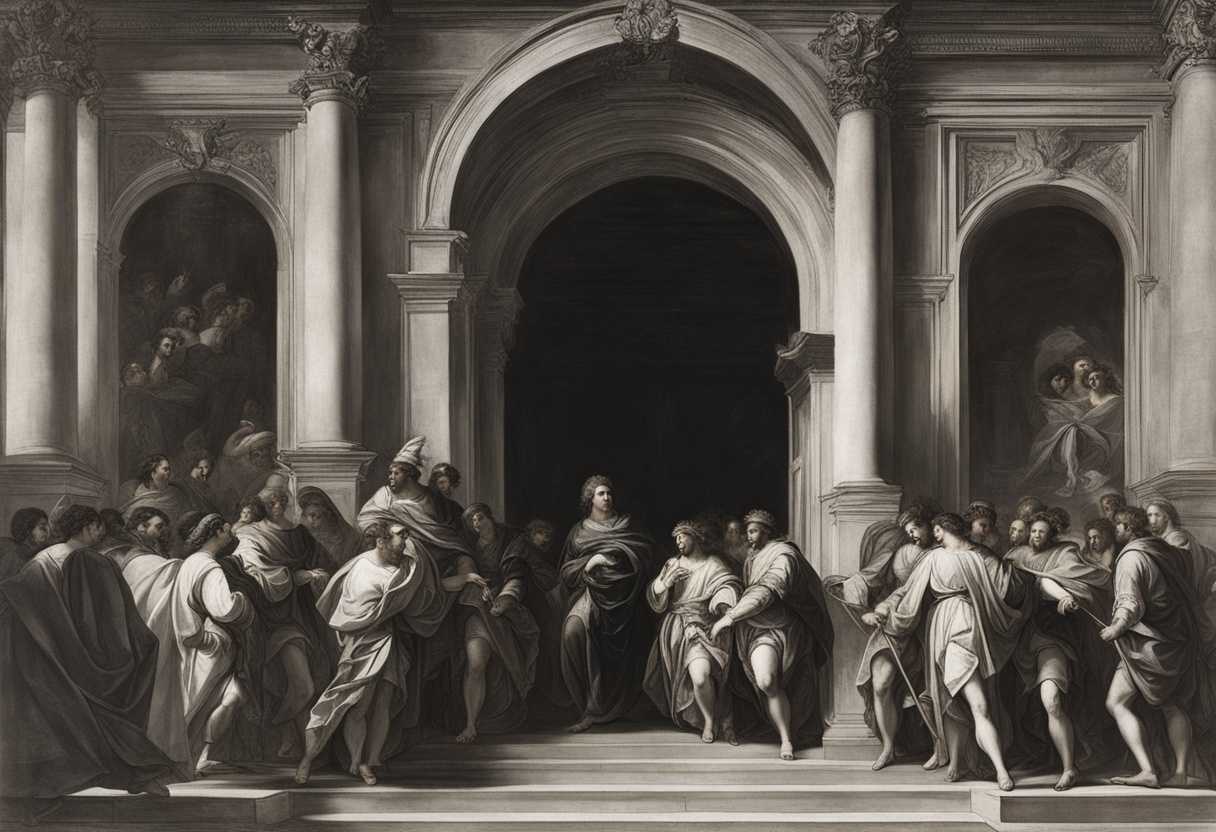
Setting the Scene for Acts 10:17-23
In Acts chapter 10, we find Peter on the rooftop of Simon the Tanner’s house in Joppa. It is around noon, and Peter goes up to the rooftop to pray. As he is praying, he falls into a trance and sees a vision of a large sheet coming down from heaven, filled with all kinds of animals, both clean and unclean according to Jewish dietary laws. A voice tells Peter to kill and eat, but Peter, being a devout Jew, refuses, stating that he has never eaten anything impure or unclean.
Meanwhile, Cornelius, a Roman centurion, has also had a vision from an angel instructing him to send for Peter, who is staying at Simon the Tanner’s house. Cornelius sends his servants to Joppa to fetch Peter. As Peter is pondering the meaning of his vision, the Spirit tells him that three men are looking for him. Peter goes down to meet them and invites them into the house, where they explain the reason for their visit and how Cornelius had been instructed by an angel to send for Peter.
The scene is set in a humble dwelling in Joppa, with the Mediterranean Sea in the background and the sounds of the bustling city filling the air. Peter, a devout Jew and one of Jesus’ disciples, is grappling with the implications of his vision, while Cornelius, a Roman centurion and a devout God-fearer, is eagerly awaiting Peter’s arrival. The convergence of these two men from different backgrounds and cultures is a pivotal moment in the early Christian church, as it marks the beginning of the gospel spreading beyond the Jewish community to the Gentiles.
What is Acts 10:17-23 about?
This verse illustrates the transformative power of divine guidance in breaking down societal barriers. It shows how Peter, a devout Jew, was led by a vision to meet Cornelius, a Gentile and a Roman centurion. This encounter challenges the traditional separation between Jews and Gentiles that was deeply ingrained in the cultural and religious practices of the time. It emphasizes the importance of openness to new experiences and perspectives, as well as the willingness to challenge ingrained beliefs for the sake of greater understanding and unity.
Think about the implications of this encounter – what it means for Peter to go against societal norms and engage with someone from a different background. What lessons can we draw from this story about embracing diversity and inclusivity in our own lives and communities? Reflect on the idea that sometimes, breaking down barriers requires us to step out of our comfort zones and engage with people who are different from us. How can we apply this message of acceptance and unity in our interactions with others, regardless of their background or beliefs?
Understanding what Acts 10:17-23 really means
In Acts 10:17-23, we witness a pivotal moment in the early church’s history, where Peter grapples with a vision from God that challenges his deeply ingrained beliefs about dietary laws and the inclusion of Gentiles in the Christian community. The phrase “Peter was inwardly perplexed” captures his initial confusion, marking the beginning of a transformative journey that will reshape his understanding of God’s plan for all people. As the Spirit speaks to him, we see divine guidance at play, emphasizing the active role of the Holy Spirit in directing Peter’s actions and decisions. When God declares, “I have sent them,” it underscores His sovereignty and initiative in orchestrating events to fulfill His divine purposes.
This passage resonates with Acts 11:1-18, where Peter recounts his vision to the Jerusalem church, highlighting God’s inclusive plan that extends salvation to both Jews and Gentiles. Similarly, Galatians 3:28 and Ephesians 2:14-18 reinforce the theme of inclusivity and unity in Christ, breaking down barriers of ethnicity, social status, and gender to create a new, unified humanity. Today, this narrative challenges us to examine our own biases and prejudices, urging us to embrace inclusivity and unity within the body of Christ. It serves as a reminder that God’s plans often transcend our limited understanding and cultural boundaries.
Consider a diverse urban church that initially struggled with integrating different cultural groups. Through prayer and intentional efforts, they discovered the beauty in their diversity, becoming a vibrant, unified community. This transformation mirrors Peter’s journey from confusion to acceptance and action, illustrating the power of God to unite diverse individuals under His love and purpose. Reflect on areas in your life where prejudices or exclusive attitudes may linger. How can you open your heart to God’s broader vision of inclusivity and unity within the body of Christ?
Contemplate how the Holy Spirit might be prompting you to step out of your comfort zone and engage with those who are different from you. Embrace the truth that God’s love and salvation are available to all, regardless of background or status, and strive to embody this inclusive love in your daily interactions. Just as Peter’s vision challenged his preconceptions and led to a more inclusive faith community, may we also be open to God’s transformative work in our hearts and communities, embracing diversity and unity in Christ.
How do we discern and follow God’s guidance?
Peter is guided by God through a vision in Acts 10:17-23 to meet with Cornelius, a Gentile. This passage teaches us that God’s guidance can come in various forms, such as visions, dreams, or through circumstances. It also highlights the importance of being open and sensitive to God’s leading, even when it goes against our preconceived notions or cultural norms.
To discern and follow God’s guidance, we must cultivate a close relationship with Him through prayer, reading His word, and seeking His will in all aspects of our lives. It requires humility and a willingness to surrender our own plans and desires to align with God’s perfect will. We can navigate life’s decisions with confidence by staying connected to God and being attentive to His voice, knowing that He will direct our steps. Trusting and having faith in God’s wisdom and timing is ultimately required to follow His guidance. It may not always make sense to our human understanding, but we can rest assured that God’s plans are always for our good and His glory. He will lead us on paths of righteousness and fulfill His purposes in our lives as we commit our ways to Him and seek His guidance earnestly.
Application
Let’s dive deep into Acts 10:17-23 and draw inspiration from Peter’s courage to break free from the familiar and embrace the unknown. Just as Peter followed God’s path with unwavering faith, let’s challenge ourselves to set aside our doubts and step into uncharted territories. Are you ready to break down barriers in your life and answer the call to walk in alignment with God’s will, even if it means venturing into the unfamiliar?

Reverend Michael Johnson is an experienced Church Minister with a profound expertise in spirituality and guidance. With a serene presence and a compassionate heart, he has faithfully served his congregation for over 20 years, leading them on a spiritual journey towards inner peace and enlightenment. Reverend Johnson’s extensive knowledge of religious philosophies and profound understanding of human nature have made him a trusted confidant and mentor to many, as he seamlessly weaves his profound wisdom into life teachings. Reverend Johnson’s calming demeanor and empathetic nature continue to uplift and heal souls, nurturing a sense of unity and tranquility within his community.