
Acts 12:20 is about the downfall of King Herod Agrippa, whose pride and hubris led to his ultimate demise as he accepted the people’s false proclamation of him being a god, failing to give glory to God.
20 Now Herod was angry with the people of Tyre and Sidon, and they came to him with one accord, and having persuaded Blastus, the king’s chamberlain, they asked for peace, because their country depended on the king’s country for food.
Setting the Scene for Acts 12:20
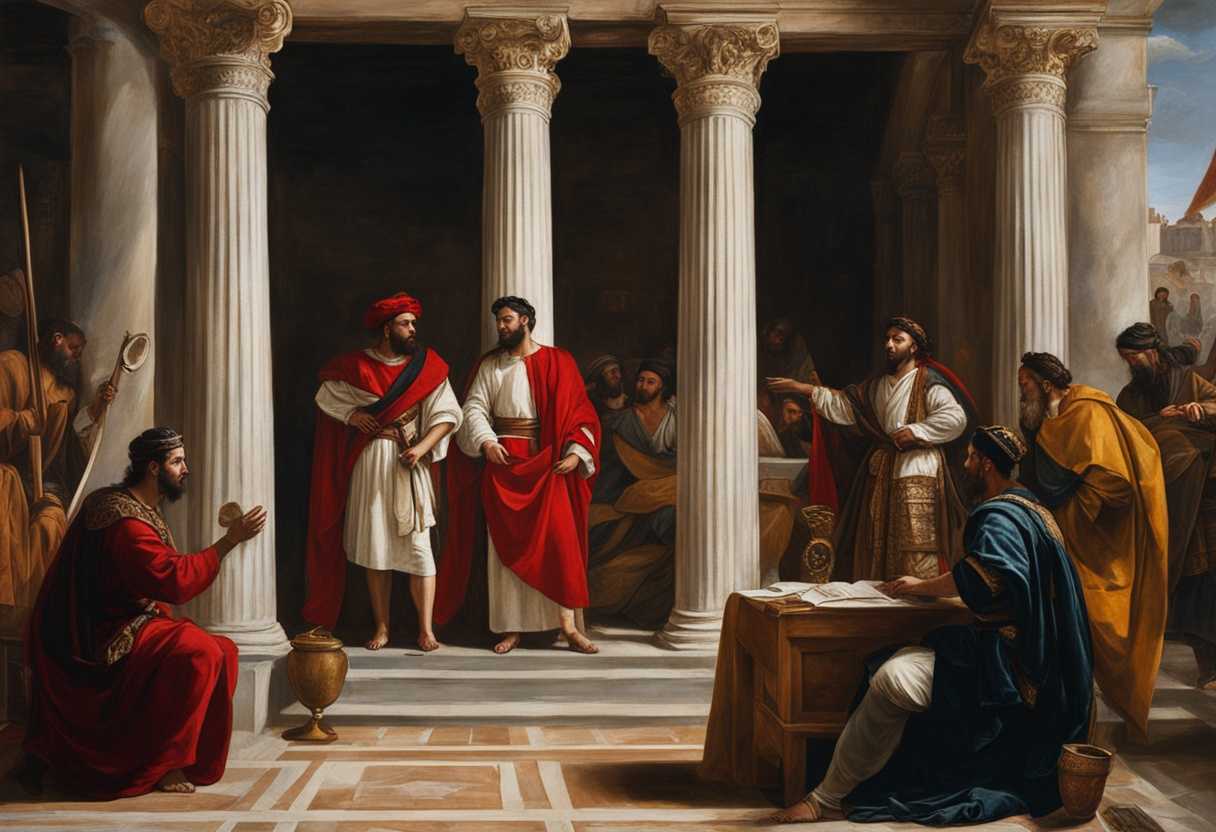
The scene in Acts 12:20 takes place in Caesarea, a prominent coastal city in the Roman province of Judea. King Herod Agrippa I is seated on his throne, adorned in royal robes, delivering a speech to the people of Tyre and Sidon who have come to seek his favor. The opulent throne room is filled with courtiers, advisors, and dignitaries, all eager to hear the king’s words.
Herod Agrippa I, seeking to assert his authority and win the favor of the people, basks in the adulation of the crowd as they shout, “This is the voice of a god, not of a man!” The king, reveling in the praise, does not rebuke the people for their blasphemous declaration, but instead accepts their adulation. However, the consequences of his prideful acceptance of divine honors are swift and severe, as the angel of the Lord strikes him down, and he is eaten by worms and dies.
The tension in the room is palpable as the once-mighty king is humbled before the eyes of all present, a stark reminder of the dangers of pride and the consequences of seeking glory that belongs only to God. The scene serves as a powerful lesson in the biblical narrative, illustrating the importance of humility and the consequences of exalting oneself above the rightful place of God.
What is Acts 12:20 about?
This verse serves as a powerful reminder of the consequences of pride and arrogance. King Herod’s downfall highlights the dangers of letting one’s ego and self-importance cloud their judgment. This cautionary tale urges us to stay humble and mindful of our actions, as unchecked pride can lead to disastrous outcomes.
Reflecting on this verse, it prompts us to consider the importance of humility and self-awareness in our own lives. Have you ever found yourself getting caught up in pride, letting it dictate your decisions and interactions? How can we ensure that we remain grounded and respectful in our relationships and endeavors? We are encouraged to cultivate humility and empathy in our daily lives by acknowledging the repercussions of King Herod’s pride, steering clear of the pitfalls of arrogance. Let us learn from this biblical lesson and strive to embody humility in all that we do.
Understanding what Acts 12:20 really means
Acts 12:20 presents us with a snapshot of a larger narrative involving King Herod Agrippa I, a ruler known for his persecution of early Christians. In this verse, we witness Herod’s anger towards the people of Tyre and Sidon, who, despite their differences, sought peace with him. The backdrop of this story sets the stage for a deeper exploration of themes such as pride, humility, dependence, and the pursuit of peace.
The subsequent verses in Acts 12:21-23 reveal the tragic consequences of Herod’s pride as he accepts praise as a god and is struck down by an angel of the Lord. This outcome echoes the wisdom found in Proverbs 16:18, which warns that “pride goes before destruction, a haughty spirit before a fall.” The downfall of Herod serves as a stark reminder of the perils of arrogance and the importance of humility in our interactions with others.
The actions of the people of Tyre and Sidon, who sought reconciliation with Herod because their food supply depended on his country, highlight the interconnectedness of communities and the significance of maintaining peaceful relationships. This narrative resonates with the teaching in Matthew 5:9, where Jesus proclaims, “Blessed are the peacemakers, for they will be called children of God.” It underscores the value of seeking peace and reconciliation in a world often marred by conflict and division.
Consider a scenario where a small business owner faces a dispute with a crucial supplier. Instead of escalating the conflict, the business owner chooses to pursue a peaceful resolution, recognizing the mutual benefit of maintaining a positive relationship. This decision not only ensures the survival of the business but also fosters a sense of harmony and cooperation between the parties involved.
The phrases in Acts 12:20, such as “Herod had been quarreling with the people of Tyre and Sidon,” “They now joined together and sought an audience with him,” and “Because they depended on the king’s country for their food supply,” offer poignant insights into the dynamics of conflict resolution and the practical considerations that underpin our relationships. By delving into this verse and its broader implications, we are prompted to reflect on the virtues of humility, the significance of fostering peaceful interactions, and the interconnected nature of our communities. Through these reflections, we can glean valuable lessons that resonate with our daily lives and interactions with others.
How should we respond when people praise us excessively?
When people praise us excessively, we should remember that it is important to stay humble and not let the praise go to our heads. Excessive praise can lead to arrogance, which can be damaging both to ourselves and our relationships with others. Instead of letting praise inflate our egos, we should remain grounded and remember that all good things come from God.
It is also crucial to acknowledge that any praise we receive is ultimately due to the blessings and abilities that God has bestowed upon us. Rather than taking credit for our accomplishments, we should give thanks to God and recognize that He is the source of all our strengths and successes. We can maintain a right perspective on our achievements and prevent pride from taking root in our hearts by staying humble and attributing all praise and glory to God.
Application
Let’s take a moment to ponder the message in Acts 12:20, and feel the power of God’s presence around us. Just like King Herod’s fate, let us keep our egos in check and bow down before the Almighty. This verse is a compass, guiding us to check our intentions and make sure we only lift up the Creator. Will you rise to honor the Lord in everything you do?

Reverend Michael Johnson is an experienced Church Minister with a profound expertise in spirituality and guidance. With a serene presence and a compassionate heart, he has faithfully served his congregation for over 20 years, leading them on a spiritual journey towards inner peace and enlightenment. Reverend Johnson’s extensive knowledge of religious philosophies and profound understanding of human nature have made him a trusted confidant and mentor to many, as he seamlessly weaves his profound wisdom into life teachings. Reverend Johnson’s calming demeanor and empathetic nature continue to uplift and heal souls, nurturing a sense of unity and tranquility within his community.