
Acts 12:21-23 is about the downfall of King Herod Agrippa I, who was struck down by God for accepting praise as a divine being rather than giving glory to God, highlighting the consequences of pride and arrogance in the face of divine authority.
21 On an appointed day Herod put on his royal robes, took his seat upon the throne, and delivered an oration to them.
22 And the people were shouting, “The voice of a god, and not of a man!”
23 Immediately an angel of the Lord struck him down, because he did not give God the glory, and he was eaten by worms and breathed his last.
Setting the Scene for Acts 12:21-23
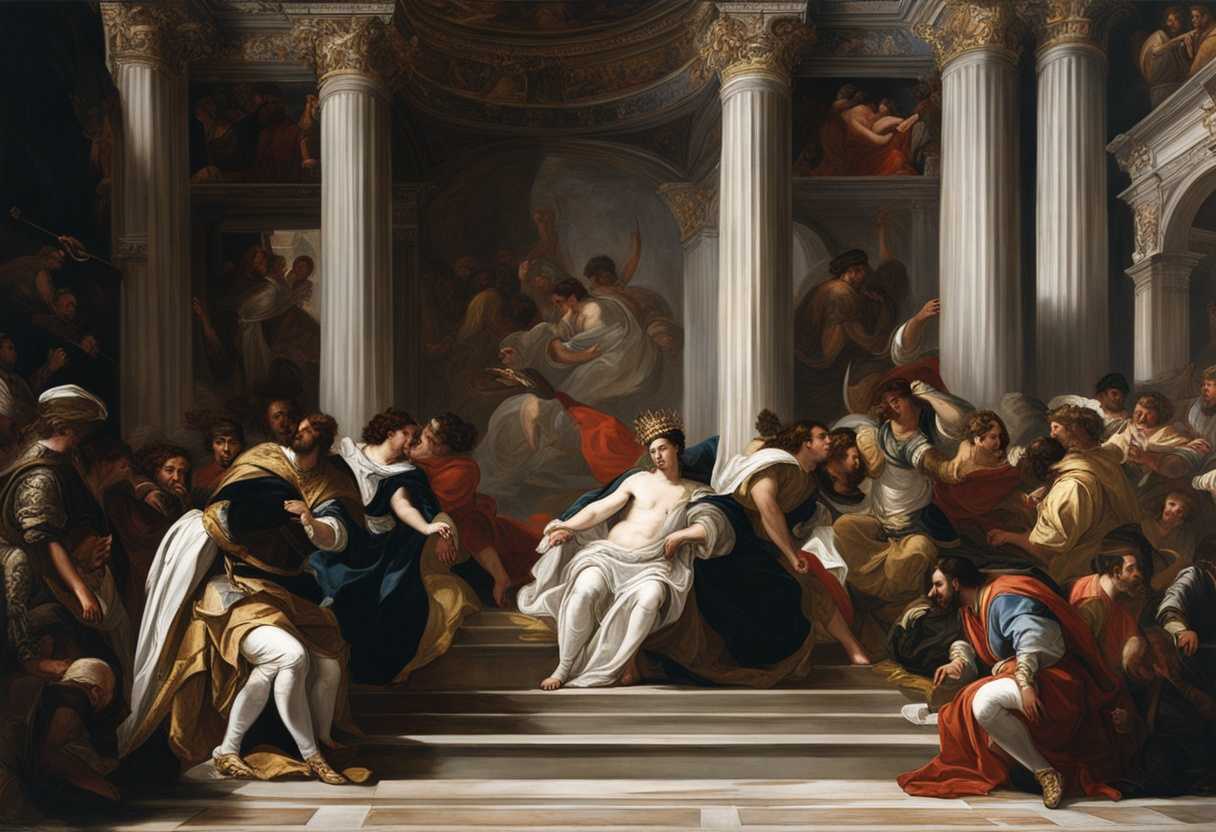
The scene in Acts 12:21-23 takes place in the city of Caesarea, a prominent Roman city along the coast of the Mediterranean Sea. King Herod Agrippa I, a ruler appointed by the Roman Empire, is in Caesarea to celebrate a festival in honor of the Emperor Claudius. The grand event is filled with pomp and splendor, with Herod dressed in his royal robes and seated on his throne, addressing the people.
The high officials, military commanders, and leading men of Caesarea are gathered before Herod, along with a crowd of people who have come to witness the festivities. The atmosphere is charged with excitement and anticipation as Herod delivers a speech to the assembled crowd, basking in the adulation and praise of the people. However, in a moment of hubris, Herod fails to give glory to God, and the consequences are swift and severe as an angel of the Lord strikes him down, and he is eaten by worms and dies.
The scene serves as a powerful reminder of the sovereignty of God and the importance of giving Him the glory that is due. It also highlights the fleeting nature of human power and the consequences of pride and arrogance. The dramatic events in Caesarea leave a lasting impression on all who witness them, underscoring the eternal truth that God will not share His glory with anyone.
What is Acts 12:21-23 about?
This verse speaks to the consequences of pride and arrogance. It teaches us that Herod’s pride and arrogance ultimately led to his downfall and death. It serves as a warning against the dangers of excessive pride and self-importance. The verse also highlights the divine judgment that humbles the arrogant. It reminds us that no matter how powerful or influential a person may be, they are not above God’s judgment.
Think about the times in your own life when you may have felt prideful or arrogant. How did it affect your relationships with others? Reflect on how humility can lead to growth and positive change in your life. Remaining humble in the face of success or power is important to prevent the negative consequences that come with arrogance. This verse ultimately reminds us of the power of humility and the need to remain grounded in the face of success and recognition.
Understanding what Acts 12:21-23 really means
In the historical setting of Acts 12:21-23, we find ourselves amidst the reign of King Herod Agrippa I, a ruler notorious for his persecution of early Christians. The immediate context of these verses follows the miraculous escape of Peter from prison, showcasing the stark dichotomy between divine intervention and human arrogance. As we delve into the key phrases of this passage, we encounter significant meanings that shed light on the narrative’s deeper implications. The phrase “On the appointed day” signifies a deliberate timing for Herod’s actions, emphasizing the calculated nature of his deeds.
Moreover, the image of “Herod, wearing his royal robes” symbolizes his earthly power and authority, setting the stage for his display of hubris. His act of sitting on his throne and delivering a public address underscores his craving for public acclaim, revealing his prideful nature. When the crowd proclaims, “The voice of a god, not of a man,” they elevate Herod to a divine status, a declaration he accepts without hesitation, exposing his arrogance. The swift divine retribution, “Immediately, because Herod did not give praise to God,” highlights the immediate consequences of usurping God’s glory.
The vivid description of Herod’s demise, “He was struck down, and he was eaten by worms and died,” serves as a poignant reminder of the futility of human pride against divine sovereignty. Drawing parallels from related biblical passages such as Proverbs 16:18, Isaiah 42:8, and Daniel 4:30-32, we see a consistent theme warning against pride and emphasizing God’s exclusive glory. In today’s context, this passage resonates as a cautionary tale against the pitfalls of pride in a society that often exalts self-promotion and personal achievements.
By reflecting on the narrative of Herod, individuals are urged to embrace humility and acknowledge God’s sovereignty in their lives. Consider a modern example of a CEO attributing all success solely to their efforts, leading to their downfall due to unchecked arrogance. This mirrors Herod’s story, illustrating the timeless truth that pride precedes a fall. As we conclude, let us heed the call to humility, recognizing the importance of acknowledging God’s role in our successes. Reflect on how you can practice humility in your daily life and give credit to God for your achievements.
How can we avoid seeking glory for ourselves?
One way to avoid seeking glory for ourselves is to recognize and acknowledge that all glory belongs to God. We can focus on attributing any success or achievement to His grace and power, rather than taking credit for it ourselves. We can avoid the temptation to seek glory for ourselves by humbling ourselves before God and acknowledging His sovereignty.
Another way to avoid seeking glory for ourselves is to prioritize serving and uplifting others. When we shift our focus from ourselves to helping and encouraging those around us, we are less likely to seek recognition or glory for our own accomplishments. We can cultivate a mindset that is more focused on the well-being of others than on our own egos by actively looking for opportunities to selflessly serve and support others.
Furthermore, we can remind ourselves that seeking recognition and glory in this world is temporary and ultimately unfulfilling. Instead, we can strive to store up treasures in heaven by living a life that reflects God’s love and glory. Keeping an eternal perspective can help us resist the urge to seek glory for ourselves and instead direct our efforts towards glorifying God in all that we do.
Application
Just as a devoted employee strives to impress their boss, let us show reverence to God, the ultimate authority in our lives. Let’s recognize His power and give Him the praise He rightfully deserves. Take a moment to realign your priorities and place God at the forefront of your decisions, just like you would prioritize your family above all else. Will you choose to submit to God’s sovereignty and walk in His ways today?

Reverend Michael Johnson is an experienced Church Minister with a profound expertise in spirituality and guidance. With a serene presence and a compassionate heart, he has faithfully served his congregation for over 20 years, leading them on a spiritual journey towards inner peace and enlightenment. Reverend Johnson’s extensive knowledge of religious philosophies and profound understanding of human nature have made him a trusted confidant and mentor to many, as he seamlessly weaves his profound wisdom into life teachings. Reverend Johnson’s calming demeanor and empathetic nature continue to uplift and heal souls, nurturing a sense of unity and tranquility within his community.