
Daniel 4:30-32 is about King Nebuchadnezzar’s pride and arrogance leading to his downfall and humbling by God, illustrating the consequences of exalting oneself above God’s supremacy.
30 The king answered and said, “Is not this great Babylon, which I have built by my mighty power as a royal residence and for the glory of my majesty?”
31 While the words were still in the king’s mouth, there fell a voice from heaven, “O King Nebuchadnezzar, to you it is spoken: The kingdom has departed from you,
32 and you shall be driven from among men, and your dwelling shall be with the beasts of the field. And you shall be made to eat grass like an ox, and seven periods of time shall pass over you, until you know that the Most High rules the kingdom of men and gives it to whom he will.
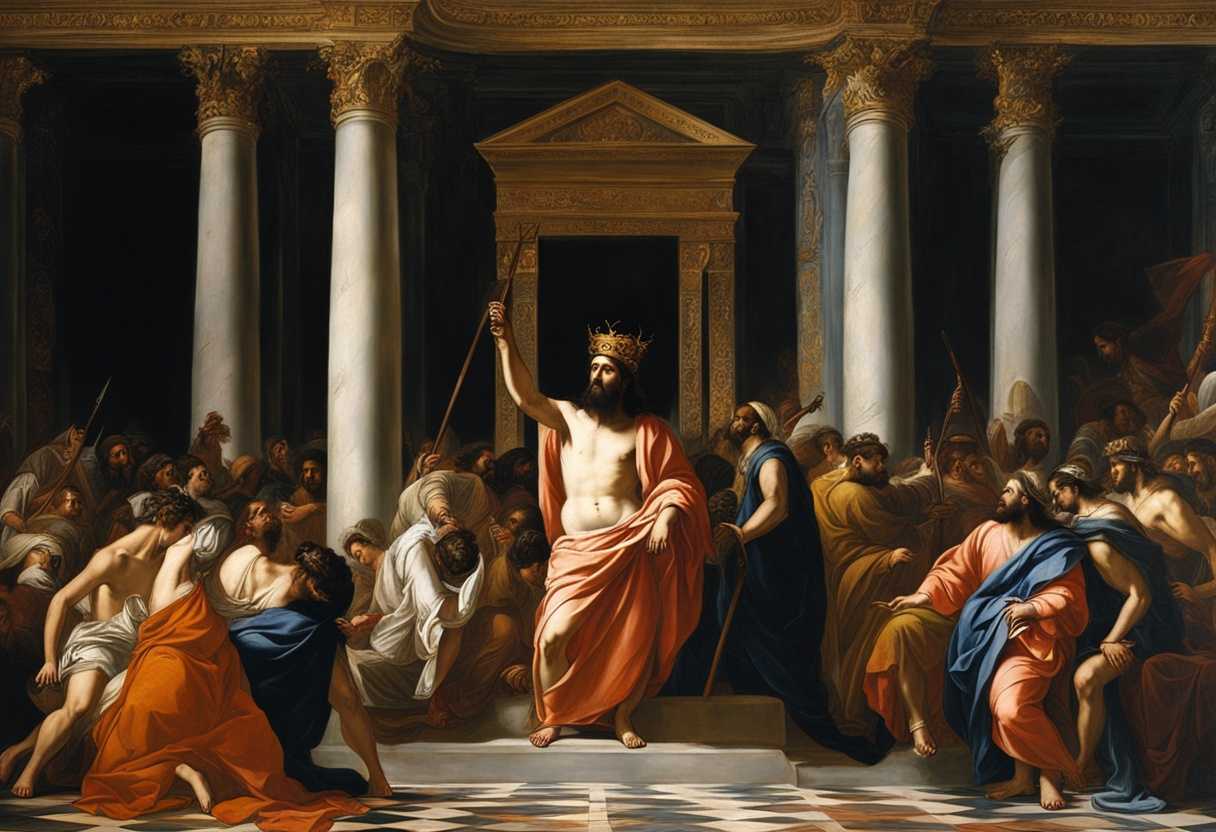
Setting the Scene for Daniel 4:30-32
The scene in Daniel chapter 4:30-32 takes place in the grand and opulent palace of King Nebuchadnezzar in the ancient city of Babylon. The king, Nebuchadnezzar himself, stands on the roof of his palace, looking out over the vast city that he has built. He is filled with pride and arrogance, boasting about his accomplishments and the majesty of his kingdom.
Surrounding the king are his royal advisors, officials, and courtiers, who have gathered to witness his grandeur. They have been summoned to hear the king’s proclamation of his own greatness and power. Among them are Daniel, the prophet, who has been serving in the king’s court and interpreting dreams and visions for him.
The atmosphere is tense as Nebuchadnezzar revels in his own glory, unaware of the divine judgment that is about to befall him. The scene is set for a dramatic turn of events that will humble the mighty king and demonstrate the sovereignty of the one true God.
What is Daniel 4:30-32 about?
The profound message of humility and respect for God’s sovereignty is illustrated in this verse. It serves as a reminder that when we allow pride to consume us, it can lead to our downfall. We are setting ourselves up for consequences that may result in negative outcomes by prioritizing our ego and self-importance over acknowledging the higher power of God. It prompts us to reflect on the importance of recognizing and honoring the presence of something greater than ourselves, highlighting the wisdom in humility and submission to God’s will.
Think about instances in your life where pride may have clouded your judgment or led to undesirable outcomes. How could a shift in perspective towards recognizing God’s supremacy have influenced those situations? Internalizing the message of this verse encourages us to cultivate a mindset of humility, understanding, and surrender to God’s plans. How can you incorporate this guidance into your daily life to avoid the pitfalls of pride and lead a more fulfilling and purposeful existence? We should strive to navigate our lives with a sense of reverence for the divine, allowing humility to guide our actions and decisions.
Understanding what Daniel 4:30-32 really means
In the narrative of King Nebuchadnezzar in the book of Daniel, we encounter a powerful ruler known for his pride and self-glorification. Nebuchadnezzar’s boastful declaration, “Is not this great Babylon, which I have built by my mighty power as a royal residence and for the glory of my majesty?” reveals his arrogance and disregard for God’s sovereignty. His belief that his accomplishments were solely due to his own abilities serves as a cautionary tale about the perils of pride. The immediate divine response, with a voice from heaven declaring the king’s impending downfall, underscores the swiftness with which God can humble the proud.
The pronouncement that “the kingdom has departed from you” signifies the consequences of Nebuchadnezzar’s hubris. It illustrates the transient nature of human achievements when they are not aligned with God’s will. The subsequent decree that he would be driven from among men to dwell with the beasts of the field symbolizes a drastic humbling experience, reducing the once-mighty king to a state of utter helplessness. These verses highlight the stark contrast between human pride and divine authority, emphasizing the importance of acknowledging God’s supremacy.
The biblical passages that echo the theme of humility and God’s opposition to pride, such as Proverbs 16:18, James 4:6, and 1 Peter 5:6, reinforce the timeless wisdom found in Nebuchadnezzar’s story. They serve as reminders for believers to guard against the pitfalls of arrogance and to cultivate a spirit of humility. In a world that often exalts self-reliance and individual achievements, these teachings offer a counter-cultural perspective on the true source of greatness.
Drawing parallels to contemporary experiences, we can see how the story of Nebuchadnezzar resonates with individuals today. The temptation to attribute success solely to personal efforts is a common pitfall in a society that values self-made individuals. The narrative serves as a poignant reminder that all accomplishments ultimately stem from God’s providence and should be acknowledged as such. It prompts us to reflect on our own attitudes towards success and to cultivate a spirit of gratitude and humility in all aspects of our lives.
Consider the anecdote of a successful entrepreneur who, in his pride, overlooked the contributions of others to his achievements. When faced with adversity, he realized the limitations of his self-reliance and the importance of humility. This personal journey mirrors Nebuchadnezzar’s humbling experience and underscores the transformative power of recognizing God’s sovereignty in our lives. Ultimately, the verses from Daniel 4:30-32 offer a timeless lesson on the dangers of pride and the enduring value of humility, guiding us towards a deeper understanding of true greatness rooted in acknowledging God’s hand in our lives.
How can I avoid pride and acknowledge God’s sovereignty?
To avoid pride and acknowledge God’s sovereignty as shown in the verse, one must recognize that all power and authority ultimately belong to God. Pride often comes from placing too much emphasis on one’s own abilities and accomplishments, disregarding the fact that everything we have is ultimately given to us by God. We acknowledge His sovereignty over our lives by humbling ourselves and attributing all success and blessings to God’s grace.
Furthermore, remembering that God is in control of all things helps to keep pride in check. The realization that God is ultimately the one directing the course of our lives and the world at large can help us resist the temptation to exalt ourselves above others. We can cultivate a spirit of gratitude and dependence on God by maintaining a posture of humility and recognizing His sovereignty in all aspects of our lives. We can guard against pride and recognize His sovereignty in our lives by actively practicing humility and giving credit to God for our successes. When we constantly remind ourselves of God’s ultimate authority and control, we are less likely to fall into the trap of pride and more likely to maintain a posture of submission and gratitude towards Him.
Application
Don’t let pride be your downfall like Nebuchadnezzar. Embrace humility and surrender to avoid the same fate. Choose to walk with God in humility. Will you humble yourself before Him today?

Reverend Michael Johnson is an experienced Church Minister with a profound expertise in spirituality and guidance. With a serene presence and a compassionate heart, he has faithfully served his congregation for over 20 years, leading them on a spiritual journey towards inner peace and enlightenment. Reverend Johnson’s extensive knowledge of religious philosophies and profound understanding of human nature have made him a trusted confidant and mentor to many, as he seamlessly weaves his profound wisdom into life teachings. Reverend Johnson’s calming demeanor and empathetic nature continue to uplift and heal souls, nurturing a sense of unity and tranquility within his community.