
Deuteronomy 34:5-8 is about the passing of leadership from Moses to Joshua, symbolizing the transition from one generation to the next and the continuity of God’s covenant and promises.
5 So Moses the servant of the Lord died there in the land of Moab, according to the word of the Lord.
6 And he buried him in the valley in the land of Moab, opposite Beth-peor; but no one knows the place of his burial to this day.
7 Moses was 120 years old when he died. His eye was undimmed, and his vigor unabated.
8 And the people of Israel wept for Moses in the plains of Moab thirty days. So the days of weeping and mourning for Moses were ended.
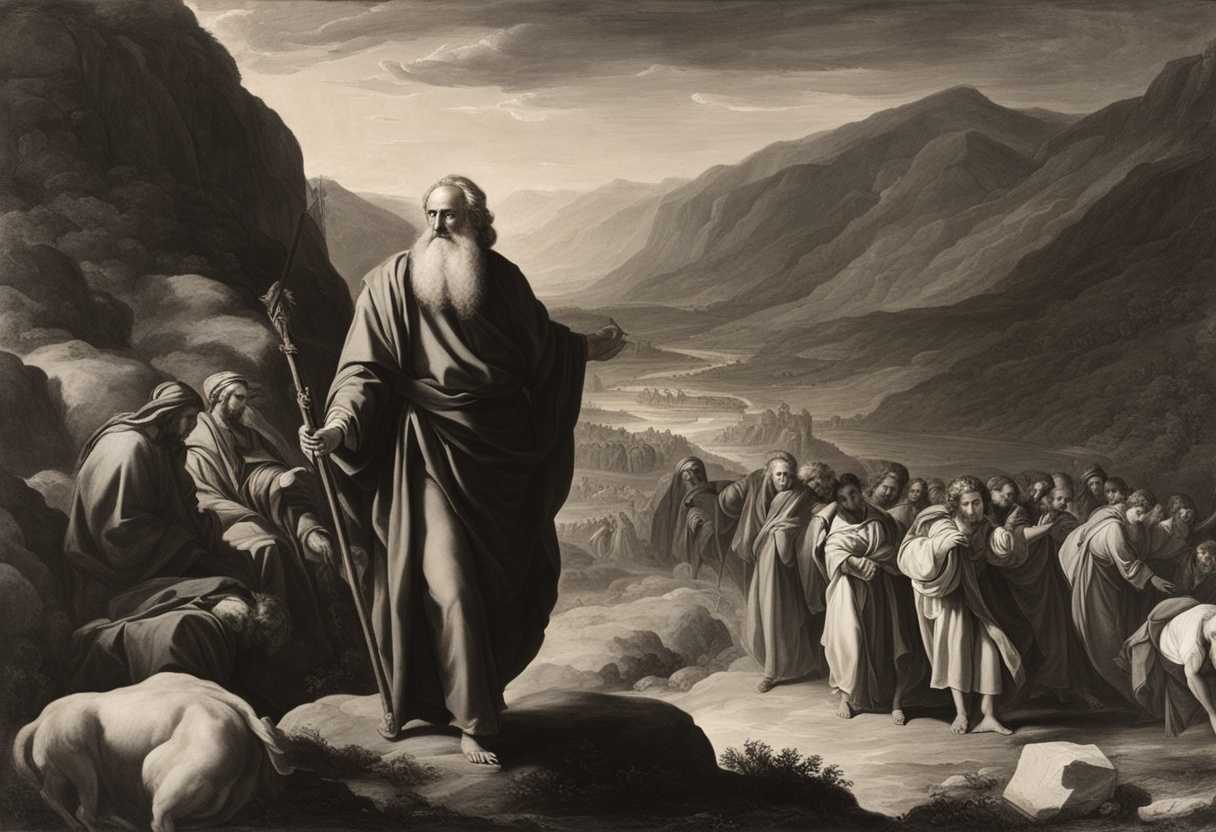
Setting the Scene for Deuteronomy 34:5-8
The scene in Deuteronomy 34:5-8 takes place at the end of the Israelites’ journey through the wilderness. Moses, the great leader chosen by God to lead the Israelites out of Egypt, has brought them to the edge of the Promised Land. However, due to his disobedience to God at the waters of Meribah, Moses is not allowed to enter the land himself. Instead, he is granted a view of the land from Mount Nebo.
In this poignant moment, Moses stands on the mountain, surrounded by the Israelites who have followed him for forty years. Joshua, his faithful assistant and chosen successor, is also present. The atmosphere is heavy with emotion as Moses gazes out over the land that he will never set foot in. The Israelites are filled with a mix of anticipation and sadness as they prepare to enter the land without their beloved leader.
The surroundings are awe-inspiring, with Mount Nebo offering a panoramic view of the land flowing with milk and honey that God had promised to Abraham, Isaac, and Jacob. The scene is a powerful reminder of the consequences of disobedience and the faithfulness of God to fulfill His promises.
What is Deuteronomy 34:5-8 about?
A significant transition of leadership from Moses to Joshua is seen in this verse. Moses, who led the Israelites out of Egypt and received the Ten Commandments from God, passes away and is buried by God himself. This moment marks the end of an era with Moses as the primary leader and prophet of the Israelites. It is a reminder of the mortality of even the most revered figures and the inevitability of change and transition in leadership. Joshua faces the daunting task of guiding the Israelites into the Promised Land as he steps into the role of leader. This transition signifies a new chapter in the history of the Israelites, with Joshua taking on the responsibility of leading the people and fulfilling the promises of God. It is a reminder that leadership is a continuous cycle, with new leaders stepping up to carry on the work that their predecessors began. We see the importance of succession planning and the passing of wisdom and responsibility from one generation to the next in this moment.
Reflecting on this verse, we are prompted to consider the legacy we are building and the leaders we are preparing to succeed us. How are we nurturing the next generation of leaders? Are we willing to let go of control and trust in the abilities of those who will follow us? This verse challenges us to think about the transitions in leadership that we will face in our own lives and how we can prepare for them with grace and wisdom.
Understanding what Deuteronomy 34:5-8 really means
Deuteronomy 34:5-8 recounts the poignant moment of Moses’ passing in the land of Moab, marking the conclusion of his remarkable leadership journey. Moses, known as the faithful servant of the Lord, had guided the Israelites through trials and triumphs, yet he was destined to see the Promised Land from afar due to a past disobedience. The verse poignantly captures the end of an era, as Moses, the revered leader, breathes his last in Moab, in accordance with the divine decree.
The mention of Moses’ burial in an undisclosed location in Moab, opposite Beth Peor, underscores the intangible nature of his legacy. While his physical resting place remains a mystery, the enduring impact of his spiritual leadership and unwavering obedience to God reverberates through generations. This anonymity serves as a powerful symbol that true greatness lies not in earthly monuments but in the hearts and minds of those influenced by a life lived in service to God.
Despite reaching the age of 120, Moses’ vigor and clarity of mind remained undiminished until his final moments, a testament to the divine favor he enjoyed. The Israelites’ thirty days of mourning in the plains of Moab reflect the deep reverence and affection they held for Moses, recognizing his pivotal role in their history and spiritual journey. This period of mourning underscores the profound impact a faithful leader can have on a community, shaping their identity and faith.
The transition of leadership from Moses to Joshua, as depicted in related passages like Joshua 1:1-2, highlights the continuity of God’s plan and the importance of trusting in His guidance during times of change. Hebrews 3:5-6 draws parallels between Moses’ faithful service and Christ’s ultimate faithfulness, emphasizing the enduring value of serving God wholeheartedly. Numbers 20:12 provides context for Moses’ inability to enter the Promised Land, reinforcing the consequences of disobedience even for a revered figure like Moses.
In our contemporary context, Moses’ story challenges us to reflect on our own commitment to faithful service and obedience to God, even when we may not see the full fruition of our efforts. It prompts us to consider the legacy we are building, reminding us that true impact transcends physical monuments and is found in the lives we touch and the spiritual influence we leave behind. Just as Moses’ legacy lives on in the Israelites’ journey with God, our actions today can shape the spiritual landscape for future generations.
Consider a dedicated teacher whose influence extends far beyond the classroom, leaving an indelible mark on the lives of students. Similarly, Moses’ legacy endures not in a marked grave but in the hearts of those he shepherded through the wilderness of life. Deuteronomy 34:5-8 stands as a poignant reminder of the fleeting nature of life, the enduring power of faithful service, and the profound impact of spiritual leadership. It beckons us to ponder the legacy we are crafting through our faith and actions, urging us to emulate Moses’ unwavering commitment to God’s call.
How can we leave a lasting legacy for God?
We can leave a lasting legacy for God by faithfully following His commandments and living a life that is pleasing to Him. We too can strive to walk in obedience to God’s Word, just as Moses obeyed God’s instructions and led the Israelites according to His will. We can leave a legacy of faith, obedience, and devotion to God that future generations will remember by doing so.
Additionally, we can leave a lasting legacy for God by investing in the spiritual growth and well-being of others. Like how Moses mentored and passed on his wisdom to Joshua, we can disciple and encourage others in their faith journey. We can leave a legacy of building up the body of Christ and advancing God’s kingdom on earth by pouring into the lives of those around us and equipping them to live out their faith. His grace and power working through us ultimately build our legacy for God, not our own strength or achievements. We can trust that God will use our lives to impact others for His kingdom as we seek to glorify Him in all that we do. We can leave a legacy that points others to His love and transforms lives for eternity by living a life of faithfulness, obedience, and service to God.
Application
Just as Moses stood steadfast in his faith, let us too rise above the obstacles before us. Embrace your purpose with courage, trusting in the path laid out for you. Like a warrior never yields in battle, let your faith be your armor in the journey ahead. Are you ready to heed the call, to follow your destiny with unwavering loyalty and conviction?

Reverend Michael Johnson is an experienced Church Minister with a profound expertise in spirituality and guidance. With a serene presence and a compassionate heart, he has faithfully served his congregation for over 20 years, leading them on a spiritual journey towards inner peace and enlightenment. Reverend Johnson’s extensive knowledge of religious philosophies and profound understanding of human nature have made him a trusted confidant and mentor to many, as he seamlessly weaves his profound wisdom into life teachings. Reverend Johnson’s calming demeanor and empathetic nature continue to uplift and heal souls, nurturing a sense of unity and tranquility within his community.