
Acts 12:4 is about King Herod’s malicious intent to hand over Peter to the Jewish leaders after Passover, symbolizing the ongoing spiritual battle between earthly powers and the divine protection of God’s chosen messengers.
4 And when he had seized him, he put him in prison, delivering him over to four squads of soldiers to guard him, intending after the Passover to bring him out to the people.
Setting the Scene for Acts 12:4
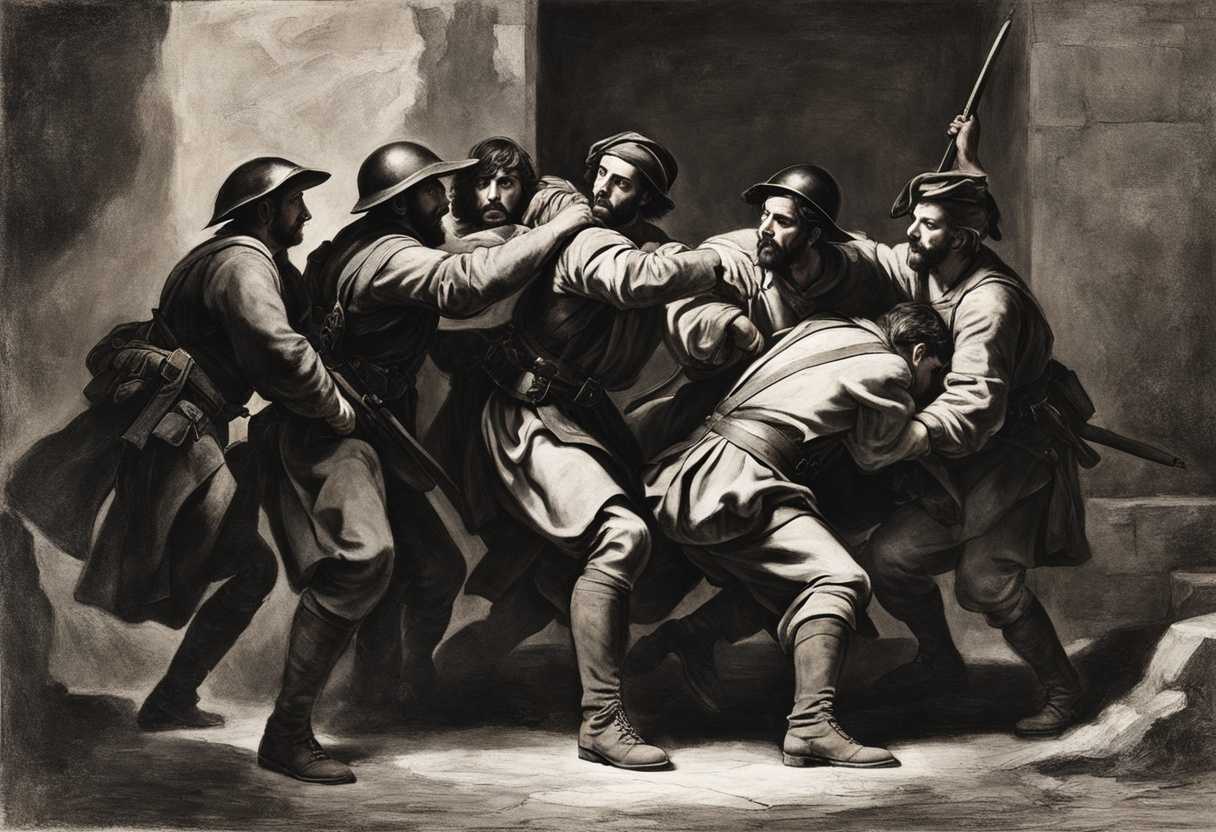
In Acts chapter 12, we find the apostle Peter imprisoned by King Herod Agrippa I. The scene is set in Jerusalem, in a heavily guarded cell within the palace. Peter, a prominent figure in the early Christian church, had been arrested and put under strict guard by Herod, who sought to please the Jewish religious leaders by persecuting the followers of Jesus.
Surrounding Peter are Roman soldiers, tasked with ensuring his confinement. The atmosphere is tense as Peter awaits his trial, knowing the dangers he faces as a follower of Christ in a hostile environment. Despite the dire circumstances, Peter remains steadfast in his faith, trusting in God’s protection and deliverance. The believers in the early church are gathered in prayer, fervently interceding for Peter’s safety and release, demonstrating their unwavering support and solidarity in the face of persecution.
What is Acts 12:4 about?
King Herod made a decision to arrest Peter during the Passover celebration in order to appease the Jewish leaders in this verse. This action was not based on justice or a legitimate reason but rather on pleasing those in power and maintaining control over the people. It raises the question of how often leaders throughout history have used their power inappropriately to manipulate situations to their advantage.
The verse also highlights the danger of leaders who prioritize their own interests over the well-being of their citizens. Herod showed a disregard for religious freedoms and human rights by arresting Peter during a sacred time like Passover. This can lead us to reflect on the importance of leaders who govern with integrity and fairness, putting the needs of their people above their own personal gain. It prompts us to consider the role of leadership in society and the impact it can have on individuals and communities.
Understanding what Acts 12:4 really means
Commentary Structure
- Introduction and Context
- Exegesis and Key Phrases
- Related Biblical References
- Relevance to Modern Life
- Anecdote and Personal Reflection
1. Introduction and Context
Acts 12:4 details a moment when Peter is arrested by King Herod during a time of persecution against the early Christians. This verse sets the stage for Peter’s miraculous escape from prison, highlighting themes of faith, divine intervention, and the trials faced by the early church. Understanding the context of Herod’s reign and the hostility toward Christians can help us appreciate the significance of this narrative.
2. Exegesis and Key Phrases
The phrase “seized him and put him in prison” illustrates the initial act of aggression and control by the authorities. This reflects the broader context of the early church’s persecution. The mention of “four squads of four soldiers each” indicates the extent to which Herod went to ensure Peter’s custody, reflecting the perceived threat that Peter posed. This excessive guard also sets the stage for the miraculous nature of Peter’s eventual release.
3. Related Biblical References
To further understand this passage, we can look at Acts 5:18-20, where Peter and the apostles are also imprisoned and later freed by an angel. Similarly, in Acts 16:25-26, Paul and Silas experience a miraculous escape from prison. These accounts together emphasize God’s power to deliver His servants from seemingly impossible situations, reinforcing the theme of divine intervention.
4. Relevance to Modern Life
Today, many people feel imprisoned by various circumstances—be it illness, addiction, or personal struggles. The message from Acts 12:4 is that God can provide a way out, even when the situation seems hopeless. It challenges us to maintain our faith, even in difficult times, trusting that divine intervention is possible and that our struggles can be overcome.
5. Anecdote and Personal Reflection
Several years ago, a friend of mine felt trapped in a job that sapped his joy and energy. Despite his best efforts, he saw no way out. He prayed fervently, seeking guidance and deliverance. One day, seemingly out of nowhere, he was offered a new position that not only aligned better with his skills but also rejuvenated his spirit. This experience mirrored the hope encapsulated in Acts 12:4, reminding us that God can change our circumstances in unexpected ways. Acts 12:4 serves as a powerful reminder of God’s ability to deliver us from our trials. By reflecting on this verse and related passages, we can find hope and encouragement, knowing that divine intervention can overcome any dire situation. Let this message inspire you to hold onto your faith amidst life’s challenges, trusting in God’s ultimate plan and timing.
What does it mean to trust in God’s timing?
Trusting in God’s timing means having faith that everything will happen at the right moment according to His plan. It involves believing that God’s timing is perfect and that He knows what is best for us. We should keep our faith strong and patient in the context of Acts 12:4, signifying that despite difficult circumstances or impending danger, knowing that God will intervene at the right time to deliver us.
This trust in God’s timing requires letting go of our own desires for immediacy and control, and instead surrendering our fears and worries to God. It involves acknowledging that He sees the bigger picture and knows what is best for us in the long run. We can find peace and comfort in the midst of uncertainty by leaning on this faith, trusting that God’s timing is always right and that He will guide us through every situation in His perfect way.
Application
Think about your daily grind and the support you need from family and friends. Just like Peter in Acts 12:4, people around you are trapped in their own struggles. The disciples’ prayers freed Peter; your prayers can free others from their hardships. Will you take a moment to fervently pray for those facing tough times and be the change they desperately need?

Reverend Michael Johnson is an experienced Church Minister with a profound expertise in spirituality and guidance. With a serene presence and a compassionate heart, he has faithfully served his congregation for over 20 years, leading them on a spiritual journey towards inner peace and enlightenment. Reverend Johnson’s extensive knowledge of religious philosophies and profound understanding of human nature have made him a trusted confidant and mentor to many, as he seamlessly weaves his profound wisdom into life teachings. Reverend Johnson’s calming demeanor and empathetic nature continue to uplift and heal souls, nurturing a sense of unity and tranquility within his community.