
Acts 13:1-5 is about the Holy Spirit guiding the early church leaders to set apart Barnabas and Saul for the work to which they were called, emphasizing the importance of prayer, fasting, and seeking God’s direction in all important decisions.
Now there were in the church at Antioch prophets and teachers, Barnabas, Simeon who was called Niger, Lucius of Cyrene, Manaen a lifelong friend of Herod the tetrarch, and Saul.
2 While they were worshiping the Lord and fasting, the Holy Spirit said, “Set apart for me Barnabas and Saul for the work to which I have called them.”
3 Then after fasting and praying they laid their hands on them and sent them off.
4 So, being sent out by the Holy Spirit, they went down to Seleucia, and from there they sailed to Cyprus.
5 When they arrived at Salamis, they proclaimed the word of God in the synagogues of the Jews. And they had John to assist them.
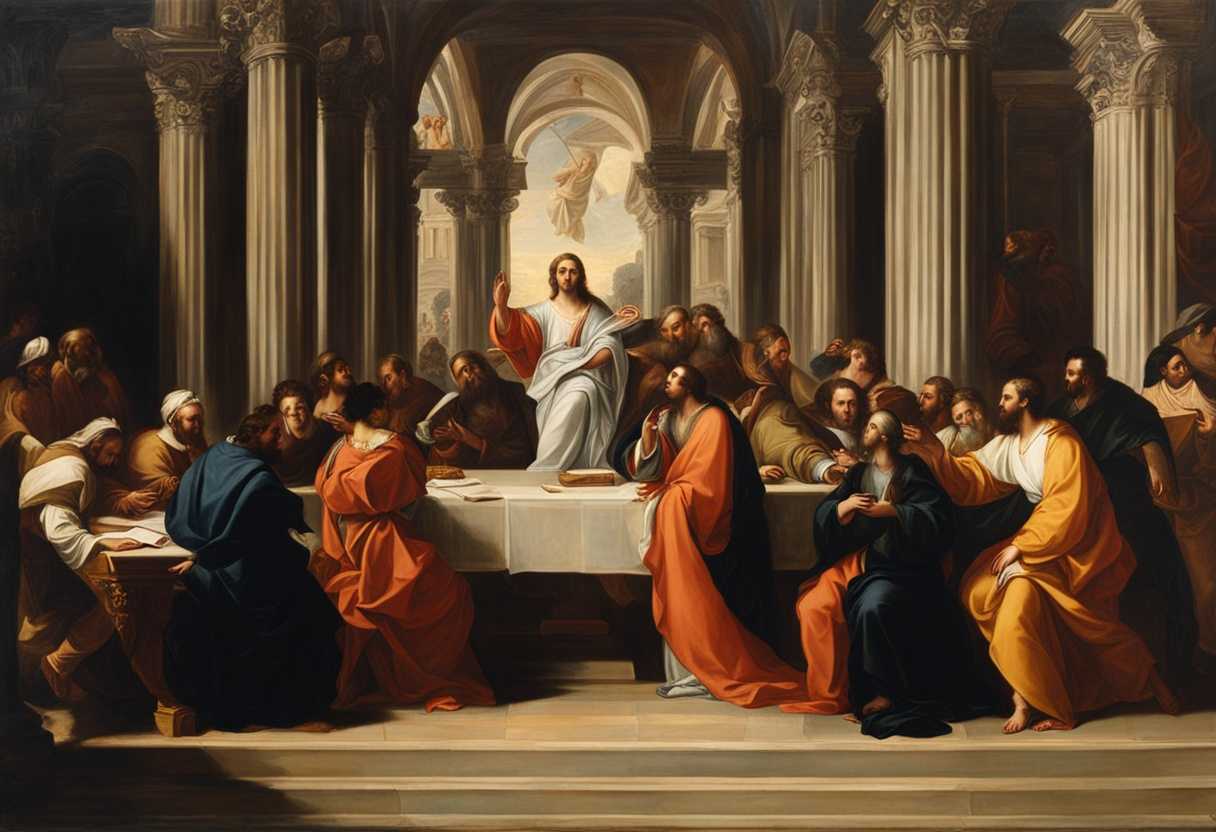
Setting the Scene for Acts 13:1-5
In Acts chapter 13, we find the scene set in the city of Antioch, a bustling and diverse metropolis in the Roman Empire. The camera pans over a group of believers gathered together in prayer and worship. Among them are prominent figures such as Barnabas, a respected leader in the early Christian community, and Saul, who would later become known as the apostle Paul. These individuals have come together through their shared faith in Jesus Christ and their desire to spread the message of the Gospel to the ends of the earth.
The room where they are gathered is dimly lit by flickering oil lamps, casting a warm glow over the faces of those present. The air is thick with the scent of incense, creating an atmosphere of reverence and devotion. As they pray and seek the guidance of the Holy Spirit, a sense of anticipation fills the room, as if they are on the brink of something momentous. It is in this sacred space that God’s voice is heard, calling Barnabas and Saul to embark on a missionary journey that will change the course of history. And so, with hearts full of faith and determination, they set out on their journey, ready to fulfill the divine purpose set before them.
What is Acts 13:1-5 about?
Can you imagine being chosen by the Holy Spirit for a special mission? This verse from Acts 13:4 shows us that Paul and Barnabas were called by the Holy Spirit to go out and spread the Gospel. Just think about the trust and faith that the Holy Spirit had in them to carry out such an important task! It is a reminder that when we are open to the guidance of the Holy Spirit, amazing things can happen. We, as teachers, can learn from this verse by reflecting on our own calling to educate and inspire our students. Just like Paul and Barnabas were sent out to spread the Gospel, we are sent out every day to spread knowledge, kindness, and positivity in our classrooms. We are chosen for this important mission, just like Paul and Barnabas were chosen by the Holy Spirit, and we should embrace our roles with enthusiasm and dedication.
Understanding what Acts 13:1-5 really means
In Acts 13:1-5, we witness a pivotal moment in the early church in Antioch, where Barnabas and Saul (later known as Paul) are commissioned for their first missionary journey. The passage underscores the significant role of the Holy Spirit in guiding the church’s mission, highlighting the importance of spiritual disciplines in seeking God’s will. As the believers were worshiping and fasting, they were in a posture of humility and dependence on God, setting an example for us today on the value of spiritual practices in discerning God’s guidance.
The phrase “The Holy Spirit said” in the passage emphasizes the active involvement of the Holy Spirit in directing the church’s activities. This divine guidance is not limited to the early church but is a principle that remains relevant for believers today. Just as God spoke to the early church, we can trust in the Holy Spirit to lead and empower us for the work God has called us to do.
God’s specific calling and purpose for individuals are evident in the command to “Set apart for me Barnabas and Saul for the work to which I have called them.” This highlights the personalized nature of God’s calling on our lives. Each of us has a unique role to play in God’s kingdom, and it is essential to seek His guidance and confirmation through prayer and fasting, as demonstrated in this passage.
The church’s role in affirming and supporting those called to ministry is exemplified in the act of laying hands on Barnabas and Saul after fasting and praying. This gesture symbolizes the church’s recognition and endorsement of God’s calling on their lives. Today, the local church continues to play a crucial role in identifying and supporting individuals in their ministries, providing a community of believers who can affirm and encourage one another in their callings.
Acts 13:1-5 resonates with believers today through its emphasis on spiritual disciplines, the guidance of the Holy Spirit, and the supportive role of the church in fulfilling God’s mission. As we reflect on this passage, we are reminded of the importance of seeking God’s direction through worship, fasting, and prayer. We are encouraged to be open to the leading of the Holy Spirit in our lives, trusting that He will guide us in fulfilling the purposes God has for us.
In a modern-day context, we can see the principles of Acts 13:1-5 in action through the story of a young woman in a local church feeling called to missionary work. Through prayer, fasting, and the support of her church community, she is affirmed in her calling and sent out with their blessing. This contemporary example illustrates how the timeless truths found in Acts 13:1-5 are still relevant and applicable today, inspiring believers to seek God’s will, trust in His guidance, and rely on the support of the church as they pursue their callings in God’s kingdom.
How can we discern the Holy Spirit’s direction?
One way to discern the Holy Spirit’s direction is through prayer and seeking God’s guidance. The believers in Antioch prayed and fasted before the Holy Spirit specifically spoke to them about setting apart Barnabas and Saul for the work to which He had called them in Acts 13:2. This shows us that spending time in prayer and fasting can help us tune in to the voice of the Holy Spirit and receive His direction.
Another way to discern the Holy Spirit’s direction is through the unity of believers. The prophets and teachers in Antioch were gathered together when the Holy Spirit spoke to them in Acts 13:1. It is important to seek counsel and confirmation from other believers when seeking the Holy Spirit’s guidance. Believers coming together in unity can help confirm the direction the Holy Spirit is leading.
Lastly, discerning the Holy Spirit’s direction involves being sensitive to His promptings and having a willingness to obey. The Holy Spirit sent out Barnabas and Saul in Acts 13:4-5, and they obeyed without hesitation. This shows us the importance of having a humble and obedient heart to follow the leading of the Holy Spirit, even if it may not align with our own plans or expectations.
Application
Unlock the power of prayer and fasting in your life, just like the early church leaders in Acts 13:1-5. Dive deep into your spiritual journey, dedicating time to seek clarity and guidance from the divine. Are you ready to commit to prayer and fasting, paving the way for a profound connection with God in your modern-day hustle and bustle?

Reverend Michael Johnson is an experienced Church Minister with a profound expertise in spirituality and guidance. With a serene presence and a compassionate heart, he has faithfully served his congregation for over 20 years, leading them on a spiritual journey towards inner peace and enlightenment. Reverend Johnson’s extensive knowledge of religious philosophies and profound understanding of human nature have made him a trusted confidant and mentor to many, as he seamlessly weaves his profound wisdom into life teachings. Reverend Johnson’s calming demeanor and empathetic nature continue to uplift and heal souls, nurturing a sense of unity and tranquility within his community.