
Acts 16:16-34 is about Paul and Silas demonstrating unwavering faith in God through perseverance in the face of suffering and imprisonment, leading to the conversion of the jailer and his household.
16 As we were going to the place of prayer, we were met by a slave girl who had a spirit of divination and brought her owners much gain by fortune-telling.
17 She followed Paul and us, crying out, “These men are servants of the Most High God, who proclaim to you the way of salvation.”
18 And this she kept doing for many days. Paul, having become greatly annoyed, turned and said to the spirit, “I command you in the name of Jesus Christ to come out of her.” And it came out that very hour.
19 But when her owners saw that their hope of gain was gone, they seized Paul and Silas and dragged them into the marketplace before the rulers.
20 And when they had brought them to the magistrates, they said, “These men are Jews, and they are disturbing our city.
21 They advocate customs that are not lawful for us as Romans to accept or practice.”
22 The crowd joined in attacking them, and the magistrates tore the garments off them and gave orders to beat them with rods.
23 And when they had inflicted many blows upon them, they threw them into prison, ordering the jailer to keep them safely.
24 Having received this order, he put them into the inner prison and fastened their feet in the stocks.
25 About midnight Paul and Silas were praying and singing hymns to God, and the prisoners were listening to them,
26 and suddenly there was a great earthquake, so that the foundations of the prison were shaken.
27 When the jailer woke and saw that the prison doors were open, he drew his sword and was about to kill himself, supposing that the prisoners had escaped.
28 But Paul cried with a loud voice, “Do not harm yourself, for we are all here.”
29 And the jailer called for lights and rushed in, and trembling with fear he fell down before Paul and Silas.
30 Then he brought them out and said, “Sirs, what must I do to be saved?”
31 And they said, “Believe in the Lord Jesus, and you will be saved, you and your household.”
32 And they spoke the word of the Lord to him and to all who were in his house.
33 And he took them the same hour of the night and washed their wounds; and he was baptized at once, he and all his family.
34 Then he brought them up into his house and set food before them. And he rejoiced along with his entire household that he had believed in God.
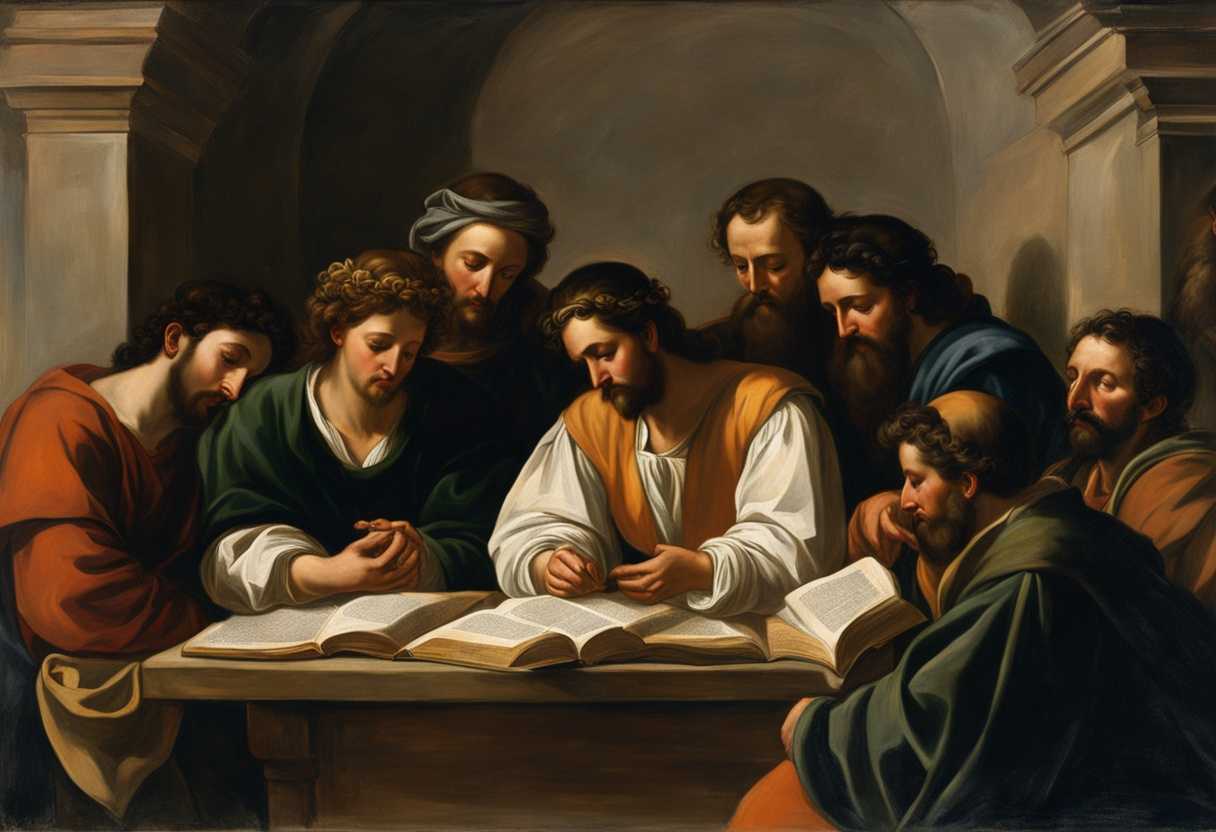
Setting the Scene for Acts 16:16-34
In Acts chapter 16, we find the apostle Paul and his companion Silas in the city of Philippi. As they were going to the place of prayer, they were met by a slave girl who had a spirit by which she predicted the future. This girl followed Paul and Silas, shouting, “These men are servants of the Most High God, who are telling you the way to be saved.” This continued for many days, causing Paul to become greatly annoyed. Finally, he commanded the spirit to come out of her, which it did.
The owners of the slave girl, realizing that their hope of making money through her fortune-telling was gone, seized Paul and Silas and dragged them before the authorities in the marketplace. They were accused of advocating customs unlawful for Romans to accept or practice. The crowd joined in the attack against them, and the magistrates ordered them to be stripped and beaten. After being severely flogged, they were thrown into prison, with their feet fastened in stocks.
In the darkness of the prison cell, Paul and Silas prayed and sang hymns to God, and the other prisoners were listening to them. Suddenly, there was a great earthquake that shook the foundations of the prison, opening all the doors and loosening everyone’s chains. The jailer, fearing that the prisoners had escaped, was about to take his own life when Paul assured him that they were all still there. This miraculous event led to the jailer and his household coming to believe in the Lord Jesus, and they were all baptized that very night.
What is Acts 16:16-34 about?
This verse demonstrates the power of faith, prayer, and worship in the face of adversity. Despite being imprisoned, Paul and Silas chose to praise and pray to God. Their actions show us that even in the darkest moments, we can find strength and hope through our connection to a higher power. Their faith was unwavering, and it ultimately led to a miraculous outcome – the conversion of the jailer and his household.
Have you ever faced a difficult situation where it seemed like there was no way out? How did you respond to it? This verse reminds us that our response to challenges can have a profound impact not only on ourselves but also on those around us. We strengthen our own faith and have the potential to inspire and transform others by choosing to turn to prayer and praise in times of trouble.
Paul and Silas’ story serves as a powerful reminder of the transformative power of faith and worship. It challenges us to consider how we respond to trials and tribulations in our own lives. Are we able to find moments of praise and thanksgiving even in the midst of difficulties? How can we use our faith to bring light and hope to those around us, just as Paul and Silas did with the jailer and his household?
Understanding what Acts 16:16-34 really means
In Acts 16:16-34, we witness a series of events in Philippi involving Paul and Silas that highlight themes of spiritual liberation, divine intervention, the power of worship, and the transformative impact of faith. The passage begins with the encounter with a slave girl possessed by a spirit of divination, symbolizing the bondage of sin and exploitation. Paul’s response, “Greatly annoyed, turned and said to the spirit,” underscores Christ’s authority over evil spirits and the necessity of spiritual discernment in confronting such forces.
Amidst their imprisonment, Paul and Silas choose to respond by praying and singing hymns to God, showcasing the profound influence of worship and prayer even in the darkest of circumstances. The subsequent earthquake, a symbol of God’s intervention and the breaking of physical and spiritual chains, leads to the jailer’s inquiry, “Sirs, what must I do to be saved?” This question encapsulates the universal quest for salvation and the transformative power of witnessing faith in action.
Drawing parallels with related Bible passages such as Acts 12:5-17, Psalm 34:17, and Romans 8:28, we see a consistent theme of divine intervention, God’s responsiveness to prayer, and the belief that God works for the good of those who love Him. These connections reinforce the overarching message of Acts 16:16-34 and provide a broader context for understanding the significance of the events in Philippi.
The relevance of this passage to contemporary audiences is profound. In a world where many grapple with various forms of bondage and adversity, the narrative offers hope that through faith in Jesus, true liberation can be found. Moreover, the emphasis on the power of worship and prayer serves as a reminder that in times of trouble, turning to God can bring peace and even miraculous change.
The transformation of the jailer and his household underscores the impact of living out one’s faith and the importance of sharing the Gospel with others. Just as Paul and Silas’ unwavering faith led to unexpected and positive outcomes, believers today are encouraged to trust in God’s intervention and boldly live out their faith, knowing that their actions can lead others to salvation.
In conclusion, Acts 16:16-34 stands as a powerful testament to the liberating power of Jesus, the significance of faith and worship, and the transformative influence of witnessing. It challenges believers to trust in God’s sovereignty, engage in fervent prayer and worship, and actively share their faith with others, believing in the potential for lives to be changed and souls to be saved through the demonstration of authentic faith.
How can we respond with faith in difficult circumstances?
We can respond with faith in times of difficulty by remaining steadfast in our belief in God’s power and sovereignty. Like Paul and Silas in Acts 16, who were imprisoned and faced with challenges, we can choose to trust in God’s plan and have faith that He will see us through. We can find strength and peace amidst turmoil by praying, praising God, and staying connected to Him through our worship and devotion.
Furthermore, we can respond with faith by focusing on the bigger picture and understanding that God can work all things for good. Our difficult circumstances can be opportunities for God to work in miraculous ways, just as Paul and Silas’s imprisonment ultimately led to the jailer and his household coming to know Christ. We can navigate challenging situations with confidence and hope by keeping our eyes fixed on God and believing in His promises.
Lastly, responding with faith in difficult circumstances involves surrendering our fears, worries, and doubts to God, and allowing His peace to fill our hearts. Rather than being consumed by the challenges we face, we can choose to lean on God’s strength and rely on His grace. Through prayer, meditation on His Word, and the support of our Christian community, we can find the courage and resilience to face adversity with unwavering faith and trust in God’s goodness.
Application
Think about the hard days at work or the tough times with family. Just like Paul and Silas who sang praise behind bars, we too must stand firm in our faith no matter what. Don’t let life’s challenges shake you. Trust God’s plan for you. Will you choose to praise Him even in your darkest moments?

Reverend Michael Johnson is an experienced Church Minister with a profound expertise in spirituality and guidance. With a serene presence and a compassionate heart, he has faithfully served his congregation for over 20 years, leading them on a spiritual journey towards inner peace and enlightenment. Reverend Johnson’s extensive knowledge of religious philosophies and profound understanding of human nature have made him a trusted confidant and mentor to many, as he seamlessly weaves his profound wisdom into life teachings. Reverend Johnson’s calming demeanor and empathetic nature continue to uplift and heal souls, nurturing a sense of unity and tranquility within his community.