
Acts 2:30 is about the promise of a future descendant from the line of David who would be the eternal king and fulfill the Messianic prophecies.
30 Being therefore a prophet, and knowing that God had sworn with an oath to him that he would set one of his descendants on his throne,
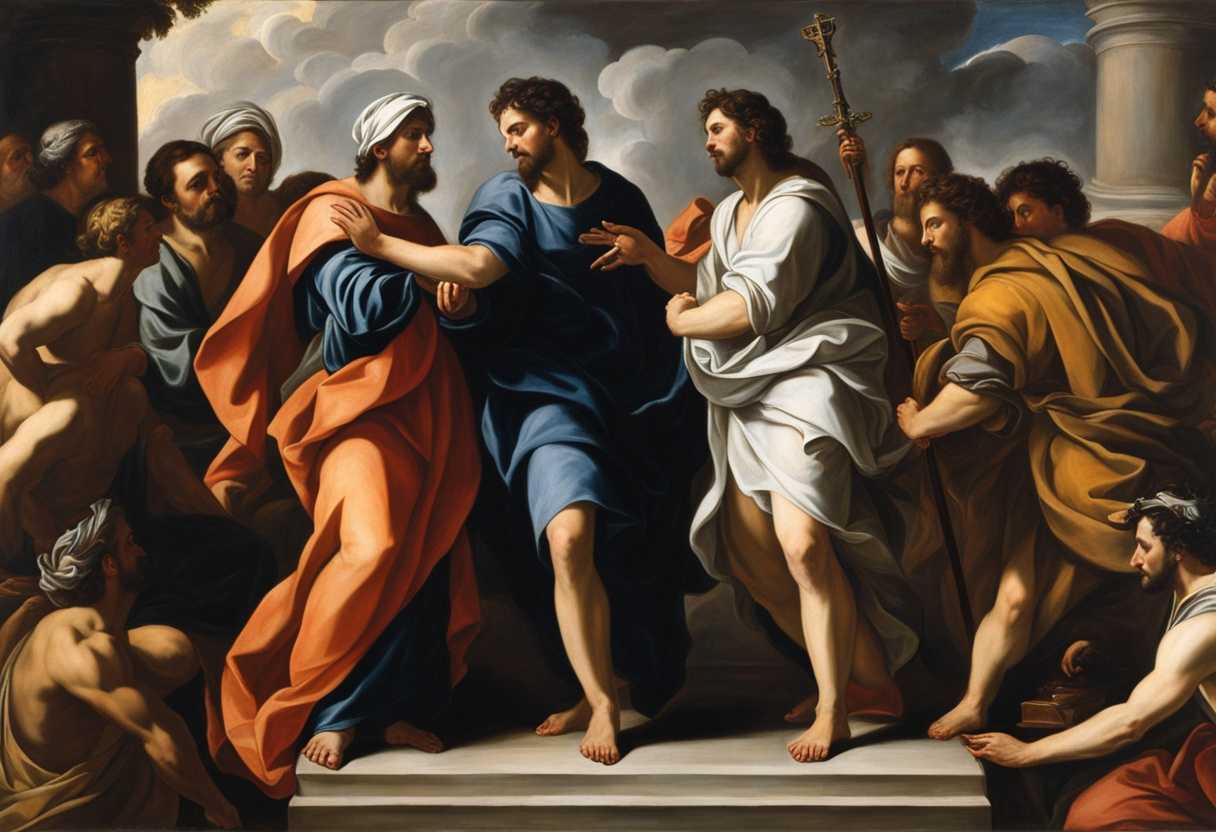
Setting the Scene for Acts 2:30
The scene in Acts 2:30 takes place in Jerusalem during the feast of Pentecost. The disciples, including Peter, are gathered together in a room, likely the upper room where they had been staying since the ascension of Jesus. The room is filled with anticipation and excitement as they await the promised Holy Spirit.
Peter, along with the other disciples, had been instructed by Jesus to stay in Jerusalem until they received the power from on high. As they were all together in one place, suddenly a sound like a mighty rushing wind filled the room, and tongues of fire appeared and rested on each of them. They were all filled with the Holy Spirit and began to speak in other languages, as the Spirit enabled them.
In this moment, Peter stands up among the disciples and addresses the crowd that had gathered outside, boldly proclaiming the message of Jesus Christ and the fulfillment of prophecy regarding the Messiah. The scene is one of divine empowerment and boldness as Peter, filled with the Holy Spirit, fearlessly preaches the gospel to the people of Jerusalem.
What is Acts 2:30 about?
What an incredible promise this verse holds! It speaks to the everlasting kingship of Jesus Christ, the Son of God who was born into the lineage of David. This verse is a powerful reminder of God’s faithfulness to His people throughout history. It highlights the connection between the Old Testament prophecies and the fulfillment of those prophecies in the person of Jesus.
Imagine the hope and reassurance this verse would have brought to the people of Israel, knowing that despite their trials and tribulations, God had a plan to establish an eternal kingdom through Jesus. This verse also points to the dual nature of Jesus as both fully human, descended from David, and fully divine, sitting on an everlasting throne. It serves as a reminder of the sovereignty and eternal reign of Jesus, who holds all power and authority in heaven and on earth. Jesus is indeed the promised Messiah, the King who reigns forever, let us be encouraged by this fact as we reflect on this verse. He is seated on the throne of grace, ready to intercede for us and guide us in His everlasting kingdom, so let us place our trust in Him. Let this verse inspire us to live with faith and confidence in the unchanging and eternal promises of our Lord and Savior, Jesus Christ.
Understanding what Acts 2:30 really means
Structure for Commentary:
- Introduction and Context
- Analysis of Key Phrases
- Cross-references to Other Biblical Passages
- Relevance to Contemporary Life
- Anecdote and Personal Reflection
- Peter is speaking to a crowd about King David in this verse, emphasizing that David was a prophet and knew that God had promised him that one of his descendants would sit on his throne. This promise is crucial because it points directly to Jesus Christ as the fulfillment of Old Testament prophecy. Understanding this connection helps us see the continuity of God’s plan throughout Scripture. The phrase “being therefore a prophet” is being considered for analysis.” David was not only a king but also a prophet. This dual role underscores his unique position in God’s plan. Another significant phrase is “God had sworn with an oath to him.” This emphasizes the certainty and solemnity of God’s promises. Finally, “that he would set one of his descendants on his throne” directly refers to the messianic prophecy fulfilled in Jesus Christ.
Cross-references to Other Biblical Passages
This verse can be connected with 2 Samuel 7:12-13, where God promises David that his offspring will establish the kingdom. Similarly, Psalm 132:11 reiterates this promise. Matthew 1:1 in the New Testament traces Jesus’ genealogy back to David, highlighting the fulfillment of this promise. These cross-references enrich our understanding of God’s faithfulness and the unfolding of His redemptive plan.
Relevance to Contemporary Life
Today, this verse reminds us that God’s promises are reliable and trustworthy. God’s unwavering faithfulness offers us a foundation of hope and assurance in a world where commitments are often broken. It also reminds us that God’s plans are far-reaching and meticulously orchestrated, spanning generations and culminating in the salvation offered through Jesus Christ.
Anecdote and Personal Reflection
I recall a time when a friend of mine faced a series of setbacks and began to doubt God’s promises. It was a challenging period, but we revisited the story of David and the fulfillment of God’s promises through Jesus. This reflection helped my friend see that even when circumstances seem uncertain, God’s promises remain steadfast. It strengthened their faith and provided a renewed sense of hope and purpose. Let this verse encourage us to trust in God’s promises, even when we cannot see the immediate outcome. God’s timing is perfect, and He has good plans for us. Let’s engage with Scripture, seeking to understand the depth of God’s promises and how they apply to our lives. May this lead us to live with greater faith, hope, and commitment to God’s purposes.
How can we understand the promise of resurrection?
The promise of resurrection can be understood by considering the example of Jesus Christ. God emphasized in Acts 2:30 that He raised Jesus from the dead. This event serves as a demonstration of God’s power over death and as a testimony to the promise of resurrection for believers. Christians are also promised resurrection to eternal life, just as Jesus was raised to life.
The resurrection of Jesus offers hope and assurance to believers that death is not the end. It signifies victory over sin and death, providing comfort and encouragement to those who trust in Him. This promise of resurrection points to a future where believers will be reunited with God in a perfect and eternal existence, free from the limitations and sorrows of this world. The promise of resurrection in Acts 2:30 ultimately teaches that death is not final for those who have faith in Christ. It assures believers of a future where they will experience the fullness of life and joy in the presence of God. This hope enables Christians to face the struggles and uncertainties of life with confidence, knowing that their ultimate destiny is secure in the hands of a loving and powerful God.
Application
Imagine the legacy of King David, like a powerful family tapestry that reaches its peak in Jesus Christ. Dive into the Scriptures and see the threads of God’s promise woven through time, into your own life. Make time in your busy schedule to uncover these truths and let them guide you. In your work and family life, how will you chase God’s plan and purpose?

Reverend Michael Johnson is an experienced Church Minister with a profound expertise in spirituality and guidance. With a serene presence and a compassionate heart, he has faithfully served his congregation for over 20 years, leading them on a spiritual journey towards inner peace and enlightenment. Reverend Johnson’s extensive knowledge of religious philosophies and profound understanding of human nature have made him a trusted confidant and mentor to many, as he seamlessly weaves his profound wisdom into life teachings. Reverend Johnson’s calming demeanor and empathetic nature continue to uplift and heal souls, nurturing a sense of unity and tranquility within his community.