
Amos 5:22 is about the futility of offering sacrifices and burnt offerings to God when they are not accompanied by genuine repentance and righteous living.
22 Even though you offer me your burnt offerings and grain offerings, I will not accept them; and the peace offerings of your fattened animals, I will not look upon them.
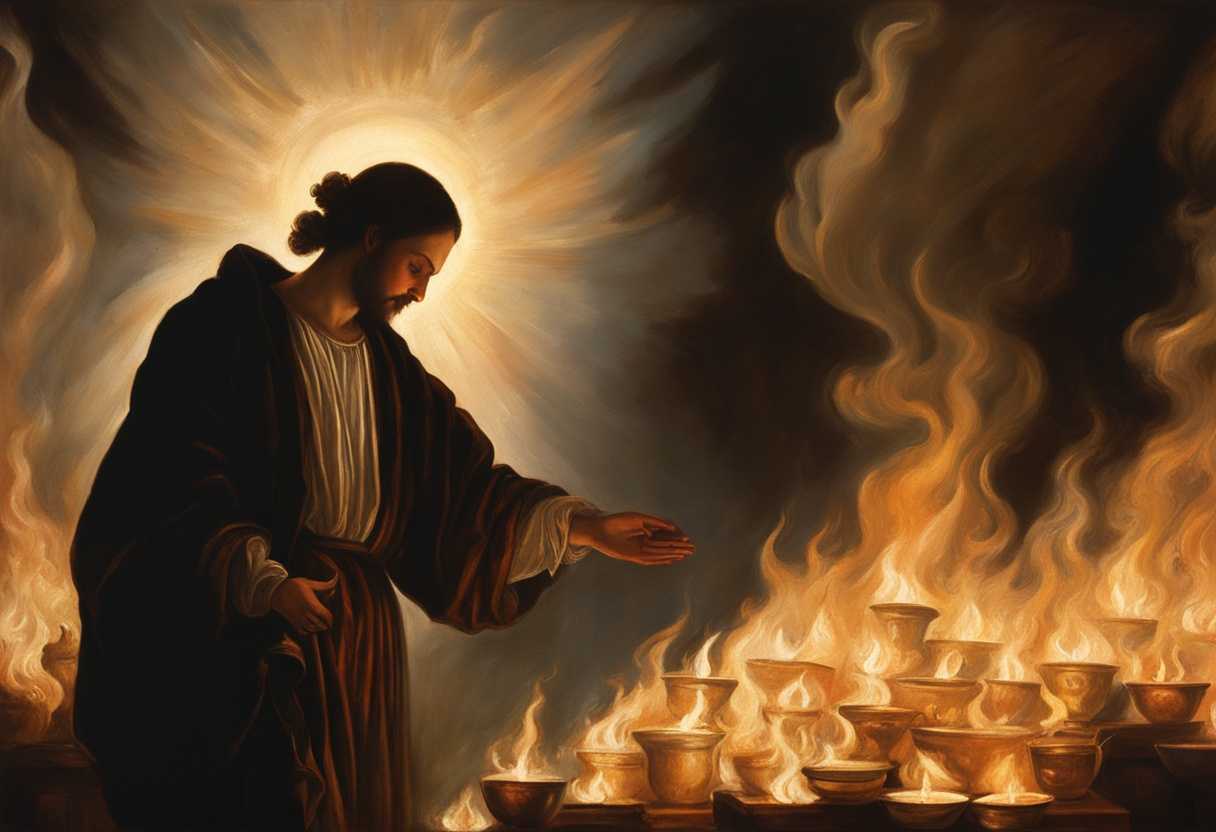
Setting the Scene for Amos 5:22
In Amos chapter 5, the prophet Amos delivers a scathing message to the people of Israel, condemning their empty religious practices and calling for true justice and righteousness. The scene described in this chapter is set in a bustling marketplace in the city of Bethel, a prominent religious center in ancient Israel. The marketplace is filled with merchants selling their goods, people haggling over prices, and the sound of animals being traded.
Among the crowd are the religious leaders of the city, dressed in their elaborate robes and symbols of authority. They have gathered to offer sacrifices at the altar, but their hearts are far from God. Amos stands in their midst, a lone figure speaking out against their hypocrisy and calling for repentance. The air is thick with tension as Amos’s words cut through the noise of the marketplace, challenging the people to turn away from their empty rituals and seek true justice and righteousness.
As the scene unfolds, the people begin to listen to Amos’s message, some with hearts softened by conviction, while others harden their hearts in defiance. The marketplace becomes a battleground of spiritual warfare, as Amos confronts the religious leaders and calls the people to choose whom they will serve. The scene is a powerful reminder of the importance of true worship and obedience to God, rather than empty religious practices.
What is Amos 5:22 about?
God is conveying a powerful message about the importance of prioritizing justice and righteousness over mere rituals and religious practices in Amos 5:22. This verse serves as a reminder that external acts of worship, such as offering sacrifices and ceremonies, hold little value if they are not aligned with a genuine commitment to justice and righteousness. God desires a true and authentic relationship with His people, one that is characterized by compassion, fairness, and integrity in their interactions with one another. Think about this verse as a reflection of your daily actions as a teacher. Are you simply going through the motions of teaching, or are you approaching your role with a sense of justice and righteousness? Just like God values sincerity over empty rituals, your students benefit more from your genuine care and commitment to their growth and development. Let this verse serve as a guide to prioritize the values of justice and righteousness in all aspects of your life, including your teaching practice.
Understanding what Amos 5:22 really means
Amos, a prophet during a time of prosperity marred by social injustice and religious hypocrisy, delivers a poignant message in the book bearing his name. The verse in question, Amos 5:22, encapsulates God’s rejection of empty religious offerings devoid of genuine righteousness and justice. It serves as a stark reminder that external acts of worship hold little value if not accompanied by a heart committed to righteousness and justice. God’s refusal to acknowledge insincere worship underscores the importance of authenticity in our relationship with Him.
Drawing parallels with other biblical passages, such as Isaiah 1:11-17 and Micah 6:6-8, we see a consistent theme condemning hollow rituals and emphasizing the weightier matters of justice, mercy, and humility. Jesus echoes this sentiment in Matthew 23:23, rebuking the Pharisees for their meticulous observance of religious practices while neglecting justice, mercy, and faithfulness. These passages collectively emphasize the primacy of genuine righteousness over outward displays of piety.
The relevance of Amos 5:22 extends to contemporary society, challenging believers to assess the authenticity of their worship. It prompts introspection on whether our religious practices are mere performances or genuine expressions of love, justice, and mercy. The verse compels us to align our actions with our beliefs, emphasizing that true worship is manifested not only in rituals but also in how we treat others and live out our faith.
Consider a scenario where a devout churchgoer engages in religious activities but exhibits unethical behavior in their daily interactions. This anecdote mirrors the message of Amos 5:22, urging individuals to integrate their faith into every aspect of their lives. It underscores the importance of consistency between our religious practices and our conduct outside of formal worship settings, highlighting the inseparable link between faith and action.
In conclusion, Amos 5:22 stands as a timeless call to authentic worship and righteous living. It challenges us to transcend superficial religious observance and embody the core values of justice, mercy, and humility in our daily lives. As we reflect on this verse, may we strive to cultivate a genuine faith that permeates every facet of our existence, honoring God not only with our words and rituals but with our deeds and attitudes towards others.
Are we offering true worship or empty rituals?
The verse in Amos 5:22 serves as a reminder to examine our intentions and the authenticity of our worship. It highlights the distinction between true worship, characterized by genuine reverence, love, and obedience to God, and mere ritualistic practices devoid of true devotion. God values sincere worship that stems from a genuine heart rather than empty rituals performed simply for the sake of tradition or appearance.
Therefore, when we reflect on whether our worship is pleasing to God, we should consider the motivation behind our actions. Are we engaging in rituals and religious practices out of cultural habit or social expectations, or are we sincerely seeking to draw closer to God and honor Him with our whole being? True worship involves not only outward actions but also inner attitudes of humility, gratitude, and a desire to honor God authentically in all aspects of our lives.
Application
Think of Amos 5:22 as a mirror reflecting your true intentions. Just like giving your best at work or being there for your family, genuine worship requires heart and purpose. Don’t settle for empty rituals; let your actions align with your faith. Give your soul the same commitment you give to your daily life. Are you ready to live your worship authentically and meaningfully?

Reverend Michael Johnson is an experienced Church Minister with a profound expertise in spirituality and guidance. With a serene presence and a compassionate heart, he has faithfully served his congregation for over 20 years, leading them on a spiritual journey towards inner peace and enlightenment. Reverend Johnson’s extensive knowledge of religious philosophies and profound understanding of human nature have made him a trusted confidant and mentor to many, as he seamlessly weaves his profound wisdom into life teachings. Reverend Johnson’s calming demeanor and empathetic nature continue to uplift and heal souls, nurturing a sense of unity and tranquility within his community.