
Amos 7:14 is about Amos explaining to Amaziah that despite his initial profession as a humble herdsman and tender of sycamore fruit, he was chosen by God to be a prophet and speak His words regardless of his background or qualifications.
14 Then Amos answered and said to Amaziah, “I was no prophet, nor a prophet’s son, but I was a herdsman and a dresser of sycamore figs.
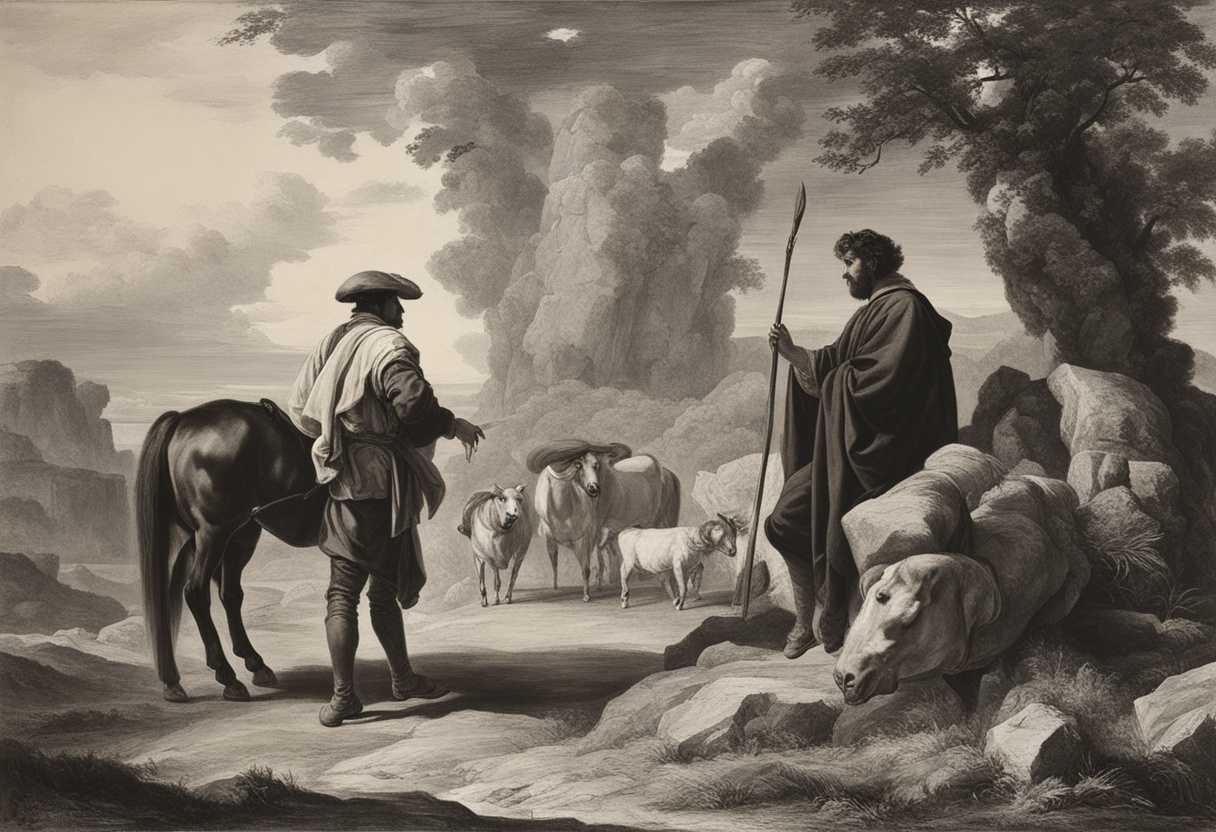
Setting the Scene for Amos 7:14
In Amos chapter 7, we find the prophet Amos standing in the midst of a bustling marketplace in the ancient kingdom of Israel. The scene is filled with merchants haggling over prices, the aroma of spices and incense wafting through the air, and the sound of animals being traded in the background. Amos, a shepherd and fig farmer by trade, was called by God to deliver a message of judgment to the people of Israel for their sins and injustices.
As Amos stands in the marketplace, he is approached by Amaziah, the priest of Bethel, who is displeased with the prophet’s message of impending doom. Amaziah questions Amos’ authority and demands that he leave the land of Israel and return to Judah. However, Amos boldly proclaims that he did not choose to be a prophet but was called by God to speak the truth, regardless of the consequences.
Surrounded by a crowd of onlookers, Amos and Amaziah engage in a tense exchange, with the prophet fearlessly declaring the word of the Lord and the priest attempting to silence him. The clash between the two men symbolizes the larger conflict between the corrupt religious establishment and the prophetic voices calling for repentance and righteousness.
What is Amos 7:14 about?
Amos demonstrates profound courage and a sense of duty as he delivers a challenging message of destruction in this verse. Despite not being a professional prophet by trade, Amos feels compelled to speak out against the injustice and wrongdoing he sees around him. This reluctance highlights the weight of the message he is tasked with delivering, knowing that it will likely be met with resistance and backlash.
Have you ever been in a situation where you felt compelled to speak out against something unjust or wrong, even if it felt uncomfortable or daunting? Amos’s story serves as a reminder of the importance of standing up for what is right, even in the face of adversity. It shows us that sometimes, the most impactful actions come from unexpected sources, driven by a deep sense of moral obligation. Let Amos’s example inspire you to find the courage to speak out against injustice and make a difference in your own community, no matter how daunting the task may seem.
Understanding what Amos 7:14 really means
Amos, a shepherd and dresser of sycamore-fig trees from Judah, was chosen by God to deliver a message to Israel, despite not being a professional prophet. His background highlights the unexpected ways in which God works through ordinary individuals. In Amos 7:14, he declares, “I was no prophet, nor a prophet’s son, but I was a herdsman and a dresser of sycamore figs,” emphasizing his humble origins and divine calling.
This verse underscores the idea that God’s call is not limited by human standards or qualifications. Amos’s lack of a prophetic lineage challenges the notion that only certain individuals are fit for God’s work. It prompts us to consider how God can use anyone, regardless of their background or societal status, for His purposes. The phrase “I was no prophet” highlights Amos’s initial reluctance and surprise at being chosen, showing that God’s call can come unexpectedly to anyone.
In the broader biblical context, we see a pattern of God choosing the humble and the unlikely for significant roles. From David, a shepherd boy anointed as king, to Jesus calling fishermen as His disciples, the Bible is replete with examples of God’s unconventional choices. These passages, including 1 Samuel 16:11-13 and Matthew 4:18-22, reinforce the message that God’s call transcends human expectations and qualifications.
Today, Amos 7:14 challenges us to reevaluate our preconceived notions of who is fit for God’s work. It encourages us to be open to His calling, even if we feel unqualified or insignificant. In a world that often values status and credentials, this verse reminds us that God looks at the heart and values faithfulness above all else. It prompts us to trust in God’s sovereignty and to step out in obedience, regardless of our perceived limitations.
Consider the modern-day janitor who, despite feeling unqualified, heeded God’s call to start a community outreach program that transformed lives. His story mirrors Amos’s experience, illustrating that God can use anyone for His purposes. This anecdote serves as a tangible reminder that God’s call is not limited by our circumstances or qualifications, but by our willingness to respond in faith.
In conclusion, Amos 7:14 challenges us to embrace the truth that God’s call knows no bounds. It calls us to trust in His sovereignty and to be open to His leading, knowing that He can use us in extraordinary ways. By heeding this call, we can find courage and inspiration to step into the roles God has prepared for us, no matter how humble our beginnings may seem.
How can we discern a true call from God?
We can look to the example of Amos in Amos 7:14 to discern a true call from God. The key lies in the fact that Amos did not initially seek out or expect the call from God. Instead, God chose and called Amos for a specific purpose. This teaches us that a true call from God often comes unexpectedly and may require us to step out of our comfort zone.
Furthermore, a true call from God is often accompanied by a sense of conviction and confirmation in our hearts. We too may feel a deep sense of purpose and direction when God is calling us, just as Amos felt the unmistakable pull of God on his life. It is important to listen to our inner convictions and seek confirmation through prayer, scriptures, and wise counsel from fellow believers. A true call from God ultimately aligns with His Word and will. Comparing His calling with the teachings of the Bible and ensuring that it is in line with the character and mission of God is crucial as we seek to discern it. We can confidently discern and follow through with a true call from God by staying rooted in scripture and seeking guidance from the Holy Spirit.
Application
Think of your life like navigating through a busy city. Are you tuning into God’s directions, even when it’s tough or inconvenient? Are you picking up the “calls” He sends, the ones meant for no one but you? Pause and really consider: Are you embracing the mission God has set for you? Are you rising to the challenges, just as you would for your family or at work? Are you living the purpose He’s given you?

Reverend Michael Johnson is an experienced Church Minister with a profound expertise in spirituality and guidance. With a serene presence and a compassionate heart, he has faithfully served his congregation for over 20 years, leading them on a spiritual journey towards inner peace and enlightenment. Reverend Johnson’s extensive knowledge of religious philosophies and profound understanding of human nature have made him a trusted confidant and mentor to many, as he seamlessly weaves his profound wisdom into life teachings. Reverend Johnson’s calming demeanor and empathetic nature continue to uplift and heal souls, nurturing a sense of unity and tranquility within his community.