
Amos 7:9 is about the prophet Amos interceding on behalf of the people of Israel to avert the impending judgment of God, highlighting the importance of repentance and seeking mercy.
9 The high places of Isaac shall be made desolate,
and the sanctuaries of Israel shall be laid waste,
and I will rise against the house of Jeroboam with the sword.”
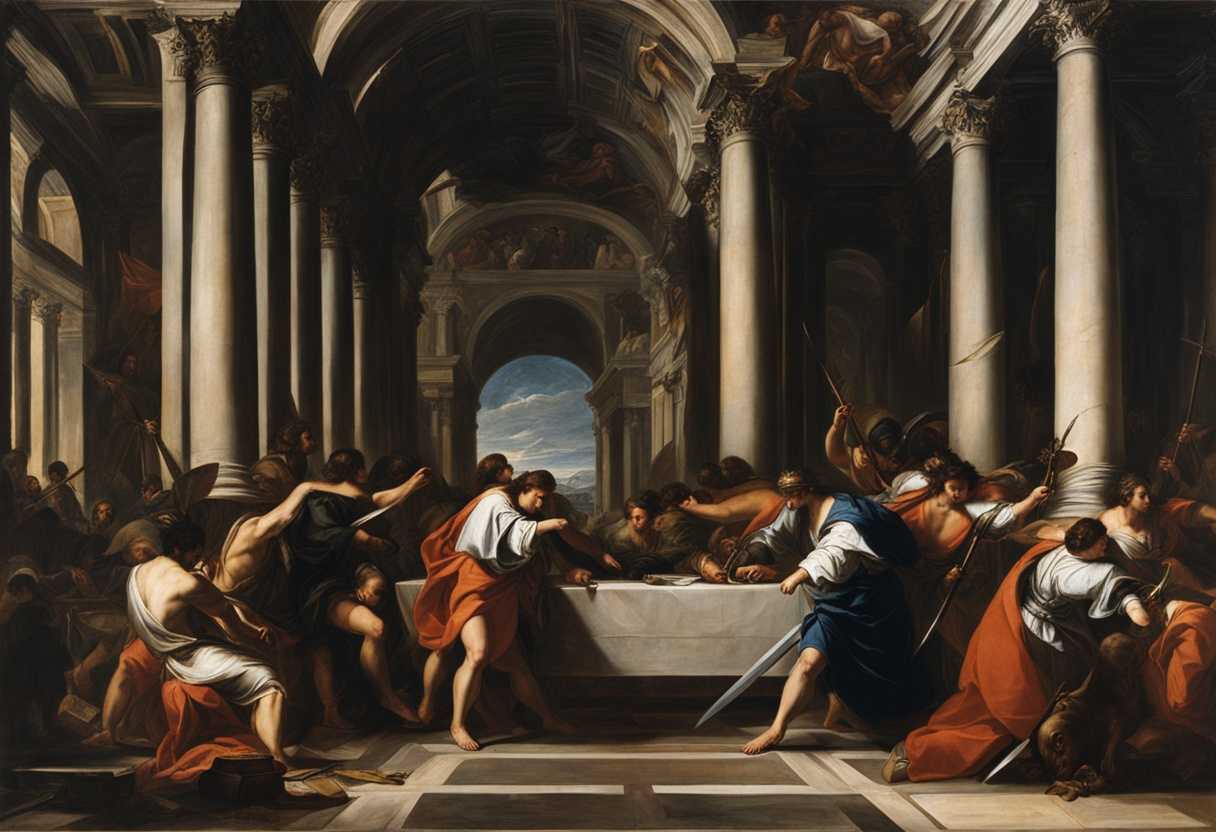
Setting the Scene for Amos 7:9
In Amos chapter 7, we find the prophet Amos standing in the midst of a bustling marketplace in the ancient kingdom of Israel. The scene is filled with merchants haggling over prices, farmers selling their produce, and people going about their daily business. Amos, a shepherd from Tekoa, has been called by God to deliver a message of judgment to the people of Israel for their sins and injustices.
As Amos stands in the marketplace, he is approached by Amaziah, the priest of Bethel, who is displeased with the prophet’s words of impending doom. Amaziah questions Amos’ authority and tells him to go back to Judah to prophesy, implying that he is not welcome in Israel. Despite the priest’s opposition, Amos stands firm in his conviction and continues to proclaim the message that God has given him.
The tension between Amos and Amaziah in the marketplace serves as a backdrop to the larger conflict between the prophet and the religious establishment of Israel. The scene is charged with emotion and drama as Amos fearlessly speaks truth to power, challenging the status quo and calling the people to repentance.
What is Amos 7:9 about?
The metaphor of a plumb line in this verse illustrates how God’s judgment is precise and unwavering. God’s judgment serves as a perfect standard by which to measure our actions and obedience, just as builders use a plumb line to ensure that a wall is straight and true. The image of the plumb line conveys a sense of accuracy and fairness in God’s judgment, showing that He does not waiver or show favoritism when holding us accountable for our deeds. God’s judgment, if as precise as a plumb line, leaves no room for error or deception. It challenges us to reflect on our own actions and attitudes, and to align ourselves with God’s standards of righteousness. Are we living in accordance with God’s will, or are we straying from His path? The verse serves as a reminder that ultimately, we will all be held accountable to God’s unchanging standard of justice. Let us align ourselves with His will, so that we may stand firm when measured against His plumb line of truth and righteousness.
Understanding what Amos 7:9 really means
Amos 7:9 presents a striking prophecy where God declares, “The high places of Isaac shall be desolate, and the sanctuaries of Israel shall be laid waste.” These words carry a profound message about the spiritual decay and corruption that had taken root in Israel during that time. The high places, once meant for true worship, had become centers of idolatry and false practices. The sanctuaries, supposed to be holy spaces, had been defiled by the people’s disobedience and moral decline.
In understanding this verse, we delve into the broader context of Amos’s prophetic ministry. Living during a period of material prosperity but moral bankruptcy in Israel, Amos boldly spoke out against social injustices, warned of impending divine judgment, and called for a return to genuine worship of God. His words were not merely a critique of external practices but a call to the heart of the people to repent and seek righteousness.
The imagery of desolation and destruction in the verse symbolizes the consequences of forsaking God’s ways. It serves as a stark warning that outward displays of religion, devoid of true faith and obedience, are unacceptable to the Lord. The mention of Isaac and Israel underscores the collective responsibility of the nation to uphold God’s standards and live in accordance with His will.
Drawing parallels to our contemporary world, the message of Amos remains relevant. Just as in his time, we can easily fall into the trap of going through religious motions without genuine devotion or ethical living. The call to social justice, emphasized by Amos and echoed in other biblical passages, challenges us to actively seek justice, show mercy, and walk humbly with God in our daily lives.
Leadership accountability is another crucial theme highlighted in Amos 7:9. The prophecy against the house of Jeroboam serves as a reminder that those in positions of authority, whether in religious or secular spheres, are held to high standards of integrity and justice. It prompts us to evaluate the conduct of our leaders and ourselves, ensuring that our actions align with God’s principles of righteousness and compassion.
In reflecting on Amos 7:9, we are urged to examine our worship practices and personal conduct. Are we merely going through the motions of religion, or do our hearts truly seek after God? Are we actively pursuing justice and mercy in our communities, or are we turning a blind eye to the needs of the marginalized? The verse challenges us to embody a faith that is authentic, compassionate, and just, mirroring the character of God Himself.
What does it mean to stand up for truth?
Standing up for truth means taking a bold stand against falsehood and deception, even when it may be unpopular or challenging. It involves speaking out against injustice, corruption, and dishonesty, regardless of the potential consequences. This verse from Amos 7:9 illustrates the importance of not remaining silent in the face of lies or manipulation but instead confronting them with unwavering honesty and integrity. Standing up for truth involves a commitment to upholding principles of honesty, fairness, and transparency, even in the most difficult situations. Standing up for truth requires a deep sense of moral courage and conviction. It often involves going against the grain and challenging the status quo to ensure that the truth is revealed and upheld. Individuals who stand up for truth demonstrate a willingness to confront falsehood and oppression, advocate for what is right and just, and embody the values of authenticity, accountability, and righteousness. Standing up for truth in a world where misinformation and deceit can easily spread affirms one’s commitment to ethical behavior and unwavering integrity.
Application
Picture your life as a bustling office or a dynamic family. Every task, every interaction carries weight. Amos 7:9 reminds us that just as Amos prayed for Israel, we too must lift others up in prayer. Your prayers are like vital emails or heartfelt words—they can change someone’s day, even their life. So, will you take a moment to step away from the chaos and pray for those in need of God’s help?

Reverend Michael Johnson is an experienced Church Minister with a profound expertise in spirituality and guidance. With a serene presence and a compassionate heart, he has faithfully served his congregation for over 20 years, leading them on a spiritual journey towards inner peace and enlightenment. Reverend Johnson’s extensive knowledge of religious philosophies and profound understanding of human nature have made him a trusted confidant and mentor to many, as he seamlessly weaves his profound wisdom into life teachings. Reverend Johnson’s calming demeanor and empathetic nature continue to uplift and heal souls, nurturing a sense of unity and tranquility within his community.