
Daniel 11:14-19 is about the political dealings and conflicts between two powerful kingdoms and their attempts to secure alliances through marriage, ultimately leading to deception, betrayal, and the failure to achieve their desired goals.
14 “In those times many shall rise against the king of the south, and the violent among your own people shall lift themselves up in order to fulfill the vision, but they shall fail.
15 Then the king of the north shall come and throw up siegeworks and take a well-fortified city. And the forces of the south shall not stand, or even his best troops, for there shall be no strength to stand.
16 But he who comes against him shall do as he wills, and none shall stand before him. And he shall stand in the glorious land, with destruction in his hand.
17 He shall set his face to come with the strength of his whole kingdom, and he shall bring terms of an agreement and perform them. He shall give him the daughter of women to destroy the kingdom, but it shall not stand or be to his advantage.
18 Afterward he shall turn his face to the coastlands and shall capture many of them, but a commander shall put an end to his insolence; indeed, he shall turn his insolence back upon him.
19 Then he shall turn his face back toward the fortresses of his own land, but he shall stumble and fall, and shall not be found.
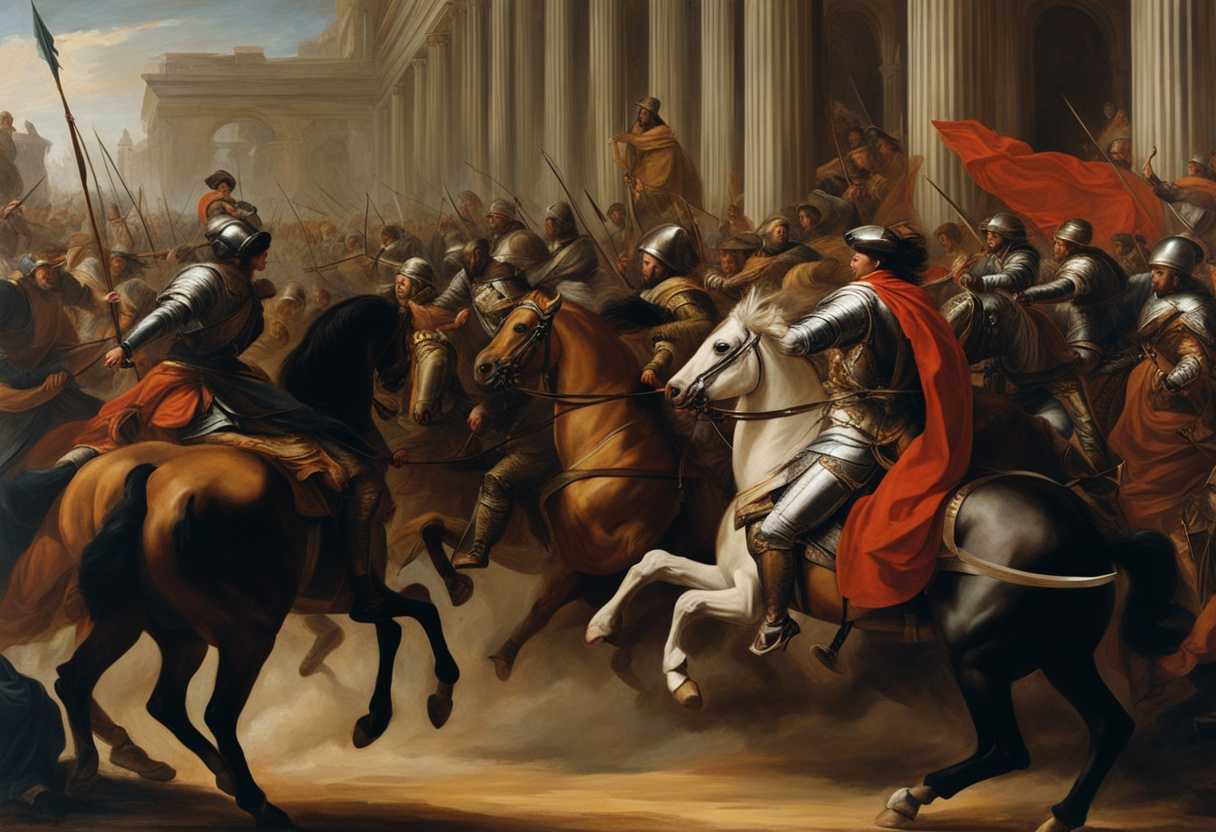
Setting the Scene for Daniel 11:14-19
In Daniel 11:14-19, the scene unfolds in the ancient world of the Middle East during the time of the Seleucid Empire. The main characters in this scene are Antiochus IV Epiphanes, the ruthless and power-hungry king of the Seleucid Empire, and Ptolemy VI Philometor, the young and vulnerable king of Egypt. These two rulers are entangled in a complex web of political intrigue and power struggles as they vie for control over the region.
The setting is a grand palace in a bustling city, where Antiochus IV Epiphanes and Ptolemy VI Philometor have come to negotiate a peace treaty. The tension in the air is palpable as both kings are accompanied by their advisors and courtiers, each whispering counsel and strategies in their ears. The opulence of the palace is contrasted by the underlying sense of treachery and betrayal that hangs heavy in the air.
As the negotiations unfold, alliances are made and broken, promises are given and taken back, and the fate of entire nations hangs in the balance. The scene is a dramatic portrayal of the fragile nature of power and the lengths to which rulers will go to secure their dominance. Amidst the lavish surroundings and intricate political maneuvers, the stage is set for a showdown of epic proportions between these two formidable kings.
What is Daniel 11:14-19 about?
Ah, political intrigue and conflict in ancient times. What a fascinating yet tumultuous era that must have been! These verses serve as a peek into the power struggles and complexities that were present in the political landscape of those times. Imagine the plotting, scheming, and maneuvering that took place behind the scenes as individuals vied for control and authority. We delve into these verses as the pursuit of power and influence is a timeless theme that transcends generations. The dynamics of politics, with its shifting alliances and backstabbing tactics, are laid bare in these words. It is a reminder of how human nature and ambition can often lead to conflict and betrayal, even in the halls of power.
Reflecting on these verses can prompt us to ponder the role of politics in society, both in the past and in the present. How have these power struggles shaped our world today? What lessons can we draw from the mistakes and triumphs of those who came before us? Studying these historical narratives gives us insights into the intricate web of interactions and decisions that govern the world of politics.
Understanding what Daniel 11:14-19 really means
In the historical setting of Daniel 11:14-19, we find a prophetic vision given to Daniel, unveiling the conflicts between the kings of the North and the South, representing the Seleucid Empire and the Ptolemaic Kingdom. This passage serves as a prophecy, foretelling the rise and fall of various leaders and kingdoms, emphasizing the fleeting nature of earthly power. As we delve into the key phrases within these verses, we encounter phrases like “Many shall rise up,” indicating a time of turmoil and rebellion, with factions vying for control. “The violent among your own people” hints at internal strife and betrayal, showcasing the destructive potential of internal conflicts. The mention of “the king of the North” points to the aggressive and expansionist nature of the Seleucid rulers, while “He shall turn his face toward the fortresses of his own land” signifies a moment of retreat or consolidation, focusing on securing existing territory.
Drawing parallels with other biblical passages, we see echoes of conflict and upheaval in Jesus’ words in Matthew 24:6-7, emphasizing the cyclical nature of wars and unrest. Ecclesiastes 1:9 reinforces the idea that history repeats itself, with human conflicts recurring throughout time. In contrast, Psalm 46:1-3 offers solace, reminding believers of God’s unwavering presence as a refuge and strength in times of trouble. The relevance of these verses to contemporary society is striking, as they mirror the political turmoil and power struggles that persist in our world today. They prompt personal reflection on the transient nature of power and the significance of placing trust in eternal rather than temporal authorities.
Consider modern examples of political upheavals, such as the Arab Spring, where leaders have been toppled, leading to prolonged instability in some regions. Individuals may resonate with stories of job instability, experiencing frequent changes in leadership and direction. Through these narratives, the passage serves as a reminder that while human leadership may falter, God’s sovereignty remains constant. Despite the chaos depicted in Daniel 11:14-19, believers are encouraged to find comfort in God’s unchanging nature. This prompts a call to action, urging individuals to reflect on where they place their trust and how they can embody stability and peace in their communities, reflecting the eternal peace found in God.
What is the significance of God’s timing in events?
The timing of God’s events holds great significance as it highlights His sovereignty and control over all things. God’s timing in these verses from Daniel perfectly aligns with His divine plan and purposes. Each event unfolds according to His will, displaying his wisdom and ultimate authority over the course of history.
Throughout the passage in Daniel, we witness how God orchestrates events at the appointed time to fulfill His promises and carry out His plans. His timing serves to demonstrate His faithfulness, trustworthiness, and power. This assurance helps believers to trust in God’s perfect timing, even when things may seem uncertain or difficult to understand. God’s timing is always perfect, and we can rely on His guidance and provision in all situations.
Application
In the daily hustle of life, like juggling work and family, we find ourselves facing various challenges that test our resolve. Just as we prioritize our tasks and loved ones, let us also commit to prioritize our faith in God. Just as we strive for success in our endeavors, let us also strive for unwavering faith in times of adversity. Will you take a stand today and remain steadfast in your devotion to God, no matter what comes your way?

Reverend Michael Johnson is an experienced Church Minister with a profound expertise in spirituality and guidance. With a serene presence and a compassionate heart, he has faithfully served his congregation for over 20 years, leading them on a spiritual journey towards inner peace and enlightenment. Reverend Johnson’s extensive knowledge of religious philosophies and profound understanding of human nature have made him a trusted confidant and mentor to many, as he seamlessly weaves his profound wisdom into life teachings. Reverend Johnson’s calming demeanor and empathetic nature continue to uplift and heal souls, nurturing a sense of unity and tranquility within his community.