
Judges 11:4-11 is about Jephthah, a man who was initially rejected by his family but later called upon to lead the Israelites in battle due to his valor and leadership qualities.
4 After a time the Ammonites made war against Israel.
5 And when the Ammonites made war against Israel, the elders of Gilead went to bring Jephthah from the land of Tob.
6 And they said to Jephthah, “Come and be our leader, that we may fight against the Ammonites.”
7 But Jephthah said to the elders of Gilead, “Did you not hate me and drive me out of my father’s house? Why have you come to me now when you are in distress?”
8 And the elders of Gilead said to Jephthah, “That is why we have turned to you now, that you may go with us and fight against the Ammonites and be our head over all the inhabitants of Gilead.”
9 And Jephthah said to the elders of Gilead, “If you bring me home again to fight against the Ammonites, and the Lord gives them over to me, I will be your head.”
10 And the elders of Gilead said to Jephthah, “The Lord will be witness between us, if we do not do as you say.”
11 Then Jephthah went with the elders of Gilead, and the people made him head and leader over them. And Jephthah spoke all his words before the Lord at Mizpah.
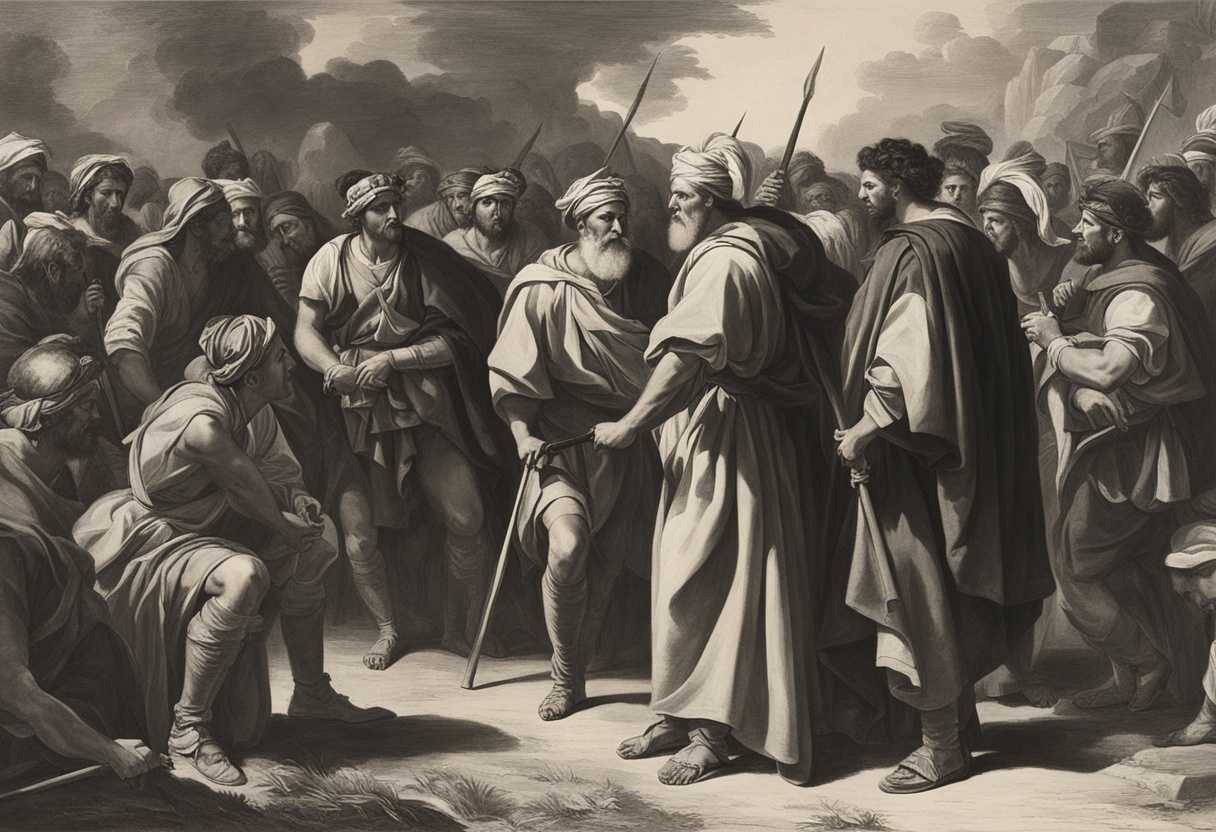
Setting the Scene for Judges 11:4-11
In the book of Judges, we find the scene set in the land of Gilead, a region known for its rugged terrain and fierce warriors. Jephthah, a mighty warrior and outcast, has been living on the outskirts of society due to his illegitimate birth. Despite his exile, the elders of Gilead seek out Jephthah’s help in their time of need as they face a looming threat from the Ammonites.
The elders of Gilead gather together in a solemn meeting, their faces etched with worry as they discuss the impending battle with the Ammonites. Jephthah stands before them, his rugged appearance belying his inner strength and determination. The elders, desperate for a leader who can deliver them from their enemies, implore Jephthah to lead their armies into battle.
Surrounded by the stark beauty of the Gilead landscape, with its rocky cliffs and sprawling valleys, Jephthah and the elders engage in a tense negotiation. Jephthah, aware of his own worth and seeking to secure his position, bargains with the elders, demanding to be made their leader before he agrees to take up arms against the Ammonites. The scene is charged with anticipation and uncertainty as the fate of Gilead hangs in the balance, and Jephthah’s destiny as a leader and warrior is set in motion.
What is Judges 11:4-11 about?
This verse from the Book of Judges captures a pivotal moment in the leadership of Jephthah as he navigates a delicate negotiation with the Ammonites before engaging in battle. Jephthah demonstrates his ability to lead with wisdom and diplomacy, seeking a peaceful resolution before resorting to conflict. Instead of rushing into war, he shows strategic thinking and a willingness to engage in dialogue to avoid unnecessary bloodshed. Through his words, Jephthah showcases the importance of communication and negotiation in resolving conflicts, even in the midst of heightened tensions. We can learn valuable lessons from Jephthah’s leadership style as we reflect on this verse. How often do we approach conflicts in our own lives with a willingness to listen and negotiate? Are we quick to resort to aggression and force, or do we take the time to seek peaceful solutions through dialogue and compromise? Jephthah’s example challenges us to consider the power of communication in resolving disputes and the importance of approaching conflicts with a mindset of understanding and cooperation. Let us strive to emulate Jephthah’s leadership qualities in our own interactions by seeking peaceful resolutions through open communication and negotiation.
Understanding what Judges 11:4-11 really means
The Book of Judges provides a historical narrative of Israel’s tumultuous journey through cycles of sin, oppression, repentance, and deliverance. In Judges 11:4-11, the focus shifts to Jephthah, a Gileadite initially rejected by his own people but later called upon to lead them in battle against the Ammonites. Jephthah’s journey from rejection to leadership serves as a powerful reminder of God’s tendency to use the marginalized and outcast for His divine purposes, showcasing His redemptive and reconciliatory nature.
Jephthah’s exile to the land of Tob after fleeing from his brothers symbolizes the initial rejection he faced, a common theme in the lives of many individuals whom God chooses for significant roles. The elders of Gilead’s eventual decision to seek Jephthah’s leadership marks a pivotal moment of redemption and reconciliation, highlighting the transformative power of God’s grace in human relationships. Jephthah’s poignant question, “If you take me back to fight the Ammonites… will I really be your head?” reflects his human need for assurance and trust, resonating with our innate desires for validation and commitment in our own lives.
In parallel with Jephthah’s narrative, biblical passages like 1 Samuel 16:7 and Romans 8:28 further emphasize God’s preference for inner qualities over external circumstances and His ability to work all things for the good of those who love Him. These verses provide a broader context for understanding Jephthah’s story and its implications for our faith journeys today, reminding us of God’s sovereignty and redemptive power in our lives.
The relevance of Jephthah’s story extends to contemporary audiences, offering lessons on redemption, second chances, leadership, trust, and God’s ultimate sovereignty. Just as Jephthah’s rejection led to his eventual recognition and purpose, we are encouraged to trust in God’s transformative plan for our lives, seek reconciliation in our relationships, and embrace the roles He calls us to with unwavering faith.
To illustrate the enduring relevance of Jephthah’s narrative, consider the story of Sarah, a young woman initially dismissed for her unconventional ideas but later recognized for her unique perspective in solving critical problems at work. Sarah’s journey mirrors Jephthah’s, underscoring how initial rejection can pave the way for eventual recognition, purpose, and fulfillment in God’s grand design for our lives.
In conclusion, the account of Jephthah in Judges 11:4-11 serves as a poignant testament to God’s transformative power, urging us to trust in His redemptive plan, seek reconciliation in our relationships, and embrace the roles He calls us to with faith and humility, knowing that He sees our hearts and orchestrates our paths for His glory.
What sacrifices are we willing to make for God?
Some are willing to make sacrifices for God in the story of Jephthah in the book of Judges. Jephthah made a vow to sacrifice whatever or whoever came out to greet him first upon his return from battle if he was granted victory. Unfortunately, his daughter was the one who came out first, and Jephthah kept his vow, sacrificing his own daughter as a burnt offering.
This passage raises ethical and moral dilemmas about the nature of sacrifice and the extent to which one should go to fulfill vows made to God. It challenges us to consider the consequences of our promises and the weight of the sacrifices we are willing to make for our faith. It reminds us of the importance of being mindful and thoughtful about the commitments and promises we make in our devotion to God. This story ultimately prompts us to reflect on the concept of sacrifice in our own lives. What sacrifices are we willing to make for God, and are we truly prepared for the implications of those sacrifices? It calls us to consider the depth of our faith and the sincerity of our devotion as we navigate the complexities of honoring God in our actions and decisions.
Application
Just as Jephthah held onto his faith in times of struggle, let us also have the confidence to trust in God amidst our own trials. Embrace the courage to believe in His presence when faced with challenges at work or in your family life. Stand strong like Jephthah, knowing that God never leaves your side. Are you ready to fortify your faith and conquer any adversities that come your way?

Reverend Michael Johnson is an experienced Church Minister with a profound expertise in spirituality and guidance. With a serene presence and a compassionate heart, he has faithfully served his congregation for over 20 years, leading them on a spiritual journey towards inner peace and enlightenment. Reverend Johnson’s extensive knowledge of religious philosophies and profound understanding of human nature have made him a trusted confidant and mentor to many, as he seamlessly weaves his profound wisdom into life teachings. Reverend Johnson’s calming demeanor and empathetic nature continue to uplift and heal souls, nurturing a sense of unity and tranquility within his community.