
Deuteronomy 31:1-13 is about Moses giving final instructions to Joshua as his successor, emphasizing the importance of faithfulness to God and His commandments in the face of challenges and transitions.
1 So Moses continued to speak these words to all Israel.
2 And he said to them, “I am 120 years old today. I am no longer able to go out and come in. The Lord has said to me, ‘You shall not go over this Jordan.’
3 It is the Lord your God who will go before you. He will be with you; he will not leave you or forsake you. Do not fear or be dismayed.
4 And the Lord will do to them as he did to Sihon and Og, the kings of the Amorites, and to their land, when he destroyed them.
5 And the Lord will give them over to you, and you shall do to them according to the whole commandment that I have commanded you.
6 Be strong and courageous. Do not fear or be in dread of them, for it is the Lord your God who goes with you. He will not leave you or forsake you.
7 Then Moses summoned Joshua and said to him in the sight of all Israel, “Be strong and courageous, for you shall go with this people into the land that the Lord has sworn to their fathers to give them, and you shall put them in possession of it.
8 It is the Lord who goes before you. He will be with you; he will not leave you or forsake you. Do not fear or be dismayed.
9 Then Moses wrote this law and gave it to the priests, the sons of Levi, who carried the ark of the covenant of the Lord, and to all the elders of Israel.
10 And he commanded them, “At the end of every seven years, at the set time in the year of release, at the Feast of Booths,
11 when all Israel comes to appear before the Lord your God at the place that he will choose, you shall read this law before all Israel in their hearing.
12 Assemble the people, men, women, and little ones, and the sojourner within your towns, that they may hear and learn to fear the Lord your God, and be careful to do all the words of this law,
13 and that their children, who have not known it, may hear and learn to fear the Lord your God, as long as you live in the land that you are going over the Jordan to possess.
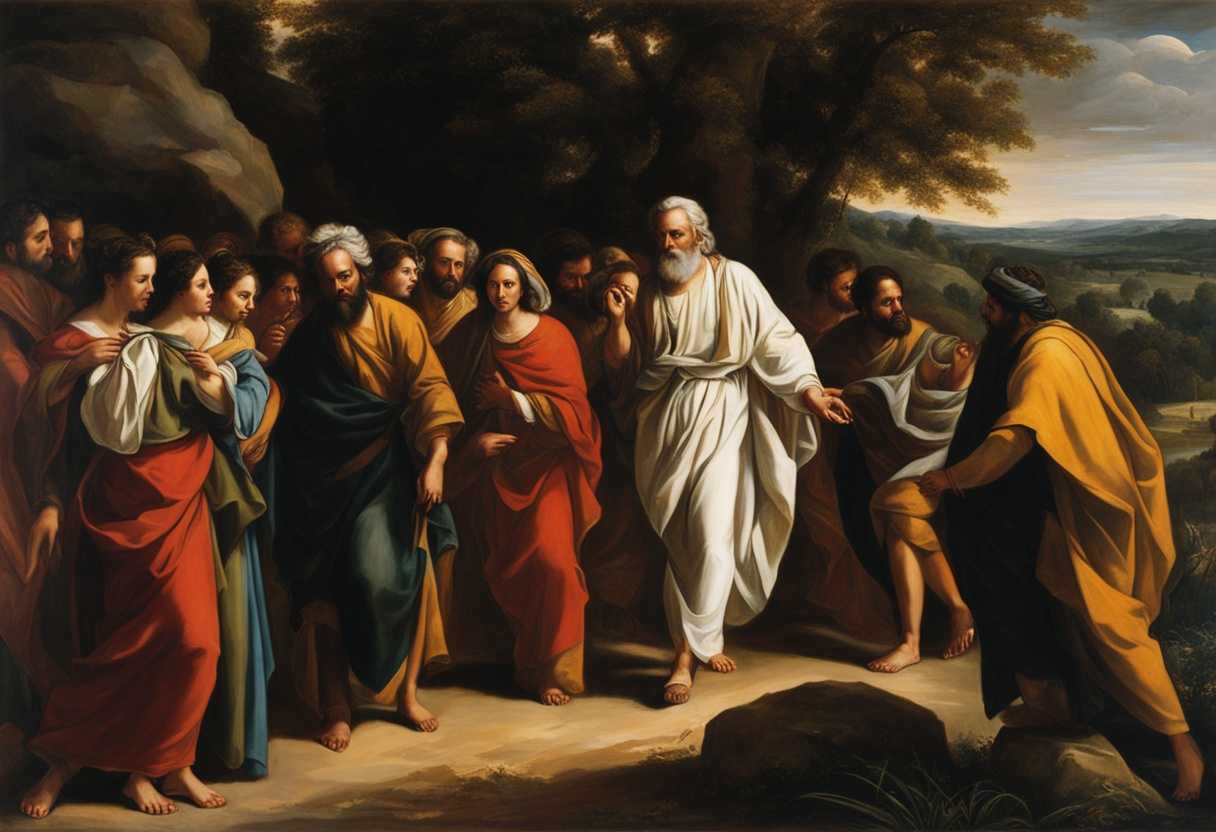
Setting the Scene for Deuteronomy 31:1-13
The scene in Deuteronomy 31:1-13 takes place towards the end of Moses’ life as he prepares to pass on the leadership of the Israelites to Joshua. The setting is the Israelite camp in the wilderness, with the Tabernacle at the center surrounded by the tents of the various tribes. The atmosphere is charged with a mix of anticipation, reverence, and a sense of transition.
Moses, the venerable leader of the Israelites, is addressing the people gathered before him. Joshua, his faithful assistant and chosen successor, stands by his side. The elders, leaders of the tribes, and all the men, women, and children of Israel have come to hear Moses’ final words of guidance and encouragement before he hands over the mantle of leadership.
As Moses speaks, his voice carries the weight of his years of experience, wisdom, and closeness to God. He reminds the people of God’s faithfulness throughout their journey, exhorts them to be strong and courageous as they enter the Promised Land, and charges Joshua to lead with the same obedience and devotion to God that he has demonstrated. The scene is one of solemnity and significance, as the torch of leadership is about to be passed from one generation to the next.
What is Deuteronomy 31:1-13 about?
What a powerful and reassuring message from Moses to the people of Israel! Moses, in this verse, is not just offering a casual pep talk; he is instilling a deep sense of courage and strength in the hearts of the Israelites as they prepare to face the challenges ahead. Moses emphasizes the divine support and guidance that will accompany them on their journey by reminding them that God is the one who goes before them.
Think about the significance of these words – “be strong and courageous.” It’s not just a platitude; it’s a call to action, a command to trust in God’s faithfulness and provision. Moses is essentially challenging the Israelites to embody these qualities by exhorting them to have unwavering faith in God’s promises and to face the unknown with boldness and resolve. It’s a poignant reminder that strength and courage are not found within ourselves alone but are derived from our trust in God’s presence and protection.
So, as we reflect on this verse, let us also take to heart these timeless words of encouragement. God goes before us in all circumstances, leading the way and preparing the path ahead, so let us draw strength from this assurance. May we embody the same spirit of courage and trust that Moses so powerfully conveyed to the Israelites, knowing that with God by our side, we can face any challenge or obstacle that comes our way.
Understanding what Deuteronomy 31:1-13 really means
In Deuteronomy 31:1-13, we find Moses delivering his final words to the Israelites before his passing. At the age of one hundred and twenty, he acknowledges his inability to continue leading them, marking a significant transition in leadership as Joshua is prepared to take the helm. This moment serves as a poignant reminder of human limitations and the necessity of passing the baton to the next generation, a theme echoed in Joshua 1:1-2 where God commissions Joshua to lead the people.
God’s unwavering assurance and promise are highlighted in verses 3-6, as Moses reassures the Israelites that the Lord Himself will go before them. This declaration underscores the continuous presence and guidance of God in their journey, mirroring the sentiment in Hebrews 13:5 that God will never leave nor forsake His people. The charge to Joshua in verses 7-8 to “be strong and courageous” serves as both an encouragement and empowerment for the new leader, emphasizing the importance of faith and boldness in fulfilling God’s plans, as reiterated in Joshua 1:9.
As Moses instructs the people to gather for the reading of the Law in verses 9-13, the significance of communal worship and adherence to God’s teachings is underscored. This communal learning experience fosters a healthy fear and reverence for the Lord, as seen in Nehemiah 8:1-3 when Ezra reads the Law to the assembled people, emphasizing the importance of unity and collective understanding of God’s commands.
The relevance of these passages to modern-day scenarios is striking. Just as the Israelites faced a leadership transition, we encounter changes in leadership in various spheres of life. The importance of mentorship and guidance, as seen in the anecdote of a retiring CEO mentoring their successor, resonates with the timeless wisdom of passing on knowledge and support to new leaders. In times of uncertainty, the assurance of God’s presence and guidance remains a source of strength, as illustrated in personal stories of overcoming challenges through faith in God’s promises.
The call to gather for worship and communal learning is as vital today as it was in Moses’ time. The anecdote of a church community coming together to support one another during a crisis exemplifies the power of unity and shared faith. The phrases “be strong and courageous,” “The Lord your God himself will cross over ahead of you,” and “Assemble the people… so they can listen and learn” encapsulate the essence of the passage, emphasizing the need for faith, God’s guidance, and communal worship in our lives.
In conclusion, Deuteronomy 31:1-13 serves as a timeless reminder of the importance of leadership transitions, God’s assurance, and communal worship. It encourages us to trust in God’s guidance, support new leaders, and value the unity and learning that come from gathering in worship.
How can we be courageous in times of transition?
We can draw courage in times of transition from knowing that even though change may be ahead, we are not alone. We too can find strength in the knowledge that God goes before us and will never leave nor forsake us, just as Moses reassured Joshua in Deuteronomy. We can face the unknown with courage and confidence by trusting in God’s faithfulness.
It is important to remember that transitions are often accompanied by uncertainties and challenges, but these obstacles should not deter us from moving forward. Rather, they should serve as opportunities for growth and deeper reliance on God. We too must put our faith in Him during times of change, just as the Israelites had to trust God’s guidance as they entered the promised land.
When we approach transitions with faith and courage, we can embrace the new season as a chance for God to work in our lives in ways we never imagined. We can navigate the uncertainties with boldness and trust in His plan for us by staying close to Him through prayer, seeking His guidance, and surrounding ourselves with support from fellow believers.
Application
In the hustle of life, find the courage within you, just like Joshua did. Trust in your abilities and lean on the support of those around you. Take bold steps forward with faith, embracing the unknown as a path towards growth. Will you heed the call to be brave in your own pursuits, knowing that with determination and belief, you can conquer any challenge that comes your way?

Reverend Michael Johnson is an experienced Church Minister with a profound expertise in spirituality and guidance. With a serene presence and a compassionate heart, he has faithfully served his congregation for over 20 years, leading them on a spiritual journey towards inner peace and enlightenment. Reverend Johnson’s extensive knowledge of religious philosophies and profound understanding of human nature have made him a trusted confidant and mentor to many, as he seamlessly weaves his profound wisdom into life teachings. Reverend Johnson’s calming demeanor and empathetic nature continue to uplift and heal souls, nurturing a sense of unity and tranquility within his community.