
Deuteronomy 33:19 is about how the tribe of Gad will experience prosperity and abundance as they dwell securely with God’s blessing in their allocated portion of land.
19 They shall call peoples to the mountain; there they offer right sacrifices; for they draw from the abundance of the seas and the hidden treasures of the sand.”
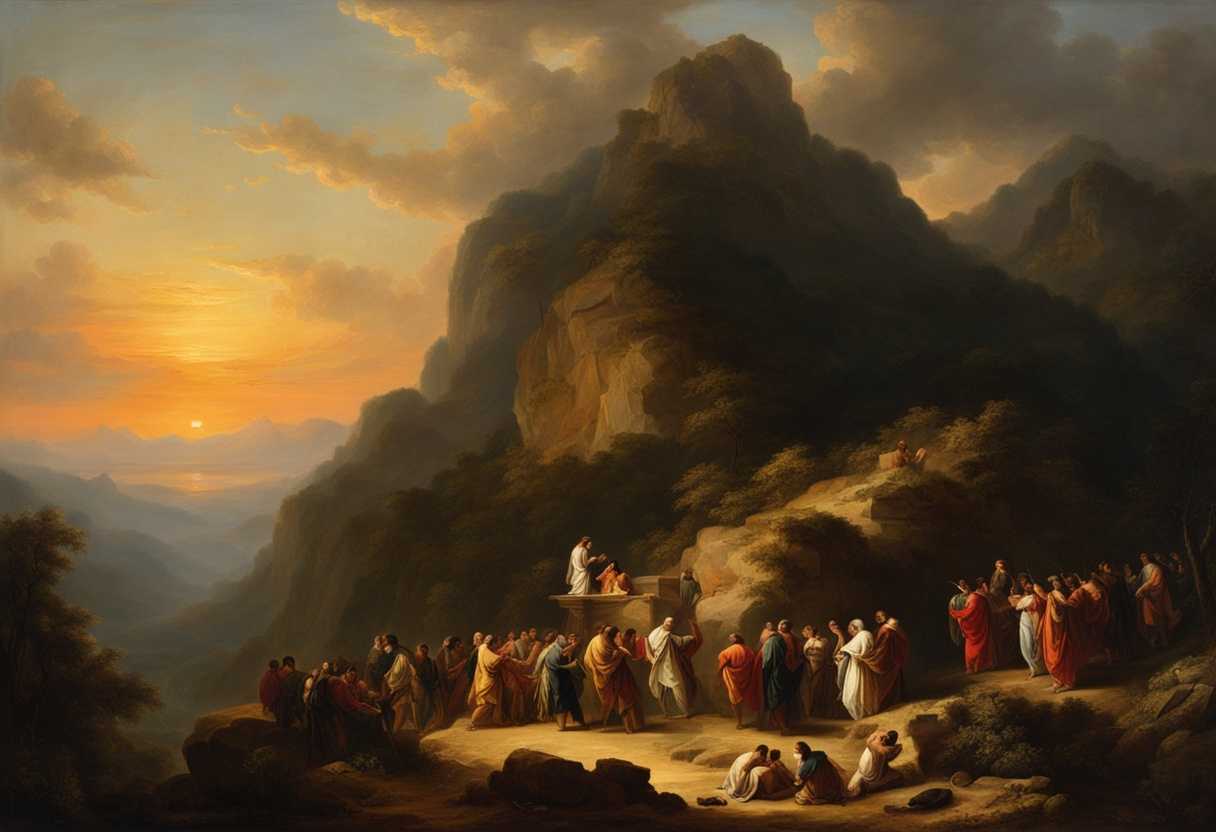
Setting the Scene for Deuteronomy 33:19
The scene in Deuteronomy 33:19 takes place during the blessing of the tribes of Israel by Moses before his death. The setting is a solemn and significant one, with the Israelites gathered around Moses as he imparts blessings upon each tribe. The tribe of Gad is specifically mentioned in this verse, receiving a blessing that speaks of their abundance and prosperity.
In this scene, Moses, the revered leader of the Israelites, stands tall and dignified, his face reflecting both wisdom and weariness from his many years of leading God’s people. The tribe of Gad, known for their skilled warriors and livestock, stands before him, their faces a mix of anticipation and reverence. The surroundings are likely the vast wilderness where the Israelites have been wandering for years, with the dust of the desert clinging to their sandals and the sun beating down upon them.
As Moses speaks the blessing over the tribe of Gad, there is a hushed reverence among the people, a sense of awe at being in the presence of a man chosen by God. The words of the blessing resonate with the tribe, filling them with hope and gratitude for the promise of prosperity and abundance. This moment is a poignant one, a reminder of the faithfulness of God and the importance of staying true to His commandments.
What is Deuteronomy 33:19 about?
Moses blesses the tribe of Gad in Deuteronomy 33:19 by foretelling their future prosperity and strength. When he speaks of Gad summoning peoples to the mountain to offer sacrifices of the righteous, he is painting a picture of the tribe’s leadership and influence. The act of summoning people to the mountain signifies power and authority, indicating that Gad will be a respected and influential tribe among the other tribes of Israel. The sacrifices of the righteous symbolize Gad’s commitment to living in a way that is pleasing to God, emphasizing their faithfulness and obedience. We can also consider the broader message this verse conveys about leadership and righteousness as we reflect on it. We too are called to lead by example and live in a way that reflects our faith and values, just as Gad is called to summon people to the mountain and offer sacrifices of the righteous. This verse challenges us to consider how we can use our own influence and authority to inspire others and bring honor to God. So, how can we summon others to higher ideals and lead with integrity and righteousness in our own lives? How can we strive to be like the tribe of Gad, standing as a beacon of faithfulness and obedience in a world that often values power and success above all else?
Understanding what Deuteronomy 33:19 really means
Deuteronomy 33:19, nestled within Moses’ final blessings to the tribes of Israel, shines a light on the tribes of Zebulun and Issachar. These verses paint a picture of prosperity and leadership in worship for these tribes. The imagery of summoning peoples to the mountain speaks volumes about their role in guiding others towards encountering God. It’s a call to action, a beckoning to lead by example and draw others into the presence of the Almighty.
“They will offer sacrifices of righteousness” underscores the importance of genuine and just worship. It’s not just about going through the motions but about approaching God with sincerity and integrity. This phrase reminds us that our worship should be a reflection of our hearts, pure and dedicated to honoring God. The mention of feasting on the abundance of the seas and treasures hidden in the sand symbolizes God’s provision and favor. It’s a reminder that as we seek Him first, all these things shall be added unto us.
In Isaiah 2:3, we see a parallel to the idea of summoning people to the mountain of the Lord. The invitation to learn from God and walk in His ways echoes the essence of leading others in worship and discipleship. Psalm 24:3-4 reinforces the concept of approaching God with clean hands and a pure heart, emphasizing the significance of righteousness in our worship and relationship with Him.
The relevance of Deuteronomy 33:19 transcends time and culture. In a world where distractions abound, the call to prioritize worship and righteousness remains as vital as ever. This verse serves as a beacon, guiding believers to stay steadfast in their faith and trust in God’s provision, even amidst uncertainty and challenges.
Consider a community leader who, against all odds, gathers people for prayer and worship consistently. As they remain dedicated to seeking God, the community experiences not only spiritual growth but also unexpected blessings and prosperity. This anecdote mirrors the promise encapsulated in Deuteronomy 33:19, illustrating how devotion to God can lead to both spiritual enrichment and material abundance.
In conclusion, Deuteronomy 33:19 stands as a poignant reminder of the significance of worship, righteousness, and unwavering trust in God’s provision. It urges believers to lead others towards God, promising His blessings in abundance. May we heed this call to worship sincerely, lead others in righteousness, and trust in the unfailing faithfulness of our Provider.
What does true satisfaction in God look like?
True satisfaction in God looks like finding contentment and fulfillment in Him alone. It means experiencing a deep sense of peace and joy that surpasses material possessions or temporary pleasures. When we are truly satisfied in God, our desires align with His will, and we trust in His provision and goodness. This satisfaction leads to a sense of completeness and wholeness, knowing that our ultimate purpose and fulfillment come from our relationship with God.
This verse portrays the abundance and richness that come from being satisfied in God. It uses the imagery of the blessing of the land and its fullness to illustrate the overflow of blessings that come when we find our satisfaction in Him. Our lives can bear fruit and flourish when we are deeply satisfied in God, just as the land yields its fruits abundantly when well-watered. This satisfaction brings a sense of security, prosperity, and contentment that go beyond earthly treasures and pleasures, leading to a deep-seated joy and peace that can only be found in Him.
Application
Embrace God’s blessings like a cherished promotion at work or a loving gesture from your family. Surrender to His guidance and be rewarded with divine grace and abundance. Let gratitude fuel your actions as you navigate through the challenges of today. Will you choose to acknowledge and appreciate God’s provision in your life?

Reverend Michael Johnson is an experienced Church Minister with a profound expertise in spirituality and guidance. With a serene presence and a compassionate heart, he has faithfully served his congregation for over 20 years, leading them on a spiritual journey towards inner peace and enlightenment. Reverend Johnson’s extensive knowledge of religious philosophies and profound understanding of human nature have made him a trusted confidant and mentor to many, as he seamlessly weaves his profound wisdom into life teachings. Reverend Johnson’s calming demeanor and empathetic nature continue to uplift and heal souls, nurturing a sense of unity and tranquility within his community.