
Deuteronomy 9:16-21 is about the Lord reminding the Israelites of their stubbornness and rebellion against Him, highlighting Moses’ plea for mercy on their behalf and recounting the consequences of their idolatry, emphasizing the need for humility and dependence on God’s grace.
16 And I looked, and behold, you had sinned against the Lord your God. You had made yourselves a golden calf.
17 And I took hold of the two tablets and threw them out of my two hands and broke them before your eyes.
18 Then I lay prostrate before the Lord as before, forty days and forty nights.
19 For I was afraid of the anger and hot displeasure that the Lord bore against you, so that he was ready to destroy you. But the Lord listened to me that time also.
20 And the Lord was so angry with Aaron that he was ready to destroy him. And I prayed for Aaron also at the same time.
21 And I took the sinful thing, the calf that you had made, and burned it with fire and crushed it, grinding it very small, until it was as fine as dust. And I threw the dust of it into the brook that ran down from the mountain.
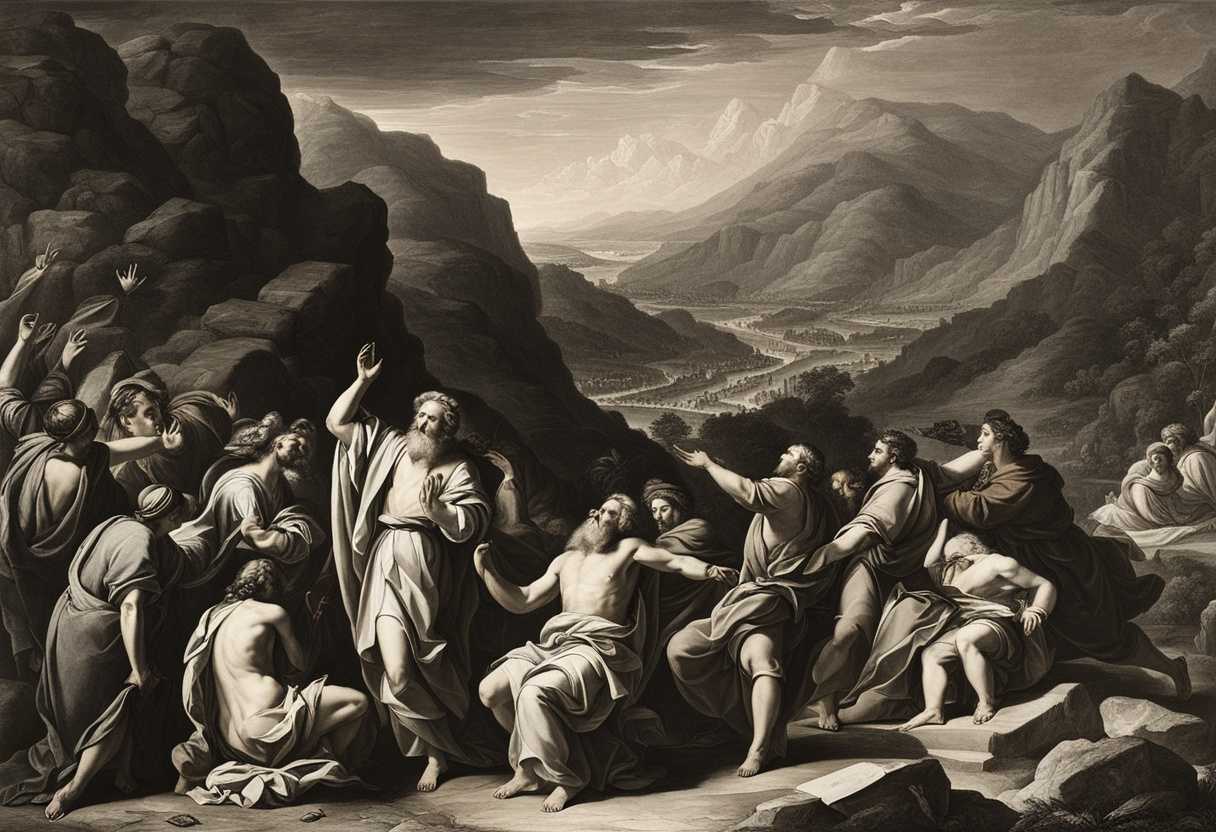
Setting the Scene for Deuteronomy 9:16-21
In the arid wilderness of Sinai, the air is thick with anticipation and tension. The Israelites, a vast multitude of men, women, and children, have journeyed for years under the leadership of Moses, their prophet and guide. They stand at the foot of a rugged mountain, the very place where Moses had ascended to receive the commandments from God. The sun hangs low in the sky, casting long shadows across the camp, where tents are pitched and fires smolder. The people are weary from their travels, yet their spirits are high, filled with hope for the Promised Land that lies ahead. However, a dark cloud looms over them, a reminder of their recent transgressions.
Among the crowd, Moses stands resolute, his face weathered by the sun and the weight of his responsibilities. He recalls the moment when he descended from the mountain, clutching the tablets of stone inscribed with God’s laws. His heart sank as he witnessed the people reveling in idolatry, worshiping a golden calf they had fashioned in his absence. The memory of their disobedience stings sharply, and he feels the burden of their sin pressing heavily upon him. In his mind, he recalls the fervent plea he made to God, begging for mercy on behalf of the Israelites, who had turned away from the covenant they had sworn to uphold. The scene is a poignant reminder of their fragility and the consequences of their actions.
As Moses addresses the assembly, he recounts the gravity of their rebellion and the anger of the Lord that nearly consumed them. He speaks of the sacrifices he made, the forty days and nights spent in fasting and prayer, pleading for their forgiveness. The people listen intently, their hearts heavy with remorse as they reflect on their past mistakes. The surrounding landscape, with its rocky terrain and sparse vegetation, mirrors their spiritual desolation. Yet, amidst the harshness of the wilderness, there is a flicker of hope. Moses reminds them of God’s unwavering commitment to His people, urging them to remember the covenant and to strive for righteousness as they prepare to enter the land flowing with milk and honey. The scene is one of reflection, repentance, and the promise of redemption, as the Israelites stand on the precipice of a new beginning.
What is Deuteronomy 9:16-21 about?
This verse brings to light a profound theme that resonates throughout the narrative of Moses and the Israelites: the delicate interplay between rebellion, mercy, humility, and the pursuit of obedience. Can you imagine standing at the crossroads between divine judgment and the grace offered by a merciful God? Moses, in recounting the history of Israel’s rebellion, not only serves as a historical record but also as a cautionary tale. It’s a powerful reminder that our choices carry weight and that we often find ourselves at odds with the very principles meant to guide us.
Moses emphasizes that remaining humble before God is not merely an option but a necessity for receiving His grace. Isn’t it fascinating how the concept of humility is often overlooked in our lives today? We create space for growth and transformation by acknowledging our flaws and shortcomings. This humility opens our hearts to obedience, a vital aspect often perceived as burdensome. But when we understand obedience as a pathway to a deeper relationship with God, it begins to feel less like a chore and more like an invitation to experience divine love and purpose. So, how can we learn from the past, like the Israelites, without falling into the same traps of pride and disobedience? It’s by embracing humility that we align ourselves with the heart of God, ultimately steering clear of judgment and inviting His mercy into our lives. What choices might we need to rethink today to foster that same spirit of obedience and humility?
Understanding what Deuteronomy 9:16-21 really means
In Deuteronomy 9:16-21, we find Moses recounting a pivotal moment in Israel’s history as they stand on the brink of entering the Promised Land. This passage serves as a sobering reminder of human frailty and the profound need for divine grace. As Moses reflects on the people’s rebellion, he highlights not only their failures but also God’s unwavering mercy. This duality of rebellion and grace is a theme that resonates deeply throughout Scripture and remains relevant in our lives today.
One of the key themes in this passage is the rebellion against God. The Israelites’ actions, particularly their creation of the golden calf, illustrate a common human tendency to stray from divine commands. How often do we find ourselves in similar situations, choosing our own paths over God’s guidance? This rebellion is not just a historical account; it reflects a struggle that many of us face in our daily lives. The challenge lies in recognizing our own “stiff-necked” tendencies and the need for humility before God.
Yet, amidst this rebellion, we see the theme of divine mercy shining through. Despite the Israelites’ disobedience, God remains willing to forgive and guide them. This is a powerful reminder that no matter how far we stray, God’s love is always present, waiting for us to return. The passage encourages us to reflect on our own lives and the grace that is available to us, even in our darkest moments. Have you ever felt unworthy of forgiveness? This passage reassures us that God’s mercy knows no bounds.
Moses’ role as an intercessor is another significant aspect of this passage. His plea to God on behalf of the Israelites illustrates the importance of prayer and advocacy. When we intercede for others, we participate in a divine dialogue that can lead to transformation. The phrase “The Lord listened to me” emphasizes the power of intercessory prayer. It invites us to consider how we can be advocates for those who have strayed, reminding us that our prayers can have a profound impact.
Related biblical passages, such as Exodus 32:9-14 and Psalm 106:19-23, echo the themes found in Deuteronomy. They remind us of the depth of Israel’s rebellion and God’s mercy throughout their history. In Romans 5:20, Paul reinforces the idea that grace abounds where sin increases, further illustrating the boundless nature of God’s forgiveness. These connections deepen our understanding of the passage and its implications for our lives.
In today’s world, many struggle with feelings of guilt and shame due to their mistakes. This passage offers hope and encouragement. A personal anecdote comes to mind: a friend once shared how he felt distant from God after making a series of poor choices. He believed he had lost his chance for redemption. However, through prayer and reflection, he discovered that God’s love was still present, waiting for him to return. This mirrors the message of mercy found in this passage and serves as a reminder that we are never beyond the reach of God’s grace.
In conclusion, Deuteronomy 9:16-21 serves as a powerful reminder of the human condition—our propensity to sin and the incredible grace of God. It calls us to reflect on our own lives, to seek forgiveness, and to extend that grace to others. In a world filled with division and strife, the message of mercy and intercession is more relevant than ever. How can we embody this grace in our interactions with others? Let us strive to be vessels of God’s mercy, both for ourselves and for those around us.
Am I seeking to understand God’s guidance in my life?
This passage shows a profound moment where an individual seeks divine guidance, especially amid challenges and uncertainty. The context highlights the importance of acknowledging one’s shortcomings and being aware of the consequences of past actions. Recognizing personal flaws and the need for spiritual assistance is a crucial step in the path toward understanding God’s will in one’s life. This humility can open the heart to receiving wisdom and direction from God. The passage emphasizes the significance of accountability and the need for protection from potential pitfalls. It demonstrates that seeking God’s guidance is not only about asking for blessings but also about being aware of the broader picture and the past experiences that shape current circumstances. This can lead to deeper insights regarding one’s purpose and the decisions that align with divine intent. Embracing this perspective can enrich one’s understanding of how to move forward.
Finally, it brings forth the idea that the journey toward understanding God’s guidance is often laden with trials and reminders of the importance of faithfulness. Cultivating a spirit of reliance on God’s leading, especially during tough times, transforms struggles into opportunities for growth. It’s a reminder that through reflection and seeking wisdom, one can navigate life’s complexities while remaining attuned to a higher purpose. Embracing this journey can ultimately deepen one’s relationship with God and clarify the path ahead.
Application
Life is like a busy workweek; distractions can sneak in and pull your focus away from what truly matters—your relationships and your purpose. Just as in a family, where attentiveness builds love, your connection with God needs constant nurturing. Take a moment to look inside: are you allowing anything to overshadow that bond? Reclaim your time and energy this week; set clear boundaries and prioritize your devotion. What action will you take today to keep your faith shining bright despite all the noise around you?

Reverend Michael Johnson is an experienced Church Minister with a profound expertise in spirituality and guidance. With a serene presence and a compassionate heart, he has faithfully served his congregation for over 20 years, leading them on a spiritual journey towards inner peace and enlightenment. Reverend Johnson’s extensive knowledge of religious philosophies and profound understanding of human nature have made him a trusted confidant and mentor to many, as he seamlessly weaves his profound wisdom into life teachings. Reverend Johnson’s calming demeanor and empathetic nature continue to uplift and heal souls, nurturing a sense of unity and tranquility within his community.