
Exodus 21:2-11 is about outlining the laws and regulations regarding the treatment of Hebrew slaves, emphasizing the importance of humane and just treatment of all individuals regardless of their social status.
2 When you buy a Hebrew slave, he shall serve six years, and in the seventh he shall go out free, for nothing.
3 If he comes in single, he shall go out single; if he comes in married, then his wife shall go out with him.
4 If his master gives him a wife and she bears him sons or daughters, the wife and her children shall be her master’s, and he shall go out alone.
5 But if the slave plainly says, ‘I love my master, my wife, and my children; I will not go out free,’
6 then his master shall bring him to God, and he shall bring him to the door or the doorpost. And his master shall bore his ear through with an awl, and he shall be his slave forever.
7 “When a man sells his daughter as a slave, she shall not go out as the male slaves do.”
8 If she does not please her master, who has designated her for himself, then he shall let her be redeemed. He shall have no right to sell her to a foreign people, since he has broken faith with her.
9 And if he designates her for his son, he shall deal with her as with a daughter.
10 If he takes another wife to himself, he shall not diminish her food, her clothing, or her marital rights.
11 When a man sells his daughter as a slave, she shall not go out as the male slaves do.
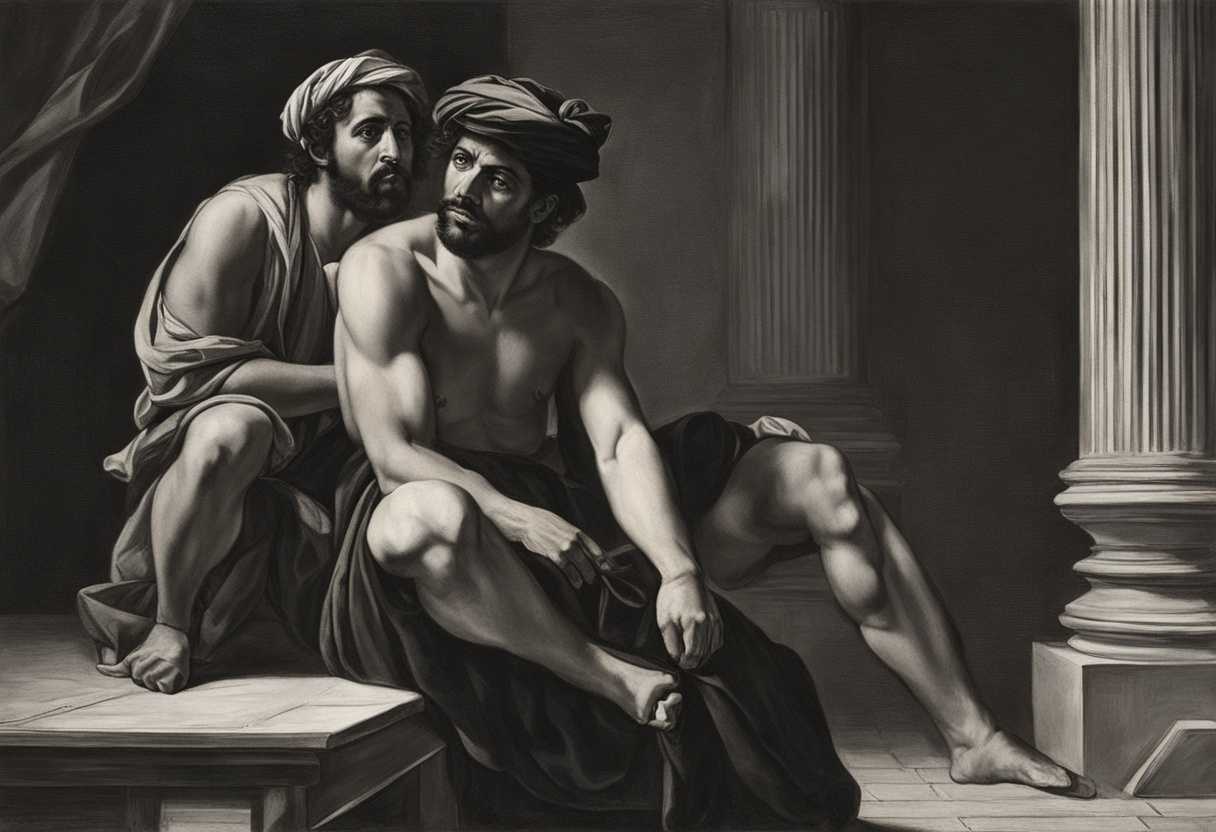
Setting the Scene for Exodus 21:2-11
In the scene described in Exodus 21:2-11, we find Moses, the leader of the Israelites, standing before a group of people who have gathered at the foot of Mount Sinai. The Israelites had recently been freed from slavery in Egypt and were now receiving laws and commandments from God through Moses. The atmosphere is tense yet expectant, as the people eagerly listen to the instructions being given to them.
Among the crowd are elders, tribal leaders, and ordinary men and women, all seeking guidance on how to live in this newfound freedom. Moses, with his long beard and commanding presence, speaks with authority as he lays out the laws concerning the treatment of slaves. The surroundings are awe-inspiring, with the majestic Mount Sinai towering in the background, its peak shrouded in clouds as a symbol of God’s presence.
As Moses continues to speak, outlining the rules for the fair treatment of slaves and the consequences for mistreating them, the people nod in understanding. This moment marks a pivotal point in their journey towards becoming a nation governed by divine laws, setting the foundation for their future as a chosen people of God.
What is Exodus 21:2-11 about?
The verse outlines the guidelines for Hebrew slaves, providing a framework for their treatment, rights, and eventual freedom. It serves as a reminder that even in a society where slavery existed, there were rules in place to ensure humane treatment and a path to liberation. The verse establishes boundaries to prevent exploitation and abuse by specifying the conditions under which a Hebrew slave could be acquired. It emphasizes the importance of respecting the dignity and well-being of those who have fallen into servitude.
Reflecting on this verse prompts us to consider the ethical implications of power dynamics and the responsibilities that come with authority. How can we apply these principles to our own interactions with others, ensuring fairness and compassion in all circumstances? It calls us to examine the role of justice and mercy in our society, inviting us to advocate for the rights and protections of the vulnerable. This verse ultimately challenges us to cultivate a culture of empathy and justice, upholding and honoring the inherent worth of every individual.
Understanding what Exodus 21:2-11 really means
The verses in Exodus 21:2-11 form part of the Covenant Code, a collection of laws given to the Israelites post their exodus from Egypt. These laws specifically address the treatment of Hebrew servants, shedding light on the social and economic structures of ancient Israel. One key phrase states that a Hebrew servant is to serve for six years and go free in the seventh year without payment, echoing the principle of sabbatical rest and liberation akin to God resting on the seventh day in the creation narrative. Another phrase emphasizes family unity, stating that if a servant comes with a wife, they both go free, underlining the importance of protecting familial relationships.
Moreover, the complexity of servitude is highlighted in the provision that if a master gives a wife to a servant who bears children, the wife and children belong to the master when the servant goes free. This underscores the intricate rights and dynamics within the servitude system. Additionally, the concept of voluntary servitude out of love and loyalty is introduced, where a servant who chooses to stay with his family and master must go before the judges. These passages offer insights into the nuances of relationships, freedom, and loyalty within the societal framework of ancient Israel.
In related biblical passages like Leviticus 25:39-43 and Deuteronomy 15:12-18, the treatment of Hebrew servants and the Year of Jubilee are discussed, reinforcing themes of freedom and restoration. Galatians 5:1 in the New Testament connects physical liberation with spiritual freedom in Christ, emphasizing the overarching theme of freedom in biblical teachings. These verses from Exodus serve as a reminder to uphold justice, compassion, and the dignity of every individual, challenging us to ensure fair treatment and respect for those under our authority.
Applying these principles to modern contexts, envision a workplace where an employer grants a sabbatical year to an employee as a gesture of appreciation, allowing them to rest and rejuvenate. This act not only benefits the employee but also cultivates a culture of respect and gratitude within the organization. Similarly, in a family-owned business that treats employees like family, supporting their well-being and standing by them in times of need, loyalty and a sense of community akin to voluntary servitude out of love are fostered.
In conclusion, the verses from Exodus 21:2-11 teach us about the delicate balance between justice and mercy, the significance of rest, and the value of relationships. They prompt us to introspect on how we can embody these principles in our daily lives, creating environments characterized by fairness, compassion, and mutual respect.
How should we treat slaves in the modern world?
We should recognize the inherent dignity and rights of all individuals, regardless of their race, gender, or social status in the modern world. We should strive to ensure that all people are treated with fairness, respect, and compassion, just as the verses in Exodus 21:2-11 provide guidelines for the treatment of slaves in ancient times. This means abolishing the institution of slavery in all its forms and working towards a society where every individual is free from exploitation and oppression.
Furthermore, we should actively work towards promoting equality and justice for all, including addressing systemic issues that contribute to modern forms of slavery, such as human trafficking and forced labor. We can strive to create a world where we value and protect the rights and dignity of all individuals by upholding the principles of human rights, promoting education and economic opportunities, and providing support for vulnerable populations.
Application
Let’s embody the values of fairness and compassion, just like in today’s workplaces and families. Extend a hand to those in need, ensuring everyone is treated with dignity and respect. Take a stand for what is right, showing kindness in all your encounters. How will you make a difference today?

Reverend Michael Johnson is an experienced Church Minister with a profound expertise in spirituality and guidance. With a serene presence and a compassionate heart, he has faithfully served his congregation for over 20 years, leading them on a spiritual journey towards inner peace and enlightenment. Reverend Johnson’s extensive knowledge of religious philosophies and profound understanding of human nature have made him a trusted confidant and mentor to many, as he seamlessly weaves his profound wisdom into life teachings. Reverend Johnson’s calming demeanor and empathetic nature continue to uplift and heal souls, nurturing a sense of unity and tranquility within his community.