
22 “When men strive together and hit a pregnant woman, so that her children come out, but there is no harm, the one who hit her shall surely be fined, as the woman’s husband shall impose on him, and he shall pay as the judges determine.”
23 But if there is harm, then you shall pay life for life,
24 eye for eye, tooth for tooth, hand for hand, foot for foot,
25 burn for burn, wound for wound, stripe for stripe.
Setting the Scene for Exodus 21:22-25
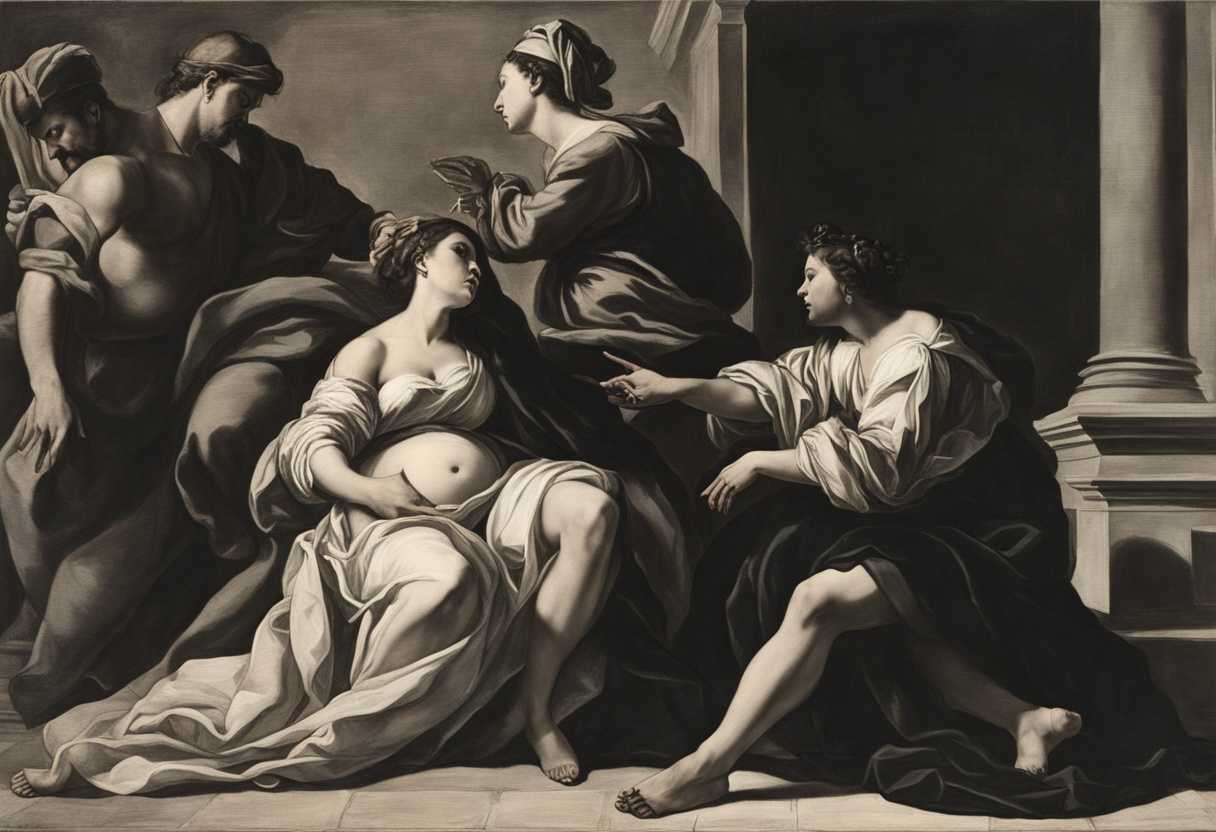
In Exodus 21:22-25, the scene is set in ancient Israel, within a bustling marketplace in a town square. The sun beats down on the dusty ground as merchants call out to passersby, showcasing their wares. People from all walks of life mill about, engaging in lively conversations and bartering for goods. In the midst of this vibrant scene, two men are engaged in a heated dispute that has drawn a small crowd around them.
The first man, named Reuben, is a wealthy landowner known for his strict adherence to the laws of Moses. The second man, named Jacob, is a poor laborer who has come to Reuben seeking justice for an injury he sustained while working on Reuben’s land. As they argue, the onlookers murmur amongst themselves, eager to see how this conflict will be resolved according to the laws set forth in Exodus 21. Reuben, with a furrowed brow and arms crossed, listens intently as Jacob recounts the incident that left him with a broken arm. The tension in the air is palpable as they await a decision on how to proceed in accordance with the laws outlined in Exodus 21:22-25, which address restitution for injuries caused during disputes. The outcome of this confrontation will not only impact Reuben and Jacob but also serve as a lesson to all those present on the importance of justice and compassion in their community.
What is Exodus 21:22-25 about?
Exodus 21:22-25 directly acknowledges the value of human life, including the life of an unborn child. This verse sets a standard for how society should value and protect both the mother and the child she carries. It emphasizes the importance of treating all individuals, regardless of their stage of development, with dignity and respect.
Have you ever paused to consider the significance of protecting the rights of the unborn and their mothers? This verse challenges us to think deeply about the value we place on human life and how we should respond when harm is done. It prompts us to reflect on our own actions and the importance of upholding justice and compassion towards all individuals, especially those who may be vulnerable or marginalized. This verse calls for accountability and restitution for causing harm to a pregnant woman and her child, reminding us of the responsibility we have to ensure the well-being and protection of all members of our community.
Understanding what Exodus 21:22-25 really means
Introduction and Context
To fully grasp the depth of Exodus 21:22-25, we must first understand its context within the broader narrative of the Bible. This passage is part of the Covenant Code, a set of laws given to the Israelites after their exodus from Egypt. These laws were meant to guide the community in justice, equity, and holiness. This specific passage addresses the consequences of causing harm to a pregnant woman and her unborn child during a conflict, thereby underscoring the value of life and the principles of restitution and justice.
Phrase Analysis
The passage includes the phrase “life for life, eye for eye, tooth for tooth,” which is often referred to as the lex talionis or the law of retaliation. At first glance, it might appear to endorse strict retributive justice. However, it’s crucial to understand that this was intended as a legal principle to limit excessive punishment and ensure that penalties were proportionate to the harm caused. It sought to curtail cycles of vengeance by placing boundaries on retribution.
Relevant Biblical Passages
This concept recurs in other parts of the Old Testament, but it’s also reinterpreted in the New Testament. Jesus, in the Sermon on the Mount (Matthew 5:38-39), challenges his followers to transcend the principle of “eye for eye” by advocating for forgiveness and turning the other cheek. This evolution in understanding points to a deeper spiritual truth: while justice is necessary, mercy and forgiveness are equally vital in the life of a believer. The principles behind this passage remain profoundly relevant in today’s world. We live in a society where justice and accountability are paramount, yet we also face the challenge of balancing these with compassion and forgiveness. The call to act justly, love mercy, and walk humbly with God (Micah 6:8) is ever pertinent. How do we hold people accountable while also offering grace? This is a tension we navigate daily in our personal lives, legal systems, and communities.
Anecdote for Reflection
Imagine a community where a conflict arises, leading to unintended harm. Instead of escalating the situation, the community seeks to restore relationships and heal wounds. I recall a story of two families in a small town who were embroiled in a bitter dispute. Instead of seeking retribution, they chose to sit together, discuss their grievances, and find a way forward. This act of restorative justice not only resolved the conflict but also strengthened the community bonds. Let’s consider how we can embody the deeper principles of this passage in our own lives as we reflect on it. Are there areas where we need to seek justice or offer forgiveness? We can ensure that our pursuit of justice does not overshadow our call to love and show mercy by being mindful of our actions and intentions. We should strive to be instruments of God’s justice and peace, always remembering that true justice is tempered with compassion.
How do we value the sanctity of human life?
Valuing the sanctity of human life is demonstrated by recognizing that all individuals deserve to be treated with dignity and respect. Every person’s life is precious and should be protected, regardless of their circumstances or background. We, as human beings, are called to uphold the inherent worth and value of every individual, honoring the unique gift of life that each person possesses.
Furthermore, valuing the sanctity of human life involves promoting a culture of compassion, empathy, and care for one another. It means seeking to understand and support those in need, standing up for justice, and working towards the well-being of all people. We contribute to creating a more just, loving, and equitable society where all individuals can thrive and flourish by recognizing and upholding the sanctity of human life.
Application
Think of life as a balancing act between work deadlines and family responsibilities. Isn’t it crucial to value every task and every moment with loved ones? In the same way, reflect on Exodus 21:22-25 and let it inspire you to protect the vulnerable and seek justice in your community. Stand up for those who can’t speak for themselves, just as you’d stand up for a teammate or a family member. How will you take action today to show love and support to those in need?

Reverend Michael Johnson is an experienced Church Minister with a profound expertise in spirituality and guidance. With a serene presence and a compassionate heart, he has faithfully served his congregation for over 20 years, leading them on a spiritual journey towards inner peace and enlightenment. Reverend Johnson’s extensive knowledge of religious philosophies and profound understanding of human nature have made him a trusted confidant and mentor to many, as he seamlessly weaves his profound wisdom into life teachings. Reverend Johnson’s calming demeanor and empathetic nature continue to uplift and heal souls, nurturing a sense of unity and tranquility within his community.