
Exodus 40:30-32 is about the anointing of Aaron and his sons as high priests, symbolizing their consecration and separation for the sacred service of God within the tabernacle.
30 He set the basin between the tent of meeting and the altar, and put water in it for washing, with which Moses and Aaron and his sons washed their hands and their feet.
31 And Moses and Aaron and his sons washed their hands and their feet there,
32 When they went into the tent of meeting, and when they approached the altar, they washed, as the Lord commanded Moses.
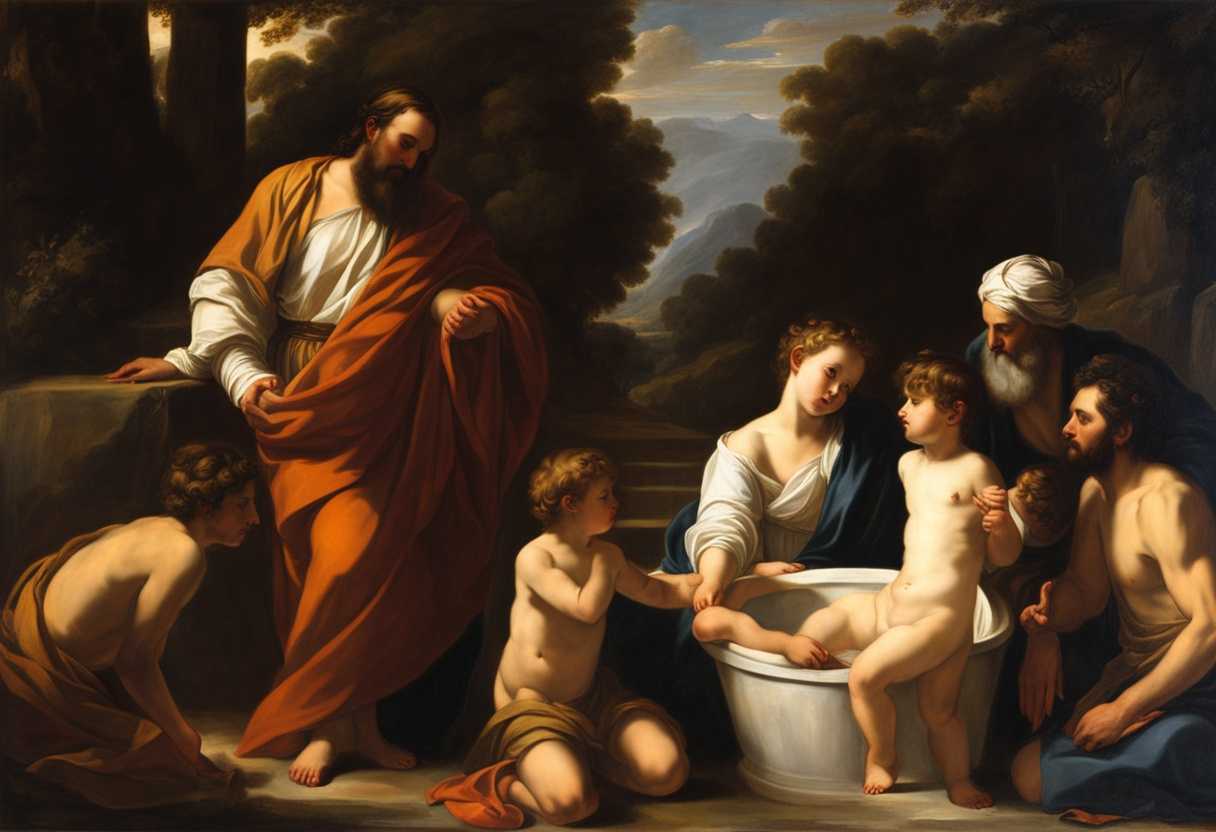
Setting the Scene for Exodus 40:30-32
In Exodus chapter 40, we find ourselves in the midst of the Israelites as they are setting up the Tabernacle in the wilderness. Moses, the revered leader of the Israelites, is overseeing the final stages of the construction. He is accompanied by skilled craftsmen and priests who have been diligently working on the Tabernacle according to the detailed instructions given by God.
The scene is bustling with activity as the final touches are being put in place. The Tabernacle, a sacred tent, is being erected with its various components – the Ark of the Covenant, the altar, the table for the bread of the Presence, and the lampstand. The air is filled with the sound of hammers, the smell of incense, and the sight of the intricate craftsmanship that adorns the sacred space.
As Moses inspects the completed work, a sense of awe and reverence fills the air. The Israelites gather around, their faces reflecting a mixture of exhaustion and excitement as they witness the fulfillment of God’s commandments. The presence of God descends upon the Tabernacle, signifying His approval of their efforts and His promise to dwell among His people.
What is Exodus 40:30-32 about?
Moses faithfully carries out God’s instructions to set up the tabernacle and consecrate the priests in this verse. It showcases Moses’ obedience and diligence in fulfilling the divine commands. Moses ensured that the tabernacle was established according to God’s holy standards and set apart the priests for their sacred duties by following God’s guidance meticulously.
This verse also highlights the importance of obedience and reverence in carrying out tasks assigned to us, especially when they are related to worship and serving God. It teaches us the significance of following instructions attentively and without compromise, just as Moses did in setting up the tabernacle and consecrating the priests. We can learn the value of obedience in our own lives and the impact it can have on fulfilling God’s purpose for us by reflecting on the actions of Moses. So, let us consider: How can we imitate Moses in our commitment to following God’s commands faithfully and with reverence in all aspects of our lives?
Understanding what Exodus 40:30-32 really means
The Book of Exodus recounts the Israelites’ journey from slavery in Egypt to their covenant with God at Mount Sinai. Chapter 40 delves into the construction of the Tabernacle, God’s dwelling among His people. Within this context, verses 30-32 highlight the significance of the bronze basin for washing, used by Moses, Aaron, and his sons.
“He placed the basin between the tent of meeting and the altar,” indicating the necessity of purification before approaching God. This positioning underscores the essential role of cleansing before entering the sacred space. “Moses, Aaron, and his sons used it to wash their hands and feet,” symbolizing both physical and spiritual readiness for worship and service. This act of washing signifies a preparation of heart and mind to engage with the divine.
The repeated washing whenever they entered the tent of meeting or approached the altar emphasizes the continual need for purity and sanctification in believers’ lives. Psalm 24:3-4 echoes this sentiment, highlighting the requirement of clean hands and a pure heart to stand in God’s presence. In John 13:8-10, Jesus washing the disciples’ feet teaches humility and the importance of spiritual cleansing. Hebrews 10:22 further connects physical washing with spiritual purification through faith in Christ.
The principle of purification before God remains relevant today, reminding us of the importance of spiritual readiness and a life that honors Him. This translates into daily self-examination, repentance, and seeking God’s forgiveness and guidance. Just as a surgeon meticulously prepares for surgery to ensure the patient’s safety, we must spiritually cleanse ourselves to effectively serve God.
In conclusion, Exodus 40:30-32’s act of washing serves as a potent symbol of the need for purity and preparation in our relationship with God. It prompts us to reflect on our lives, seek spiritual cleansing, and approach God with reverence and readiness to serve. Let us heed this call to purity and readiness in our walk with the Lord.
How should we prepare ourselves to serve the Lord?
To prepare ourselves to serve the Lord, we must first consecrate ourselves. This means dedicating our lives and actions to the service of God, setting ourselves apart from the world and its distractions. Consecration involves seeking God’s will, aligning our hearts with His, and surrendering our desires to His purposes. We make a commitment to serve the Lord wholeheartedly by consecrating ourselves, allowing Him to work through us for His glory.
Secondly, we must be obedient to God’s instructions. We are called to obey His word and follow His guidance in our lives, just as the Israelites followed the detailed commands given to them by God in the Old Testament. Obedience is a key aspect of serving the Lord, as it demonstrates our trust in His wisdom and authority. We can align our actions with His will and carry out His work effectively by listening to God’s voice through prayer, studying His word, and seeking His guidance.
Lastly, we should strive for excellence in our service to the Lord. Whether it is in our work, relationships, or ministries, we should aim to do everything with excellence as if we are doing it for the Lord Himself. We honor God and bring glory to His name by giving our best effort, talents, and resources in service to Him. This requires a mindset of continuous improvement, a commitment to growth and development, and a willingness to serve with diligence and enthusiasm.
Application
Let’s unlock our potential and commit to our divine calling like Aaron and his sons. Just as they were anointed for a sacred duty, let’s consecrate ourselves to fulfill our purpose. How can you dedicate yourself today to live out God’s plan for you? It’s time to take action and embrace your destiny with faith and determination. So, what will it be – are you ready to step into your role in this grand story of life?

Reverend Michael Johnson is an experienced Church Minister with a profound expertise in spirituality and guidance. With a serene presence and a compassionate heart, he has faithfully served his congregation for over 20 years, leading them on a spiritual journey towards inner peace and enlightenment. Reverend Johnson’s extensive knowledge of religious philosophies and profound understanding of human nature have made him a trusted confidant and mentor to many, as he seamlessly weaves his profound wisdom into life teachings. Reverend Johnson’s calming demeanor and empathetic nature continue to uplift and heal souls, nurturing a sense of unity and tranquility within his community.