
Exodus 40:33-34 is about the completion of the tabernacle, indicating the presence of God with His people through the manifestation of His glory in the form of a cloud.
33 And he erected the court around the tabernacle and the altar, and set up the screen of the gate of the court. So Moses finished the work.
34 Then the cloud covered the tent of meeting, and the glory of the Lord filled the tabernacle.
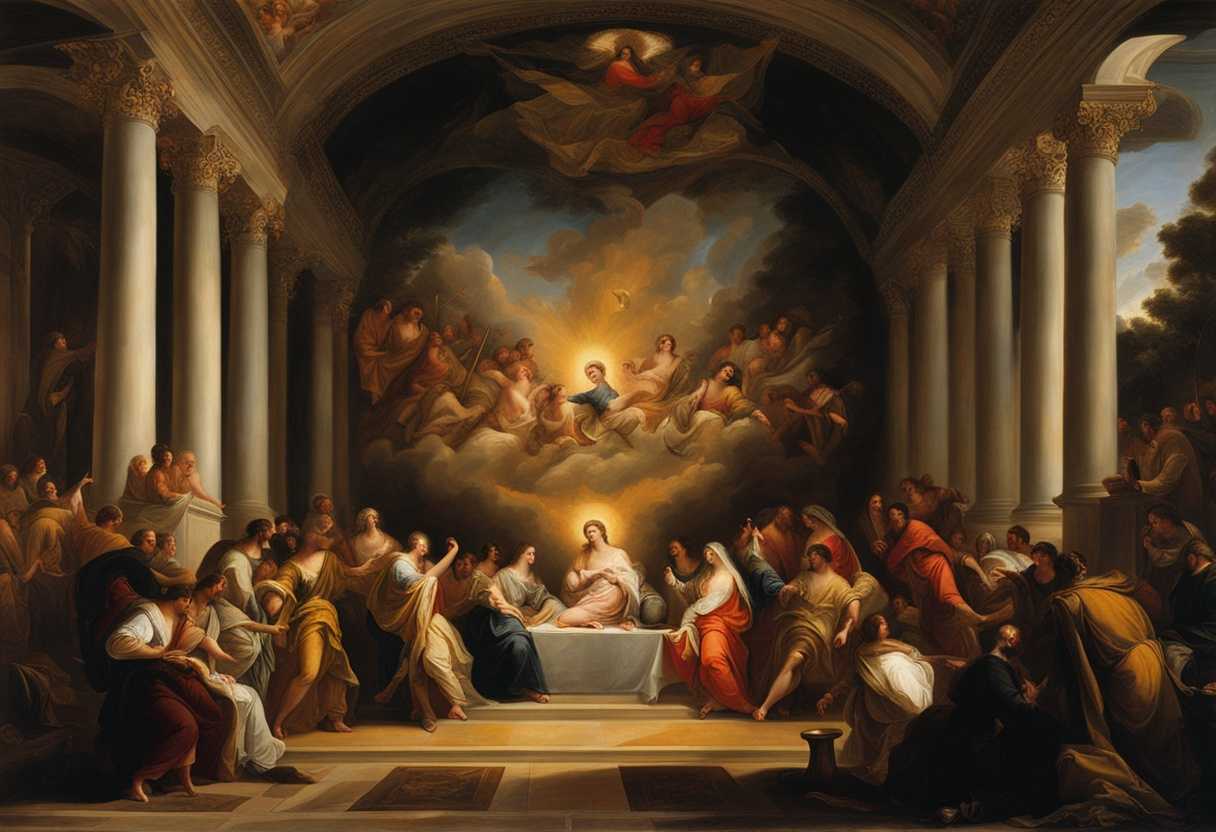
Setting the Scene for Exodus 40:33-34
In Exodus chapter 40, we find the scene where Moses sets up the tabernacle, following the detailed instructions given to him by God. The tabernacle was a portable sanctuary where the Israelites could worship and offer sacrifices to God during their journey in the wilderness. The tabernacle was a symbol of God’s presence among His people.
In this particular scene, Moses, the leader of the Israelites, along with his brother Aaron, the high priest, and other Levitical priests are present. They have spent days meticulously constructing the tabernacle, setting up the altar, arranging the furniture, and anointing everything with oil as commanded by God. The atmosphere is filled with reverence and anticipation as they await the culmination of their efforts.
As the final touches are completed, a cloud descends upon the tabernacle, signifying the presence of God. The glory of the Lord fills the tabernacle, and Moses is unable to enter due to the overwhelming presence of God. This moment is a powerful demonstration of God’s faithfulness to His people and His willingness to dwell among them. It is a sacred and awe-inspiring moment that solidifies the covenant between God and the Israelites.
What is Exodus 40:33-34 about?
Imagine the awe and wonder that must have filled the hearts of the Israelites as they witnessed the glory of the Lord filling the tabernacle. This verse illustrates the tangible presence of God among His people, a powerful reminder of His faithfulness and promise to dwell among them. The tabernacle was not just a physical structure but a sacred space where the Israelites could meet with God and experience His presence in a very real way.
Think about the significance of God choosing to manifest His glory in the tabernacle. It shows His desire to be intimately involved in the lives of His people, to guide, protect, and provide for them. The filling of the tabernacle with God’s glory symbolizes His holiness and majesty, creating a sense of reverence and worship among the Israelites. It serves as a constant reminder that God is with them every step of the way, leading them through their journey and establishing a deep spiritual connection with His chosen people.
Understanding what Exodus 40:33-34 really means
The Book of Exodus recounts the Israelites’ liberation from Egyptian bondage and their journey to establish a covenant with God at Mount Sinai. In Chapter 40, the focus shifts to the completion of the Tabernacle, a sacred structure serving as God’s earthly dwelling among the Israelites. Verses 33-34 capture the pivotal moment when Moses finalizes the Tabernacle’s setup, prompting a divine response that signifies God’s presence and approval.
“So Moses finished the work” encapsulates the significance of obedience and diligence in fulfilling divine tasks. It highlights the importance of following God’s commands faithfully to accomplish His purposes. Following Moses’ completion of the Tabernacle, “the cloud covered the tent of meeting,” symbolizing God’s presence descending upon the sacred space. This visible manifestation signifies God’s approval and His tangible presence among His people.
“The glory of the Lord filled the tabernacle” portrays a profound display of God’s presence, indicating His acceptance and blessing of the Tabernacle as a place of worship. This divine filling symbolizes the sanctification of the space for encountering God and seeking His guidance. The imagery of God’s glory filling the Tabernacle underscores the sacredness of the place and the reverence due to the Almighty.
Drawing parallels from related biblical passages, such as 1 Kings 8:10-11, John 1:14, and Revelation 21:3, we see a consistent theme of God’s desire to dwell among His people. These passages emphasize the significance of God’s presence in dedicated spaces and ultimately in the hearts of believers. Just as the Tabernacle was filled with God’s glory, believers today can experience His presence through prayer, worship, and obedience.
The completion of the Tabernacle and the divine filling with God’s glory offer timeless lessons for believers today. They remind us of the importance of diligently completing the tasks God assigns us, trusting in His blessings and guidance. The visible signs of God’s approval, like the cloud covering the tent, serve as reminders of His presence and favor in our lives. These signs can manifest as peace, guidance, and blessings, affirming God’s active involvement in our daily experiences.
Consider a community coming together to build a place of worship, each member contributing their skills and resources. Upon completion, as they gather for the first service, they sense a profound unity and peace, tangibly feeling God’s presence among them. This communal experience mirrors the Israelites’ encounter when the Tabernacle was filled with God’s glory, highlighting the transformative power of God’s presence in uniting and sanctifying His people.
In conclusion, the narrative of the Tabernacle’s completion and divine filling serves as a poignant reminder of God’s desire to dwell among His people. It prompts us to diligently pursue God’s presence, complete our tasks faithfully, and discern His signs of approval in our lives. Just as God filled the Tabernacle with His glory, may we seek His presence in our lives, allowing His divine light to illuminate our paths and sanctify our hearts.
How can we invite the presence of God?
To invite the presence of God, we can see from Exodus 40:33-34 that Moses finished setting up the tabernacle, and then the cloud covered the tent of meeting, and the glory of the Lord filled the tabernacle. This passage shows us that when we are diligent in preparing a place for God’s presence and are obedient to His instructions, He will come and dwell among us. We can invite the presence of God in our own lives by creating a sacred space or a dedicated time for prayer and meditation, where we seek His presence and acknowledge His sovereignty. By studying His Word faithfully, worshipping, and following His commandments, we create an atmosphere conducive for God to reveal Himself to us. We too can experience God’s presence in a tangible way when we align ourselves with His will, just as the tabernacle was filled with His glory when it was set up according to His instructions. Inviting the presence of God ultimately requires humility, reverence, and a desire to be in His presence. It involves seeking Him with a pure heart and a willingness to surrender our own desires for His purposes. When we actively pursue a relationship with God, He promises to draw near to us and manifest His presence in our lives, just as He did in the tabernacle in the Exodus account.
Application
Embrace the image of the Lord’s glory filling the tabernacle as a reminder to seek His presence in everything you do. Just as the Israelites revered His tangible presence, approach your daily responsibilities with a sacred mindset. Let your heart and home be like the tabernacle, a space for His light to shine through your interactions. Will you open the door for God’s presence to dwell in your life right now?

Reverend Michael Johnson is an experienced Church Minister with a profound expertise in spirituality and guidance. With a serene presence and a compassionate heart, he has faithfully served his congregation for over 20 years, leading them on a spiritual journey towards inner peace and enlightenment. Reverend Johnson’s extensive knowledge of religious philosophies and profound understanding of human nature have made him a trusted confidant and mentor to many, as he seamlessly weaves his profound wisdom into life teachings. Reverend Johnson’s calming demeanor and empathetic nature continue to uplift and heal souls, nurturing a sense of unity and tranquility within his community.