
25 Then Zipporah took a flint and cut off her son’s foreskin and touched Moses’ feet with it and said, “Surely you are a bridegroom of blood to me.”
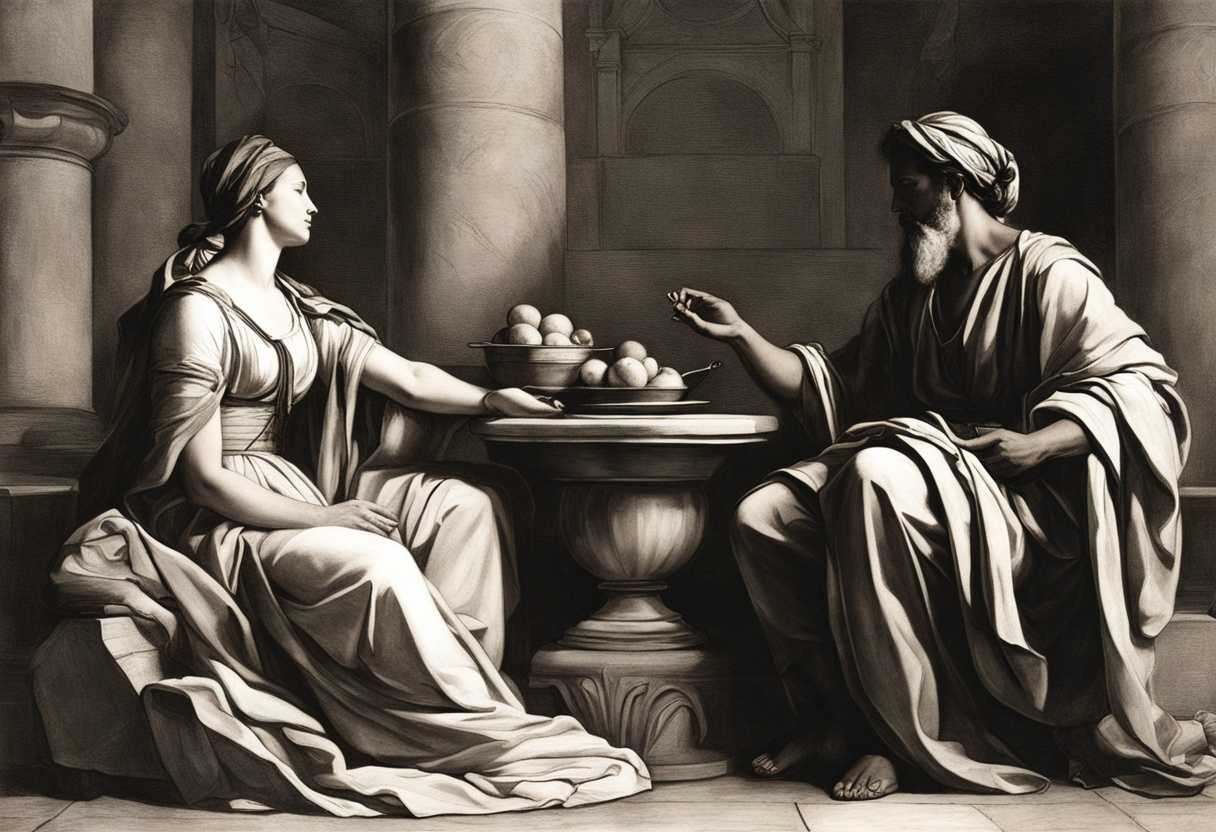
Setting the Scene for Exodus 4:25
In Exodus chapter 4, we find Moses on his way back to Egypt with his wife Zipporah and their two sons. The scene unfolds in the wilderness as they make their journey towards Egypt. The sun is setting, casting a warm golden glow over the vast desert landscape. The air is filled with the sound of the wind rustling through the dry bushes and the occasional cry of a desert bird.
As they travel, they come to a resting place for the night, setting up camp under the starlit sky. Zipporah is tending to the fire, preparing a simple meal for the family, while Moses sits nearby, lost in thought. Their two sons, Gershom and Eliezer, are playing nearby, their laughter echoing in the quiet desert night.
Suddenly, a dramatic and unexpected event takes place as Zipporah takes a flint knife and circumcises their youngest son. This action is a response to God’s command to Moses to circumcise their son as a sign of the covenant between God and the Israelites. The scene is filled with tension and emotion as Zipporah performs the circumcision, and Moses realizes the importance of obeying God’s commands.
What is Exodus 4:25 about?
We witness the urgency and significance of following God’s commandments in this verse. Zipporah’s quick action to circumcise her son highlights her understanding of God’s expectations and her dedication to fulfilling them. Through her decisive and courageous act, she averts God’s anger towards Moses, showcasing the power of obedience and faith in mitigating divine consequences.
This verse also underscores the interconnectedness of our actions with the well-being of others. Zipporah’s willingness to take matters into her own hands not only saves her husband from God’s wrath but also demonstrates the profound impact individuals can have on each other’s destinies. It prompts us to reflect on our responsibilities towards one another, the importance of selflessness in times of crisis, and the transformative power of our faith in shaping our relationships with both the divine and our fellow human beings. So, let us ponder on the weight of our actions, the depth of our faith, and the strength of our bonds with others as we navigate the complex tapestry of life.
Understanding what Exodus 4:25 really means
Certainly! To provide a comprehensive commentary on Exodus 4:25, let’s follow the structure:
- Context and Background
- Detailed Explanation of Key Phrases
- Cross-Referencing Other Bible Verses
- Relevance Today
- Anecdote for Modern Understanding
- Concluding Thoughts
Context and Background
Exodus 4:25 sits within an important narrative where God is preparing Moses to return to Egypt to lead the Israelites out of bondage. However, this particular verse presents a moment of crisis and immediate action taken by Zipporah, Moses’ wife. Understanding the broader context of God’s covenant with Abraham and the significance of circumcision helps illuminate the gravity of this event.
Detailed Explanation of Key Phrases
The phrase “She took a flint knife, cut off her son’s foreskin and touched Moses’ feet with it” is loaded with meaning. Circumcision was a covenantal sign between God and Abraham’s descendants, signifying their unique relationship and obligations (Genesis 17:10-14). Moses neglected an essential covenantal duty by not circumcising his son. Zipporah’s drastic measure underscores the urgency and seriousness of compliance with God’s commands.
When she calls Moses a “bridegroom of blood,” it’s both a rebuke and an assertion of the covenant’s importance. Ironically, this act of circumcision, an act involving blood, symbolically restores Moses to a state of compliance, akin to how blood sacrifices would atone for sin in later traditions.
Cross-Referencing Other Bible Verses
To better understand this episode, one might consider Genesis 17:10-14, where God establishes circumcision as a covenantal sign. Additionally, Joshua 5:2-3 recounts another mass circumcision event at Gilgal, reiterating the necessity for the Israelites to uphold their covenant with God before claiming the Promised Land.
Psalm 119:60 reflects this urgency in adhering to God’s commandments: “I will hasten and not delay to obey your commands.” This principle is paralleled in Zipporah’s immediate action, highlighting the importance of obedience.
Relevance Today
Today, this passage might seem distant culturally but its underlying principles remain relevant. It reminds believers of the importance of obedience to God’s commands and the seriousness of covenants or commitments made before Him. Even though physical circumcision may not be a literal requirement for Christians today (as Paul discusses in Romans 2:29), the call to live a life obedient to God’s will remains.
Anecdote for Modern Understanding
Imagine a modern baptism ceremony in a Christian church. A baptism symbolizes a public declaration of faith and commitment to follow Christ. Now, recall a story where a family almost misses the scheduled baptism for their child due to forgetfulness. Their hurried but successful arrival at the church underscores how such rituals cement our relationship with God and the community. Similar to Zipporah’s quick thinking, the family’s determination to fulfill their commitment reinforces the deep-seated importance of such spiritual milestones.
Concluding Thoughts
Exodus 4:25 serves as a stark reminder of the seriousness with which we should approach our spiritual responsibilities and covenants. This event, as followers of Christ, points to the broader theme of obedience and the urgency with which we should adhere to God’s directives. The underlying call to faithful commitment remains timeless, whether cultural contexts may change or not, manifesting through the ancient rite of circumcision or modern acts of faith like baptism. What commitments have you made in your faith journey, and how might you ensure you honor them? Reflect on Zipporah’s example and the urgency and faithfulness she demonstrated.
What are the consequences of neglecting spiritual responsibilities?
Neglecting spiritual responsibilities can lead to severe consequences. When someone fails to attend to their spiritual duties, they risk facing the anger and disapproval of God in the mentioned verse. The responsibilities that one has towards their spiritual growth and relationship with the divine are not to be taken lightly, as they have the potential to greatly impact one’s life and connection to the divine. Individuals who ignore spiritual obligations may find themselves estranged from their faith, lacking in spiritual nourishment, and distant from the guidance and protection that comes from fulfilling these responsibilities. The neglect of these duties can lead to a sense of spiritual emptiness, a disconnect from one’s purpose, and a loss of the blessings and rewards that come from living a life in alignment with one’s spiritual values and beliefs. It is essential to prioritize these responsibilities in order to maintain a strong and vibrant spiritual connection.
Application
Think of life’s demands as a high-stakes project with urgent deadlines. You must act decisively, just like Zipporah did. Trust in God’s guidance, even when obstacles seem too big to overcome. Embrace faith as your most critical tool. Today, will you step up and take the action God calls you to?

Reverend Michael Johnson is an experienced Church Minister with a profound expertise in spirituality and guidance. With a serene presence and a compassionate heart, he has faithfully served his congregation for over 20 years, leading them on a spiritual journey towards inner peace and enlightenment. Reverend Johnson’s extensive knowledge of religious philosophies and profound understanding of human nature have made him a trusted confidant and mentor to many, as he seamlessly weaves his profound wisdom into life teachings. Reverend Johnson’s calming demeanor and empathetic nature continue to uplift and heal souls, nurturing a sense of unity and tranquility within his community.