
Exodus 7:20-21 is about God demonstrating His power and control over all creation by turning the water of the Nile River into blood, signaling His authority and judgment over the false gods of Egypt.
20 Moses and Aaron did as the Lord commanded. In the sight of Pharaoh and in the sight of his servants, he lifted up the staff and struck the water in the Nile, and all the water in the Nile turned into blood.
21 And the fish in the Nile died, and the Nile stank, so that the Egyptians could not drink water from the Nile. There was blood throughout all the land of Egypt.
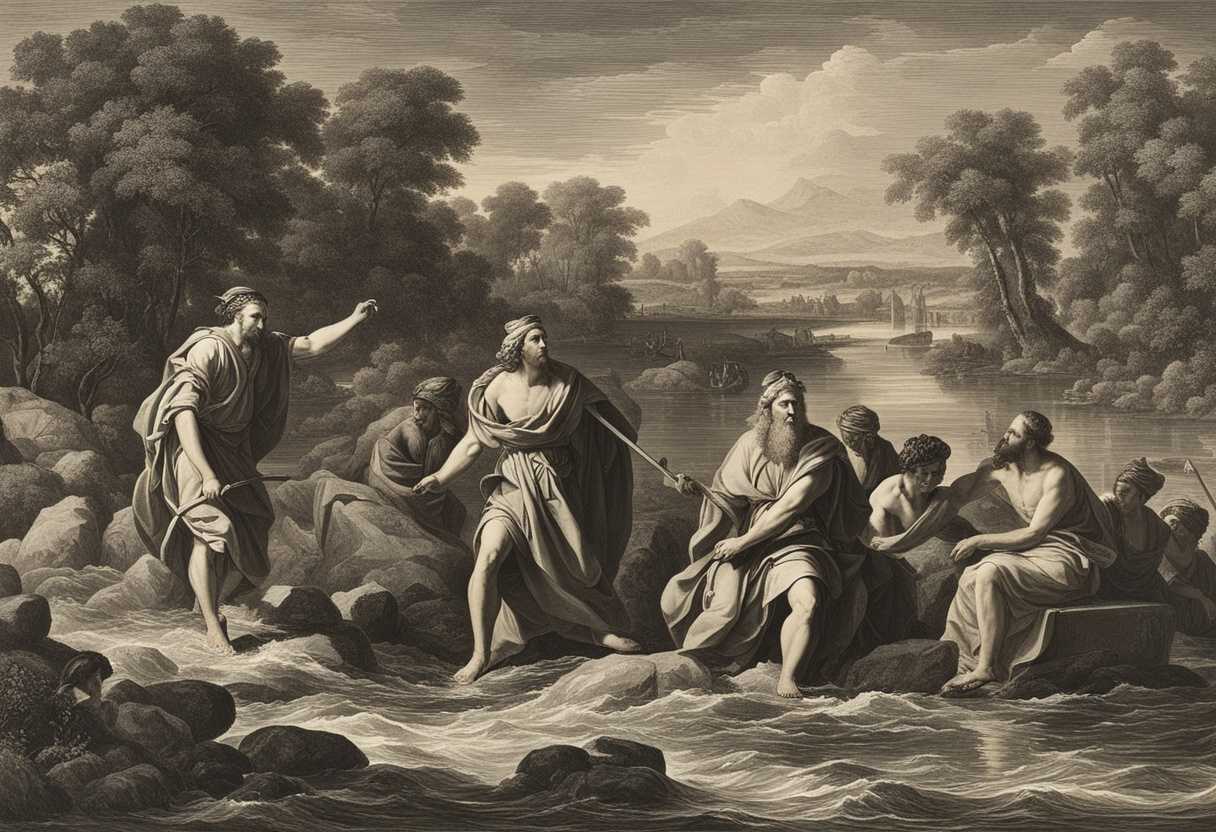
Setting the Scene for Exodus 7:20-21
The scene in Exodus 7:20-21 takes place in the land of Egypt during the time when Moses and Aaron were sent by God to confront Pharaoh and demand the release of the Israelites from slavery. The setting is the royal court of Pharaoh, a grand and opulent chamber adorned with intricate hieroglyphics and luxurious furnishings. Pharaoh, the powerful ruler of Egypt, sits on his throne, surrounded by his advisors and court officials.
Moses and Aaron stand before Pharaoh, their faces determined and their staffs in hand, ready to perform the miraculous signs that God had instructed them to demonstrate. The atmosphere is tense as Moses raises his staff and strikes the water of the Nile, turning it into blood. The once life-giving river now flows red with blood, a powerful symbol of God’s judgment and power over the gods of Egypt.
Pharaoh’s courtiers look on in shock and awe, unsure of how to react to this display of divine power. Pharaoh himself is both amazed and defiant, refusing to heed the warnings of Moses and Aaron. The stage is set for a dramatic showdown between the God of Israel and the prideful ruler of Egypt, a battle that will ultimately lead to the liberation of the Israelites from bondage.
What is Exodus 7:20-21 about?
God demonstrates His power and authority by turning the Nile River into blood in this verse. God is showcasing not only His ability to control the elements of nature but also His role as a judge against those who defy Him by performing this miraculous act. The transformation of the Nile River into blood serves as a warning and a symbol of the consequences of disobedience and sin.
Imagine the sheer magnitude of power required to transform an entire river into blood. It is a clear display of God’s sovereignty and his ability to bring about drastic and unmistakable signs to communicate His will. Through this act, God is not only illustrating His ability to intervene in the natural world but also His divine authority over all aspects of creation. It serves as a reminder of the consequences that can come from going against His will and serves as a lesson of the importance of obedience and humility before Him.
Understanding what Exodus 7:20-21 really means
In Exodus 7:20-21, we witness the unfolding of the first plague upon Egypt, where the Nile River is turned into blood by the hand of God through Moses and Aaron. This dramatic event serves as a display of God’s power and a judgment against the Egyptians for their mistreatment of the Israelites. The obedience of Moses and Aaron to God’s command to strike the Nile with Aaron’s staff highlights the importance of following God’s will, even in the face of uncertainty or difficulty. It underscores the significance of trusting in God’s guidance and acting in accordance with His instructions.
The act of striking the Nile with the staff symbolizes God’s authority and supremacy over all creation. By transforming the life-giving waters of the Nile into blood, God directly challenges the Egyptian gods and asserts His dominion. The miraculous nature of this transformation serves as a clear sign of God’s judgment and a call for repentance. The death of the fish and the foul odor emanating from the river further emphasize the severity of the plague, illustrating the consequences of disobedience and the disruption of the natural order due to sin.
These verses resonate with other passages in the Bible, such as Revelation 16:4-6, which also speaks of waters turning to blood as a judgment. This parallel underscores the theme of divine justice and the consequences of rebellion against God. Psalm 78:44 recounts the plagues of Egypt as a testament to God’s mighty works and His faithfulness in delivering His people. In contrast, John 2:1-11 presents a miracle of transformation that highlights Jesus’ power and the blessings of the new covenant, offering a different perspective on the significance of water-related miracles.
The relevance of these verses extends to our lives today, reminding us of God’s sovereignty and His intervention in human affairs. They prompt us to acknowledge His power and respond with obedience and reverence. The story of the plagues serves as a cautionary tale against hardness of heart and the repercussions of disregarding God’s commands. It urges us to examine our own lives, repent of disobedience, and seek restoration through God’s grace.
Consider a scenario where a community’s river, vital for sustenance and livelihood, becomes contaminated, leading to illness and death. This situation mirrors the impact of the first plague on Egypt, illustrating how our actions, whether environmental or moral, can have far-reaching consequences. Just as the community must address the pollution and restore the river, we too must confront sin in our lives, seeking forgiveness and renewal from God.
In conclusion, Exodus 7:20-21 serves as a profound testament to God’s authority and the imperative of obedience. These verses challenge us to reflect on the consequences of sin, prompting us to turn to God for guidance and redemption. By grasping the deeper significance of these events and applying their lessons to our lives, we can draw nearer to God and align ourselves with His divine will.
How do we respond when faced with God’s power?
When faced with God’s power, we are called to acknowledge His sovereignty and authority. This passage reminds us of the ultimate power that God has over all creation, including natural elements like water. We must humble ourselves before God in the face of such power and recognize His ability to control even the forces of nature.
Furthermore, this verse serves as a reminder of the consequences of disobedience and going against God’s will. Pharaoh faced the wrath of God through the plagues by hardening his heart. It shows us that when we resist God’s authority and refuse to submit to His will, we will ultimately face the consequences of our actions. This serves as a caution to us to always heed God’s word and follow His commands. We are ultimately called to have faith and trust in God’s power. We should not harden our hearts like Pharaoh, but instead, surrender to God’s will and allow Him to work in our lives. It is a reminder that God’s power is unmatched, and by submitting to Him, we can experience His grace and blessings in our lives.
Application
Just as a skilled leader commands respect in the workplace, God’s power over the elements commands our trust and obedience. Let’s not hesitate in following His will, like a dedicated employee diligently carrying out their tasks. Will you flow like the waters of the Nile, yielding to the Almighty’s guidance with unwavering faith?

Reverend Michael Johnson is an experienced Church Minister with a profound expertise in spirituality and guidance. With a serene presence and a compassionate heart, he has faithfully served his congregation for over 20 years, leading them on a spiritual journey towards inner peace and enlightenment. Reverend Johnson’s extensive knowledge of religious philosophies and profound understanding of human nature have made him a trusted confidant and mentor to many, as he seamlessly weaves his profound wisdom into life teachings. Reverend Johnson’s calming demeanor and empathetic nature continue to uplift and heal souls, nurturing a sense of unity and tranquility within his community.