
Exodus 8:28 is about the Pharaoh’s continuous resistance to God’s command to let the Israelites go, symbolizing the hardened heart of those who stubbornly refuse to follow divine guidance.
28 So Pharaoh said, “I will let you go to sacrifice to the Lord your God in the wilderness; only you must not go very far away. Plead for me.”
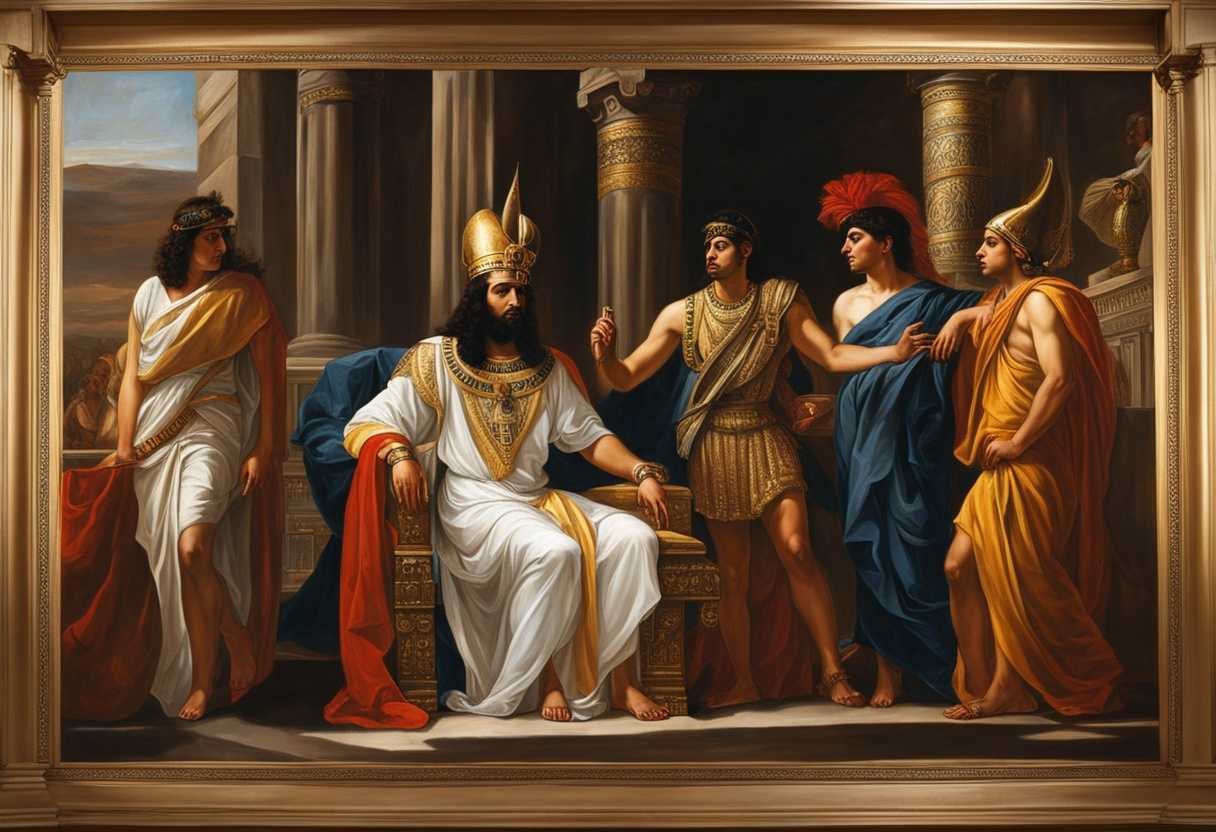
Setting the Scene for Exodus 8:28
In Exodus 8:28, we find Moses standing before Pharaoh in the grand throne room of the Egyptian palace. The air is heavy with the scent of incense burning in ornate censers, and the room is adorned with intricate hieroglyphics and golden statues of Egyptian gods. Pharaoh, adorned in regal attire, sits upon his throne, his expression a mix of defiance and curiosity as he listens to Moses speak on behalf of the Israelites.
Moses, a humble man with a commanding presence, stands before Pharaoh with his brother Aaron by his side. The two brothers have come to deliver a message from the God of Israel, demanding the release of the Hebrew slaves. The tension in the room is palpable as Moses warns of the impending plague of frogs that will overrun the land if Pharaoh does not heed the warning and let the Israelites go.
Surrounding them are the courtiers and advisors of Pharaoh, their eyes fixed on the unfolding confrontation between the powerful ruler and the determined prophet. The scene is set for a battle of wills between Pharaoh’s pride and the power of the God of Israel, with the fate of the Israelite slaves hanging in the balance.
What is Exodus 8:28 about?
Isn’t it remarkable how a heart can be softened, and a mind can change when faced with undeniable truth and divine intervention? Pharaoh finally yields to the will of God in this verse and releases the Israelites to worship Him in the wilderness. Despite his previous stubbornness and resistance, Pharaoh’s heart is finally moved to relent and allow God’s people to go.
This moment serves as a powerful reminder of the transformative power of faith and perseverance. It shows us that even the most hardened hearts can be softened by the grace of God and the unwavering faith of His people. It teaches us the importance of staying steadfast in our beliefs and trusting in the divine plan, even in the face of seemingly insurmountable challenges. Just like the Israelites, we too can find freedom and liberation when we place our trust in God and adhere to His will.
Pharaoh’s decision to let the Israelites go not only signifies a temporary reprieve for the oppressed people but also symbolizes the triumph of good over evil and the victory of faith over doubt. It reminds us that no matter how dire the circumstances may seem, God’s will shall prevail, and His light will ultimately shine through the darkness. So let us take heart in this verse and draw inspiration from Pharaoh’s relenting, knowing that with God on our side, we too can overcome any obstacle and find our way to freedom and salvation.
Understanding what Exodus 8:28 really means
In the narrative of Exodus 8:28, we witness a pivotal moment where Pharaoh, in his stubbornness, reluctantly agrees to let the Israelites go to worship God in the wilderness. This partial compliance reflects Pharaoh’s hardened heart and his ongoing resistance to fully submit to God’s command. The phrase “I will let you go” signifies a temporary and conditional release, showcasing Pharaoh’s reluctance to completely yield to God’s will. Despite this concession, Pharaoh attempts to exert control by limiting the Israelites’ freedom, stating, “Only you shall not go very far away,” symbolizing the tension between divine authority and human defiance.
Moreover, Pharaoh’s request for Moses to “make supplication” for him reveals a moment of vulnerability and acknowledgment of God’s power, albeit insincere. This interaction highlights the complex dynamics at play, where even in moments of apparent compliance, there lingers a deep-seated resistance to wholeheartedly embrace God’s commands. The parallel with contemporary struggles is evident as many individuals today grapple with offering partial obedience to God, often hesitating to fully commit to His will.
Drawing parallels to related biblical passages such as Exodus 3:18 and Exodus 9:27-28, we see a pattern of temporary repentance in Pharaoh’s behavior, mirroring instances where individuals may seek God’s intervention in times of distress but falter in maintaining a consistent and sincere relationship with Him. Jesus’ words in Matthew 15:8, quoting Isaiah, further emphasize the importance of genuine worship and obedience, cautioning against mere lip service devoid of true devotion.
Reflecting on the relevance of Pharaoh’s struggle with control and surrender, we are prompted to examine our own lives and identify areas where we may be holding back from wholeheartedly following God’s commands. Like the child who begrudgingly tidies their room to fulfill a duty, we may find ourselves offering token gestures of obedience without engaging our hearts and minds fully. This anecdote serves as a poignant reminder of the tendency to approach our spiritual commitments with a similar lack of fervor.
In light of these insights, it is crucial to introspect and discern where we might be clinging to control instead of surrendering to God’s plan wholeheartedly. Cultivating a spirit of genuine repentance and authentic worship is essential, not just in moments of crisis but as a consistent practice in our daily lives. By aligning ourselves more closely with God’s will and seeking to deepen our relationship with Him, we can move beyond mere compliance towards a profound and transformative obedience that leads to a richer experience of His blessings.
How seriously do we take our promises to God?
Pharaoh promises Moses in Exodus 8:28 that he will let the Israelites go sacrifice to their God in the wilderness. However, after the plague is lifted, Pharaoh breaks his promise and does not allow the Israelites to leave. This verse serves as a reminder of the importance of keeping our promises to God. It highlights the consequences of making vows or commitments to Him and then failing to follow through.
We should take our promises to God seriously because He holds us accountable for our words and actions. We may also face consequences if we fail to honor our commitments to God, just as Pharaoh faced consequences for breaking his promise to Moses. It is essential to have integrity and faithfulness in keeping the promises we make to Him, as God values honesty and reliability in our relationship with Him. We ultimately build our relationship with God on trust and obedience. We demonstrate our love and faithfulness to God by holding true to our promises and commitments to Him. It is important to approach our vows and commitments with reverence and sincerity, understanding the weight of our words and the impact they have on our relationship with Him.
Application
Embrace the power of trust in God’s authority, letting go of doubts like a boss delegating tasks. His wisdom is the ultimate guide in navigating the chaos of life, like a seasoned parent leading their family through a storm. Will you surrender to His unfailing authority and walk with confidence in His divine plan?

Reverend Michael Johnson is an experienced Church Minister with a profound expertise in spirituality and guidance. With a serene presence and a compassionate heart, he has faithfully served his congregation for over 20 years, leading them on a spiritual journey towards inner peace and enlightenment. Reverend Johnson’s extensive knowledge of religious philosophies and profound understanding of human nature have made him a trusted confidant and mentor to many, as he seamlessly weaves his profound wisdom into life teachings. Reverend Johnson’s calming demeanor and empathetic nature continue to uplift and heal souls, nurturing a sense of unity and tranquility within his community.