
Exodus 8:32 is about Pharaoh hardening his heart and refusing to listen to Moses and Aaron, despite witnessing the power of God’s signs and wonders through the plague of the frogs.
32 But Pharaoh hardened his heart this time also, and did not let the people go.
Setting the Scene for Exodus 8:32
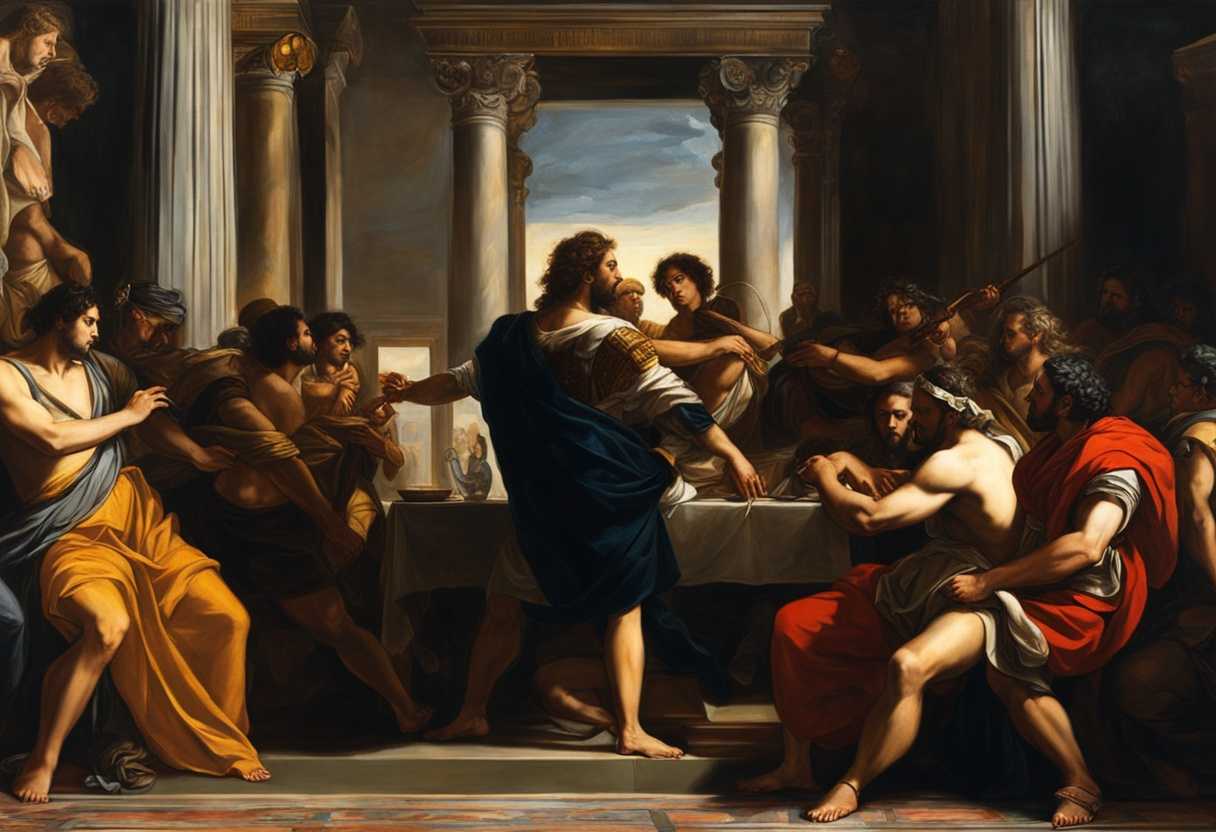
The scene in Exodus 8:32 takes place in the land of Egypt during the time when Moses and Aaron were sent by God to demand the release of the Israelites from their enslavement. Pharaoh, the ruler of Egypt, had repeatedly refused to let the Israelites go, despite witnessing the display of God’s power through various plagues. In this particular moment, the plague of flies had just ended, and Pharaoh had once again hardened his heart, refusing to release the Israelites.
The scene is set in Pharaoh’s palace, a grand and opulent structure adorned with intricate hieroglyphics and golden decorations. Pharaoh is seated on his throne, surrounded by his advisors and court officials, who are nervously whispering amongst themselves. Moses and Aaron stand before Pharaoh, their faces determined and unwavering as they deliver God’s message. The air is heavy with tension and anticipation as the fate of the Israelites hangs in the balance, with Pharaoh’s stubbornness and pride clashing against the power of God.
As the confrontation unfolds, the room is filled with a sense of divine presence, as if the very walls of the palace are bearing witness to the clash between earthly power and the will of the Almighty. The scene captures a pivotal moment in the struggle for freedom and redemption, as the forces of good and evil collide in a battle of faith and determination.
What is Exodus 8:32 about?
Pharaoh’s continued defiance towards Moses and the Israelites is witnessed in this verse. Despite witnessing numerous displays of God’s power and hearing the pleas to release the enslaved Israelites, Pharaoh chooses to harden his heart once again. This act of hardening his heart signifies an intentional resistance to change or to acknowledge the truth. It reflects stubbornness, pride, and a refusal to submit to a higher power. We can ponder on our own tendencies to stubbornly resist change or ignore the signs around us as we reflect on Pharaoh’s hardening of his heart. Are there times when we, like Pharaoh, refuse to listen to reason, even when faced with overwhelming evidence or guidance? This verse serves as a powerful reminder of the consequences of letting pride and stubbornness guide our actions, leading us away from compassion, empathy, and righteousness. Let us learn from Pharaoh’s example and strive to keep our hearts open to truth, sincerity, and humility.
Understanding what Exodus 8:32 really means
In the narrative of the plagues in Egypt, we encounter Exodus 8:32, a pivotal moment where Pharaoh’s heart is hardened, and he refuses to release the Israelites despite the miraculous signs and plagues. The phrase “Pharaoh hardened his heart” signifies a deliberate choice to resist God’s command, showcasing human stubbornness and pride. “This time also” hints at a recurring pattern, highlighting Pharaoh’s consistent disregard for God’s signs and warnings.
In Exodus 7:13, we see a parallel with Pharaoh’s hardening heart, emphasizing his refusal to listen despite divine intervention. Romans 9:17-18 offers a theological perspective on God’s sovereignty and human free will, illustrating how God’s mercy and hardening are intertwined in His divine plan.
The relevance of this passage extends to modern times, reflecting human stubbornness and the consequences of resisting divine guidance. It serves as a reminder of God’s patience and justice, emphasizing the limits to which one can defy God’s will without facing repercussions.
Consider a scenario where an individual ignores health warnings, persisting in unhealthy habits despite clear signs of danger. This mirrors Pharaoh’s defiance against God’s signs, underscoring the perils of disregarding wise counsel. It stands as a cautionary tale urging us to heed divine guidance and wise advice.
Encourage introspection among readers to identify areas in their lives where they may be resisting God’s will or ignoring counsel. Stress the importance of openness to change and receptiveness to God’s voice and the wisdom of others.
In conclusion, Exodus 8:32 serves as a poignant reminder of the outcomes of hardening one’s heart against God’s will. It calls for humility, openness, and a willingness to follow divine guidance, prompting us to reflect on our own receptivity to God’s leading and the counsel of those around us.
Do we harden our hearts against God’s truth?
This verse reminds us of the dangers of hardening our hearts against God’s truth. When we refuse to acknowledge and accept God’s word, our hearts become hardened, making it difficult for us to be receptive to His guidance and teachings. This hardening of the heart can lead us down a path of disobedience and rebellion against God, ultimately separating us from His love and mercy. We risk missing out on the blessings and wisdom He offers us by turning a deaf ear and a closed heart to God’s truth. Instead of being open to God’s transforming power and grace, a hardened heart can lead us to resist His message and cling to our own ways. It is important for us to constantly examine our hearts and ensure that we remain receptive to God’s truth, allowing Him to mold and shape us into the image of His Son.
Application
Is your heart as tough as Pharaoh’s, turning away from the divine message? Look closely at your life. Are you blocking out God’s instructions in any way? Surrender those areas, and let God lead you. What small steps can you start today to open up to God’s guidance? The time for change is now. Will you take the first step towards a softer heart?

Reverend Michael Johnson is an experienced Church Minister with a profound expertise in spirituality and guidance. With a serene presence and a compassionate heart, he has faithfully served his congregation for over 20 years, leading them on a spiritual journey towards inner peace and enlightenment. Reverend Johnson’s extensive knowledge of religious philosophies and profound understanding of human nature have made him a trusted confidant and mentor to many, as he seamlessly weaves his profound wisdom into life teachings. Reverend Johnson’s calming demeanor and empathetic nature continue to uplift and heal souls, nurturing a sense of unity and tranquility within his community.