
Exodus 9:27-35 is about Pharaoh’s continued hardness of heart despite the devastation brought upon Egypt by the plagues, ultimately demonstrating the consequences of stubbornness and the necessity of yielding to God’s will.
27 Then Pharaoh sent and called Moses and Aaron and said to them, “This time I have sinned; the Lord is in the right, and I and my people are in the wrong.
28 Plead with the Lord, for there has been enough of God’s thunder and hail. I will let you go, and you shall stay no longer.”
29 Moses said to him, “As soon as I have gone out of the city, I will stretch out my hands to the Lord. The thunder will cease, and there will be no more hail, so that you may know that the earth is the Lord’s.
30 But as for you and your servants, I know that you do not yet fear the Lord God.”
31 Now the flax and the barley were struck down, for the barley was in the ear and the flax was in bud.
32 The wheat and the emmer were not struck down, for they are late in coming up.
33 So Moses went out of the city from Pharaoh and stretched out his hands to the Lord, and the thunder and the hail ceased, and the rain no longer poured upon the earth.
34 But when Pharaoh saw that the rain and the hail and the thunder had ceased, he sinned yet again and hardened his heart, he and his servants.
35 So the heart of Pharaoh was hardened, and he did not let the people of Israel go, just as the Lord had spoken through Moses.
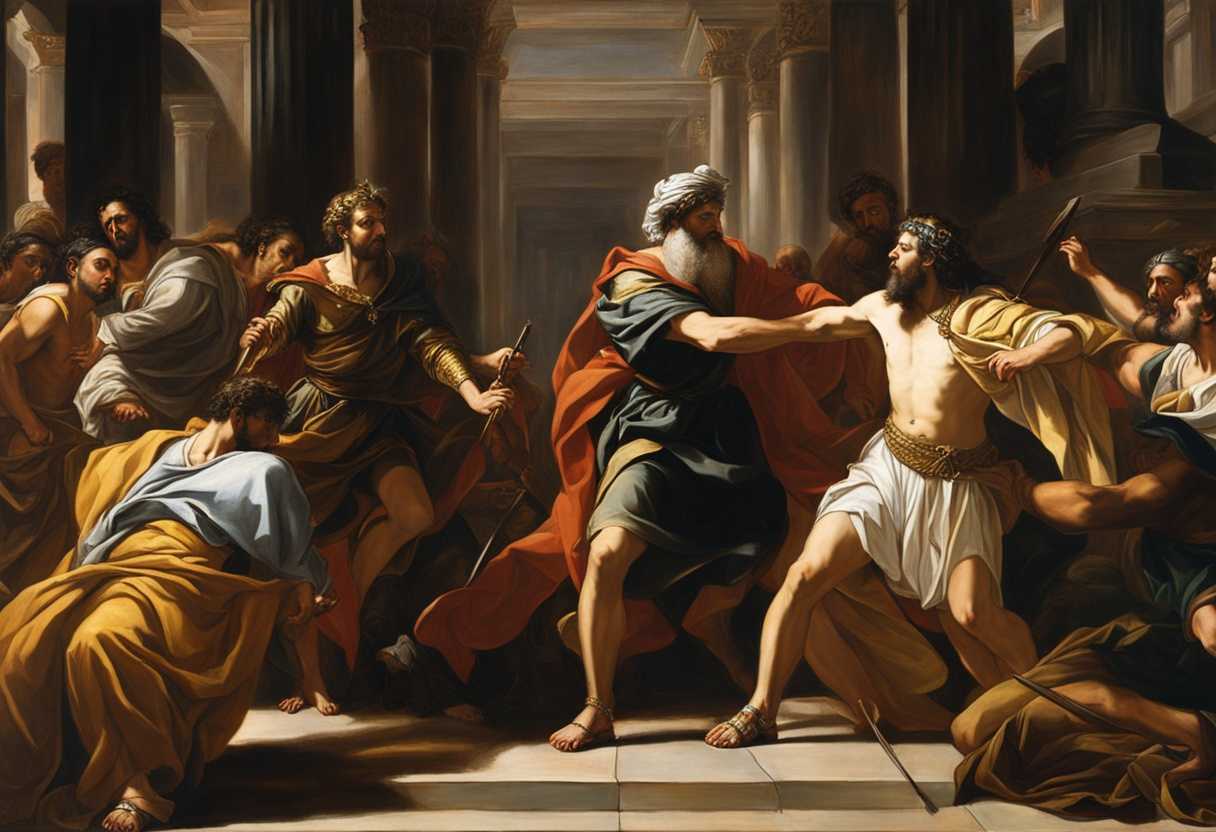
Setting the Scene for Exodus 9:27-35
The scene in Exodus 9:27-35 takes place in the land of Egypt during the time when Moses and Aaron were sent by God to deliver the Israelites from their bondage. Pharaoh, the ruler of Egypt, is at the center of the scene, along with Moses and Aaron. The surroundings are likely within the palace of Pharaoh, a grand and opulent structure befitting a powerful ruler.
Pharaoh had just witnessed a series of plagues unleashed upon Egypt by God through Moses and Aaron, each one more devastating than the last. In this particular scene, a severe hailstorm is raging outside, destroying crops, livestock, and anything left unprotected. Pharaoh, who had previously hardened his heart and refused to let the Israelites go, is now shaken by the destructive power of the hail. He calls for Moses and Aaron and admits his sin, acknowledging the righteousness of God’s judgment.
As the hail continues to pummel the land, Pharaoh pleads with Moses and Aaron to intercede on his behalf with God to stop the plague. This moment is a turning point in the narrative, as Pharaoh’s heart softens momentarily in the face of the overwhelming display of God’s power. The scene captures the tension between Pharaoh’s pride and the undeniable might of the God of Israel, setting the stage for the eventual liberation of the Israelites from their bondage in Egypt.
What is Exodus 9:27-35 about?
This verse from the Bible highlights a crucial aspect of human nature: the ability to recognize one’s mistakes, yet stubbornly refuse to change. Pharaoh, despite acknowledging his sins and the devastation brought upon his land by the hail, still chooses to harden his heart and not release the Israelites from slavery. This paradoxical behavior reminds us of our own tendencies to hold onto beliefs or behaviors even when we know they are harmful or wrong.
Have you ever found yourself in a situation where you knew you were wrong, but still couldn’t bring yourself to make amends or change your ways? Just like Pharaoh, we too can sometimes struggle to let go of our pride, ego, or preconceived notions, even when faced with overwhelming evidence of our errors. This verse serves as a powerful reminder of the importance of humility, introspection, and the willingness to make difficult decisions for the greater good, even if it means admitting defeat or letting go of control.
Reflecting on this verse, we are prompted to examine our own hearts and behaviors. Are there areas in our lives where we are being stubborn or resistant to change, even when we know it is for the best? Let us learn from Pharaoh’s mistake and strive to cultivate a mindset of openness, humility, and the willingness to transform, even in the face of adversity.
Understanding what Exodus 9:27-35 really means
In Exodus 9:27-35, we witness a pivotal moment in the ongoing struggle between Pharaoh and the Lord. Following the seventh plague in Egypt, Pharaoh experiences a brief moment of humility and recognition of his sin. He confesses, “I have sinned this time,” acknowledging his wrongdoing and the righteousness of the Lord. This admission highlights a crucial aspect of repentance – the willingness to recognize one’s faults and submit to God’s authority. However, Pharaoh’s repentance proves to be short-lived as he hardens his heart once again when the plague subsides. This cycle of temporary remorse followed by a return to defiance sheds light on the complex interplay between acknowledging God’s power and the human inclination to revert to familiar, sinful patterns.
The key phrases in this passage carry profound meanings that resonate with the broader theme of repentance and spiritual transformation. Pharaoh’s acknowledgment that “The Lord is righteous, and my people and I are wicked” underscores the contrast between God’s justice and human moral failings. It serves as a stark reminder of the consequences of sin and the importance of genuine contrition. Moreover, Pharaoh’s swift return to sin after the cessation of the plague underscores the transient nature of his repentance, highlighting the challenge of maintaining a steadfast commitment to change in the face of adversity.
Drawing parallels to other biblical passages enriches our understanding of the themes presented in Exodus 9:27-35. Romans 2:4-5 emphasizes the role of God’s kindness in leading to repentance and warns against the hardening of one’s heart. Hebrews 3:15 urges believers not to repeat the mistakes of the Israelites in the wilderness by hardening their hearts against God’s guidance. Proverbs 28:14 underscores the value of a reverent heart and the dangers of allowing one’s heart to become hardened, emphasizing the need for continual spiritual vigilance.
The relevance of this passage to contemporary audiences is profound. It serves as a poignant reminder of the importance of genuine repentance and the perils of a hardened heart. In a world where immediate consequences often prompt superficial apologies and temporary changes, the story of Pharaoh challenges us to reflect on the sincerity of our repentance and the depth of our commitment to transformation. Just as Pharaoh’s vacillation between humility and defiance impacted his relationship with God and his people, our own struggles with repentance can have far-reaching consequences in our lives and relationships.
An illustrative anecdote can help bring the message of Exodus 9:27-35 closer to home. Consider a friend who repeatedly apologizes for hurtful behavior but fails to enact lasting change, reverting to the same hurtful actions once the immediate pressure subsides. This cycle of temporary remorse and repeated transgressions mirrors Pharaoh’s behavior, highlighting the destructive impact of insincere repentance on relationships and personal growth. By examining our own patterns of repentance and transformation in light of Pharaoh’s story, we are prompted to strive for genuine, lasting change that aligns with God’s will.
In conclusion, the passage from Exodus 9:27-35 serves as a cautionary tale about the complexities of repentance and the human propensity to backslide into old ways. It challenges us to pursue a deeper, more enduring transformation that transcends mere acknowledgment of wrongdoing. By engaging with this narrative and its broader implications, we are encouraged to cultivate a soft heart, a sincere commitment to change, and a steadfast alignment with God’s purposes in our lives.
How can we acknowledge God’s power and sovereignty?
The passage in Exodus emphasizes God’s power and sovereignty through the events surrounding the plagues in Egypt. The verse reflects on how Pharaoh acknowledges God’s supremacy after witnessing the devastation caused by the plagues. Pharaoh’s admission of God’s power highlights the undeniable authority and control that God has over all aspects of creation. We are reminded of our place in the grand scheme of things by recognizing God’s power and sovereignty in the context of the plagues. It underscores the importance of humbling ourselves before God and acknowledging His supremacy in our lives. We are called to submit to His authority and trust in His divine plan for us, just as Pharaoh eventually acknowledged God’s might.
When we reflect on the passage in Exodus, we are reminded of the awe-inspiring power of God and His ability to work in miraculous ways. This acknowledgment of God’s sovereignty prompts us to approach Him with reverence and obedience. It is a humbling experience to recognize that God is in control of all things and to surrender ourselves to His divine will.
Application
Reflect on the power and authority of the Lord as described in Exodus 9:27-35. Acknowledge God’s sovereignty, trust in His plan, and humble yourself before Him. Seek His guidance and walk in obedience to His commandments. Will you commit to living faithfully with renewed reverence and obedience to God’s will?

Reverend Michael Johnson is an experienced Church Minister with a profound expertise in spirituality and guidance. With a serene presence and a compassionate heart, he has faithfully served his congregation for over 20 years, leading them on a spiritual journey towards inner peace and enlightenment. Reverend Johnson’s extensive knowledge of religious philosophies and profound understanding of human nature have made him a trusted confidant and mentor to many, as he seamlessly weaves his profound wisdom into life teachings. Reverend Johnson’s calming demeanor and empathetic nature continue to uplift and heal souls, nurturing a sense of unity and tranquility within his community.