
Ezekiel 23:19-21 is about God’s comparison of the unfaithfulness and idolatry of Israel to the sinful and promiscuous behavior of two sisters, Oholah and Oholibah, illustrating the consequences of turning away from God and seeking fulfillment in worldly pleasures.
19 Yet she increased her whoring, remembering the days of her youth, when she played the whore in the land of Egypt.
20 and lusted after her paramours there, whose members were like those of donkeys, and whose issue was like that of horses.
21 Thus you longed for the lewdness of your youth, when the Egyptians handled your bosom and pressed your young breasts.”
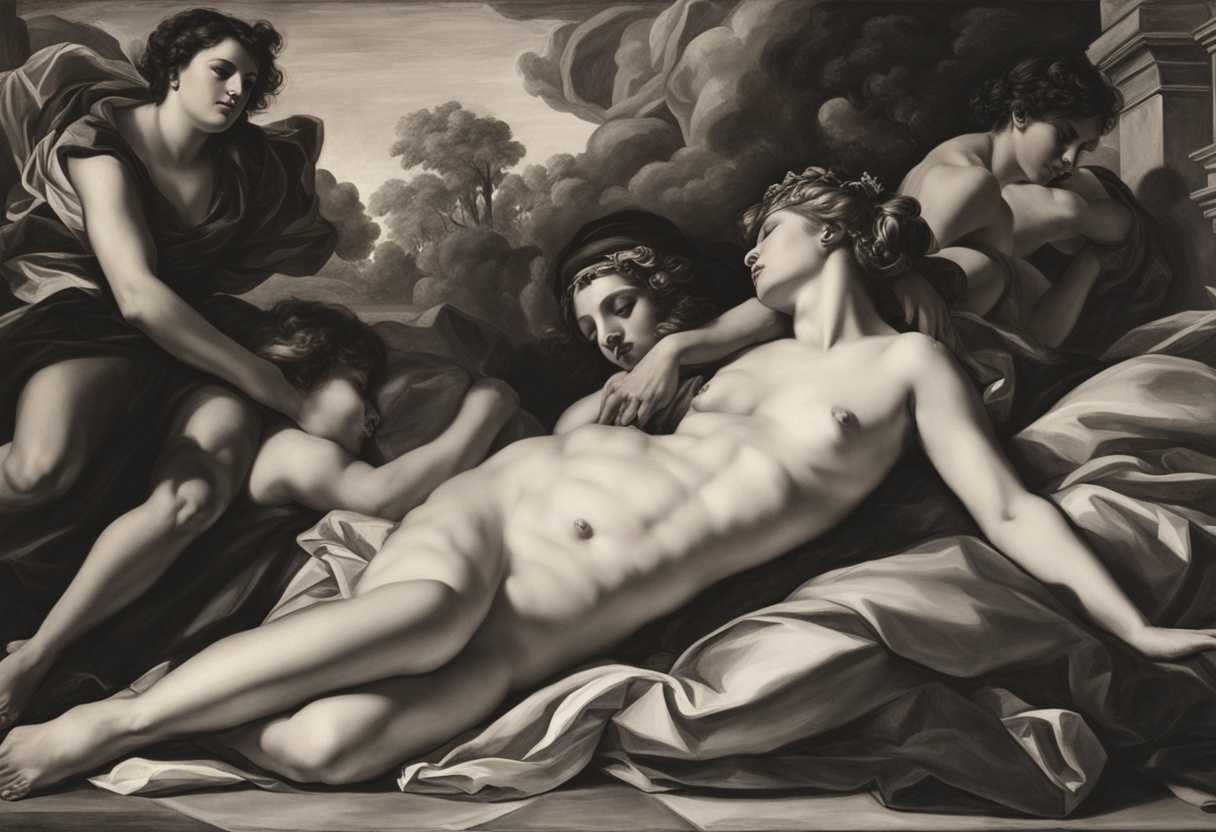
Setting the Scene for Ezekiel 23:19-21
In Ezekiel chapter 23, the prophet Ezekiel vividly describes a scene where he uses a metaphor to convey a powerful message about the unfaithfulness of the Israelites. The chapter portrays two sisters, Oholah and Oholibah, who represent Samaria and Jerusalem, respectively. These sisters were once married to the Lord but turned to idolatry and wickedness, symbolized by their prostitution and adultery.
The scene unfolds in a bustling marketplace in a city, where Oholah and Oholibah are depicted as alluring women dressed in fine garments, adorned with jewelry, and surrounded by a crowd of admirers. The atmosphere is charged with sensuality and temptation as the sisters engage in promiscuous behavior, symbolizing the spiritual unfaithfulness of the Israelites towards God. Despite their outward beauty and charm, their actions ultimately lead to their downfall and judgment.
Ezekiel’s vivid imagery serves as a stark warning about the consequences of turning away from God and seeking fulfillment in worldly pleasures. The scene is a poignant reminder of the importance of remaining faithful to the Lord and not succumbing to the allure of sin and idolatry.
What is Ezekiel 23:19-21 about?
The prophet Ezekiel uses a metaphor of two promiscuous sisters named Aholah and Aholibah in this verse to symbolize Israel’s unfaithfulness and idolatry towards God. Ezekiel vividly illustrates the severity of Israel’s betrayal and disobedience towards God by portraying Israel as these sisters who engage in illicit relationships and worship false gods. Through this metaphor, he conveys the depth of Israel’s unfaithfulness and the seriousness of their actions in a way that is both striking and memorable.
This metaphor serves as a powerful reminder of the consequences of turning away from God and seeking fulfillment in false idols and worldly pleasures. It challenges us to reflect on our own faithfulness and commitment to God, questioning if we are truly devoted to Him or if we are allowing other desires and distractions to take precedence in our lives. Ezekiel prompts us to examine our own relationship with God and consider whether we are being faithful and loyal to Him or if we are straying and seeking fulfillment elsewhere by using a vivid and provocative illustration.
Understanding what Ezekiel 23:19-21 really means
Ezekiel 23:19-21 is a part of a larger allegory in which the prophet Ezekiel vividly portrays the unfaithfulness of Jerusalem and Samaria through the metaphor of two sisters, Oholah and Oholibah. The passage uses striking imagery to depict the depth of Israel’s spiritual adultery and idolatry, emphasizing the severity of their actions. To fully grasp the meaning of these verses, it is essential to understand the historical context of Israel’s alliances and idol worship, providing a backdrop for the gravity of their transgressions.
In related biblical passages like Jeremiah 3:6-10, Hosea 2:2-5, and Revelation 17:1-5, similar metaphors of unfaithfulness and idolatry are used to describe Israel’s turning away from God. These passages collectively paint a picture of the consequences of forsaking a relationship with the Almighty in pursuit of worldly desires. The imagery of a harlot is recurrent, symbolizing spiritual unfaithfulness and the dangers of prioritizing anything above our relationship with God, a timeless lesson that resonates with people today.
Consider a scenario where a person neglects a deep friendship for superficial relationships, gradually eroding the trust and intimacy they once shared. This narrative mirrors how our relationship with God can suffer when we prioritize worldly pursuits over our spiritual connection. The phrase “She multiplied her harlotries” in Ezekiel 23:19 signifies a deliberate and repeated choice to engage in unfaithfulness, highlighting the seriousness of spiritual adultery as a pattern of behavior rather than a one-time act.
“Remembering the days of her youth” in verse 21 alludes to a longing for past sinful behaviors, warning against romanticizing past transgressions rather than growing from them. The mention of playing the harlot in the land of Egypt recalls Israel’s history of idolatry, emphasizing the enduring nature of their spiritual infidelity. These phrases serve as poignant reminders of the consequences of straying from God and the importance of maintaining a faithful relationship with Him.
By delving into the meanings behind these phrases, we confront the gravity of spiritual unfaithfulness and the necessity of prioritizing our relationship with God above all else. This passage challenges us to introspect and identify any modern-day “idols” that may be diverting our focus from our faith. Let Ezekiel’s allegory serve as a cautionary tale, prompting us to reevaluate our priorities and recommit to a steadfast relationship with the Divine.
What aspects of my life am I idolizing?
You may be idolizing aspects of your life that bring immediate pleasure or gratification but ultimately lead to spiritual emptiness and destruction. You may be unknowingly placing material possessions, status, or relationships above your relationship with God by prioritizing them in your life. This can lead to a sense of misplaced priorities and a skewed understanding of what truly brings fulfillment and purpose.
It is important to reflect on whether your current values and pursuits align with God’s will for your life. Are there areas where you are seeking validation or contentment outside of your relationship with Him? You can identify any idols that may be hindering your spiritual growth and cultivate a deeper, more fulfilling connection with God by examining your heart and intentions. True satisfaction and joy can only be found in Him, not in fleeting pleasures or worldly sources of fulfillment.
Application
Think of your relationship with God like your most cherished loved ones. Would you betray your family for fleeting moments of pleasure? Examine your heart and ask if you’ve let worldly distractions pull you away from your true purpose. Protect your spirit just as fiercely as you protect your loved ones. Are you staying loyal to what truly matters, or are you unwittingly trading eternal joy for temporary gains?

Reverend Michael Johnson is an experienced Church Minister with a profound expertise in spirituality and guidance. With a serene presence and a compassionate heart, he has faithfully served his congregation for over 20 years, leading them on a spiritual journey towards inner peace and enlightenment. Reverend Johnson’s extensive knowledge of religious philosophies and profound understanding of human nature have made him a trusted confidant and mentor to many, as he seamlessly weaves his profound wisdom into life teachings. Reverend Johnson’s calming demeanor and empathetic nature continue to uplift and heal souls, nurturing a sense of unity and tranquility within his community.