
Ezekiel 30:1-5 is about God’s judgment on Egypt for aligning themselves with other nations against Israel, emphasizing that their pride and reliance on worldly powers will ultimately lead to their downfall.
1 The word of the Lord came to me:
2 “Son of man, prophesy, and say, Thus says the Lord God: “Wail, ‘Alas for the day!’”
3 For the day is near, the day of the Lord is near; it will be a day of clouds, a time of doom for the nations.
4 A sword shall come upon Egypt,
and anguish shall be in Cush,
when the slain fall in Egypt,
and her wealth is carried away,
and her foundations are torn down.
5 Cush, and Put, and Lud, and all Arabia, and Libya, and the people of the land that is in league, shall fall with them by the sword.
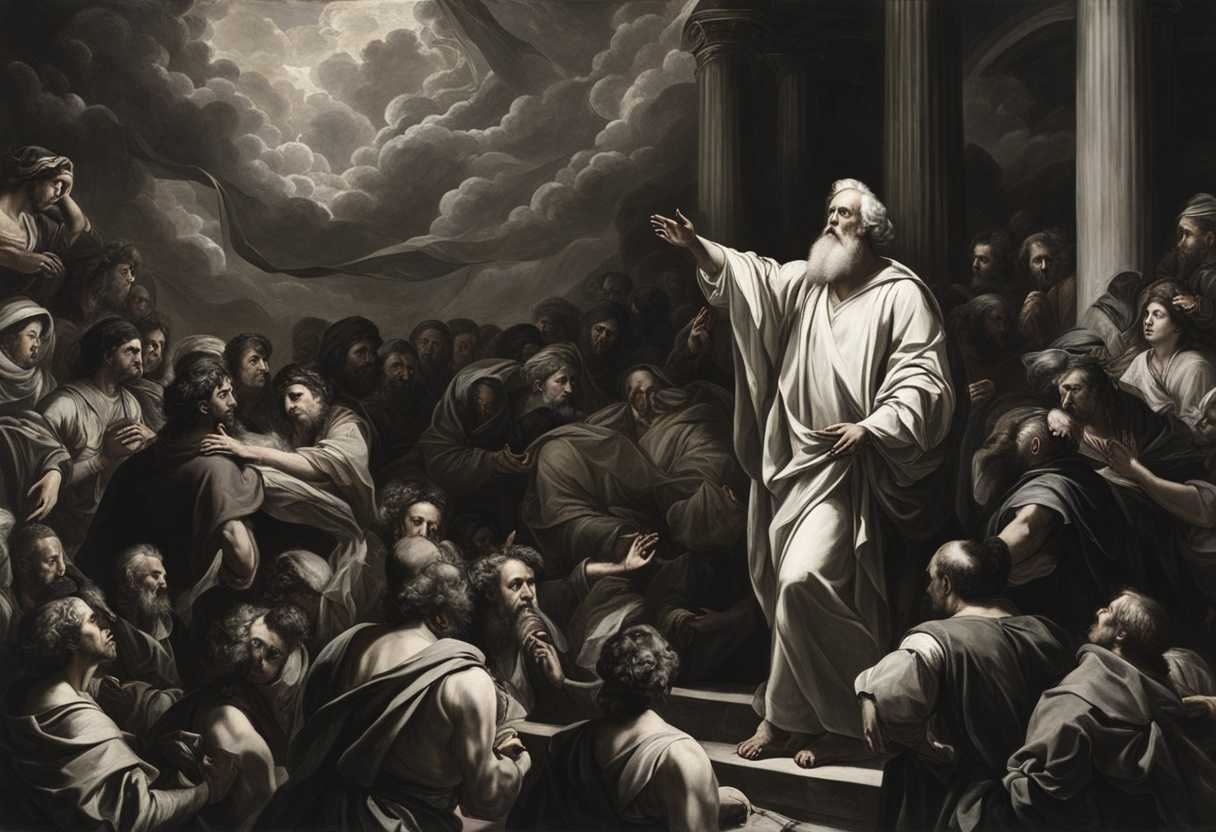
Setting the Scene for Ezekiel 30:1-5
In Ezekiel chapter 30, we find the prophet Ezekiel in a vision from the Lord, where he is transported to the land of Egypt. The scene is set in a vast desert plain, with the scorching sun beating down on the sand dunes. Ezekiel is surrounded by a group of elders from Israel who have gathered to hear his prophetic message.
The elders had come to Ezekiel seeking guidance and wisdom during a time of great turmoil and uncertainty. As they sat in a circle around him, their faces etched with worry and fear, Ezekiel began to speak the words that the Lord had placed on his heart. He warned them of the impending judgment that would come upon Egypt and the surrounding nations, a consequence of their rebellion and idolatry.
As Ezekiel spoke, his voice carried across the desert, echoing off the distant mountains. The elders listened intently, their hearts heavy with the weight of his words. In this moment, Ezekiel served as a vessel for the divine message, delivering a powerful reminder of God’s sovereignty and the consequences of turning away from Him.
What is Ezekiel 30:1-5 about?
Ezekiel in this verse is foretelling the downfall of Egypt and the various nations that will be involved in this significant event. The prophet uses his words to convey a message of warning and judgment against Egypt for its pride, arrogance, and reliance on its own strength rather than on God. Through this prophecy, Ezekiel is emphasizing the consequences of turning away from God and placing trust in worldly powers.
Just like a skilled artist carefully crafting a masterpiece, Ezekiel’s prophetic words paint a vivid picture of the impending downfall of Egypt and remind us of the importance of humility, faith, and obedience to God’s will. Ezekiel shows that the consequences of our actions not only affect us individually but also have ripple effects on those around us by highlighting the involvement of multiple nations in this event. Therefore, this verse serves as a powerful reminder for us to reflect on our own actions and decisions, ensuring that they are aligned with God’s will to avoid a similar fate as that of Egypt.
Understanding what Ezekiel 30:1-5 really means
In the Book of Ezekiel, penned during the Babylonian exile, the prophet Ezekiel delivers messages of judgment on nations and the promise of Israel’s restoration. Ezekiel 30:1-5 stands as a prophecy against Egypt and its allies, foretelling their impending downfall and the repercussions of their deeds. When Ezekiel declares, “The word of the Lord came to me,” it signifies divine revelation and the weight of the message he bears. The call to “Wail and say, ‘Alas for that day!’” urges lamentation, emphasizing the gravity of the looming judgment that Egypt faces.
“A day of clouds, a time of doom for the nations” paints a picture of darkness, confusion, and the inevitable divine judgment that will befall Egypt. The proclamation that “A sword shall come upon Egypt” symbolizes the instruments of war and destruction through which God’s judgment will be executed. The imagery of “Her wealth will be carried away, and her foundations torn down” vividly portrays the utter devastation and loss of stability that Egypt will experience. This prophecy echoes similar sentiments found in Isaiah 19:1-4 and Jeremiah 46:13-26, emphasizing the consistency of God’s judgment across different prophets.
Revelation 18:2-3 draws parallels to the downfall of Babylon, illustrating the consequences powerful nations face due to their sins. The relevance of Ezekiel’s prophecy extends to contemporary society, serving as a stark reminder of divine justice. It cautions against human hubris, warning against pride, reliance on material wealth, and military might that can lead to downfall. The passage also serves as a call to repentance, urging individuals and nations to reflect on their actions and realign with God to avert similar judgments.
Consider a modern parallel where a once-mighty corporation, appearing invincible, faced legal repercussions and bankruptcy due to unethical practices. This anecdote mirrors Egypt’s fate, illustrating that regardless of one’s perceived power, justice will ultimately prevail. In conclusion, Ezekiel’s prophecy remains a timeless admonition of the consequences of straying from God. It underscores the significance of humility, righteousness, and adherence to divine principles. Let us heed this message, reflecting on our conduct and striving to walk in alignment with God’s will to evade similar fates.
How do we respond when our complacency is challenged?
When our complacency is challenged, we are called to take heed and be aware of the consequences of our actions. It serves as a reminder to not become too comfortable or negligent in our ways, but instead to remain vigilant and responsive to the warnings provided to us. We can then make the necessary changes and adjustments in order to align our actions with what is right and just by recognizing and acknowledging our complacency.
Challenging our complacency can lead to a sense of awakening and realization of our own shortcomings. It prompts us to reflect on our behavior and evaluate if we are living in accordance with our values and beliefs. It also encourages us to take responsibility for our actions and make the effort to actively pursue righteousness and integrity in all aspects of our lives. Challenging our complacency ultimately offers an opportunity for personal growth and transformation. It pushes us to break out of our comfort zones, confront our weaknesses, and strive for continuous improvement. We can move towards a path of self-improvement and alignment with our higher purpose by embracing this challenge with humility and openness.
Application
Consider the message in Ezekiel 30:1-5 and embrace the call to repentance and turning to God. Let us understand our vulnerabilities and acknowledge the supremacy of a higher power in our lives. It’s time to humbly surrender to the Divine and ask for forgiveness and direction daily. Will you accept the challenge to sync your purpose with God’s and witness the magic unfold in your journey?

Reverend Michael Johnson is an experienced Church Minister with a profound expertise in spirituality and guidance. With a serene presence and a compassionate heart, he has faithfully served his congregation for over 20 years, leading them on a spiritual journey towards inner peace and enlightenment. Reverend Johnson’s extensive knowledge of religious philosophies and profound understanding of human nature have made him a trusted confidant and mentor to many, as he seamlessly weaves his profound wisdom into life teachings. Reverend Johnson’s calming demeanor and empathetic nature continue to uplift and heal souls, nurturing a sense of unity and tranquility within his community.