
John 3:22-24 is about how Jesus and John the Baptist both had their own unique roles in God’s plan, highlighting the importance of humility and recognizing that each individual has a specific purpose in God’s greater work.
22 After this Jesus and his disciples went into the Judean countryside, and he remained there with them and was baptizing.
23 John also was baptizing at Aenon near Salim, because water was plentiful there, and people were coming and being baptized.
24 for John had not yet been put in prison.
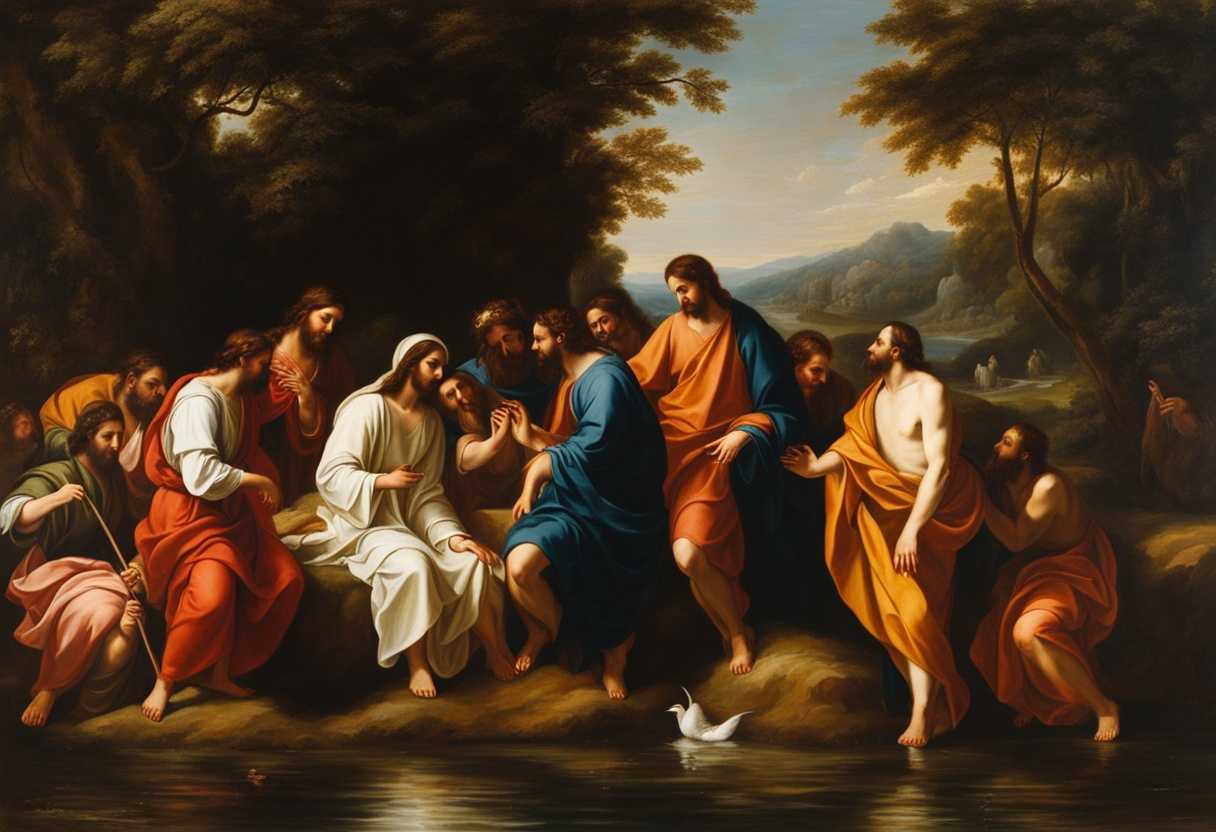
Setting the Scene for John 3:22-24
In John chapter 3, we find Jesus and his disciples in the region of Judea, where they were baptizing people. The scene is set near the Jordan River, a significant location for baptisms in the Bible. The disciples, including John the Baptist, were also baptizing nearby. The atmosphere is filled with anticipation and spiritual fervor as people from all walks of life gather to witness and participate in these baptisms.
As the crowds gathered, a discussion arose between some of John the Baptist’s disciples and a certain Jew about purification. Meanwhile, Jesus and his disciples continued their ministry of baptizing, spreading the message of repentance and the kingdom of God. The scene is bustling with activity, with people coming and going, seeking spiritual renewal and guidance. Amidst the flowing waters of the Jordan River and the voices of the crowd, Jesus’ presence brings a sense of peace and divine authority to the scene.
In this setting, we see the convergence of two important ministries – that of John the Baptist preparing the way for the Messiah, and Jesus beginning his earthly ministry. The interactions and teachings that take place in this scene lay the foundation for the transformative message of salvation that Jesus would bring to the world.
What is John 3:22-24 about?
John the Baptist, a prominent figure in the New Testament, demonstrates humility in these verses. Despite his own following and influence, John willingly steps aside and acknowledges the authority of Jesus. This act of humility is important because it exemplifies putting one’s own ego or status aside for the greater good. John understood that his role was to prepare the way for the coming of Jesus, and he did so with grace and humility. We are challenged to examine our own actions and attitudes towards authority and humility as we reflect on this passage. Do we, like John the Baptist, willingly submit to the authority of others when it is for the greater good? Do we set aside our own pride and ego to uplift others and work towards a common goal? John’s example serves as a powerful reminder that true leadership and service often require humility and a willingness to recognize and defer to others who hold greater authority and wisdom. Strive to embody the humility and grace demonstrated by John the Baptist in these verses, always seeking to uplift and support others in our actions and attitudes. May we recognize and respect the authority of those who carry important messages and lessons, just as John did with Jesus.
Understanding what John 3:22-24 really means
In John 3:22-24, we find a shift in location and focus after Jesus’ profound conversation with Nicodemus about being born again. Jesus, along with His disciples, ventures into the Judean countryside, signaling a change in setting for His teachings and baptisms. This move highlights the intimate nature of His ministry and the personal connection He sought with those around Him. It’s a reminder that Jesus meets us where we are, in the quiet corners of our lives, to bring about transformation and renewal.
While in the countryside, Jesus spends time with His disciples and actively engages in baptizing individuals. This hands-on approach underscores the significance He places on baptism and the importance of personal discipleship. By participating in this sacrament, Jesus demonstrates the tangible expression of repentance and commitment to a new life in Him. It’s a powerful reminder of the cleansing and transformative power of baptism in the life of a believer.
Simultaneously, we see John the Baptist continuing his ministry of baptizing at Aenon near Salim. The coexistence of John and Jesus’ ministries showcases a harmonious overlap, emphasizing the unity of purpose in preparing the way for the Kingdom of God. This collaboration between the two heralds serves as a model for us today, illustrating the beauty and effectiveness of working together towards a common goal. Just as John and Jesus complemented each other’s ministries, we are called to seek unity and cooperation in our communities and churches for the advancement of God’s kingdom.
The continuous influx of people coming to be baptized reflects the growing interest in the message of repentance and the Kingdom of God. This eagerness to participate in the act of baptism echoes the universal human longing for spiritual renewal and a fresh start. It reminds us that the call to repentance and the invitation to new life in Christ resonate across time and cultures, drawing people to seek forgiveness and transformation.
In our modern context, the significance of baptism as a symbol of repentance and new beginnings remains unchanged. It serves as a visible sign of our commitment to follow Christ and live a life transformed by His grace. The unity and collaboration between John and Jesus’ ministries also offer a valuable lesson for us today. Just as they worked together towards a shared purpose, we are encouraged to set aside differences and work in harmony towards the common goal of spreading the message of love, grace, and redemption.
Reflecting on these verses, we are reminded of the importance of baptism, the value of spending time in discipleship, and the power of collaborative ministry. They prompt us to seek unity and purpose in our spiritual and communal lives, mirroring the example set by John and Jesus in their time. As we navigate our own journeys of faith, may we embrace the call to repentance, the promise of new life, and the invitation to work together in unity for the sake of God’s kingdom.
How can we decrease so Christ may increase?
To decrease so Christ may increase means to humble ourselves and surrender our own desires, ambitions, and agendas in order to make more space for Christ to work in our lives. It involves recognizing that we are not the focus, but rather Christ is the center of our lives. This requires a shift in our mindset from seeking our own glory to seeking to bring glory to Christ.
One way to decrease so Christ may increase is to consistently seek His will in all areas of our life. This involves spending time in prayer, reading the Bible, and seeking guidance from the Holy Spirit. We can decrease our own desires and selfish ambitions by aligning our decisions and actions with God’s Word and seeking to fulfill His purposes, allowing Christ to be elevated in our lives.
Additionally, serving others and putting their needs above our own is a practical way to decrease so Christ may increase. We can reflect His character and point others to Him by following Christ’s example of selfless love and humility. Others will see His light shining through us as we intentionally choose to decrease our own importance and lift up Christ in our words and actions.
Application
Reflect on your role in guiding others towards the light of Christ, just like John the Baptist did. Are you able to step back and let Christ shine brightly in your life and work? Take a moment to consider how you can actively spread His message and lead others to Him. Will you embrace your purpose and take the initiative to point others towards Christ? Are you ready to illuminate the path for those around you and make a difference in their journey towards Him?

Reverend Michael Johnson is an experienced Church Minister with a profound expertise in spirituality and guidance. With a serene presence and a compassionate heart, he has faithfully served his congregation for over 20 years, leading them on a spiritual journey towards inner peace and enlightenment. Reverend Johnson’s extensive knowledge of religious philosophies and profound understanding of human nature have made him a trusted confidant and mentor to many, as he seamlessly weaves his profound wisdom into life teachings. Reverend Johnson’s calming demeanor and empathetic nature continue to uplift and heal souls, nurturing a sense of unity and tranquility within his community.