
Ezekiel 39:11-16 is about God demonstrating His power and glory through the defeat of enemies, the protection and provision for His people, and the restoration of the land for His name’s sake.
11 “On that day I will give to Gog a place for burial in Israel, the Valley of the Travelers, east of the sea. It will block the travelers, for there Gog and all his multitude will be buried. So it will be called the Valley of Hamon-gog.”
12 For seven months the house of Israel will be burying them, in order to cleanse the land.
13 “All the people of the land will bury them, and it will bring them renown on the day that I show my glory, declares the Lord God.”
14 And they will set apart men to travel through the land regularly and bury those travelers remaining on the face of the land, so as to cleanse it. At the end of seven months they will make their search.
15 And those who pass through the land, when any sees a human bone, then he shall set up a sign by it, till the buriers have buried it in the Valley of Hamon-gog.
16 And I will send fire on Magog and on those who dwell securely in the coastlands, and they shall know that I am the Lord.
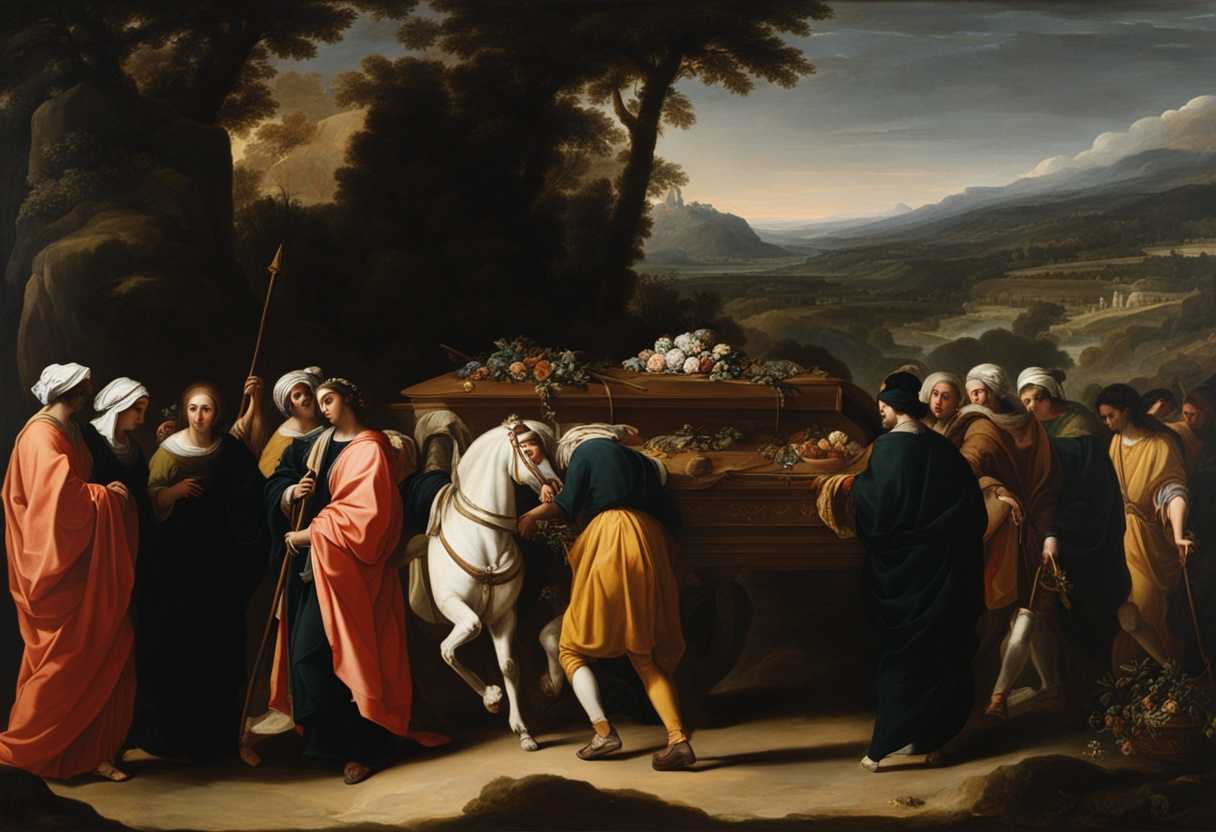
Setting the Scene for Ezekiel 39:11-16
In Ezekiel 39:11-16, the scene is set in the aftermath of a great battle where God has defeated the enemies of Israel. The valley is filled with the corpses of the fallen soldiers, and the birds and wild animals are feasting on the remains. The Lord commands Ezekiel to prophesy against Gog, the leader of the enemy forces, and to describe the destruction that has befallen them as a punishment for their wickedness.
Ezekiel, a prophet of God, stands in the valley surrounded by the devastation of war. The Lord has brought about this victory for Israel, and Ezekiel is there to witness and proclaim the fulfillment of God’s judgment. The scene is somber and eerie, with the sounds of scavenging animals and the stench of death filling the air.
As Ezekiel looks out over the valley, he sees the hand of God at work in the defeat of Israel’s enemies. The prophet’s words serve as a reminder of God’s power and sovereignty, as well as a warning to those who would oppose His people. The scene is a powerful testament to the faithfulness of God in protecting and defending His chosen ones.
What is Ezekiel 39:11-16 about?
When we dive into this verse, we witness the power and sovereignty of God prevailing over evil. The destruction of nations that stand against God’s will serves as a reminder of the consequences of turning away from His teachings. However, beyond the destruction lies a profound message of hope and restoration. God’s victory not only brings justice to those who oppose Him but also opens the door for renewal and rebuilding. Let’s ponder on the significance of God’s victory in our own lives as we reflect on this verse. Are there areas where we have allowed evil to take root, and are we willing to let God bring restoration and healing? Like the nations mentioned in the verse, when we turn back to God and seek His ways, He will not only overcome the darkness in our lives but also lead us to a place of wholeness and new beginnings. It’s a powerful reminder that no matter how formidable the challenges we face may seem, God’s victory is always within reach for those who choose to follow Him.
Understanding what Ezekiel 39:11-16 really means
Ezekiel 39:11-16 delves into a profound prophecy concerning the defeat of Gog and the subsequent restoration of Israel. In the aftermath of a monumental battle, the focus shifts to the burial of the deceased and the purification of the land. The mention of the Valley of Hamon Gog signifies a significant defeat for Israel’s enemies, symbolizing the end of hostility and the dawn of a new era marked by peace and restoration.
The phrase “Valley of Hamon Gog” carries a weighty meaning, portraying a place where Israel’s adversaries suffer a massive defeat. The term “Hamon” conveys the idea of a multitude, underscoring the vast number of fallen foes. The act of the “House of Israel” burying the dead holds symbolic significance, representing the cleansing of the land and the eradication of impurity. The duration of seven months allocated for burial symbolizes completeness and thoroughness in the purification process.
In Revelation 20:8-9, a parallel is drawn to Gog and Magog, emphasizing the ultimate triumph over evil forces in the eschatological narrative. Isaiah 66:24 underscores the finality of divine judgment for those who rebel against God, echoing the themes of justice and retribution. Numbers 19:11-13 outlines purification rituals for those in contact with the deceased, highlighting the importance of ritual purity in the biblical context.
This passage resonates with contemporary audiences by serving as a poignant reminder of God’s ultimate victory over evil and the significance of spiritual purification. It prompts believers to actively engage in personal and communal cleansing processes, mirroring the diligence required for maintaining holiness. The concept of “men of continual employment” underscores the ongoing commitment needed to uphold spiritual purity and sanctity in daily life.
Consider a community banding together to restore normalcy after a natural disaster, akin to the collective effort depicted in Ezekiel 39:11-16. Beyond physical cleanliness, the burial of the dead signifies a communal endeavor to restore spiritual purity and readiness for a fresh start. This passage encapsulates God’s sovereignty and the imperative of upholding spiritual cleanliness, urging believers to strive for purity and support one another in this perpetual journey.
In conclusion, Ezekiel 39:11-16 imparts profound lessons on God’s sovereignty, spiritual purity, and communal restoration. It beckons individuals and communities to embrace diligence in purging sin from their lives and fostering a culture of mutual support in the pursuit of holiness. By internalizing and applying the teachings embedded in this passage, individuals and communities can experience spiritual rejuvenation and draw closer to God’s intended purpose for their lives.
What is the significance of honoring God’s name?
Honoring God’s name is significant because it reflects our reverence for His power, holiness, and authority. We show our submission to God as the ultimate authority in our lives by acknowledging and respecting His name. It is a way of recognizing His supremacy and sovereignty over all things. Honoring God’s name in Ezekiel 39:11-16 portrays a crucial aspect of restoring His glory among the nations.
When we honor God’s name, we also acknowledge His faithfulness and goodness. It is a way of giving Him the recognition and praise He deserves for His mighty works and blessings in our lives. We show our gratitude for His provision, protection, and love towards us by honoring God’s name. The restoration of God’s name in Ezekiel 39:11-16 signifies the fulfillment of His promises and the manifestation of His glory to the world.
Furthermore, honoring God’s name is not only an act of worship but also a reflection of our relationship with Him. It shows our commitment to living in accordance with His will and seeking His righteousness in all that we do. We strive to align our lives with God’s character and values by honoring His name, demonstrating our love and devotion to Him. The restoration of God’s name symbolizes the establishment of His kingdom and the manifestation of His presence among His people in Ezekiel 39:11-16.
Application
Embrace the imagery of Ezekiel 39:11-16 that echoes the triumph of the Lord over adversaries, drawing strength and reassurance from His power. Like a skilled warrior protecting their family, let God shield you in times of struggle. Stand firm in your faith and find solace in His unwavering victory. Will you trust in His might and let His conquest be your shield in the battles you face today?

Reverend Michael Johnson is an experienced Church Minister with a profound expertise in spirituality and guidance. With a serene presence and a compassionate heart, he has faithfully served his congregation for over 20 years, leading them on a spiritual journey towards inner peace and enlightenment. Reverend Johnson’s extensive knowledge of religious philosophies and profound understanding of human nature have made him a trusted confidant and mentor to many, as he seamlessly weaves his profound wisdom into life teachings. Reverend Johnson’s calming demeanor and empathetic nature continue to uplift and heal souls, nurturing a sense of unity and tranquility within his community.