
Ezra 10:9-12 is about the people of Israel acknowledging their wrongdoing by intermarrying with other nations and making a covenant with God to separate from these unions in order to uphold their identity and commitment to following His laws.
9 Then all the men of Judah and Benjamin assembled at Jerusalem within the three days. It was the ninth month, on the twentieth day of the month. And all the people sat in the open square before the house of God, trembling because of this matter and because of the heavy rain.
10 And Ezra the priest stood up and said to them, “You have broken faith and married foreign women, and so increased the guilt of Israel.
11 Now then make confession to the Lord, the God of your fathers and do his will. Separate yourselves from the peoples of the land and from the foreign wives.”
12 Then all the assembly answered with a loud voice, “It is so; we must do as you have said.
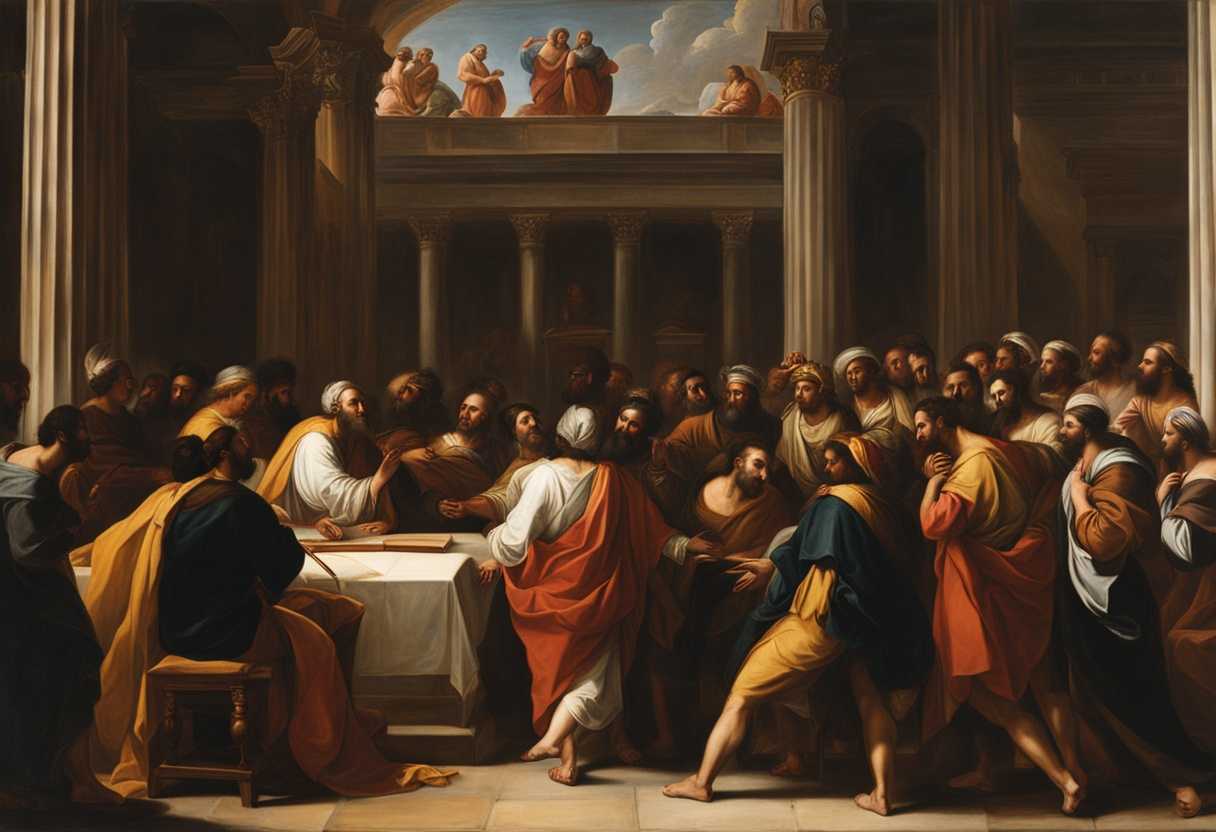
Setting the Scene for Ezra 10:9-12
In Ezra chapter 10, we find Ezra, a scribe and priest, leading a scene of intense repentance and reconciliation among the Israelites who had returned from exile in Babylon. The setting is the courtyard of the temple in Jerusalem, a place of great significance for the Jewish people. The scene is filled with emotion as the people gather together, realizing the gravity of their sin in marrying foreign women, which was against God’s commandments.
Ezra stands at the center, his face etched with concern and determination, as he addresses the crowd gathered before him. The people, including priests, Levites, and all the men of Judah and Benjamin, are visibly distressed, torn between their love for their foreign wives and their desire to obey God’s laws. The atmosphere is heavy with the weight of their transgressions, but also with a glimmer of hope for forgiveness and redemption.
As Ezra speaks, his words cut through the silence like a sharp sword, calling the people to repentance and to make amends for their sins. The crowd listens intently, their hearts convicted and their spirits stirred. In a powerful display of unity and humility, they agree to a plan of action to put away their foreign wives and children, seeking to cleanse themselves from the defilement of their disobedience. The scene is a poignant reminder of the consequences of straying from God’s ways and the power of repentance to bring about restoration and renewal.
What is Ezra 10:9-12 about?
Ezra is guiding the Israelites to repent and turn away from their marriages with foreign wives in this verse. Why is this important? Well, it all goes back to honoring God’s covenant with His people. The Israelites had intermarried with people from different cultures, which caused them to stray from their beliefs and customs. Ezra is helping the Israelites cleanse their spiritual connection with God and reaffirm their commitment to following His laws and teachings by leading them to separate from these foreign wives.
Imagine the difficult decision it must have been for the Israelites to leave behind their spouses and families in order to align themselves with God’s will. But sometimes, in order to truly honor our faith and relationship with the divine, we must make sacrifices and choose the path that brings us closer to Him. Through Ezra’s guidance, the Israelites are not only repenting for their past actions but also taking a step towards restoring their covenant with God and ensuring a future filled with His blessings and grace.
Understanding what Ezra 10:9-12 really means
The Book of Ezra delves into the return of Jewish exiles from Babylon and the reconstruction of the Temple in Jerusalem. In Ezra 10:9-12, the focus shifts to the contentious issue of intermarriage between the Israelites and neighboring nations, a direct violation of God’s decrees. Ezra, a revered priest and scribe, calls upon the people to repent and reaffirm their covenant with God. The vivid imagery of “All the people sat in the open square before the house of God, trembling because of this matter and because of the heavy rain” underscores the seriousness of the transgression and the urgency of their repentance. The heavy rain symbolizes the weight of their guilt, urging them to seek forgiveness promptly.
The stern admonition, “You have been unfaithful; you have married foreign women, adding to Israel’s guilt,” highlights the specific sin of intermarriage that led the Israelites astray from their divine covenant. It stresses the paramount importance of purity and faithfulness in their relationship with God. The resolute declaration, “Let it be done according to the Law,” signifies the people’s unwavering commitment to adhere to God’s commandments and rectify their wrongs in accordance with the Law of Moses. This unwavering dedication to following God’s statutes serves as a beacon of hope for spiritual renewal and restoration.
Drawing parallels from related biblical passages like Deuteronomy 7:3-4 and Nehemiah 13:23-27, we glean timeless wisdom on the dangers of compromising our faith by engaging in unholy alliances. The New Testament echoes this sentiment in 2 Corinthians 6:14, urging believers to uphold spiritual integrity by avoiding unequal partnerships with unbelievers. These scriptures collectively emphasize the enduring relevance of maintaining fidelity to God’s precepts and the necessity of repentance when we falter.
The narrative in Ezra 10:9-12 resonates with contemporary audiences by underscoring the significance of upholding God’s commandments, fostering communal accountability, and taking collective action to address sin. It underscores the vital role of community support in nurturing spiritual growth and steering individuals back on the path of righteousness. Just as a sports team rallies together to rectify lapses and pursue a common goal, believers are encouraged to acknowledge their missteps, seek forgiveness, and recommit to God’s ways for personal and communal restoration.
In conclusion, Ezra 10:9-12 stands as a poignant reminder of the enduring principles of faithfulness, repentance, and communal responsibility. By internalizing these teachings and applying them in our lives, we can fortify our bond with God, uphold moral integrity, and foster a supportive environment for spiritual growth and renewal. Let us heed the call to repentance, embrace accountability, and walk steadfastly in the path of righteousness, both individually and as a united community of believers.
How can we show true repentance for our sins?
True repentance for our sins involves acknowledging our wrongdoings, feeling remorse for our actions, and taking active steps to make amends and change our ways. This may include confessing our sins, asking for forgiveness from God and those we have wronged, and resolving to turn away from sinful behavior. The Israelites in Ezra 10:9-12 demonstrated true repentance by acknowledging their sins, committing to making things right, and taking practical steps to rectify the situation.
When we truly repent, we show a genuine desire to change and reconcile with God. This involves not just feeling sorry for our sins, but also making a conscious effort to abstain from repeating them in the future. True repentance requires humility, honesty, and a willingness to accept the consequences of our actions. We demonstrate our sincerity and commitment to turning away from sin and towards God by following through with our repentance and actively pursuing righteousness. True repentance ultimately requires a transformation of the heart and a genuine commitment to living according to God’s will. It is not just about words or outward displays of remorse, but about genuine contrition and a sincere desire to align our lives with God’s teachings. When we show true repentance for our sins, we open the door to forgiveness, restoration, and a renewed relationship with God.
Application
In the workplace of your soul, are you courageous enough to face errors head-on, just as in Ezra 10:9-12? Step up and confront the wrongdoings in your life, just as the people in the passage did. Take bold action to mend those spiritual cracks and set your course right. The journey towards faith transformation begins with the humbling act of admitting faults and seeking redemption. When will you choose to stand tall in the face of sin and steer your life towards renewal?

Reverend Michael Johnson is an experienced Church Minister with a profound expertise in spirituality and guidance. With a serene presence and a compassionate heart, he has faithfully served his congregation for over 20 years, leading them on a spiritual journey towards inner peace and enlightenment. Reverend Johnson’s extensive knowledge of religious philosophies and profound understanding of human nature have made him a trusted confidant and mentor to many, as he seamlessly weaves his profound wisdom into life teachings. Reverend Johnson’s calming demeanor and empathetic nature continue to uplift and heal souls, nurturing a sense of unity and tranquility within his community.