
Ezekiel 45:1-6 is about the redistribution of land and resources in a just and equitable manner, emphasizing the importance of fairness and social responsibility in society.
1 “When you allot the land as an inheritance, you shall set apart for the Lord a portion of the land as a holy district, 25,000 cubits long and 20,000 cubits broad. It shall be holy throughout its whole extent.”
2 Of this there shall be for the holy place, the sanctuary of the temple, a square five hundred by five hundred, with fifty cubits for an open space around it.
3 And of this measure you shall measure the length of five and twenty thousand, and the breadth of ten thousand, and in it shall be the sanctuary, the Most Holy Place.
4 The holy portion of the land shall be for the priests. It shall be 25,000 cubits long and 20,000 cubits wide. In it shall be the sanctuary, the most holy place.
5 The dry measure shall be a sixth of a homer, and a tenth of an ephah shall be the liquid measure;
6 “You shall have the cities of Israel, and the territory of the cities shall extend from the one side to the other.”
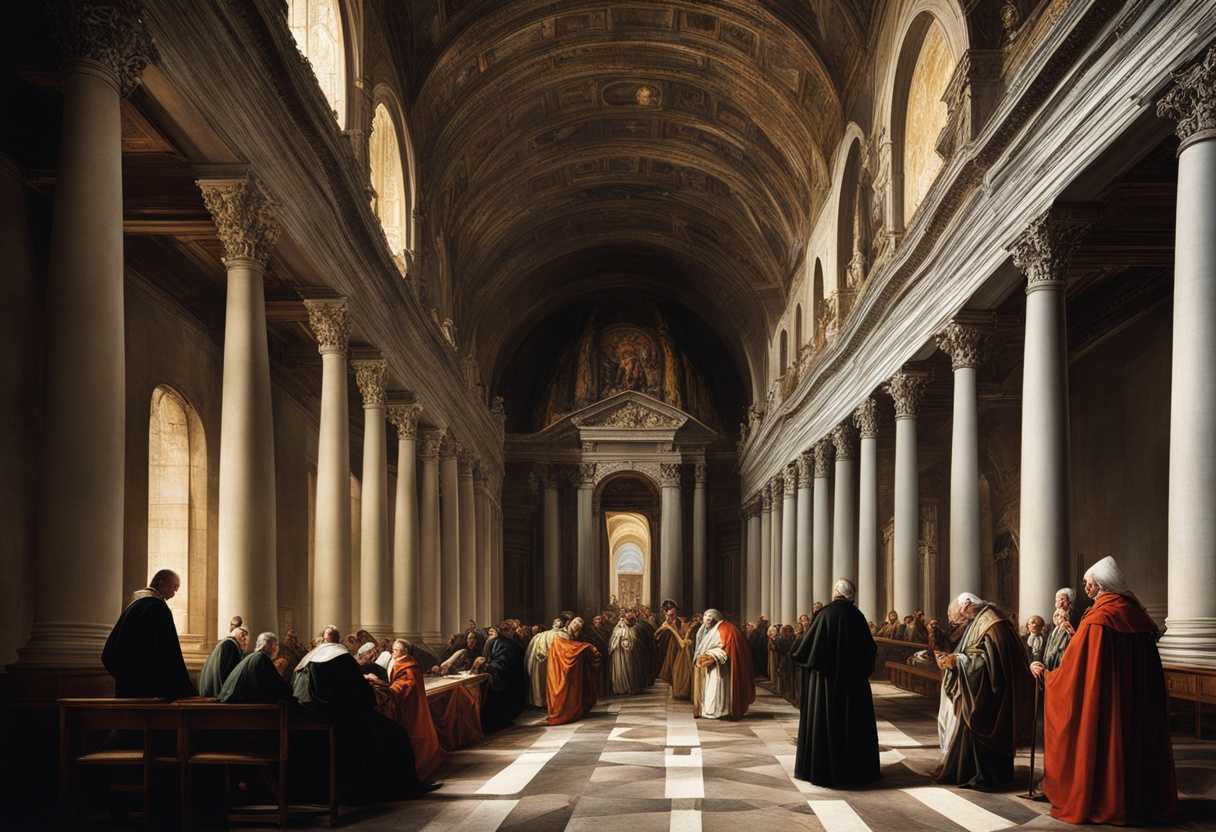
Setting the Scene for Ezekiel 45:1-6
In Ezekiel chapter 45, we find ourselves in a scene set in the prophet Ezekiel’s vision of the future temple and the division of the land among the tribes of Israel. The main characters in this scene are Ezekiel himself, who is receiving this vision from God, and an angel who is guiding him through the details of the temple and its surrounding areas.
Ezekiel finds himself standing in the inner court of the temple, surrounded by the walls and gates of the sacred space. The angel is explaining to him the measurements and divisions of the land that will be set aside for the temple, the priests, and the city. The atmosphere is one of reverence and awe as Ezekiel takes in the intricate details of the future temple and the significance of the land allocations.
As Ezekiel listens intently to the angel’s instructions, he is filled with a sense of purpose and responsibility in ensuring that the temple and its surroundings are set apart for the worship of God and the well-being of the people. The scene is one of divine revelation and divine planning, as Ezekiel is given a glimpse into the future restoration and glory of God’s chosen people.
What is Ezekiel 45:1-6 about?
Ezekiel 45:1-6 provides a detailed description of the allocation of land for the prince and the people. This verse signifies the importance of fairness, equity, and justice in the distribution of resources among the community. It highlights the need for leaders to act with righteousness and integrity when making decisions that affect the welfare of the people they serve. The division of land in this verse serves as a reminder of the responsibility of those in power to ensure that all members of society are treated fairly and have access to the resources they need to thrive. Reflecting on Ezekiel 45:1-6 prompts us to consider our own roles in promoting justice and equity within our communities. Are we advocating for fair distribution of resources? Are we holding our leaders accountable for their decisions? This verse challenges us to strive for a society where everyone has equal opportunities and access to resources, regardless of their social status or background. Let us work towards creating a more just and equitable world for all by being inspired by the principles of justice and fairness outlined in this passage.
Understanding what Ezekiel 45:1-6 really means
Ezekiel 45:1-6 presents a vision where the prophet Ezekiel is instructed on the division of the land among the tribes of Israel, emphasizing the allocation of a portion for the sanctuary and the priests. This passage underscores the importance of setting aside a holy portion for the Lord, ensuring that the needs of the priests and the sanctuary are met. In Leviticus 25:23-24, we are reminded that the land belongs to God, and the Israelites are stewards, reinforcing the idea of dedicating a portion of the land to God as seen in Ezekiel. Numbers 18:20-24 further supports this by stating that the Levites have no inheritance in the land because the Lord Himself is their inheritance, aligning with the allocation of land for the priests in Ezekiel.
Isaiah 56:7 speaks of God’s house being a house of prayer for all nations, emphasizing the significance of the sanctuary mentioned in Ezekiel. This passage holds relevance for people today in various aspects. It teaches us about stewardship, urging us to dedicate a portion of our resources to God, whether it be our time, talents, or finances. The allocation of land for the sanctuary and priests highlights the importance of community worship and supporting spiritual leaders. Setting aside a “holy portion” serves as a reminder to keep parts of our lives sacred and devoted to God.
Consider a family that designates a room in their house as a prayer room. This space becomes a sanctuary for quiet time, reflection, and connection with God, mirroring the principle in Ezekiel of setting aside a holy portion for the Lord. The phrase “a holy portion of the land” signifies dedicating parts of our lives and resources solely to God, recognizing His sovereignty and our role as stewards. “For the sanctuary” emphasizes the need for a dedicated place for worship and spiritual growth, highlighting the importance of a physical space for our spiritual life. “For the priests” reminds us to support those dedicated to spiritual leadership, acknowledging the role of those who serve God and the community.
Reflecting on these points allows us to grasp the significance of Ezekiel 45:1-6 and its application in our lives today. Just as the Israelites were instructed to set aside a portion for the Lord and the priests, we are encouraged to dedicate aspects of our lives to God, support community worship, and uphold those who lead us spiritually. This passage serves as a timeless reminder of the importance of holiness, stewardship, and community in our walk with God.
How can we honor God through fair and just measurements?
One way we can honor God through fair and just measurements is by ensuring that we are not deceiving or taking advantage of others in our dealings. We demonstrate integrity and respect for others by using accurate and honest measurements, reflecting the righteousness of God in our actions. This commitment to fairness also reflects a heart that seeks to please God by treating others with the same respect and honesty that we would want for ourselves.
Additionally, fair and just measurements demonstrate our acknowledgment of God’s sovereignty and authority over all aspects of our lives, including our business practices. We show that we trust in God’s provision and believe that He will bless our efforts when we conduct ourselves with honesty and integrity in our measurements. Thus, honoring God through fair and just measurements is not just about ethical business practices, but also about living out our faith and trust in God in every area of our lives.
Application
Embrace the wisdom of Ezekiel 45:1-6, where fairness and equity reign supreme. Let’s commit to embodying justice and righteousness, much like maintaining harmony in our work and family life. How will you seize the opportunity to make a difference by upholding these virtues in your every interaction today?

Reverend Michael Johnson is an experienced Church Minister with a profound expertise in spirituality and guidance. With a serene presence and a compassionate heart, he has faithfully served his congregation for over 20 years, leading them on a spiritual journey towards inner peace and enlightenment. Reverend Johnson’s extensive knowledge of religious philosophies and profound understanding of human nature have made him a trusted confidant and mentor to many, as he seamlessly weaves his profound wisdom into life teachings. Reverend Johnson’s calming demeanor and empathetic nature continue to uplift and heal souls, nurturing a sense of unity and tranquility within his community.