
Ezekiel 47:13-21 is about the division of the land among the twelve tribes of Israel in the promised land, symbolizing God’s provision, faithfulness, and orderly distribution of blessings to His people.
13 Thus says the Lord God: “This is the boundary by which you shall divide the land for inheritance among the twelve tribes of Israel. Joseph shall have two portions.
14 And you shall divide equally what I swore to give to your fathers. This land shall fall to you as your inheritance.
15 “This shall be the boundary of the land: On the north side, from the Great Sea by way of Hethlon to Lebo-hamath, and on to Zedad,”
16 Hamath, Berothah, Sibraim, which lies between the border of Damascus and the border of Hamath, as far as Hazer-hatticon, which is on the border of Hauran.
17 But if he does not drive them out before you, then those of them whom you let remain shall be as barbs in your eyes and thorns in your sides, and they shall trouble you in the land where you dwell.
18 “On the east side, the boundary shall run between Hauran and Damascus; along the Jordan between Gilead and the land of Israel; to the eastern sea and as far as Tamar. This is the east side.
19 And the south side shall be from Tamar as far as the waters of Meribah-kadesh, from there along the Brook of Egypt to the Great Sea. This is the south side.
20 On the west side, the Great Sea shall be the boundary to a point opposite Lebo-hamath. This is the west side.
21 “So you shall divide this land among you according to the tribes of Israel.”
Setting the Scene for Ezekiel 47:13-21
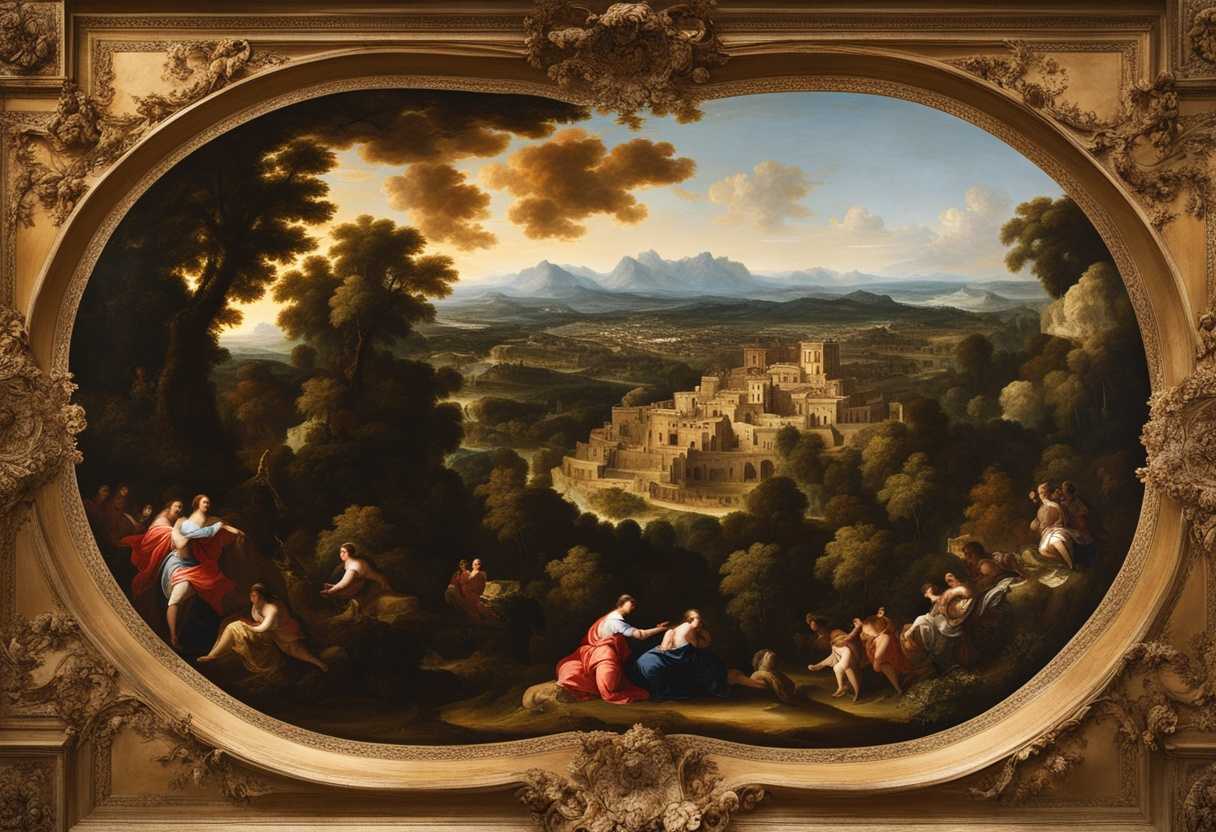
In Ezekiel 47:13-21, the prophet Ezekiel finds himself standing on the banks of the river that flows from the temple in Jerusalem. The scene is bustling with activity as the Lord instructs Ezekiel to divide the land among the twelve tribes of Israel. The leaders of each tribe, including Judah, Reuben, Gad, Asher, Naphtali, Manasseh, Ephraim, Issachar, Zebulun, Benjamin, Simeon, and Dan, are present, eagerly awaiting their allotted portions.
The atmosphere is charged with anticipation as Ezekiel begins to assign each tribe its inheritance. The land is described as abundant and fruitful, with each tribe receiving a portion according to its size and needs. The leaders listen intently as Ezekiel outlines the boundaries of their territories, ensuring that each tribe receives a fair and equitable share of the promised land.
Surrounded by the majestic temple and the flowing river, the scene is a powerful reminder of God’s faithfulness to His people. As Ezekiel carries out the Lord’s instructions, the tribes of Israel are united in their common purpose, ready to take possession of the land that has been set aside for them.
What is Ezekiel 47:13-21 about?
Ezekiel is providing a vision of a future time when the land of Israel will be divided among the tribes of Israel in this verse. This division symbolizes unity and restoration among the people of Israel, emphasizing the importance of each tribe having their own portion of the land. This vision underscores the idea of fairness and equality in the distribution of resources and territory among the tribes, promoting harmony and cooperation within the community. Reflect on this verse as you consider the significance of land in the Bible. Land was not merely a physical possession but also had deep spiritual and symbolic meanings. The division of the land among the tribes represents God’s plan for the people of Israel, highlighting His faithfulness and provision for His chosen people. It reminds us of the importance of unity, sharing, and stewardship of resources within a community. How might this vision of division and unity among the tribes inspire us to seek harmony and fairness in our own communities today?
Understanding what Ezekiel 47:13-21 really means
Ezekiel 47:13-21 unveils a vision of the boundaries of the land promised to the twelve tribes of Israel, showcasing God’s unwavering faithfulness in fulfilling His promises. This passage, nestled within Ezekiel’s prophetic vision of the restoration of Israel, underscores the significance of inheritance and belonging among God’s chosen people. The delineation of land among the tribes symbolizes divine order and provision, reflecting God’s meticulous care in allocating each tribe’s portion.
A pivotal phrase in this passage, “Joseph shall have two portions,” illuminates the exceptional status of Joseph’s descendants, Ephraim and Manasseh, who receive a double portion of land. This allocation echoes the blessings bestowed upon Joseph by Jacob in Genesis 48:5-6, emphasizing God’s favor and the fulfillment of ancestral promises. Furthermore, the directive to “divide it equally” underscores the principle of fairness and equity in the distribution of land, ensuring that each tribe receives its rightful inheritance without partiality.
Drawing parallels with related biblical passages such as Genesis 15:18-21, Numbers 34:1-12, and Joshua 13-21 provides historical context and continuity to Ezekiel’s vision. These passages collectively weave a tapestry of God’s covenant with Abraham, the delineation of the Promised Land’s boundaries, and the division of land among the tribes during Joshua’s leadership, reinforcing the divine orchestration of Israel’s inheritance.
The enduring relevance of Ezekiel 47:13-21 resonates with believers today, serving as a poignant reminder of God’s faithfulness in fulfilling His promises. It underscores the significance of community and belonging, symbolized by each tribe’s unique portion of land, fostering unity and shared inheritance among God’s people. This concept of divine inheritance finds resonance in the spiritual inheritance believers receive through faith in Christ, as articulated in Ephesians 1:11-14, highlighting the richness of God’s blessings for His children.
To illustrate the profound impact of inheritance and belonging, envision a family awaiting the fulfillment of a promised ancestral land. Upon receiving detailed instructions on dividing the land among family members, the joy and sense of belonging experienced mirror the assurance and fulfillment believers find in knowing God’s specific plan and inheritance for each individual. This anecdote encapsulates the profound joy and assurance that come from embracing God’s promises and finding one’s place within the community of believers.
In conclusion, Ezekiel 47:13-21 encapsulates God’s faithfulness, the sanctity of inheritance, and the unity of His people, urging believers to trust in His promises and embrace their unique inheritance in Christ. This passage serves as a beacon of hope, guiding believers to find solace in God’s unwavering provision and the shared inheritance that unites them as one body in Christ.
What is the significance of boundaries in spiritual growth?
The boundaries described in Ezekiel 47:13-21 are significant in spiritual growth as they represent both a physical and symbolic delineation of God’s promised land for his people. These boundaries establish a sense of order, structure, and identity, ensuring that each tribe knows their allotted inheritance. The Israelites maintain a connection to their roots and traditions, fostering a sense of unity and purpose by adhering to these boundaries.
On a deeper level, these boundaries also serve as a metaphor for personal boundaries in our spiritual journey. We must establish healthy boundaries in our lives to protect our faith, values, and spiritual well-being, just as the tribes were assigned specific territories. We can create a sacred space where we can grow and flourish in our relationship with God by setting boundaries in relationships, activities, and beliefs. Honoring these boundaries in both a physical and spiritual sense can lead to a deeper understanding of God’s providence and faithfulness. We demonstrate our trust in God’s plan for us and acknowledge His sovereignty over all aspects of our lives as we respect and uphold these boundaries. We open ourselves up to receive the blessings and guidance that God has prepared for us within the confines of His divine boundaries.
Application
Unlock your potential as a beacon of change in this world. Embrace your role in transforming your surroundings, just like a diligent worker nurtures their career or a caring parent nurtures their family. Let’s embody God’s love and justice in all our actions, fostering a community where kindness and compassion thrive. Time to rise up and make a difference in the lives of those around us. Will you heed the call to be an ambassador of positivity in this ever-evolving world?

Reverend Michael Johnson is an experienced Church Minister with a profound expertise in spirituality and guidance. With a serene presence and a compassionate heart, he has faithfully served his congregation for over 20 years, leading them on a spiritual journey towards inner peace and enlightenment. Reverend Johnson’s extensive knowledge of religious philosophies and profound understanding of human nature have made him a trusted confidant and mentor to many, as he seamlessly weaves his profound wisdom into life teachings. Reverend Johnson’s calming demeanor and empathetic nature continue to uplift and heal souls, nurturing a sense of unity and tranquility within his community.