
1 Then he cried in my ears with a loud voice, saying, “Bring near the executioners of the city, each with his destroying weapon in his hand.”
2 And behold, six men came from the direction of the upper gate, which faces north, each with his weapon for slaughter in his hand, and with them was a man clothed in linen, with a writing case at his waist. And they went in and stood beside the bronze altar.
3 Now the glory of the God of Israel had gone up from the cherub on which it rested to the threshold of the house.
4 And the Lord said to him, “Pass through the city, through Jerusalem, and put a mark on the foreheads of the men who sigh and groan over all the abominations that are committed in it.”
5 And to the others he said in my hearing, “Pass through the city after him, and strike. Your eye shall not spare, and you shall show no pity.
6 Kill old men outright, young men and maidens, little children and women, but touch no one on whom is the mark. And begin at my sanctuary.” So they began with the elders who were before the house.
7 And he said to them, “Defile the house, and fill the courts with the slain. Go out.” So they went out and struck in the city.
8 And while they were striking, and I was left alone, I fell upon my face, and cried, “Ah, Lord God! Will you destroy all the remnant of Israel in the outpouring of your wrath on Jerusalem?”
9 Then he said to me, “The guilt of the house of Israel and Judah is exceedingly great. The land is full of blood, and the city full of injustice. For they say, ‘The Lord has forsaken the land, and the Lord does not see.’
10 But as for me, my eye will not spare, nor will I have pity; I will bring their deeds upon their heads.”
11 And behold, the man clothed in linen, with the writing case at his waist, brought back word, saying, “I have done as you commanded me.”
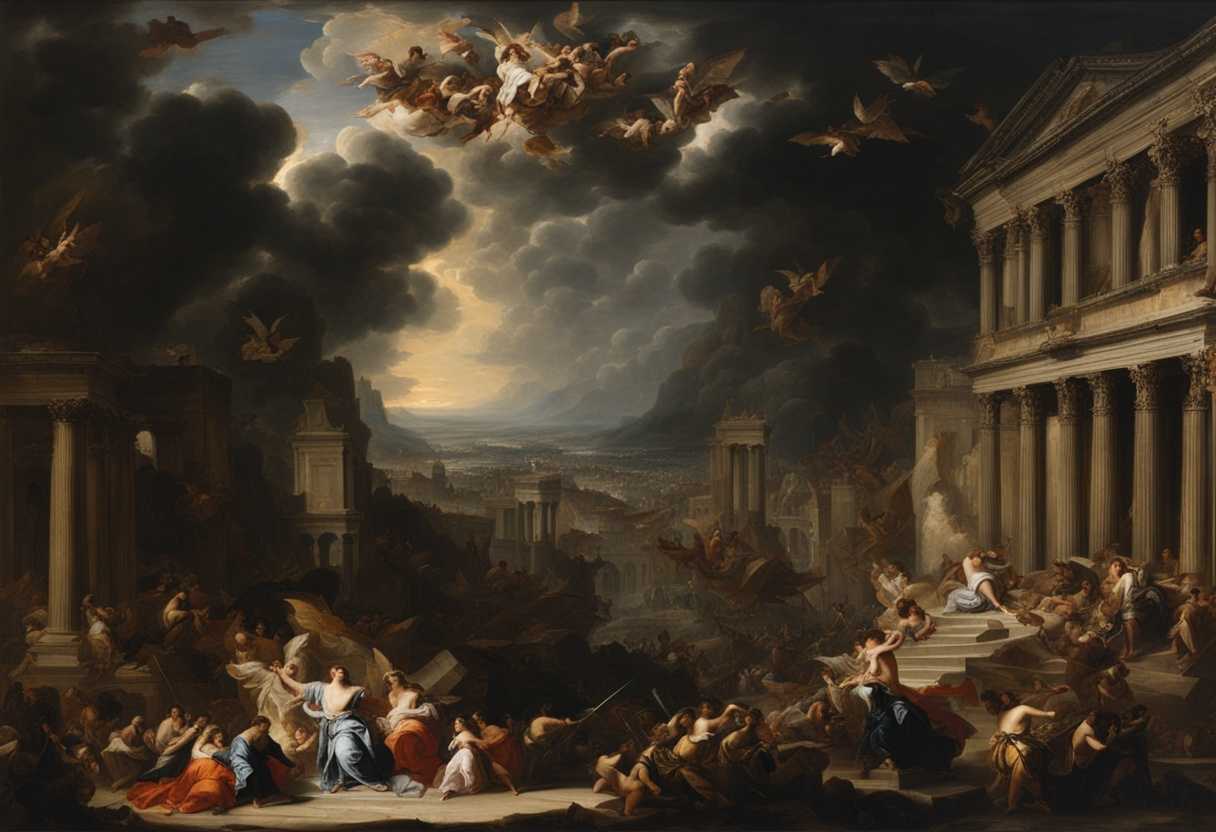
The True Meaning of Ezekiel 9
The book of Ezekiel was written by the prophet Ezekiel, who was a priest and a prophet during the Babylonian exile. He was among the first group of Israelites taken captive to Babylon in 597 BC, and he received his visions and prophecies while living in exile. Ezekiel describes a vision he had of God’s judgment on Jerusalem in this chapter. The chapter foreshadows the impending destruction of the city and the temple, as well as the separation of the righteous from the wicked. We will see how God’s holiness and justice are displayed, and how even the most devoted followers of God must face the consequences of their nation’s sin.
Ezekiel’s vision echoes the warnings found in other prophetic books, such as Jeremiah’s prophecy of the coming destruction of Jerusalem (Jeremiah 39:1-10). The events described in this chapter serve as a sobering reminder of the seriousness of sin and the importance of repentance and obedience to God.
Ezekiel 9:1-4
The verse in Ezekiel 9:1-4 is divided into a few important sections. Firstly, it starts with the prophet Ezekiel hearing the voice of God commanding those who are appointed to execute judgment upon the city. The characters in this verse are the man clothed with linen with a writer’s inkhorn at his side. Illustrating a scene reminiscent of the Passover in Exodus 12:7 where the Israelites were commanded to mark their doors with the blood of a lamb to be spared from the judgment of God, here we see a similar marking being done by the man in linen. Individuals in Jerusalem are marked for destruction due to their wickedness, rather than being marked for protection.
This section of the verse highlights the severity of God’s judgment on the sinful city of Jerusalem. The marking of those who sighed and cried over the abominations being done in the land showcases a remnant of righteous people in a city filled with wickedness. This act of marking the foreheads of the righteous is reminiscent of the sealing of the servants of God in Revelation 7:2-3, emphasizing God’s protection and preservation of His faithful followers even in the midst of chaos and destruction.
The instruction given to the man in linen to go through the city and put a mark on the foreheads of those who grieved and lamented over the detestable things that were being done in Jerusalem underscores the importance of discernment and righteous sorrow in the eyes of God. God’s people in a world where evil and wickedness prevail must have a heart that is sensitive to sin and its consequences. This act of marking the faithful few amidst the unfaithful many serves as a powerful reminder of God’s faithfulness to His people and His promise to protect and deliver them in times of judgment and tribulations. Ezekiel 9:1-4 teaches us about the righteousness and judgment of God, the importance of being separated from evil, and the promise of protection for those who remain faithful to Him. It serves as a sobering reminder for believers to be vigilant, discerning, and steadfast in their faith, especially in a world filled with corruption and sin.
Ezekiel 9:5-7
A vivid and striking depiction of a significant event in the book of Ezekiel is seen in Ezekiel 9:5-7. Let’s break down this passage further to uncover its deeper meaning and relevance to the overall message of the Bible. A group of individuals appointed by God to execute judgment in Jerusalem is read about in verse 5. These individuals are described as “those who followed him” and are tasked with striking down the inhabitants of the city who are not marked on their foreheads. The marking on the forehead denotes a sign of protection, indicating those who are faithful and obedient to God. Those without this mark are seen as deserving of punishment. This underscores the concept of divine judgment and the consequences of disobedience to God’s commands.
This scene serves as a powerful reminder of the importance of living a life that is in alignment with God’s will. It reflects the biblical principle that God is just and righteous, and that there are consequences for sin and rebellion against Him. The imagery of the marked and unmarked individuals highlights the contrast between the righteous and the wicked, emphasizing the need for faithfulness and obedience in the eyes of the Lord.
Furthermore, in verse 6, we witness the execution of judgment as commanded by God. The individuals appointed for this task are seen carrying out the divine directive without hesitation or mercy. This emphasizes the severity of God’s judgment upon those who have turned away from Him. It serves as a sobering reminder of the importance of repentance and turning back to God before it is too late.
This passage in Ezekiel 9 serves as a warning to the people of Jerusalem, illustrating the consequences of their continued disobedience and idolatry. It echoes themes found throughout the Bible regarding the importance of faith, righteousness, and the eventual judgment of God upon the unrepentant. It also underscores the idea that God is a God of justice who will ultimately hold all individuals accountable for their actions. Ezekiel 9:5-7 carries a powerful message about the consequences of sin, the importance of obedience to God, and the inevitability of divine judgment. It prompts readers to reflect on their own lives and consider whether they are marked by faithfulness and obedience to God or risk facing the consequences of disobedience.
Ezekiel 9:8-11
The verse in Ezekiel 9:8-11 can be broken down into a few key sections. The first part describes how Ezekiel sees a man clothed in linen with a writing kit at his side. The significance of this imagery is profound as linen is often associated with purity and righteousness in the Bible. The man with the writing kit symbolizes an agent of judgment, tasked with marking the foreheads of those who sigh and groan over the detestable practices being done in Jerusalem. This marking is crucial as it serves as a form of protection for the faithful and righteous individuals amidst the impending destruction.
The next section of the verse describes the command given by God to the man with the writing kit. He is instructed to go throughout the city of Jerusalem and put a mark on the foreheads of those who grieve and lament over the abominations being committed by the people. This act of marking the faithful individuals signifies the distinction between those who are righteous and those who are not. It highlights the idea of God’s faithfulness in protecting His people even in times of judgment and calamity. This theme of divine protection and preservation of the righteous is consistent throughout the Bible, emphasizing God’s unfailing love and care for His chosen ones.
The final part of the verse depicts the severe judgment that is to come upon the city of Jerusalem. The ones who are not marked for protection are to be slain without mercy, regardless of age, gender, or status. This harsh judgment signifies the consequences of persistent disobedience and unrepentant sin. It serves as a sobering reminder of the righteousness and justice of God, who punishes sin but also extends His grace to those who remain faithful to Him. This passage aligns with the concept of God’s judgment and mercy in the broader context of the Bible. It echoes the story of the Israelites in the Old Testament, where God repeatedly warned His people about the consequences of turning away from Him and engaging in idolatry and wickedness. The marking of the foreheads can be compared to the mark of protection placed on the doorposts of the Israelites during the Passover (Exodus 12:7), highlighting the theme of God’s deliverance and salvation for His people amidst destruction and judgment. Ezekiel 9:8-11 serves as a powerful reminder of the importance of remaining faithful to God, even in the midst of adversity and judgment, as He is the ultimate protector and judge.
After Ezekiel 9
The Lord had spoken, and the judgment had begun. The six men with the weapons of destruction had been sent forth, and the city was filled with the cries of the condemned. Yet, amidst the chaos, a single man stood apart, clothed in linen, with a writer’s inkhorn at his side. This man was to mark the foreheads of those who mourned the abominations of the city, sparing them from the impending wrath. The faithful were set apart as the slaughter commenced. But the question remained: what would become of those who had turned their backs on the Lord, and what further judgments lay in store for the rebellious city?

Reverend Michael Johnson is an experienced Church Minister with a profound expertise in spirituality and guidance. With a serene presence and a compassionate heart, he has faithfully served his congregation for over 20 years, leading them on a spiritual journey towards inner peace and enlightenment. Reverend Johnson’s extensive knowledge of religious philosophies and profound understanding of human nature have made him a trusted confidant and mentor to many, as he seamlessly weaves his profound wisdom into life teachings. Reverend Johnson’s calming demeanor and empathetic nature continue to uplift and heal souls, nurturing a sense of unity and tranquility within his community.