
Ezekiel 9:1-4 is about God’s command for His angels to carry out judgment upon the city of Jerusalem, sparing only those who are marked with the sign of the righteous so that they may be protected and preserved.
1 Then he cried in my ears with a loud voice, saying, “Bring near the executioners of the city, each with his destroying weapon in his hand.”
2 And behold, six men came from the direction of the upper gate, which faces north, each with his weapon for slaughter in his hand, and with them was a man clothed in linen, with a writing case at his waist. And they went in and stood beside the bronze altar.
3 Now the glory of the God of Israel had gone up from the cherub on which it rested to the threshold of the house.
4 And the Lord said to him, “Pass through the city, through Jerusalem, and put a mark on the foreheads of the men who sigh and groan over all the abominations that are committed in it.”
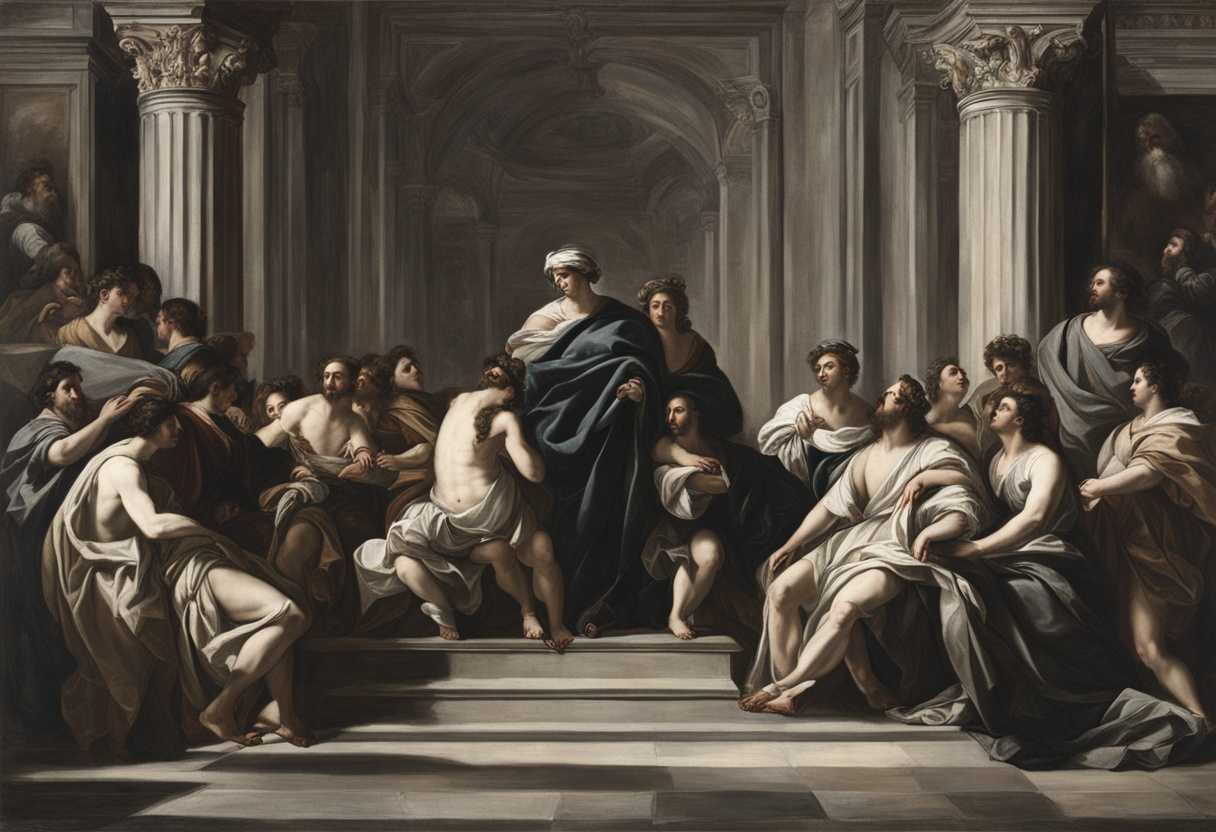
Setting the Scene for Ezekiel 9:1-4
In Ezekiel chapter 9, the prophet Ezekiel finds himself in a vision from the Lord, standing in the inner court of the temple in Jerusalem. The scene is solemn and tense as Ezekiel witnesses the unfolding events. Around him are six men, each carrying a weapon of destruction. These men are angels sent by God to execute judgment on the city for its sins.
Ezekiel had been chosen by God to receive this vision and deliver a message of warning and impending judgment to the people of Jerusalem. The prophet had been faithful in his calling, despite facing opposition and disbelief from the people around him. As he stands in the inner court, he sees the glory of the Lord filling the temple, a powerful and awe-inspiring sight.
The surroundings are filled with a sense of impending doom and the weight of God’s judgment. The atmosphere is heavy with the consequences of the people’s disobedience and idolatry. Ezekiel’s heart is heavy as he witnesses the events about to unfold, knowing that the city will face destruction for turning away from God.
What is Ezekiel 9:1-4 about?
Ezekiel’s vision of judgment in this verse creates a vivid picture of a divine reckoning where some are marked for salvation while others face destruction. The contrast between those spared and those slain emphasizes the seriousness of moral choices and the consequences they entail. It prompts us to reflect on our own actions and the ways in which they align with righteousness or lead to downfall. The weight of this vision is worth considering: the idea that our deeds can determine our fate. How does this evoke a sense of accountability and accountability in us? It reminds us to be mindful of our decisions, knowing that they have a lasting impact. Let us choose kindness, justice, and righteousness as we strive to be among those marked spared as we navigate through life. How can we live our lives in a way that reflects these values, aiming to be counted among the righteous in times of judgment?
Understanding what Ezekiel 9:1-4 really means
In Ezekiel 9:1-4, we are transported into a vision granted to the prophet Ezekiel, a vision that unveils the impending judgment upon Jerusalem. This divine revelation comes at a time when Israel is steeped in moral and spiritual decay, serving as both a cautionary tale and a plea for repentance. The urgency of God’s message is palpable as He cries out with a loud voice, demanding immediate attention to the gravity of the situation. The call for those in charge of the city to approach with their weapons symbolizes the imminent execution of God’s judgment through His appointed agents.
A poignant moment in this passage is when God instructs the marking of the foreheads of those who lament the abominations surrounding them. This mark becomes a symbol of protection for the faithful few who remain steadfast in their devotion to God amidst a sea of sin. It is a tangible sign of God’s recognition of their grief and their unwavering commitment to righteousness. This act of marking the righteous finds resonance in other biblical passages, such as Revelation 7:3, where a seal is placed on the servants of God for their protection, and in Exodus 12:7, where the blood on the doorposts shields the Israelites from the plague.
The relevance of Ezekiel’s vision extends beyond its historical context, speaking directly to the challenges faced by believers in today’s world. It serves as a poignant reminder of the importance of standing firm in faith and righteousness, even when surrounded by moral decay and corruption. In a society rife with ethical dilemmas and spiritual battles, this passage encourages believers to be unwavering in their convictions and to speak out against wrongdoing. It highlights the fact that God sees and values those who remain faithful in the face of adversity.
To illustrate the timeless message of Ezekiel 9:1-4, consider a scenario where a group of individuals upholds honesty and integrity in a community marred by deceit and fraud. Despite facing ridicule and ostracization, they hold fast to their principles. When an external authority eventually exposes the corruption, those who stood firm in their integrity not only escape unscathed but are also commended and rewarded for their steadfastness. This narrative mirrors the protection and acknowledgment promised to the faithful in Ezekiel’s vision, reinforcing the enduring relevance of the passage in contemporary contexts.
In conclusion, Ezekiel 9:1-4 serves as a poignant reminder of God’s justice and compassion. It beckons believers to remain resolute in their faith, to be moved by the sin that surrounds them, and to find solace in the assurance that God sees and safeguards those who remain faithful. This passage stands as a beacon of hope and encouragement for believers navigating the complexities of a world fraught with moral challenges, urging them to hold fast to their convictions and trust in God’s ultimate protection and reward.
Are we truly marked as God’s own?
Yes, according to the meaning of the verse, we are marked as God’s own when we are faithful followers of Him. The mark signifies a seal of protection and ownership from God. It is a symbol of being set apart and distinguished by God for His purposes. This mark sets apart those who belong to God and distinguishes them from those who do not. Those who grieve and lament over the detestable things happening around them have the mark placed on their foreheads in the context of Ezekiel 9:1-4. It serves as a sign of God’s protection and salvation for the faithful, while judgment and destruction come upon those who do not bear this mark. This marking demonstrates God’s faithfulness to His people and His commitment to preserve those who are loyal to Him. God knows and recognizes His own, providing believers with comfort and assurance. The mark symbolizes His presence, care, and ultimate deliverance for those who remain faithful to Him. It serves as a reminder that we are secure in God’s love and protection, even in the midst of trials and tribulations.
Application
Dear friend, as you dive into Ezekiel 9:1-4, it’s time to check your heart and synchronize it with God’s plan. Embrace your role in combatting wrongdoing and radiate positivity in a world filled with shadows. Will you answer the call of this text and courageously champion goodness amidst the chaos?

Reverend Michael Johnson is an experienced Church Minister with a profound expertise in spirituality and guidance. With a serene presence and a compassionate heart, he has faithfully served his congregation for over 20 years, leading them on a spiritual journey towards inner peace and enlightenment. Reverend Johnson’s extensive knowledge of religious philosophies and profound understanding of human nature have made him a trusted confidant and mentor to many, as he seamlessly weaves his profound wisdom into life teachings. Reverend Johnson’s calming demeanor and empathetic nature continue to uplift and heal souls, nurturing a sense of unity and tranquility within his community.