
Ezra 2:1-70 is about recounting the exiled Israelites’ return to Jerusalem, emphasizing the importance of remembering one’s heritage, rebuilding community, and renewing faith in challenging times.
1 Now these were the people of the province who came up out of the captivity of those exiles whom Nebuchadnezzar the king of Babylon had carried captive to Babylonia.
2 They came with Zerubbabel, Jeshua, Nehemiah, Seraiah, Reelaiah, Mordecai, Bilshan, Mispar, Bigvai, Rehum, and Baanah.
3 who came with Zerubbabel, Jeshua, Nehemiah, Seraiah, Reelaiah, Mordecai, Bilshan, Mispar, Bigvai, Rehum, and Baanah. The number of the men of the people of Israel:
4 The men of the people of Israel:
5 the sons of Arah, 775
6 the sons of Pahath-moab, namely the sons of Jeshua and Joab, 2,812
7 who came with Zerubbabel, Jeshua, Nehemiah, Seraiah, Reelaiah, Mordecai, Bilshan, Mispar, Bigvai, Rehum, and Baanah. The number of the men of the people of Israel:
8 the sons of Parosh, 2,172.
9 The sons of Zaccai, 760.
10 The sons of Bani: Hashum,
11 the sons of Bebai, 628.
12 the sons of Azgad, 1,222
13 the sons of Adonikam, 666.
14 The sons of Bigvai, two thousand fifty-six.
15 The sons of Adin, 454
16 besides their male and female servants, of whom there were 7,337. And they had 200 male and female singers.
17 the sons of Azgad, 2,322.
18 the sons of Adonikam, 666.
19 The sons of Hashum, 223.
20 The sons of Immer, 1,052.
21 The sons of Bethlehem, one hundred twenty-three.
22 The men of Netophah 56, 56, 56, 56, 56, 56, 56, 56, 56, 56, 56, 56, 56, 56, 56, 56, 56, 56, 56, 56, 56, 56, 56, 56, 56, 56, 56, 56, 56, 56, 56, 56, 56, 56, 56, 56, 56, 56, 56, 56, 56, 56, 56, 56, 56, 56, 56, 56, 56, 56, 56, 56, 56, 56, 56, 56, 56, 56, 56, 56, 56, 56, 56, 56, 56, 56, 56, 56, 56, 56, 56, 56, 56, 56, 56, 56, 56, 56, 56, 56, 56, 56, 56, 56, 56, 56, 56, 56, 56, 56, 56, 56, 56, 56, 56, 56, 56, 56, 56, 56, 56
23 The men of Anathoth, 128.
24 The sons of Azmaveth, forty-two.
25 the sons of Kiriath-arim, Chephirah, and Beeroth, 743
26 the sons of Ramah and Geba, 621
27 the men of Ramah and Geba, 621
28 The men of Bethel and Ai, 223.
29 the men of Kiriath-jearim, Chephirah, and Beeroth, seven hundred and forty-three.
30 The men of Ramah and Geba, 621.
31 The people of the other Elam, 1,254.
32 These were the people of Tel-melah, Tel-harsha, Cherub, Addan, and Immer, but they could not prove their fathers’ houses or their descent, whether they belonged to Israel:
33 the men of the other Nebo, fifty-two.
34 The sons of Jericho, 345
35 The sons of Senaah: 3,630.
36 The priests: the sons of Jedaiah, of the house of Jeshua, 973
37 the sons of Immer, 1,052
38 the sons of Pashhur, 1,247.
39 The sons of Nebo: 51
40 The Levites: the sons of Jeshua and Kadmiel, of the sons of Hodaviah, 74.
41 The singers: the sons of Asaph, 128.
42 The sons of the gatekeepers: the sons of Shallum, the sons of Ater, the sons of Talmon, the sons of Akkub, the sons of Hatita, and the sons of Shobai, in all 139.
43 The temple servants: the sons of Ziha, the sons of Hasupha, the sons of Tabbaoth,
44 The singers: the sons of Asaph, 148.
45 The gatekeepers: the sons of Shallum, the sons of Ater, the sons of Talmon, the sons of Akkub, the sons of Hatita, and the sons of Shobai, in all 139.
46 the sons of Jediael, the sons of Jeshaiah, 2,818
47 the descendants of Keros, the descendants of Siaha, the descendants of Padon,
48 The people of Lod, Hadid, and Ono, 721.
49 The descendants of Keros, the descendants of Siaha, the descendants of Padon,
50 The children of Keros, the children of Siaha, the children of Padon,
51 The sons of Bakbuk, the sons of Hakupha, the sons of Harhur,
52 The people of Bethel and Ai, 743
53 the sons of Barkos, the sons of Sisera, the sons of Temah,
54 The sons of Neziah, the sons of Hatipha.
55 The sons of Solomon’s servants: the sons of Sotai, the sons of Hassophereth, the sons of Peruda,
56 The sons of Jaala, the sons of Darkon, the sons of Giddel,
57 the sons of Shephatiah, the sons of Hattil, the sons of Pochereth-hazzebaim, the sons of Amon.
58 All the temple servants and the sons of Solomon’s servants were 392.
59 The following were those who came up from Tel-melah, Tel-harsha, Cherub, Addan, and Immer, though they could not prove their fathers’ houses or their descent, whether they belonged to Israel:
60 The sons of Delaiah, the sons of Tobiah, the sons of Nekoda, six hundred fifty-two.
61 Also, of the people of the priests: the sons of Habaiah, the sons of Hakkoz, the sons of Barzillai (who had taken a wife of the daughters of Barzillai the Gileadite and was called by their name).
62 These sought their registration among those enrolled in the genealogies, but they were not found there, and so they were excluded from the priesthood as unclean.
63 The governor told them that they were not to partake of the most holy food until a priest with Urim and Thummim should arise.
64 The whole assembly together was 42,360,
65 besides their male and female servants, of whom there were 7,337, and they had 200 male and female singers.
66 Their horses were seven hundred thirty-six, their mules two hundred forty-five,
67 Their camels were 675, their donkeys were 435,
68 Some of the heads of families, when they came to the house of the Lord that is in Jerusalem, made freewill offerings for the house of God, to erect it on its site.
69 According to their ability they gave to the treasury of the work sixty-one thousand darics of gold, five thousand minas of silver, and one hundred priests’ garments.
70 So the priests, and the Levites, and some of the people, the singers, the gatekeepers, and the temple servants, lived in their towns, and all the rest of Israel in their towns.
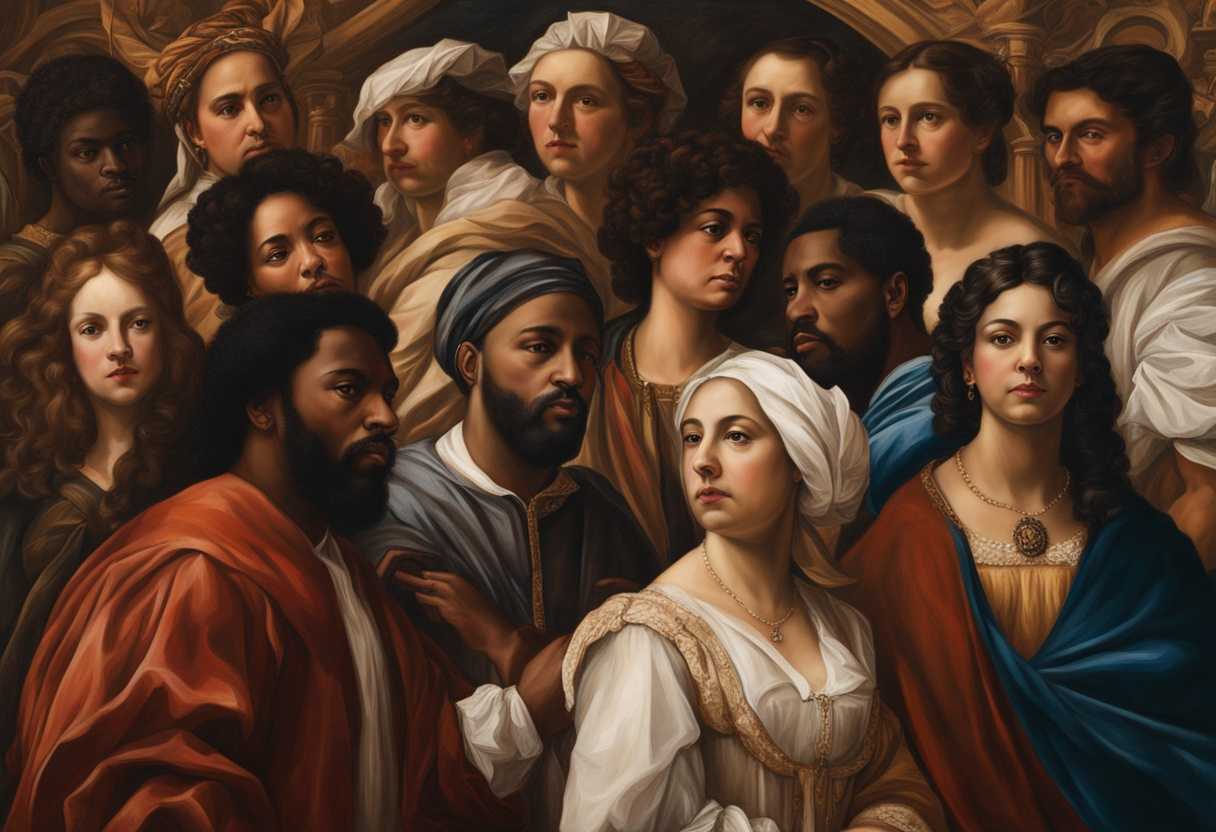
Setting the Scene for Ezra 2:1-70
In the book of Ezra, chapter 2, we find a detailed account of the Israelites who returned to Jerusalem from exile in Babylon. The scene is set in the city of Babylon, where a group of Israelites, led by Zerubbabel, Jeshua, and Nehemiah, have been granted permission by King Cyrus of Persia to return to their homeland and rebuild the temple in Jerusalem. The Israelites had been in exile for 70 years, as prophesied by Jeremiah, and now they were finally able to return.
The group gathered in Babylon consisted of men, women, and children, along with their servants and livestock. They had spent years in a foreign land, longing for their homeland and the chance to worship in the temple of their God once again. As they prepared to make the long journey back to Jerusalem, there was a sense of anticipation and excitement among the people. They were filled with hope for the future and gratitude for the opportunity to return to their ancestral land.
The surroundings in Babylon were bustling with activity as the Israelites made final preparations for their journey. The city was a melting pot of different cultures and languages, but amidst the diversity, the Israelites stood united in their mission to return to Jerusalem. As they set out on their journey, they carried with them the precious artifacts and treasures that had been taken from the temple years before, eager to restore them to their rightful place. The scene was one of determination, faith, and a deep sense of connection to their heritage and their God.
What is Ezra 2:1-70 about?
The mention of exiles who returned to Jerusalem after captivity in Babylon in this verse signifies a significant moment of redemption and restoration for the people of Israel. It symbolizes a turning point in their history, where they were able to rebuild their lives and their city after a period of hardship and displacement. These exiles returning to Jerusalem can be seen as a sign of hope, resilience, and faith in the face of adversity.
Imagine the emotions these exiles must have felt as they finally returned to their homeland after years of being in captivity. Think about the sense of freedom and joy they experienced as they reentered Jerusalem and began the process of rebuilding their lives. This verse reminds us of the importance of perseverance, faith, and the enduring promise of restoration even in the darkest of times. It serves as a powerful reminder that no matter how challenging our circumstances may be, there is always hope for a brighter future ahead.
Understanding what Ezra 2:1-70 really means
Ezra 2:1-70 provides a detailed account of the exiles who returned to Jerusalem and Judah from Babylonian captivity. This chapter meticulously lists the names and numbers of the people, priests, Levites, temple servants, and descendants of Solomon’s servants who made the journey back. It serves as a poignant reminder of the significance of community, heritage, and the fulfillment of God’s promises. The phrase “the exiles who returned” stands out, emphasizing the realization of God’s pledge to bring His people back to their homeland after a period of exile. This return symbolizes not only a physical homecoming but also a spiritual renewal and a fresh beginning for the Israelites.
“According to their families” underscores the deep-rooted importance of family and lineage in Jewish tradition. It highlights the role of heritage in preserving faith and traditions, showcasing how familial ties were integral to the identity of the returning exiles. The mention of “the priests, the Levites, the singers, the gatekeepers, and the temple servants” in the passage emphasizes the structured and communal worship life of the Israelites. Each group had a specific role to play, illustrating that everyone has a designated place and purpose in God’s divine plan. This organized and communal approach to worship not only fosters unity but also facilitates spiritual growth and development within the community.
The themes and phrases in Ezra 2:1-70 resonate with broader biblical narratives and themes found in related passages. Jeremiah 29:10-14 echoes God’s promise to bring the exiles back after 70 years, showcasing His unwavering faithfulness. Nehemiah 7:6-73 provides a parallel account of the return, emphasizing the consistency and continuity in the biblical narrative. Isaiah 44:28 prophesies about Cyrus, who played a pivotal role in allowing the Jews to return and rebuild Jerusalem, highlighting God’s sovereignty over nations. These interconnected passages weave a tapestry of divine providence, restoration, and fulfillment of promises.
The relevance of Ezra 2:1-70 extends beyond its historical context, offering timeless lessons for people today. The themes of community and belonging underscore the importance of finding identity and support within one’s community, be it religious, familial, or social. The faithfulness of God, exemplified through the return from exile, serves as a beacon of hope and encouragement for believers to trust in God’s promises amidst life’s challenges. The passage also speaks to the universal human experience of restoration and hope, offering solace to those who may be grappling with loss or displacement in their lives.
In conclusion, Ezra 2:1-70 transcends being a mere list of names; it serves as a testament to God’s faithfulness, the significance of community, and the promise of restoration. It prompts us to seek our place within our communities, place our trust in God’s enduring promises, and anticipate the restoration and renewal He offers to all who turn to Him. Just as the returning exiles found solace and purpose in their homecoming, may we too find comfort and direction in our journey towards God and His redemptive plan for our lives.
How does God provide for His people’s restoration?
God gathers His people together and brings them back to their homeland, providing for their restoration in Ezra 2:1-70. The verse lists the names of those who returned to Judah after the exile in Babylon, showing how God meticulously cares for each individual and remembers His people. God demonstrates His faithfulness and commitment to restoring His people by guiding the people back to their land and reuniting them with their families and communities.
Additionally, God provides for His people’s restoration by preserving their identity and heritage. The detailed account of the returnees in Ezra 2 signifies God’s desire to ensure the continuation of His people’s lineage and culture. God acknowledges each person’s significance and the importance of their role in the restoration of Judah by knowing and recording their names. This serves as a reminder to His people that they are not forgotten and that God is actively working to revitalize and strengthen them. God’s provision for His people’s restoration in Ezra 2:1-70 reflects His unchanging love and compassion. Despite the challenges and tribulations His people faced, God never abandoned them. Instead, He orchestrated their return and reestablishment, demonstrating His power to heal, redeem, and renew His people. God’s faithfulness in gathering His people back to their homeland is a powerful testimony of His everlasting commitment to restoring and blessing His chosen ones.
Application
Reflect on your own journey, just like the exiles in Jerusalem after the Babylonian captivity. Are you ready to come back to your faith, no matter how far you have strayed? Let this be the perfect moment to recommit yourself to what truly matters. Will you answer the call to return to the path that leads you closer to your purpose and fulfillment?

Reverend Michael Johnson is an experienced Church Minister with a profound expertise in spirituality and guidance. With a serene presence and a compassionate heart, he has faithfully served his congregation for over 20 years, leading them on a spiritual journey towards inner peace and enlightenment. Reverend Johnson’s extensive knowledge of religious philosophies and profound understanding of human nature have made him a trusted confidant and mentor to many, as he seamlessly weaves his profound wisdom into life teachings. Reverend Johnson’s calming demeanor and empathetic nature continue to uplift and heal souls, nurturing a sense of unity and tranquility within his community.