
Leviticus 23:40-43 is about the Israelites celebrating the Feast of Tabernacles by dwelling in temporary shelters to remember their time in the wilderness; emphasizing the importance of remembering God’s provision and faithfulness in times of trial.
40 And you shall take on the first day the fruit of splendid trees, branches of palm trees and boughs of leafy trees and willows of the brook, and you shall rejoice before the Lord your God seven days.
41 You shall celebrate it as a feast to the Lord for seven days in the year. It is a statute forever throughout your generations; you shall celebrate it in the seventh month.
42 You shall dwell in booths for seven days. All native Israelites shall dwell in booths,
43 that your generations may know that I made the people of Israel dwell in booths when I brought them out of the land of Egypt: I am the Lord your God.”
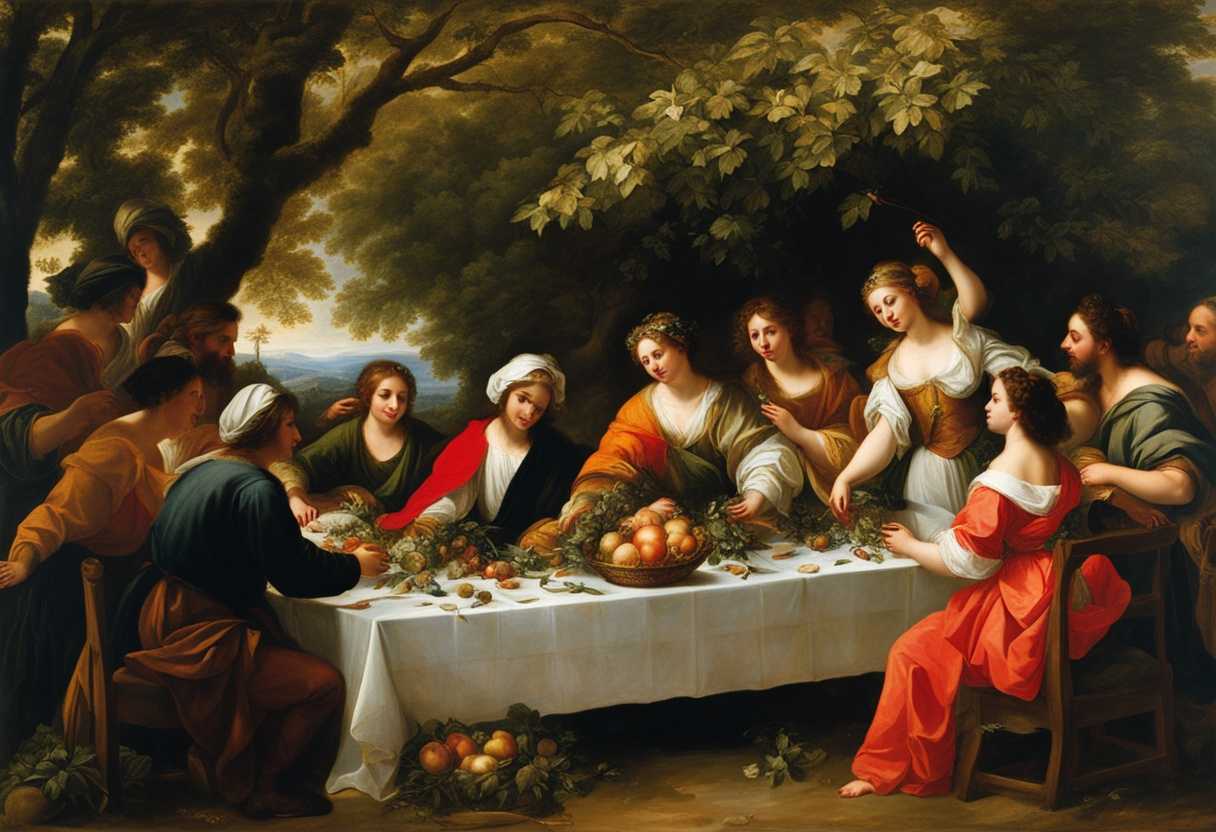
Setting the Scene for Leviticus 23:40-43
In Leviticus 23:40-43, we find the scene of the Feast of Tabernacles, also known as the Feast of Booths or Sukkot. This festival was one of the three pilgrimage festivals in ancient Israel, where all adult Jewish males were required to travel to Jerusalem to celebrate. The Feast of Tabernacles was a joyful and festive occasion, commemorating the Israelites’ time in the wilderness and the harvest season.
The scene is set in Jerusalem, specifically in the Temple courtyard. The area is bustling with activity as people from all over Israel have gathered to celebrate the feast. Families have constructed temporary booths or sukkahs made of branches and foliage, in accordance with the commandment in Leviticus 23:40. The air is filled with the sound of prayers, songs, and the rustling of leaves in the wind.
Among the crowd are men, women, and children, dressed in their finest garments for the occasion. They hold the four species – the etrog (citron), lulav (palm branch), hadass (myrtle), and aravah (willow) – which they wave in all directions as part of the festive rituals. The atmosphere is one of joy, gratitude, and unity as the people come together to worship and give thanks to God for His provision and protection.
What is Leviticus 23:40-43 about?
Oh, what a beautiful verse that captures the essence of the Feast of Tabernacles! The Feast of Tabernacles, also known as Sukkot, is a time of great rejoicing and celebration for the Jewish community. It is a time to remember the Israelites’ journey through the desert and to reflect on God’s provision and faithfulness to His people. Can you imagine the joy and gratitude that must have filled their hearts as they dwelt in temporary shelters, just as their ancestors did in the wilderness? The Feast of Tabernacles reminds us of the importance of joy, remembrance, and thanksgiving in our lives. It is a time to reflect on the ways God has provided for us and remained faithful to us in the midst of life’s trials and challenges. We can build temporary shelters as a symbolic gesture of our reliance on God and His protection over us, just as the Israelites built sukkahs to dwell in during this time. So, let us join in the celebration with hearts full of joy, minds filled with remembrance, and lips overflowing with thanksgiving for all that God has done for us.
Understanding what Leviticus 23:40-43 really means
Leviticus 23:40-43 provides us with a glimpse into the ancient Israelites’ observance of the Feast of Tabernacles, a time of rejoicing and remembrance. The instructions given by God regarding this feast emphasize the use of natural elements like branches from luxuriant trees to symbolize life, growth, and God’s provision. Living in temporary shelters during this festival serves as a physical reminder of life’s transient nature and the Israelites’ dependence on God during their wilderness journey.
The passage underscores the importance of passing down these traditions to future generations, ensuring that they remember God’s faithfulness and deliverance. This act of remembrance is not just a historical recounting but a way to instill gratitude and faith in the hearts of those who come after us. The Feast of Tabernacles was a communal celebration, fostering unity and shared joy among the Israelites. In our modern world, where individualism often prevails, communal celebrations like these can bring people together, fostering a sense of belonging and togetherness.
The relevance of these ancient practices to our lives today is profound. By reflecting on our own journeys and God’s faithfulness, we can cultivate a spirit of gratitude and remembrance. The simplicity of living in temporary shelters during the feast reminds us of the impermanence of material possessions and the importance of relying on God rather than worldly comforts. Just as the Israelites celebrated their harvest and journey, we can find ways to celebrate and honor God in our daily lives.
In Nehemiah 8:14-18, we see a revival of the Feast of Tabernacles, highlighting the joy and communal participation in the festival. Jesus’ words in John 7:37-38 connect the physical celebration of the feast to spiritual fulfillment, offering living water to those who believe in Him. Zechariah 14:16-19 prophesies about the nations coming to Jerusalem to celebrate the Feast of Tabernacles in the future, indicating its lasting significance and universal appeal.
Imagine a family that goes camping annually to commemorate a significant event, living simply, sharing stories, and expressing gratitude. This practice strengthens their bond and keeps the memory of their experience alive for future generations. Similarly, the Feast of Tabernacles serves as a tangible way to remember and celebrate God’s faithfulness, fostering a deeper sense of gratitude, community, and reliance on Him. Leviticus 23:40-43 challenges us to incorporate these principles into our lives, ensuring that we remember, celebrate, and teach others about God’s goodness and provision.
How can we dwell joyfully in temporary shelters?
We can dwell joyfully in temporary shelters by understanding the significance behind the practice. The tradition of dwelling in temporary shelters during the feast of Tabernacles serves as a reminder of the Israelites’ journey in the wilderness after their exodus from Egypt. It symbolizes their dependence on God for protection and provision during uncertain times. We are called to reflect on our own lives and recognize that ultimately, our security comes from God by participating in this tradition.
Additionally, dwelling in temporary shelters can also foster a sense of community and unity among believers. Sharing this experience with others can create a deeper bond as we come together to worship and give thanks for God’s faithfulness. It is a time to celebrate the harvest and acknowledge the blessings that have been bestowed upon us. We can find contentment in the temporary nature of our earthly dwellings by focusing on gratitude and joy during this time, knowing that our true home is in God’s eternal presence.
Application
Embrace the spirit of Leviticus 23:40-43, as you immerse yourself in the joy of the Lord’s feasts. Take a moment to dwell in the booths of your heart, honoring God’s provision and faithfulness throughout your journey. Let these appointed times be a testament of gratitude and holiness in your life. Will you join in this divine celebration and cherish God’s goodness within you?

Reverend Michael Johnson is an experienced Church Minister with a profound expertise in spirituality and guidance. With a serene presence and a compassionate heart, he has faithfully served his congregation for over 20 years, leading them on a spiritual journey towards inner peace and enlightenment. Reverend Johnson’s extensive knowledge of religious philosophies and profound understanding of human nature have made him a trusted confidant and mentor to many, as he seamlessly weaves his profound wisdom into life teachings. Reverend Johnson’s calming demeanor and empathetic nature continue to uplift and heal souls, nurturing a sense of unity and tranquility within his community.